Author Archives: vinaire

I am originally from India. I am settled in United States since 1969. I love mathematics, philosophy and clarity in thinking.

ISLAM: The Standing Miracle

Reference: Islam

[NOTE: In color are Vinaire’s comments.]

The power of the koranic revelation lies not only in the literal meaning of its words but also in the language in which this meaning incorporated, including its sound. Muslims have preferred to teach others the language in which they believe God spoke finally with incomparable force and directness.

The blend of admiration, respect, and affection that the Muslim feels for Muhammad is an impressive fact of history. They see him as a man who experienced life in exceptional range. Not only was he a shepherd, merchant, hermit, exile, soldier, lawmaker, prophet-priest-king, and mystic; he was also an orphan, for many years the husband of one wife much older than himself, a many times bereaved father, a widower, and finally the husband of many wives, some much younger than himself. In all of these roles he was exemplary. All this is in the minds of Muslims as they add to the mention of his name the benediction, “Blessings and peace be upon him.” Even so, they never mistake him for the earthly center of their faith. That place is reserved for the bible of Islam, the Koran. 

The blend of admiration, respect, and affection that the Muslim feels for Muhammad is an impressive fact of history. They see him as a man who experienced life in exceptional range. 

Literally, the word al-qur’an in Arabic (and hence “koran,”) means a recitation. Fulfilling that purpose, the Koran is perhaps the most recited (as well as read) book in the world. Certainly, it is the world’s most memorized book, and possibly the one that exerts the most influence on those who read it. So great was Muhammad’s regard for its contents that (as we have seen) he considered it the only major miracle God worked through him—God’s “standing miracle,” as he called it. That he himself, unschooled to the extent that he was unlettered (ummi) and could barely write his name, could have produced a book that provides the ground plan of all knowledge and at the same time is grammatically perfect and without poetic peer—this, Muhammad, and with him all Muslims, are convinced defies belief. He put the point in a rhetorical question: “Do you ask for a greater miracle than this, O unbelieving people, than to have your language chosen as the language of that incomparable Book, one piece of which puts all your golden poetry to shame?” 

It was a miracle that Muhammad, who was unschooled to the extent that he could barely write his name, could have produced a book that provides the ground plan of all knowledge and at the same time is grammatically perfect and without poetic peer.

Four-fifths the length of the New Testament, the Koran is divided into 114 chapters or surahs, which (with the exception of the short first chapter that figures in the Muslim’s daily prayers) are arranged in order of decreasing length. Thus Surah Two has 286 verses, Surah Three has 200, down to Surah One Hundred Fourteen, which has only six. 

Muslims tend to read the Koran literally. They consider it the earthly facsimile of an Uncreated Koran in almost exactly the way that Christians consider Jesus to have been the human incarnation of God. The comparison that reads, “If Christ is God incarnate, the Koran is God inlibriate” (from liber, Latin for book) is inelegant but not inaccurate. The created Koran is the instantiation, in letters and sounds, of the Koran’s limitless essence in its Uncreated Form. Not that there are two Korans, of course. Rather, the created Koran is the formal crystallization of the infinite reality of the Uncreated Koran. Two levels of reality are operative here. There is the Divine Reality of the Uncreated Koran, and there is the earthly reality of the created Koran. When the created Koran is said to be a miracle, the miracle referred to is the presence of the Uncreated Koran within the letters and sounds of its created (and therefore necessarily in certain ways circumscribed) manifestation. 

Muslims tend to read the Koran literally. They consider it the earthly facsimile of an Uncreated Koran in almost exactly the way that Christians consider Jesus to have been the human incarnation of God. 

The words of the Koran came to Muhammad in manageable segments over twenty-three years through voices that seemed at first to vary and sometimes sounded like “the reverberating of bells,” but which gradually condensed into a single voice that identified itself as Gabriel’s. Muhammad had no control over the flow of the revelation; it descended on him independent of his will. When it arrived he was changed into a special state that was externally discernible. Both his appearance and the sound of his voice would change. He reported that the words assaulted him as if they were solid and heavy: “For We shall charge thee with a word of weight” (73:5; all such references in this chapter are to surah and verse[s] in the Koran). Once they descended while he was riding a camel. The animal sought vainly to support the added weight by adjusting its legs. By the time the revelation ceased, its belly was pressed against the earth and its legs splayed out. The words that Muhammad exclaimed in these often trancelike states were memorized by his followers and recorded on bones, bark, leaves, and scraps of parchment, with God preserving their accuracy throughout. 

The words of the Koran came to Muhammad in manageable segments over twenty-three years through voices that seemed at first to vary and sometimes sounded like “the reverberating of bells,” but which gradually condensed into a single voice that identified itself as Gabriel’s.

The Koran continues the Old and New Testaments, God’s earlier revelations, and presents itself as their culmination: “We made a covenant of old with the Children of Israel [and] you have nothing of guidance until you observe the Torah and the Gospel” (5:70, 68). This entitles Jews and Christians to be included with Muslims as “People of the Book.” (Because the context of the koranic revelation is the Middle East, religions of other lands are not mentioned, but their existence is implied and in principle validated, as in the following verses: “To every people we have sent a messenger…. [Some] We have mentioned to you, and [some] we have not mentioned to you” [10:47, 4:164]). Nevertheless, Muslims regard the Old and New Testaments as sharing two defects from which the Koran is free. For circumstantial reasons they record only portions of Truth. Second, the Jewish and Christian Bibles were partially corrupted in transmission, a fact that explains the occasional discrepancies that occur between their accounts and parallel ones in the Koran. Exemption from these two limitations makes the Koran the final and infallible revelation of God’s will. Its second chapter says explicitly: “This is the Scripture whereof there is no doubt.”

The Koran continues the Old and New Testaments, God’s earlier revelations, and presents itself as their culmination: “We made a covenant of old with the Children of Israel [and] you have nothing of guidance until you observe the Torah and the Gospel” (5:70, 68).

From the outside things look otherwise, for from without the Koran is all but impenetrable. No one has ever curled up on a rainy weekend to read the Koran. Carlyle confessed that it was “as toilsome reading as I ever undertook; a wearisome, confused jumble, crude, incondite. Nothing but a sense of duty could carry any European through the Koran.” Sir Edward Gibbon said much the same: “The European will peruse with impatience its endless incoherent rhapsody of fable and precept, and declamation, which seldom excites a sentiment or an idea, which sometimes crawls in the dust, and is sometimes lost in the clouds.” How are we to understand the discrepancy of the Koran as read from within and from without? 

When read from without Koran appears to be a wearisome, confused jumble, which seldom excites a sentiment or an idea.

The language in which it was proclaimed, Arabic, provides an initial clue. “No people in the world,” writes Philip Hitti, “are so moved by the word, spoken or written, as the Arabs. Hardly any language seems capable of exercising over the minds of its users such irresistible influence as Arabic.” Crowds in Cairo, Damascus, or Baghdad can be stirred to the highest emotional pitch by statements that, when translated, seem banal. The rhythm, melodic cadence, the rhyme produce a powerful hypnotic effect. Thus the power of the koranic revelation lies not only in the literal meaning of its words but also in the language in which this meaning incorporated, including its sound. The Koran was from the first a vocal phenomenon; we remember that we are to “recite” in the name of the Lord! Because content and container are here inseparably fused, translations cannot possibly convey the emotion, the fervor, and the mystery that the Koran holds in the original. This is why, in sharp contrast to Christians, who have translated their Bible into every known script, Muslims have preferred to teach others the language in which they believe God spoke finally with incomparable force and directness.

The power of the koranic revelation lies not only in the literal meaning of its words but also in the language in which this meaning incorporated, including its sound. Muslims have preferred to teach others the language in which they believe God spoke finally with incomparable force and directness.

Language, however, is not the only barrier the Koran presents to outsiders, for in content too it is like no other religious text. Unlike the Upanishads, it is not explicitly metaphysical. It does not ground its theology in dramatic narratives as the Indian epics do, nor in historical ones as do the Hebrew scriptures; nor is God revealed in human form as in the Gospels and the Bhagavad-Gita. Confining ourselves to the Semitic scriptures, we can say that whereas the Old and New Testaments are directly historical and indirectly doctrinal, the Koran is directly doctrinal and indirectly historical. Because the overwhelming thrust of the Koran is to proclaim the unity, omnipotence, omniscience, and mercy of God—and correlatively the total dependence of human life upon him—historical facts are in its case merely reference points that have scarcely any interest in themselves. This explains why the prophets are cited without any chronological order; why historical occurrences are sometimes recounted so elliptically as to be unintelligible without commentaries; and why the biblical stories that the Koran refers to are presented in an unexpected, abbreviated, and dry manner. They are stripped of their epic character and inserted as didactic examples of the infinitely various things that declare God’s praise. When the Lord-servant relationship is the essential point to get across, all else is but commentary and allusion. 

Whereas the Old and New Testaments are directly historical and indirectly doctrinal, the Koran is directly doctrinal and indirectly historical. the overwhelming thrust of the Koran is to proclaim the unity, omnipotence, omniscience, and mercy of God.

Perhaps we shall be less inclined to fault the Koran for the strange face it presents to foreigners if we note that foreign scriptures present their own problems to Muslims. To speak only of the Old and New Testaments, Muslims express disappointment in finding that those texts do not take the form of Divine speech and merely report things that happened. In the Koran God speaks in the first person. Allah describes himself and makes known his laws. The Muslim is therefore inclined to consider each individual sentence of the Holy Book as a separate revelation and to experience the words themselves, even their sounds, as a means of grace. “The Qur’an does not document what is other than itself. It is not about the truth: it is the truth.” By contrast the Jewish and Christian Bibles seem more distant from God for placing religious meaning in reports of events instead of God’s direct pronouncements. 

The Qur’an does not document what is other than itself. It is not about the truth: it is the truth.

The Koran’s direct delivery creates, for the reader, a final problem that in other scriptures is eased by greater use of narrative and myth. One discerning commentator on the Koran puts this point as follows: “The seeming incoherence of the text has its cause in the incommensurable disproportion between the Spirit [Uncreated Koran] and the limited resources of human language. It is as though the poverty-stricken coagulation which is the language of mortal man were under the formidable pressure of the Heavenly Word broken into a thousand fragments, or as if God in order to express a thousand truths, had but a dozen words at his command and so was compelled to make use of allusions heavy with meaning, of ellipses, abridgements and symbolical syntheses.”

The Koran’s direct delivery creates, for the reader, a final problem that in other scriptures is eased by greater use of narrative and myth.

Putting comparisons behind us, it is impossible to overemphasize the central position of the Koran in the elaboration of any Islamic doctrine. With large portions memorized in childhood, it regulates the interpretation and evaluation of every event. It is a memorandum for the faithful, a reminder for daily doings, and a repository of revealed truth. It is a manual of definitions and guarantees, and at the same time a road map for the will. Finally, it is a collection of maxims to meditate on in private, deepening endlessly one’s sense of the divine glory. “Perfect is the Word of your Lord in truth and justice” (6:115).

Koran has the central position in the elaboration of any Islamic doctrine. It is a manual of definitions and guarantees, and at the same time a road map for the will. 

.
ISLAM: The Migration That Led to Victory

Reference: Islam

[NOTE: In color are Vinaire’s comments.]

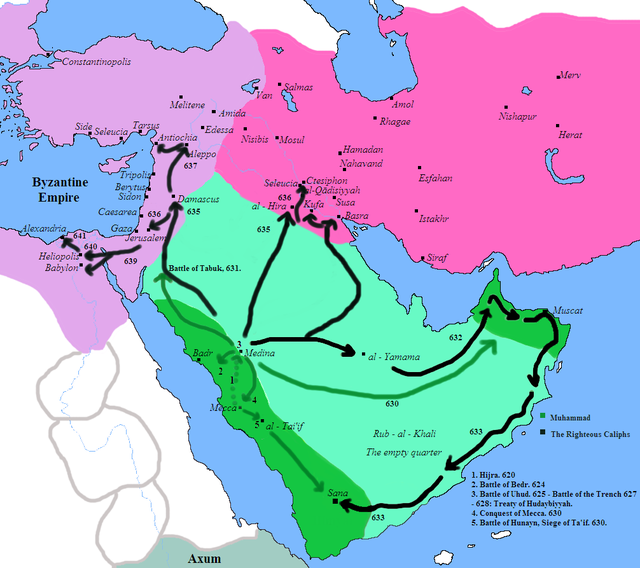
Muhammad died in A.D. 632 with virtually all of Arabia under his control. With all the power of armies and police, no other Arab had ever succeeded in uniting his countrymen as he had. Before the century closed his followers had conquered Armenia, Persia, Syria, Palestine, Iraq, North Africa, and Spain, and had crossed the Pyrenees into France. 

By this time the Meccan nobility was alarmed. What had begun as a pretentious prophetic claim on the part of a half-crazed camel driver had turned into a serious revolutionary movement that was threatening their very existence. They were determined to rid themselves of the troublemaker for good. 

Soon Muhammad’s effort to preach Allah (one God) became alarming to the Meccan nobility.

As he faced this severest crisis of his career, Muhammad was suddenly waited on by a delegation of the leading citizens of Yathrib, a city 280 miles to Mecca’s north. Through pilgrims and other visitors to Mecca, Muhammad’s teachings had won a firm hold in Yathrib. The city was facing internal rivalries that put it in need of a strong leader from without, and Muhammad looked like the man. After receiving a delegation’s pledge that they would worship Allah only, that they 800000 observe the precepts of Islam, and that they would obey its prophet in all that was right and defend him and his adherents as they would their women and children, Muhammad received a sign from God to accept the charge. About seventy familiespreceded him. When the Meccan leaders got wind of the exodus they did everything in their power to prevent his going; but, together with his close companion Abu Bakr, he eluded their watch and set out for Yathrib, taking refuge on the way in a crevice south of the800000city. Horsemen scouring the countryside came so close to discovering them that Muhammad’s companion was moved to despair. “We are only two,” he murmured. “No, we are three,” Muhammad answered, “for God is with us.” The Koran agrees. “He was with them,” it observes, for they were not discovered. After three days, when the search had slackened, they managed to procure two camels and make their hazardous way by unfrequented paths to the city of their destination. 

The year was 622. The migration, known in Arabic as the Hijra, is regarded by Muslims as the turning point in world history and is the year from which they date their calendar. Yathrib soon came to be known as Medinat al-Nabi, the City of the Prophet, and then by contraction simply to Medina, “the city.” 

In the year 622 AD, Muhammad migrated to Medina (Yathrib). This is considered a turning point in Islam and world history. As planned, his followers had preceded him. 

From the moment of his arrival at Medina, Muhammad assumed a different role. From prophecy he was pressed into administration. The despised preacher became a masterful politician; the prophet was transformed into statesman. We see him as the master not merely of the hearts of a handful of devotees but of the collective life of a city, its judge and general as well as its teacher. 

Mohammad’s role transitioned into that of the administrator of a city.  The despised preacher became a masterful politician; the prophet was transformed into statesman. 

Even his detractors concede that he played his new role brilliantly. Faced with problems of extraordinary complexity, he proved to be a remarkable statesman. As the supreme magistrate, he continued to lead as unpretentious a life as he had in the days of his obscurity. He lived in an ordinary clay house, milked his own goats, and was accessible day and night to the humblest in his community. Often seen mending his own clothes, “no emperor with his tiaras was obeyed as this man in a cloak of his own clouting.” God, say Muslim historians, put before him the key to the treasures of this world, but he refused it. 

Muhammad continued to lead a humble and unpretentious life, while solving problems of extraordinary complexity brilliantly in his role as a statesman.

Tradition depicts his administration as an ideal blend of justice and mercy. As chief of state and trustee of the life and liberty of his people, he exercised the justice necessary for order, meting out punishment to those who were guilty. When the injury was toward himself, on the other hand, he was gentle and merciful even to his enemies. In all, the Medinese found him a master whom it was as difficult not to love as not to obey. For he had, as one biographer has written, “the gift of influencing men, and he had the nobility only to influence for the good.”

Muhammad had the gift of influencing men, and the nobility only to influence for the good. Tradition depicts his administration as an ideal blend of justice and mercy. 

For the remaining ten years of his life, his personal history merged with that of the Medinese commonwealth of which he was the center. Exercising superb statecraft, he welded the five heterogeneous and conflicting tribes of the city, three of which were Jewish, into an orderly confederation. The task was not an easy one, but in the end he succeeded 800000 awakening in the citizens a spirit of cooperation unknown in the city’s history. His reputation spread and people began to flock from every part of Arabia to see the man who had wrought this “miracle.”

Exercising superb statecraft, Muhammad welded the five heterogeneous and conflicting tribes of the city, three of which were Jewish, into an orderly confederation. 

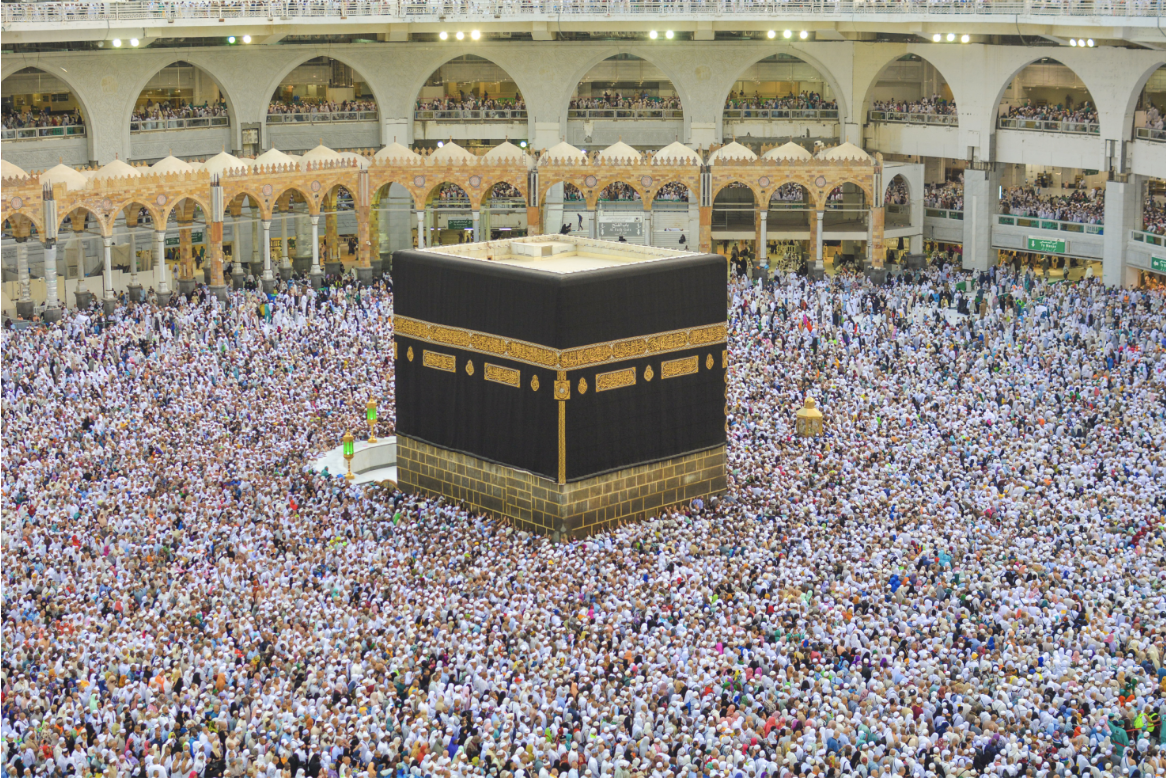
There followed the struggle with the Meccans for the mind of Arabia as a whole. In the second year of the Hijra the Medinese won a spectacular victory over a Meccan army many times larger, and they interpreted the victory as a clear sign that the angels of heaven were battling on their side. The following year, however, witnessed a reversal during which Muhammad himself was wounded. The Meccans did not follow up their victory until two years later, when they laid siege to Medina in a last desperate effort to force the Muslims to capitulate. The failure of this effort turned the tide permanently in Muhammad’s favor; and within three years—eight years after his Migration from Mecca—he who had left as a fugitive returned as conqueror. The city that had treated him cruelly now lay at his feet, with his former persecutors at his mercy. Typically, however, he did not press his victory. In the hour of his triumph the past was forgiven. Making his way to the famous Ka’ba, a cubical temple (said to have been built by Abraham) that Muhammad rededicated to Allah and adopted as Islam’s focus, he accepted the virtual mass conversion of the city. Himself, he returned to Medina. 

There followed the struggle with the Meccans for the mind of Arabia as a whole. It turned into an armed conflict. Finally, in 630 AD, Muhammad won decisively, but in the hour of his triumph he forgave the past. He accepted the virtual mass conversion of the city to Islam.

Two years later, in A.D. 632 (10 A.H., After the Hijra), Muhammad died with virtually all of Arabia under his control. With all the power of armies and police, no other Arab had ever succeeded in uniting his countrymen as he had. Before the century closed his followers had conquered Armenia, Persia, Syria, Palestine, Iraq, North Africa, and Spain, and had crossed the Pyrenees into France. But for their defeat by Charles Martel in the Battle of Tours in 733, the entire Western world might today be Muslim. Within a brief span of mortal life, Muhammad had “called forth out of unpromising material a nation never united before, in a country that was hitherto but a geographical expression; established a religion which in vast areas superseded Christianity and Judaism and still claims the adherence of a goodly portion of the human race; and laid the basis of an empire that was soon to embrace within its far-flung boundaries the fairest provinces of the then civilized world.”

Two years later, in A.D. 632, Muhammad died with virtually all of Arabia under his control. With all the power of armies and police, no other Arab had ever succeeded in uniting his countrymen as he had. Before the century closed his followers had conquered Armenia, Persia, Syria, Palestine, Iraq, North Africa, and Spain, and had crossed the Pyrenees into France. 

In The 100: A Ranking of the Most Influential Persons in History, Michael Hart places Muhammad first. His “unparalleled combination of secular and religious influence entitles Muhammad to be considered the most influential single figure in human history,” Hart writes. The explanation that Muslims give for that verdict is simple. The entire work, they say, was the work of God.

Muhammad has been ranked first among the Most Influential Persons in History.

.

ISLAM: The Seal of the Prophets

Reference: Islam

[NOTE: In color are Vinaire’s comments.]

In an environment of greed, licentiousness and class distinctions, Muhammad was preaching a message that was intensely democratic. He was insisting that in the sight of his Lord all people were equal. He taught respect for the world’s incontrovertible order.

Following Ishmael’s line in Arabia, we come in the latter half of the sixth century A.D. to Muhammad, the prophet through whom Islam reached its definitive form, Muslims believe. There had been authentic prophets of God before him, but he was their culmination; hence he is called “The Seal of the Prophets.” No valid prophets will follow him. 

Muhammad was the prophet through whom Islam reached its definitive form.

The world into which Muhammad was born is described by subsequent Muslims in a single word: ignorant. Life under the conditions of the desert had never been serene. People felt almost no obligation to anyone outside their tribes. Scarcity of material goods made brigandage a regional institution and the proof of virility. In the sixth century political deadlock and the collapse of the magistrate in the leading city of Mecca aggravated this generally chaotic situation. Drunken orgies were commonplace, and the gaming impulse uncontrolled. The prevailing religion watched from the sidelines, providing no check. Best described as an animistic polytheism, it peopled the sandy wastes with beastly sprites called jinn or demons. Fantastic personifications of desert terrors, they inspired neither exalted sentiments nor moral restraint. Conditions could hardly have been better calculated to produce a smoldering undercurrent, which erupted in sudden affrays and blood feuds, some of which extended for half a century. The times called for a deliverer. 

The world into which Muhammad was born was simply ignorant. The prevailing religion could best be described as an animistic polytheism. People felt almost no obligation to anyone outside their tribes. Scarcity of material goods made brigandage a regional institution. 

He was born into the leading tribe of Mecca, the Koreish, in approximately A.D. 570, and was named Muhammad, “highly praised,” which name has since been borne by more male children than any other in the world. His early life was cradled in tragedy, for his father died a few days before he was born, his mother when he was six, and his grandfather, who cared for him after his mother’s death, when he was eight. Thereafter he was adopted into his uncle’s home. Though the latter’s declining fortunes forced the young orphan to work hard minding his uncle’s flocks, he was warmly received by his new family. The angels of God, we are told, had opened Muhammad’s heart and filled it with light. 

Muhammad was born into the leading tribe of Mecca, the Koreish. He was orphaned at an early age and was adopted into his uncle’s home. He was warmly received by his new family. He worked hard from a young age.

The description epitomizes his early character as this comes down to us by tradition. Pure-hearted and beloved in his circle, he was, it is said, of sweet and gentle disposition. His bereavements having made him sensitive to human suffering in every form, he was always ready to help others, especially the poor and the weak. His sense of honor, duty, and fidelity won him, as he grew older, the high and enviable titles of “The True,” “The Upright,” “The Trustworthy One.” Yet despite his concern for others, he remained removed from them in outlook and ways, isolated in a corrupt and degenerate society. As he grew from childhood to youth and from youth to manhood, the lawless strife of his contemporaries, the repeated outbursts of pointless quarrels among tribes frequenting the Meccan fairs, and the general immorality and cynicism of his day combined to produce in the prophet-to-be a reaction of horror and disgust. Silently, broodingly, his thoughts were turning inward. 

Pure-hearted and gentle in disposition, Muhammad was sensitive to human suffering in every form. Yet despite his concern for others, he remained removed from them in outlook and ways, isolated in a corrupt and degenerate society. 

Upon reaching maturity he took up the caravan business, and at the age of twenty-five entered the service of a wealthy widow named Khadijah. His prudence and integrity impressed her greatly, and gradually their relation deepened into affection, then love. Though she was fifteen years his senior, they were married and the match proved happy in every respect. During a long, desolate period that lay ahead, in which no one would believe in him, not even himself, Khadijah was to remain steadfastly by his side, consoling him and tending hope’s thin flame. “God,” tradition was to record, “comforted him through her, for she made his burden light.” 

Upon reaching maturity he took up the caravan business. During a long, desolate period that lay ahead, in which no one would believe in him, God comforted him through his wife Khadijah, for she made his burden light.

Following his marriage were fifteen years of preparation before his ministry was to begin. A mountain on the outskirts of Mecca, known as Mount Hira, contained a cave, and Muhammad, needing solitude, began to frequent it. Peering into the mysteries of good and evil, unable to accept the crudeness, superstition, and fratricide that were accepted as normal, “this great fiery heart, seething, simmering like a great furnace of thoughts,” was reaching out for God.

Unable to accept the crudeness, superstition, and fratricide that were accepted as normal, Muhammad routinely sought solitude to peer into the mysteries of good and evil, and reached out to God in earnestness.

The desert jinn were irrelevant to this quest, but one deity was not. Named Allah, he was worshiped by the Meccans not as the only God but as an impressive one nonetheless. Creator, supreme provider, and determiner of human destiny, he was capable of inspiring authentic religious feeling and genuine devotion. Certain contemplatives of the time, called hanifs, worshiped Allah exclusively, and Muhammad was one of their number. Through vigils, often lasting the entire night, Allah’s reality became for Muhammad increasingly evident and awesome. Fearful and wonderful, real as life, real as death, real as the universe he had ordained, Allah (Muhammad was convinced) was far greater than his countrymen supposed. This God, whose majesty overflowed a desert cave to fill all heaven and earth, was surely not a god or even the greatest of gods. He was what his name literally claimed: He was the God, One and only, One without rival. Soon from this mountain cave was to sound the greatest phrase of the Arabic language; the deep, electrifying cry that was to rally a people and explode their power to the limits of the known world: La ilaha illa ’llah! There is no god but God! 

Muhammad discovered the contemplatives of the time, called hanifs, who followed prophet Abraham in worshipping Allah exclusively. Soon, the majesty of Allah became the only reality to Muhammad, and he often cried in deep ecstasy: La ilaha illa ’llah! There is no god but God! 

But first the prophet must receive, around 610, his commission. Gradually, as Muhammad’s visits to the cave became more compelling, the command that he later saw as predestined took form. It was the same command that had fallen earlier on Abraham, Moses, Samuel, Isaiah, and Jesus. Wherever, whenever, this call comes, its form may differ but its essence is the same. A voice falls from heaven saying, “You are the appointed one.” On the Night of Power, as a strange peace pervaded creation and all nature was turned toward its Lord, in the middle of that night, say the Muslims, the Book was opened to a ready soul. Some add that on the anniversary of that Night it is possible to hear the grass grow and the trees speak, and that those who do so become saints or sages, for on the annual return of that Night one can see through the fingers of God.

Then one night, the command that had fallen earlier on Abraham, Moses, Samuel, Isaiah, and Jesus, fell on Muhammad too.

On that first Night of Power, as Muhammad lay on the floor of the cave, his mind locked in deepest contemplation, there came to him an angel in the form of a man. The angel said to him: “Proclaim!” and he said: “I am not a proclaimer”; whereupon, as Muhammad was himself to report, “the Angel took me and whelmed me in his embrace until he had reached the limit of my endurance. Then he released me and said again, ‘Proclaim!’ Again I said: ‘I am not a proclaimer,’ and again he whelmed me in his embrace. When again he had reached the limit of my endurance he said ‘Proclaim!,’ and when I again protested, he whelmed me for a third time, this time saying:

Proclaim in the name of your Lord who created!
Created man from a clot of blood.
Proclaim: Your Lord is the Most Generous,
Who teaches by the pen;
Teaches man what he knew not.” (Koran 96:1–3)

Muhammad went into trance and had an overwhelming experience in which he knew he must let all men know about the majesty of Allah. 

Arousing from his trance, Muhammad felt as if the words he had heard had been branded on his soul. Terrified, he rushed home and fell into paroxysms. Coming to himself, he told Khadijah that he had become either a prophet or “one possessed—mad.” At first she resisted this disjunction, but on hearing his full story she became his first convert—which, Muslims often remark, in itself speaks well for his authenticity, for if anyone understands a man’s true character it is his wife. “Rejoice, O dear husband, and be of good cheer,” she said. “You will be the Prophet of this people.” 

Even when Muhammad was not certain, at first, of his divine mission, his wife Khadijah believed in it, and encouraged him whole-heartedly to follow that mission.

We can imagine the spiritual anguish, the mental doubts, the waves of misgivings that followed in the wake of the experience. Was the voice really God’s? Would it come again? Above all, what would it require? 

It returned repeatedly, and its command was always the same—to proclaim. “O thou, inwrapped in thy mantle, arise and warn, and glorify thy Lord.” Muhammad’s life was no more his own. From that time forth it was given to God and to humanity, preaching with unswerving purpose in the face of relentless persecution, insult, and outrage, the words that God was to transmit for twenty-three years. 

From that time forth Muhammad’s life was given to God and to humanity, preaching with unswerving purpose in the face of relentless persecution, insult, and outrage.

The content of the revelation will be reserved for later sections. Here we need only speak of the response it drew and note that its appeal throughout was to human reason as vectored by religious discernment.

In an age charged with supernaturalism, when miracles were accepted as the stock-in-trade of the most ordinary saint, Muhammad refused to pander to human credulity. To miracle-hungry idolaters seeking signs and portents, he cut the issue clean: “God has not sent me to work wonders; He has sent me to preach to you. My Lord; be praised! Am I more than a man sent as an apostle?” From first to last he resisted every impulse to inflate his own image. “I never said that God’s treasures are in my hand, that I knew the hidden things, or that I was an angel. I am only a preacher of God’s words, the bringer of God’s message to mankind.” If signs be sought, let them be not of Muhammad’s greatness but of God’s, and for these one need only open one’s eyes. The heavenly bodies holding their swift, silent course in the vault of heaven, the incredible order of the universe, the rain that falls to relieve the parched earth, palms bending with golden fruit, ships that glide across the seas laden with goodness—can these be the handiwork of gods of stone? What fools to cry for signs when creation tokens nothing else! In an age of credulity, Muhammad taught respect for the world’s incontrovertible order, a respect that was to bring Muslims to science before it did Christians. Apart from his nocturnal ascent through the heavens, which will be mentioned, he claimed only one miracle, that of the Koran itself. That he with his own resources could have produced such truth—this was the one naturalistic hypothesis he could not accept. 

Muhammad refused to pander to human credulity. He taught respect for the world’s incontrovertible order, a respect that was to bring Muslims to science before it did Christians.

As for the reaction to his message, it was (for all but a few) violently hostile. The reasons for the hostility can be reduced to three: (1) Its uncompromising monotheism threatened polytheistic beliefs and the considerable revenue that was coming to Mecca from pilgrimages to its 360 shrines (one for every day of the lunar year); (2) its moral teachings demanded an end to the licentiousness that citizens clung to; and (3) its social content challenged an unjust order. In a society riven with class distinctions, the new Prophet was preaching a message that was intensely democratic. He was insisting that in the sight of his Lord all people were equal. 

In an environment of greed, licentiousness and class distinctions, Muhammad was preaching a message that was intensely democratic. He was insisting that in the sight of his Lord all people were equal. 

As such a teaching suited neither their tastes nor their privileges, the Meccan leaders were determined to have none of it. They began their attack with ridicule: pinpricks of laughter, petty insults, and hoots of derision. When these proved ineffective, their words turned uglier—to abuse, calumny, vilification, and then overt threats. When these too failed, they resorted to open persecution. They covered Muhammad and his followers with dirt and filth as they were praying. They pelted them with stones, beat them with sticks, threw them in prison, and tried to starve them out by refusing to sell to them. To no avail; persecution only steeled the will of Muhammad’s followers. “Never since the days when primitive Christianity startled the world from its sleep,” wrote a scholar whose words assume added weight because he was on the whole a severe critic of Islam, “had men seen the like arousing of spiritual life—of faith that suffers sacrifices.” Muhammad himself set the pattern for their fidelity. Under the most perilous of circumstances, he continued to throw heart and soul into his preaching, adjuring listeners wherever he could find them to abandon their evil ways and prepare for the day of reckoning. 

Muhammad and his few followers were subjected to ridicule, abuse, threats and actual persecution. Under the most perilous of circumstances, he continued to throw heart and soul into his preaching to abandon their evil ways.

At first the odds were so heavily against him that he made few converts; three long years of heartbreaking effort yielded less than forty. But his enemies could do nothing to forever seal the hearts of the Meccans against his words. Slowly but steadily, people of energy, talent, and worth became convinced of the truth of his message until, by the end of a decade, several hundred families were acclaiming him as God’s authentic spokesman.

At first the odds were so heavily against him that he made few converts; three long years of heartbreaking effort yielded less than forty. But by the end of a decade, several hundred families became convinced of the truth of his message.

.

ISLAM: Background

Reference: Islam

[NOTE: In color are Vinaire’s comments.]

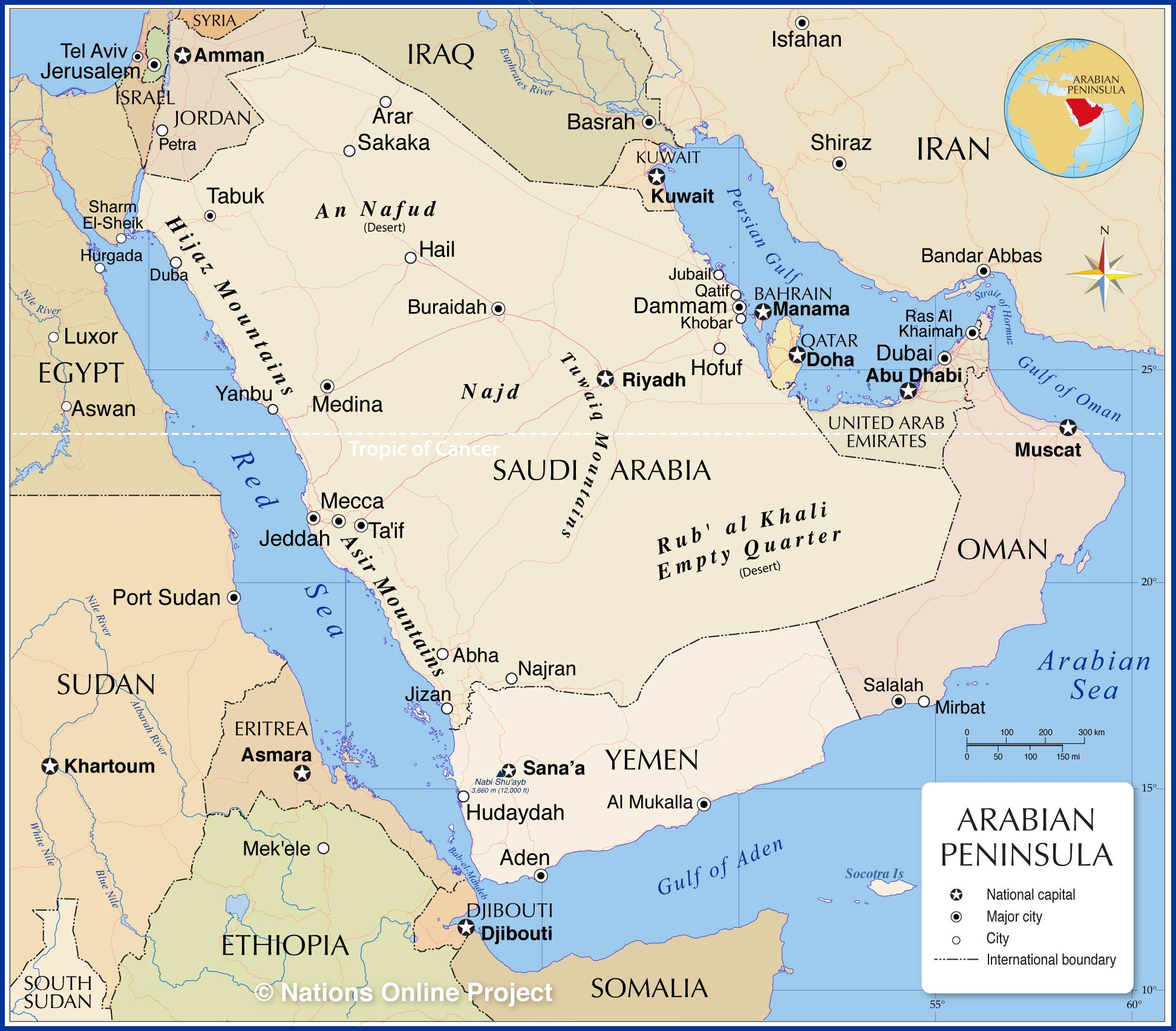
Abraham’s sons were Ishmael and Isaac from different wives. According to the Koran, Ishmael went to the place where Mecca was to rise. His descendants, flourishing in Arabia, become Muslims; whereas those of Isaac, who remained in Palestine, were Hebrews and became Jews.

We can begin with an anomaly. Of all the non-Western religions, Islam stands closest to the West—closest geographically, and also closest ideologically; for religiously it stands in the Abrahamic family of religions, while philosophically it builds on the Greeks. Yet despite this mental and spatial proximity, Islam is the most difficult religion for the West to understand. “No part of the world,” an American columnist has written, “is more hopelessly and systematically and stubbornly misunderstood by us than that complex of religion, culture and geography known as Islam.”

Of all the non-Western religions, Islam stands closest to the West. Religiously it stands in the Abrahamic family of religions; but it is most stubbornly misunderstood by the West.

This is ironic, but the irony is easily explained. Proximity is no guarantee of concord—tragically, more homicides occur within families than anywhere else. Islam and the West are neighbors. Common borders have given rise to border disputes, which, beginning with raids and counter-raids, have escalated into vendettas, blood feuds, and all-out war. There is a happier side; in times and places Christians, Muslims, and Jews have lived together harmoniously—one thinks of Moorish Spain. But for a good part of the last fourteen hundred years, Islam and Europe have been at war, and people seldom have a fair picture of their enemies. Islam is going to be an interesting religion for this book to negotiate. 

Islam and the West are neighbors. Common borders have given rise to border disputes, which, beginning with raids and counter-raids, have escalated into vendettas, blood feuds, and all-out war. 

Mistakes begin with its very name. Until recently it was called Muhammadanism by the West, which is not only inaccurate but offensive. It is inaccurate, Muslims say, because Muhammad didn’t create this religion; God did—Muhammad was merely God’s mouthpiece. Beyond this, the title is offensive because it conveys the impression that Islam focuses on a man rather than on God. To name Christianity after Christ is appropriate, they say, for Christians believe that Christ was God. But to call Islam Muhammadanism is like calling Christianity St. Paulism. The proper name of this religion is Islam. Derived from the root s-l-m, which means primarily “peace” but in a secondary sense “surrender,” its full connotation is “the peace that comes when one’s life is surrendered to God.” This makes Islam—together with Buddhism, from budh, awakening—one of the two religions that is named after the attribute it seeks to cultivate; in Islam’s case, life’s total surrender to God. Those who adhere to Islam are known as Muslims.

The proper name of this religion is Islam. Derived from the root s-l-m, which means primarily “peace” but in a secondary sense “surrender,” its full connotation is “the peace that comes when one’s life is surrendered to God.” 

.

Background

“Around the name of the Arabs,” writes Philip Hitti, “gleams that halo which belongs to the world-conquerors. Within a century after their rise this people became the masters of an empire extending from the shores of the Atlantic Ocean to the confines of China, an empire greater than that of Rome at its zenith. In this period of unprecedented expansion, they assimilated to their creed, speech, and even physical type, more aliens than any stock before or since, not excepting the Hellenic, the Roman, the Anglo-Saxon, or the Russian.”

Within a century after their rise the Arabs, became the masters of an empire extending from the shores of the Atlantic Ocean to the confines of China, an empire greater than that of Rome at its zenith.

Central in this Arab rise to greatness was their religion, Islam. If we ask how it came into being, the outsider’s answer points to socio-religious currents that were playing over Arabia in Muhammad’s day and uses them to explain what happened. The Muslims’ answer is different. Islam begins not with Muhammad in sixth-century Arabia, they say, but with God. “In the beginning God…” the book of Genesis tells us. The Koran agrees. It differs only in using the word Allah. Allah is formed by joining the definite article al (meaning “the”) with Ilah (God). Literally, Allah means “the God.” Not a god, for there is only one. The God. When the masculine plural ending im is dropped from the Hebrew word for God, Elohim, the two words sound much alike. 

Central in this Arab rise to greatness was their religion, Islam. Islam begins not with Muhammad in sixth-century Arabia, they say, but with God.

God created the world, and after it human beings. The name of the first man was Adam. The descendants of Adam led to Noah, who had a son named Shem. This is where the word Semite comes from; literally a Semite is a descendant of Shem. Like the Jews, the Arabs consider themselves a Semitic people. The descendants of Shem led to Abraham, and so far we are still in the tradition of Judaism and Christianity. Indeed, it was the submission of Abraham in his supreme test—would he be willing to sacrifice his son?—that appears to have provided Islam with its name. Abraham married Sarah. Sarah had no son, so Abraham, wanting to continue his line, took Hagar for his second wife. Hagar bore him a son, Ishmael, whereupon Sarah conceived and likewise had a son, named Isaac. Sarah then demanded that Abraham banish Ishmael and Hagar from the tribe. Here we come to the first divergence between the koranic and biblical accounts. According to the Koran, Ishmael went to the place where Mecca was to rise. His descendants, flourishing in Arabia, become Muslims; whereas those of Isaac, who remained in Palestine, were Hebrews and became Jews.

Abraham’s sons were Ishmael and Isaac from different wives. According to the Koran, Ishmael went to the place where Mecca was to rise. His descendants, flourishing in Arabia, become Muslims; whereas those of Isaac, who remained in Palestine, were Hebrews and became Jews.

.

Islam

Reference: The World’s Religions

  1. Background
  2. The Seal of the Prophets
  3. The Migration That Led to Victory
  4. The Standing Miracle
  5. Basic Theological Concepts
  6. The Five Pillars
  7. Social Teachings
  8. Sufism
  9. Whither Islam?
  10. Suggestions for Further Reading

.