Author Archives: vinaire

I am originally from India. I am settled in United States since 1969. I love mathematics, philosophy and clarity in thinking.

ISLAM: Whither Islam?

Reference: Islam

[NOTE: In color are Vinaire’s comments.]

There are indications that Islam is emerging from several centuries of stagnation, which colonization no doubt exacerbated. However, it faces enormous problems in the modern pluralistic society.

For long periods since Muhammad called his people to God’s oneness, Muslims have wandered from the spirit of the Prophet. Their leaders are the first to admit that practice has often been replaced by mere profession, and that fervor has waned.

Muslims have often wandered from the spirit of the Prophet into mechanical observance of their religion.

Viewed as a whole, however, Islam unrolls before us one of the most remarkable panoramas in all history. We have spoken of its early greatness. Had we pursued its history there would have been sections on the Muslim empire, which, a century after Muhammad’s death, stretched from the bay of Biscay to the Indus and the frontiers of China, from the Aral Sea to the upper Nile. More important would have been the sections describing the spread of Muslim ideas: the development of a fabulous culture, the rise of literature, science, medicine, art, and architecture; the glory of Damascus, Baghdad, and Egypt, and the splendor of Spain under the Moors. There would have been the story of how, during Europe’s Dark Ages, Muslim philosophers and scientists kept the lamp of learning bright, ready to spark the Western mind when it roused from its long sleep. 

Viewed as a whole, however, Islam unrolls before us one of the most remarkable panoramas in all history. 

Nor would the story have been entirely confined to the past, for there are indications that Islam is emerging from several centuries of stagnation, which colonization no doubt exacerbated. It faces enormous problems: how to distinguish industrial modernization (which on balance it welcomes), from Westernization (which on balance it doesn’t); how to realize the unity that is latent in Islam when the forces of nationalism work powerfully against it; how to hold on to Truth in a pluralistic, relativizing age. But having thrown off the colonial yoke, Islam is stirring with some of the vigor of its former youth. From Morocco across from Gibraltar on the Atlantic, eastward across North Africa, through the Indian subcontinent (which includes Pakistan and Bangladesh), on to the near-tip of Indonesia, Islam is a vital force in the contemporary world. Numbering in the order of 900 million adherents in a global population of 5 billion, one person out of every five or six belongs today to this religion which guides human thought and practice in unparalleled detail. And the proportion is increasing. Read these words at any hour of day or night and somewhere from a minaret (or now by radio) a muezzin will be calling the faithful to prayer, announcing:

God is most great.
God is most great.
I testify that there is no god but God.
I testify that Muhammad is the Prophet of God.
Arise and pray;
God is most great.
God is most great.
There is no god but God.

There are indications that Islam is emerging from several centuries of stagnation, which colonization no doubt exacerbated. However, it faces enormous problems in the modern pluralistic society.

.

ISLAM: Sufism

Reference: Islam

[NOTE: In color are Vinaire’s comments.]

Sufism was a movement within Islam to promote the inner message of Islam. Sufis donned coarse woolen garments to protest the silks and satins (the worldliness) of sultans and califs. Sufis have their rights, but—if we may venture the verdict of Islam as a whole—so have ordinary believers whose faith in unambiguous principles, fully adequate for salvation, could be undermined by teachings that seem to tamper with them. 

We have been treating Islam as if it were monolithic, which of course it is not. Like every religious tradition it divides. Its main historical division is between the mainstream Sunnis (“Traditionalists” [from sunnah, tradition] who comprise 87 percent of all Muslims) and the Shi’ites (literally “partisans” of Ali, Muhammad’s son-in-law, whom Shi’ites believe should have directly succeeded Muhammad but who was thrice passed over and who, when he was finally appointed leader of the Muslims, was assassinated). Geographically, the Shi’ites cluster in and around Iraq and Iran, while the Sunnis flank them to the West (the Middle East, Turkey, and Africa) and to the East (through the Indian subcontinent, which includes Pakistan and Bangladesh, on through Malaysia, and into Indonesia, where alone there are more Muslims than in the entire Arab world). We shall pass over this historical split, which turns on an in-house dispute, and take up instead a division that has universal overtones. It is the vertical division between the mystics of Islam, called Sufis, and the remaining majority of the faith, who are equally good Muslims but are not mystics. 

Islam is split into Shi’ites and Sunnis on the basis of politics. However, it also divided between the Sufis and the non-mystic Islam on the basis of its universality as a religion.

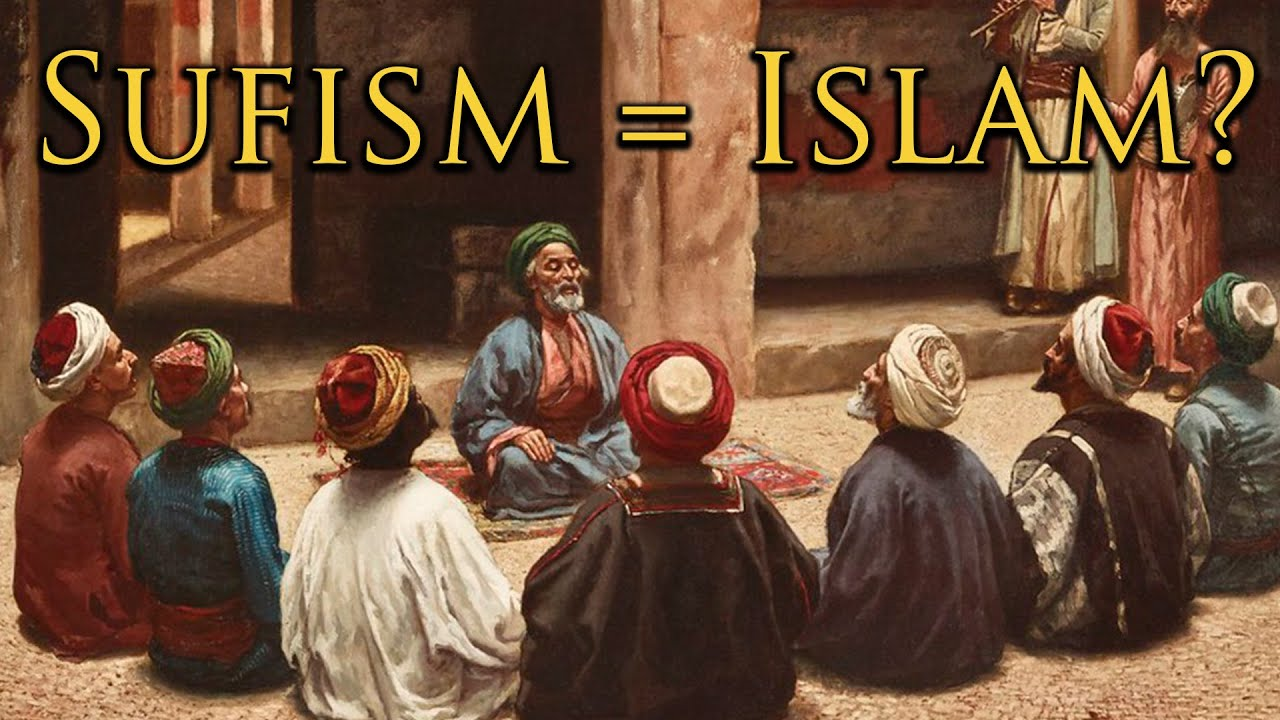
The root meaning of the word Sufi is wool, suf. A century or two after Muhammad’s death, those within the Islamic community who bore the inner message of Islam came to be known as Sufis. Many of them donned coarse woolen garments to protest the silks and satins of sultans and califs. Alarmed by the worldliness they saw overtaking Islam, they sought to purify and spiritualize it from within. They wanted to recover its liberty and love, and to restore to it its deeper, mystical tone. Externals should yield to internals, matter to meaning, outward symbol to inner reality. “Love the pitcher less,” they cried, “and the water more.” 

Sufism was a movement within Islam to promote the inner message of Islam. Sufis donned coarse woolen garments to protest the silks and satins (the worldliness) of sultans and califs. 

Sufis saw this distinction between the inner and the outer, the pitcher and what it contains, as deriving from the Koran itself, where Allah presents himself as both “the Outward [al-zahir] and the Inward [al-batin]” (57:3). Exoteric Muslims—we shall call them such because they were satisfied with the explicit meanings of the Koran’s teachings—passed over this distinction, but the Sufis (esoteric Muslims) found it important. Contemplation of God occupies a significant place in every Muslim’s life, but for most it must compete, pretty much on a par, with life’s other demands. When we add to this that life is demanding—people tend to be busy—it stands to reason that not many Muslims will have the time, if the inclination, to do more than keep up with the Divine Law that orders their lives. Their fidelity is not in vain; in the end their reward will be as great as the Sufis’. But the Sufis were impatient for their reward, if we may put the matter thus. They wanted to encounter God directly in this very lifetime. Now. 

Contemplation of God occupies a significant place in every Muslim’s life, but for most it must compete, pretty much on a par, with life’s other demands. But the Sufis were impatient. They wanted to encounter God directly in this very lifetime. 

This called for special methods, and to develop and practice them the Sufis gathered around spiritual masters (shaikhs), forming circles that, from the twelfth century onward, crystallized into Sufi orders (tariqahs). The word for the members of these orders is fakir—pronounced fakir; literally poor, but with the connotation of one who is “poor in spirit.” In some ways, however, they constituted a spiritual elite, aspiring higher than other Muslims, and willing to assume the heavier disciplines their extravagant goals required. We can liken their tariqahs to the contemplative orders of Roman Catholicism, with the difference that Sufis generally marry and are not cloistered. They engage in normal occupations and repair to their gathering places (zawiyahs, Arabic; khanaqahs, Persian) to sing, dance, pray, recite their rosaries in concert, and listen to the discourses of their Master, all to the end of reaching God directly. Someone who was ignorant of fire, they observe, could come to know it by degrees: first by hearing of it, then by seeing it, and finally by being burned by its heat. The Sufis wanted to be “burned” by God. 

The Sufis gathered around spiritual masters (shaikhs), forming circles that, from the twelfth century onward, crystallized into Sufi orders (tariqahs). Sufis marry and engage in normal occupations. They repair to their gathering places to recite their rosaries in concert to the end of reaching God directly.

This required drawing close to him, and they developed three overlapping but distinguishable routes. We can call these the mysticisms of love, of ecstasy, and of intuition. To begin with the first of these, Sufi love poetry is world famous. A remarkable eighth-century woman saint, Rabi’a, discovered in her solitary vigils, often lasting all night, that God’s love was at the core of the universe; not to steep oneself in that love and reflect it to others was to forfeit life’s supreme beatitude. Because love is never more evident than when its object is absent, that being the time when the beloved’s importance cannot be overlooked, Persian poets in particular dwelt on the pangs of separation to deepen their love of God and thereby draw close to him. Jalal ad-Din Rumi used the plaintive sound of the reed flute to typify this theme.

Sufism developed the mysticisms of love, of ecstasy, and of intuition. A well-known exponent of sufism is Jalal ad-Din Rumi who is famous for his poetry.

Listen to the story told by the reed, of being seextractVerseted.
“Since I was cut from the reedbed, I have made this crying sound.
Anyone separated from someone he loves understands what I say, anyone
pulled from a source longs to go back.”

The lament of the flute, torn from its riverbank and symbol therefore for the soul’s severance from the divine, threw the Sufis into states of agitation and bewilderment. Nothing created could assuage those states; but its beloved, Allah, is so sublime, so dissimilar, that human love for him is like the nightingale’s for the rose, or the moth’s for the flame. Even so, Rumi assures us, that human love is returned:

Never does the lover seek without being sought by his beloved.
When the lightning of love has shot into this heart, know that there is
love in that heart….
Mark well the text: “He loves them and they love Him.” (Koran, 5:59).

The Sufi poetry dwelt on the soul’s severance from the divine, which threw the soul into states of agitation and bewilderment. The pangs of separation deepened its love of God and thereby drew it close to Allah. 

But the full truth has still not been grasped, for Allah loves his creatures more than they love him. “God saith: Whoso seeketh to approach Me one span, I approach him one cubit; and whoso seeketh to approach Me one cubit, I approach him two fathoms; and whoever walks towards Me, I run towards him.” Rabi’a celebrates the eventual meeting of the two souls, one finite, the other Infinite, in her famous night prayer:

My God and my Lord: eyes are at rest, the stars are setting, hushed are the movements of birds in their nests, of monsters in the deep. And you are the Just who knows no change, the Equity that does not swerve, the Everlasting that never passes away. The doors of kings are locked and guarded by their henchmen, but your door is open to those who call upon you. My Lord, each lover is now alone with his beloved. And I am alone with you.

But the full truth has still not been grasped, for Allah loves his creatures more than they love him.

We are calling the second Sufi approach to the divine presence ecstatic (literally, “to stand outside oneself”) because it turns on experiences that differ, not just in degree but in kind, from usual ones. The presiding metaphor for ecstatic Sufis was the Prophet’s Night Journey through the seven heavens into the Divine Presence. What he perceived in those heavens no one can say, but we can be sure the visions were extraordinary—increasingly so with each level of ascent. Ecstatic Sufis do not claim that they come to see what Muhammad saw that night, but they move in his direction. At times the content of what they are experiencing engrosses them so completely that their states become trancelike because of their total abstraction from self. No attention remains for who they are, where they are, or what is happening to them. In psychological parlance they are “dissociated” from themselves, losing consciousness of the world as it is normally perceived. Journeying to meet such adepts, pilgrims reported finding themselves ignored—not out of discourtesy, but because literally they were not seen. Deliberate inducement of such states required practice; a pilgrim who sought out a revered ecstatic named Nuri reported finding him in such an intense state of concentration that not a hair of his body moved. “When I later asked him, ‘From whom did you learn this deep concentration?’ he replied, ‘From a cat watching by a mouse hole. But its concentration is much more intense than mine.’” Nevertheless, when the altered state arrives, it feels like a gift rather than an acquisition. The phrase that mystical theology uses, “infused grace,” feels right here; for Sufis report that as their consciousness begins to change, it feels as if their wills were placed in abeyance and a superior will takes over. 

Ecstatic (literally, “to stand outside oneself”) is the second Sufi approach to the divine presence. Sufis report that as their consciousness begins to change, it feels as if their wills were placed in abeyance and a superior will takes over. 

Sufis honor their ecstatics, but in calling them “drunken” they serve notice that they must bring the substance of their visions back with them when they find themselves “sober” again. In plain language, transcendence must be made immanent; the God who is encountered apart from the world must also be encountered within it. This latter does not require ecstasy as its preliminary, and the direct route to cultivating it carries us to the third Sufi approach: the way of intuitive discernment. 

Sufis honor their ecstatics, but in calling them “drunken” they serve notice that they must bring the substance of their visions back with them when they find themselves “sober” again. 

Like the other two methods this one brings knowledge, but of a distinct sort. Love mysticism yields “heart knowledge,” and ecstasy “visual or visionary knowledge,” because extraterrestrial realities are seen; but intuitive mysticism brings “mental knowledge,” which Sufis call ma’rifah, obtained through an organ of discernment called “the eye of the heart.” Because the realities attained through ma’rifah are immaterial, the eye of the heart is immaterial as well. It does not compete with the physical eye whose objects, the world’s normal objects, remain fully in view. What it does is clothe those objects in celestial light. Or to reverse the metaphor: It recognizes the world’s objects as garments that God dons to create a world. These garments become progressively more transparent as the eye of the heart gains strength. It would be false to say that the world is God—that would be pantheism. But to the eye of the heart, the world is God-in-disguise, God veiled.

Love mysticism yields “heart knowledge,” and ecstasy “visual or visionary knowledge”; but intuitive mysticism brings “mental knowledge,” which Sufis call ma’rifah, obtained through an organ of discernment called “the eye of the heart.”

The principal method the Sufis employed for penetrating the disguise is symbolism. In using visible objects to speak of invisible things, symbolism is the language of religion generally; it is to religion what numbers are to science. Mystics, however, employ it to exceptional degree; for instead of stopping with the first spiritual object a symbol points to, they use it as stepping stone to a more exalted object. This led al-Ghazali to define symbolism as “the science of the relation between multiple levels of reality.” Every verse of the Koran, the Sufis say, conceals a minimum of seven hidden significations, and the number can sometimes reach to seventy. 

In using visible objects to speak of invisible things, symbolism is the language of religion generally; it is to religion what numbers are to science. Mystics, however, employ it to exceptional degree.

To illustrate this point: For all Muslims removing one’s shoes before stepping into a mosque is a mark of reverence; it signifies checking the clamoring world at the door and not admitting it into sacred precincts. The Sufi accepts this symbolism fully, but goes on to see in the act the additional meaning of removing everything that separates the soul from God. Or the act of asking forgiveness. All Muslims pray to be forgiven for specific transgressions, but when the Sufi pronounces the formula astaghfiru’llah, I ask forgiveness of God, he or she reads into the petition an added request: to be forgiven for his or her separate existence. This sounds strange, and indeed, exoteric Muslims find it incomprehensible. But the Sufis see it as an extension of Rabi’a’s teaching that “Your existence is a sin with which no other can be compared.” Because ex-istence is a standing out from something, which in this case is God, existence involves separation. 

All Muslims pray to be forgiven for specific transgressions, but when the Sufi pronounces the formula astaghfiru’llah, I ask forgiveness of God, he or she reads into the petition an added request: to be forgiven for his or her separate existence.

To avoid it Sufis developed their doctrine of fana—extinction—as the logical term of their quest. Not that their consciousness was to be extinguished. It was their self-consciousness—their consciousness of themselves as separate selves replete with their private personal agendas—that was to be ended. If the ending was complete, they argued, when they looked inside the dry shells of their now-emptied selves they would find nothing but God. A Christian mystic put this point by writing:

God, whose boundless love and joy
Are present everywhere;
He cannot come to visit you
Unless you are not there. (Angelus Silesius)

Al-Hallaj’s version was: “I saw my Lord with the eye of the Heart. I said: ‘Who are you?’ He answered: ‘You.’”

Not that their consciousness was to be extinguished. It was their self-consciousness—their consciousness of themselves as separate selves replete with their private personal agendas—that was to be ended. 

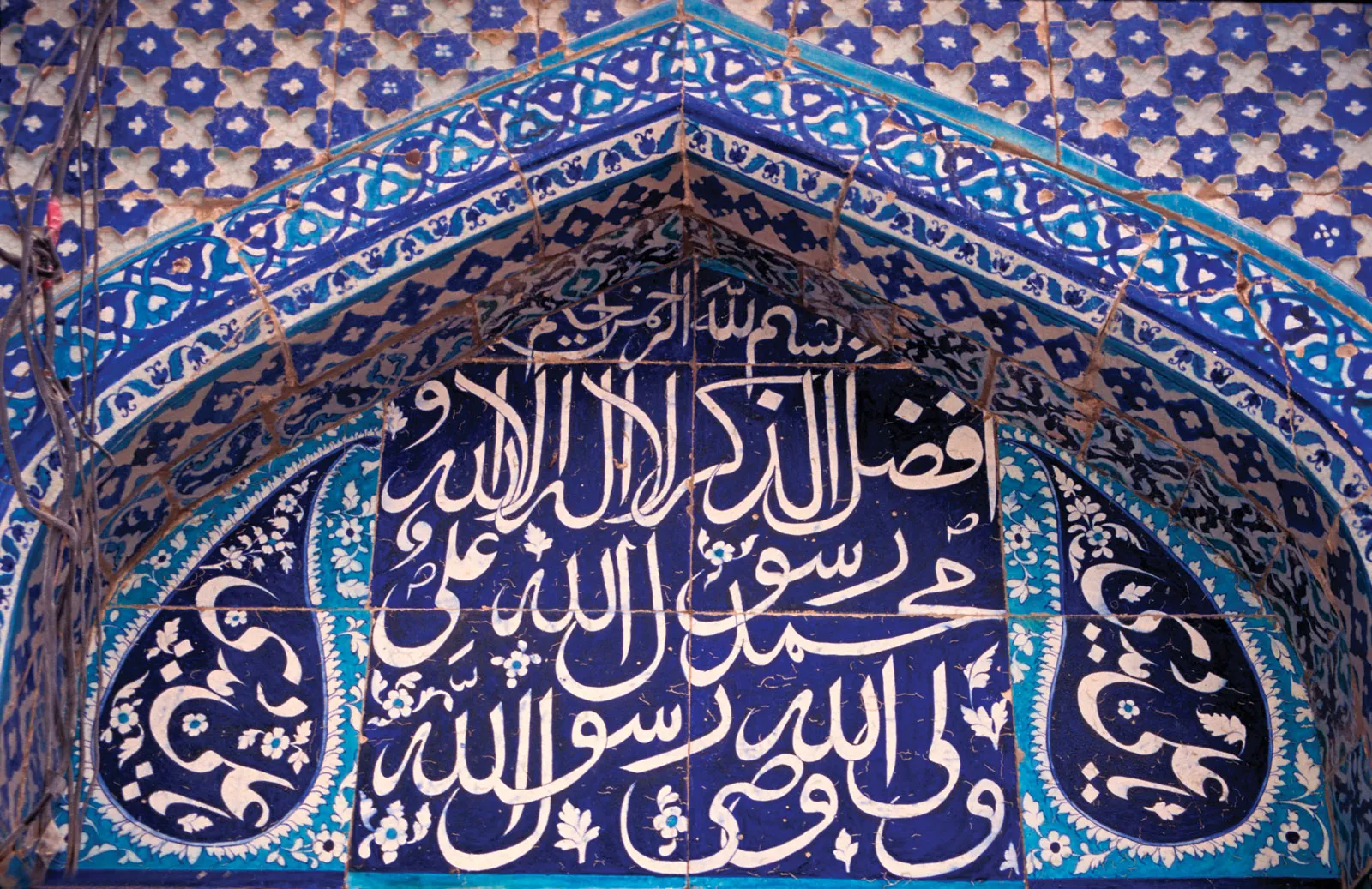
As a final example of the Sufis’ extravagant use of symbolism, we can note the way they tightened the creedal assertion “There is no god but God” to read, “There is nothing but God.” To exoteric Muslims this again sounded silly, if not blasphemous: silly because there are obviously lots of things—tables and chairs—that are not God; blasphemous because the mystic reading seemed to deny God as Creator. But the Sufis’ intent was to challenge the independence that people normally ascribe to things. Monotheism to them meant more than the theoretical point that there are not two Gods; that they considered obvious. Picking up on the existential meaning of theism—God is that to which we give (or should give) ourselves—they agreed that the initial meaning of “no god but God” is that we should give ourselves to nothing but God. But we do not catch the full significance of the phrase, they argued, until we see that we do give ourselves to other things when we let them occupy us as objects in their own right; objects that have the power to interest or repel us by being simply what they are. To think of light as caused by electricity—by electricity only and sufficiently, without asking where electricity comes from—is in principle to commit shirk; for because only God is self-sufficient, to consider other things as such is to liken them to God and thereby ascribe to him rivals. 

We do give ourselves to other things when we let them occupy us as objects in their own right; objects that have the power to interest or repel us by being simply what they are. Such things have to be manifestation of God.

Symbolism, though powerful, works somewhat abstractly, so the Sufis supplement it with dhikr (to remember), the practice of remembering Allah through repeating his Name. “There is a means of polishing all things whereby rust may be removed,” a hadith asserts, adding: “That which polishes the heart is the invocation of Allah.” Remembrance of God is at the same time a forgetting of self, so Sufis consider the repetition of Allah’s Name the best way of directing their attention Godward. Whether they utter God’s Name alone or with others, silently or aloud, accenting its first syllable sharply or prolonging its second syllable as long as breath allows, they try to fill every free moment of the day with its music. Eventually, this practice kneads the syllables into the subconscious mind, from which it bubbles up with the spontaneity of a birdsong. 

Remembrance of God is at the same time a forgetting of self, so Sufis consider the repetition of Allah’s Name the best way of directing their attention Godward. 

The foregoing paragraphs sketch what Sufism is at heart, but they do not explain why this section opened by associating it with a division within Islam. The answer is that Muslims are of two minds about Sufism. This is partly because Sufism is itself a mixed bag. By the principle that the higher attracts the lower, Sufi orders have at times attracted riffraff who are Sufis in little more than name. For example, certain mendicant orders of Sufism have used poverty as a discipline, but it is only a step from authentic Sufis of this stripe to beggars who do no more than claim to be Sufis. Politics too has at times intruded. Most recently, groups have arisen in the West that call themselves Sufis, while professing no allegiance whatsoever to Islamic orthodoxy. 

By the principle that the higher attracts the lower, Sufi orders have at times attracted riffraff who are Sufis in little more than name.

It is not surprising that these aberrations raise eyebrows, but even authentic Sufism (as we have tried to describe it) is controversial. Why? It is because Sufis take certain liberties that exoteric Muslims cannot in conscience condone. Having seen the sky through the skylight of Islamic orthodoxy, Sufis become persuaded that there is more sky than the aperture allows. When Rumi asserted, “I am neither Muslim nor Christian, Jew nor Zoroastrian; I am neither of the earth nor of the heavens, I am neither body nor soul,” we can understand the exoterics’ fear that orthodoxy was being strained beyond permissible limits. Ibn ‘Arabi’s declaration was even more unsettling:

My heart has opened unto every form. It is a pasture for gazelles, a cloister for Christian monks, a temple for idols, the Ka’ba of the pilgrim, the tablets of the Torah and the book of the Koran. I practice the religion of Love; in whatsoever directions its caravans advance, the religion of Love shall be my religion and my faith.

As for Al-Hallaj’s assertion that he was God, no explanation from the Sufis to the effect that he was referring to the divine Essence that was within him could keep exoterics from hearing this as outright blasphemy. 

Even authentic Sufism is controversial because Sufis take certain liberties that exoteric Muslims cannot in conscience condone. 

Mysticism breaks through the boundaries that protect the faith of the typical believer. In doing so it moves into an unconfined region that, fulfilling though it is for some, carries dangers for those who are unqualified for its teachings. Without their literal meaning being denied, dogmas and prescriptions that the ordinary believer sees as absolute are interpreted allegorically, or used as points of reference that may eventually be transcended. Particularly shocking to some is the fact that the Sufi often claims, if only by implication, an authority derived directly from God and a knowledge given from above rather than learned in the schools. 

Mysticism breaks through the boundaries that protect the faith of the typical believer. In doing so it moves into an unconfined region that, fulfilling though it is for some, carries dangers for those who are unqualified for its teachings. 

Sufis have their rights, but—if we may venture the verdict of Islam as a whole—so have ordinary believers whose faith in unambiguous principles, fully adequate for salvation, could be undermined by teachings that seem to tamper with them. For this reason many spiritual Masters have been discreet in their teachings, reserving parts of their doctrine for those who are suited to receive them. This is also why the exoteric authorities have regarded Sufism with understandable suspicion. Control has been exercised, partly by public opinion and partly by means of a kind of dynamic tension, maintained through the centuries, between the exoteric religious authorities on the one hand and Sufi shaikhs on the other. An undercurrent of opposition to Sufism within sections of the Islamic community has served as a necessary curb on the mystics, without this undercurrent having been strong enough to prevent those who have had a genuine vocation for a Sufi path from following their destiny. 

Sufis have their rights, but—if we may venture the verdict of Islam as a whole—so have ordinary believers whose faith in unambiguous principles, fully adequate for salvation, could be undermined by teachings that seem to tamper with them. 

On the whole, esoterism and exoterism have achieved a healthy balance in Islam, but in this section we shall let the exoterics have the last word. One of the teaching devices for which they are famous has not yet been mentioned; it is the Sufi tale. This one, “The Tale of the Sands,” relates to their doctrine of fana, the transcending, in God, of the finite self. 

A stream, from its source in far-off mountains, passing through every kind and description of countryside, at last reached the sands of the desert. Just as it had crossed every other barrier, the stream tried to cross this one, but it found that as fast as it ran into the sand, its waters disappeared. 

It was convinced, however, that its destiny was to cross this desert, and yet there was no way. Now a hidden voice, coming from the desert itself, whispered: “The Wind crosses the desert, and so can the stream.” 

The stream objected that it was dashing itself against the sand, and only getting absorbed: that the wind could fly, and this was why it could cross a desert. 

“By hurtling in your own accustomed way you cannot get across. You will either disappear or become a marsh. You must allow the wind to carry you over, to your destination.” 

But how could this happen? “By allowing yourself to be absorbed in the wind.” 

This idea was not acceptable to the stream. After all, it had never been absorbed before. It did not want to lose its individuality.

And, once having lost it, how was one to know that it could ever be regained? 

“The wind,” said the sand, “performs this function. It takes up water, carries it over the desert, and then lets it fall again. Falling as rain, the water again becomes a river.” 

“How can I know that this is true?” “It is so, and if you do not believe it, you cannot become more than a quagmire, and even that could take many, many years. And it certainly is not the same as a stream.” 

“But can I not remain the same stream that I am today?” 

“You cannot in either case remain so,” the whisper said. “Your essential part is carried away and forms a stream again. You are called what you are even today because you do not know which part of you is the essential one.” 

When it heard this, certain echoes began to arise in the thoughts of the stream. Dimly it remembered a state in which it—or some part of it?—had been held in the arms of a wind. It also remembered—or did it?—that this was the real thing, not necessarily the obvious thing, to do. 

And the stream raised its vapor into the welcoming arms of the wind, which gently and easily bore it upwards and along, letting it fall softly as soon as they reached the roof of a mountain, many, many, miles away. And because it had its doubts, the stream was able to remember and record more strongly in its mind the details of the experience. It reflected, “Yes, now I have learned my true identity.” 

The stream was learning. But the sands whispered: “We know, because we see it happen day after day: and because we, the sands, extend from the riverside all the way to the mountain.” 

And that is why it is said that the way in which the stream of Life is to continue on its journey is written in the Sands. 

On the whole, esoterism and exoterism have achieved a healthy balance in Islam. This one, “The Tale of the Sands,” relates to their doctrine of fana, the transcending, in God, of the finite self. 

.

ISLAM: Social Teachings

Reference: Islam

[NOTE: In color are Vinaire’s comments.]

The distinctive thing about Islam is not its ideal but the detailed prescriptions it sets forth for achieving it. In addition to being a spiritual guide, Islam is a legal compendium. Islam joins faith to politics, religion to society, inseparably. Westerners who define religion in terms of personal experience would never be understood by Muslims.

“O men! listen to my words and take them to heart! Know ye that every Muslim is a brother to every other Muslim, and that you are now one brotherhood.” These notable words, spoken by the Prophet during his “farewell pilgrimage” to Mecca shortly before his death, epitomize one of Islam’s loftiest ideals and strongest emphases. The intrusion of nationalism in the last two centuries has played havoc with this ideal on the political level, but on the communal level it has remained discernibly intact. “There is something in the religious culture of Islam which inspired, in even the humblest peasant or peddler, a dignity and a courtesy toward others never exceeded and rarely equalled in other civilizations,” a leading Islamicist has written. 

A sense of brotherhood epitomize one of Islam’s loftiest ideals and strongest emphases, that has remained discernibly intact on the communal level if not political.

Looking at the difference between pre-and post-Islamic Arabia, we are forced to ask whether history has ever witnessed a comparable moral advance among so many people in so short a time. Before Muhammad there was virtually no restraint on intertribal violence. Glaring inequities in wealth and possession were accepted as the natural order of things. Women were regarded more as possessions than as human beings. Rather than say that a man could marry an unlimited number of wives, it would be more accurate to say that his relations with women were so casual that beyond the first wife or two they scarcely approximated marriage at all. Infanticide was common, especially of girls. Drunkenness and large-scale gambling have already been remarked upon. Within a half-century there was effected a remarkable change in the moral climate on all of these counts. 

Looking at the difference between pre-and post-Islamic Arabia, we are forced to ask whether history has ever witnessed a comparable moral advance among so many people in so short a time.

Something that helped it to accomplish this near-miracle is a feature of Islam that we have already alluded to, namely its explicitness. Its basic objective in interpersonal relations, Muslims will say, is precisely that of Jesus and the other prophets: brotherly and sisterly love. The distinctive thing about Islam is not its ideal but the detailed prescriptions it sets forth for achieving it. We have already encountered its theory on this point. If Jesus had had a longer career, or if the Jews had not been so socially powerless at the time, Jesus might have systematized his teachings more. As it was, his work “was left unfinished. It was reserved for another Teacher to systematize the laws of morality.” The Koran is this later teacher. In addition to being a spiritual guide, it is a legal compendium. When its innumerable prescriptions are supplemented by the only slightly less authoritative hadith—traditions based on what Muhammad did or said on his own initiative—we are not surprised to find Islam the most socially explicit of the Semitic religions. Westerners who define religion in terms of personal experience would never be understood by Muslims, whose religion calls them to establish a specific kind of social order. Islam joins faith to politics, religion to society, inseparably. 

The distinctive thing about Islam is not its ideal but the detailed prescriptions it sets forth for achieving it. In addition to being a spiritual guide, Islam is a legal compendium. Islam joins faith to politics, religion to society, inseparably. Westerners who define religion in terms of personal experience would never be understood by Muslims.

Islamic law is of enormous scope. It will be enough for our purposes if we summarize its provisions in four areas of collective life. 

1. Economics. Islam is acutely aware of the physical foundations of life. Until bodily needs are met, higher concerns cannot flower. When one of Muhammad’s followers ran up to him crying, “My Mother is dead; what is the best alms I can give away for the good of her soul?” the Prophet, thinking of the heat of the desert, answered instantly, “Water! Dig a well for her, and give water to the thirsty.” 

Islam is acutely aware of the physical foundations of life. Until bodily needs are met, higher concerns cannot flower. 

Just as the health of an organism requires that nourishment be fed to its every segment, so too a society’s health requires that material goods be widely and appropriately distributed. These are the basic principles of Islamic economics, and nowhere do Islam’s democratic impulses speak with greater force and clarity. The Koran, supplemented by hadith, propounded measures that broke the barriers of economic caste and enormously reduced the injustices of special interest groups. 

The Koran, supplemented by hadith, propounded measures that broke the barriers of economic caste and enormously reduced the injustices of special interest groups. 

The model that animates Muslim economics is the body’s circulatory system. Health requires that blood flow freely and vigorously; sluggishness can bring on illness, blood clots occasion death. It is not different with the body politic, in which wealth takes the place of blood as the life-giving substance. As long as this analogy is honored and laws are in place to insure that wealth is in vigorous circulation, Islam does not object to the profit motive, economic competition, or entrepreneurial ventures—the more imaginative the latter, the better. So freely are these allowed that some have gone so far as to characterize the Koran as “a businessman’s book.” It does not discourage people from working harder than their neighbors, nor object to such people being rewarded with larger returns. It simply insists that acquisitiveness and competition be balanced by the fair play that “keeps arteries open,” and by compassion that is strong enough to pump life-giving blood—material resources—into the circulatory system’s smallest capillaries. These “capillaries” are fed by the Poor Due, which (as has been noted) stipulates that annually a portion of one’s holdings be distributed to the poor. 

The model that animates Muslim economics is the body’s circulatory system. Just as the health of an organism requires that nourishment be fed to its every segment, so too a society’s health requires that material goods be widely and appropriately distributed.

As for the way to prevent “clotting,” the Koran went after the severest economic curse of the day—primogeniture—and flatly outlawed it. By restricting inheritance to the oldest son, this institution had concentrated wealth in a limited number of enormous estates. In banning the practice, the Koran sees to it that inheritance is shared by all heirs, daughters as well as sons. F. S. C. Northrop describes the settlement of a Muslim’s estate that he chanced to witness. The application of Islamic law that afternoon resulted in the division of some $53,000 among no less than seventy heirs. 

In banning the practice of primogeniture, the Koran sees to it that inheritance is shared by all heirs, daughters as well as sons.

One verse in the Koran prohibits the taking of interest. At the time this was not only humane but eminently just, for loans were used then to tide the unfortunate over in times of disaster. With the rise of capitalism, however, money has taken on a new meaning. It now functions importantly as venture capital, and in this setting borrowed money multiplies. This benefits the borrower, and it is patently unjust to exclude the lender from his or her gain. The way Muslims have accommodated to this change is by making lenders in some way partners in the venture for which their monies are used. When capitalism is approached in this manner, Muslims find no incompatibility between its central feature, venture capital, and Islam. Capitalism’s excesses—which Muslims consider to be glaringly exhibited in the secular West—are another matter. The equalizing provisos of the Koran would, if duly applied, offset them. 

Koran prohibits the taking of interest when loans are taken to tide the unfortunate over in times of disaster. When money is borrowed as venture capital then lenders are made partners in the venture in some way.

2. The Status of Women. Chiefly because it permits a plurality of wives, the West has accused Islam of degrading women. 

If we approach the question historically, comparing the status of Arabian women before and after Muhammad, the charge is patently false. In the pre-Islamic “days of ignorance,” marriage arrangements were so loose as to be scarcely recognizable. Women were regarded as little more than chattel, to be done with as fathers or husbands pleased. Daughters had no inheritance rights and were often buried alive in their infancy. 

Addressing conditions in which the very birth of a daughter was regarded as a calamity, the koranic reforms improved woman’s status incalculably. They forbade infanticide. They required that daughters be included in inheritance—not equally, it is true, but to half the proportion of sons, which seems just, in view of the fact that unlike sons, daughters would not assume financial responsibility for their households. In her rights as citizen—education, suffrage, and vocation—the Koran leaves open the possibility of woman’s full equality with man, an equality that is being approximated as the customs of Muslim nations become modernized. If in another century women under Islam do not attain the social position of their Western sisters, a position to which the latter have been brought by industrialism and democracy rather than religion, it will then be time, Muslims say, to hold Islam accountable. 

Addressing conditions in which the very birth of a daughter was regarded as a calamity, the koranic reforms improved woman’s status incalculably. In her rights as citizen—education, suffrage, and vocation—the Koran leaves open the possibility of woman’s full equality with man.

It was in the institution of marriage, however, that Islam made its greatest contribution to women. It sanctified marriage, first, by making it the sole lawful locus of the sexual act. To the adherents of a religion in which the punishment for adultery is death by stoning and social dancing is proscribed, Western indictments of Islam as a lascivious religion sound ill-directed.

Islam sanctifies marriage by making it the sole lawful locus of the sexual act. The punishment for adultery is death by stoning.

Second, the Koran requires that a woman give her free consent before she may be wed; not even a sultan may marry without his bride’s express approval. Third, Islam tightened the wedding bond enormously. Though Muhammad did not forbid divorce, he countenanced it only as a last resort. Asserting repeatedly that nothing displeased God more than the disruption of marital vows, he instituted legal provisions to keep marriages intact. At the time of marriage husbands are required to provide the wife with a sum on which both agree and which she retains in its entirety should a divorce ensue. Divorce proceedings call for three distinct and separate periods, in each of which arbiters drawn from both families try to reconcile the two parties. Though such devices are intended to keep divorces to a minimum, wives no less than husbands are permitted to instigate them. 

Koran requires that a woman give her free consent before she may be wed. It instituted legal provisions to keep marriages intact. 

There remains, however, the issue of polygamy, or more precisely polygyny. It is true that the Koran permits a man to have up to four wives simultaneously, but there is a growing consensus that a careful reading of its regulations on the matter point toward monogamy as the ideal. Supporting this view is the Koran’s statement that “if you cannot deal equitably and justly with [more than one wife], you shall marry only one.” Other passages make it clear that “equality” here refers not only to material perquisites but to love and esteem. In physical arrangements each wife must have private quarters, and this in itself is a limiting factor. It is the second proviso, though—equality of love and esteem—that leads jurists to argue that the Koran virtually enjoins monogamy, for it is almost impossible to distribute affection and regard with exact equality. This interpretation has been in the Muslim picture since the third century of the Hijrah, and it is gaining increasing acceptance. To avoid any possible misunderstanding, many Muslims now insert in the marriage deed a clause by which the husband formally renounces his supposed right to a second concurrent spouse, and in point of fact—with the exception of African tribes where polygyny is customary—multiple wives are seldom found in Islam today. 

It is true that the Koran permits a man to have up to four wives simultaneously, but there is a growing consensus that a careful reading of its regulations on the matter point toward monogamy as the ideal.

Nevertheless, the fact remains that the Koran does permit polygyny: “You may marry two, three, or four wives, but not more.” And what are we to make of Muhammad’s own multiple marriages? Muslims take both items as instances of Islam’s versatility in addressing diverse circumstances. There are circumstances in the imperfect condition we know as human existence when polygyny is morally preferable to its alternative. Individually, such a condition might arise if, early in marriage, the wife were to contract paralysis or another disability that would prevent sexual union. Collectively, a war that decimated the male population could provide an example, forcing (as this would) the option between polygyny and depriving a large proportion of women of motherhood and a nuclear family of any sort. Idealists may call for the exercise of heroic continence in such circumstances, but heroism is never a mass option. The actual choice is between a legalized polygyny in which sex is tightly joined to responsibility, and alternatively monogamy, which, being unrealistic, fosters prostitution, where men disclaim responsibility for their sexual partners and their progeny. Pressing their case, Muslims point out that multiple marriages are at least as common in the West; the difference is that they are successive. Is “serial polygyny,” the Western version, self-evidently superior to its coeval form, when women have the right to opt out of the arrangement (through divorce) if they want to? Finally, Muslims, though they have spoken frankly from the first of female sexual fulfillment as a marital right, do not skirt the volatile question of whether the male sexual drive is stronger than the female’s. “Hoggledy higamous, men are polygamous; /Higgledy hogamus, women monogamous,” Dorothy Parker wrote flippantly. If there is biological truth in her limerick, “rather than allowing this sensuality in the male to run riot, obeying nothing but its own impulses, the Law of Islam sets down a polygynous framework that provides a modicum of control. [It] confers a conscious mold on the formless instinct of man in order to keep him within the structures of religion.”

The actual choice is between a legalized polygyny in which sex is tightly joined to responsibility, and alternatively monogamy, which, being unrealistic, fosters prostitution, where men disclaim responsibility for their sexual partners and their progeny.

As for the veiling of women and their seclusion generally, the koranic injunction is restrained. It says only to “Tell your wives and your daughters and the women of the believers to draw their cloaks closely round them (when they go abroad). That will be better, so that they may be recognized and not annoyed” (33:59). Extremes that have evolved from this ruling are matters of local custom and are not religiously binding. 

The veiling of women and their seclusion generally, the koranic injunction is restrained. Extremes that have evolved are matters of local custom and are not religiously binding. 

Somewhere in this section on social issues the subject of penalties should be mentioned, for the impression is widespread that Islamic law imposes ones that are excessively harsh. This is a reasonable place to address this issue, for one of the most frequently cited examples is the punishment for adultery, which repeats the Jewish law of death by stoning—two others that are typically mentioned are severance of the thief’s hand, and flogging for a number of offenses. These stipulations are indeed severe, but (as Muslims see matters) this is to make the point that the injuries that occasion these penalties are likewise severe and will not be tolerated. Once this juridical point is in place, mercy moves in to temper the decrees. “Avert penalties by doubt,” Muhammad told his people, and Islamic jurisprudence legitimizes any stratagem that averts the penalty without outright impugning the Law. Stoning for adultery is made almost impossible by the proviso that four unimpeachable witnesses must have observed the act in detail. “Flogging” can be technically fulfilled by using a light sandal or even the hem of a garment, and thieves may retain their hands if the theft was from genuine need. 

Islamic law imposes penalties that are excessively harsh; but this is to make the point that the injuries that occasion these penalties are likewise severe and will not be tolerated. Islamic jurisprudence legitimizes any stratagem that averts the penalty without outright impugning the Law. 

3. Race Relations. Islam stresses racial equality and “has achieved a remarkable degree of interracial coexistence.” The ultimate test in this area is willingness to intermarry, and Muslims see Abraham as modeling this willingness in marrying Hagar, a black woman whom they regard as his second wife rather than a concubine. Under Elijah Muhammad the Black Muslim movement in America—it has had various names—was militant toward the whites; but when Malcolm X made his 1964 pilgrimage to Mecca, he discovered that racism had no precedent in Islam and could not be accommodated to it. Muslims like to recall that the first muezzin, Bilal, was an Ethiopian who prayed regularly for the conversion of the Koreish—“whites” who were persecuting the early believers, many of whom were black. The advances that Islam continues to make in Africa is not unrelated to this religion’s principled record on this issue. 

Islam stresses racial equality and “has achieved a remarkable degree of interracial coexistence.”

4. The Use of Force. Muslims report that the standard Western stereotype that they encounter is that of a man marching with sword outstretched, followed by a long train of wives. Not surprisingly, inasmuch as from the beginning (a historian reports) Christians have believed that “the two most important aspects of Muhammad’s life…are his sexual licence and his use of force to establish religion.” Muslims feel that both Muhammad and the Koran have been maligned on these counts. License was discussed above. Here we turn to force. 

Christians have believed that “the two most important aspects of Muhammad’s life…are his sexual licence and his use of force to establish religion.” 

Admit, they say, that the Koran does not counsel turning the other cheek, or pacifism. It teaches forgiveness and the return of good for evil when the circumstances warrant—“turn away evil with that which is better” (42:37)—but this is different from not resisting evil. Far from requiring the Muslim to turn himself into a doormat for the ruthless, the Koran allows punishment of wanton wrongdoers to the full extent of the injury they impart (22:39–40). Justice requires this, they believe; abrogate reciprocity, which the principle of fair play requires, and morality descends to impractical idealism if not sheer sentimentality. Extend this principle of justice to collective life and we have as one instance jihad, the Muslim concept of a holy war, in which the martyrs who die are assured of heaven. All this the Muslim will affirm as integral to Islam, but we are still a far cry from the familiar charge that Islam spread primarily by the sword and was upheld by the sword. 

The Koran does not counsel turning the other cheek. It allows punishment of wanton wrongdoers to the full extent of the injury they impart. The downside of this is that this becomes dangerous when one’s judgment is incorrect.

As an outstanding general, Muhammad left many traditions regarding the decent conduct of war. Agreements are to be honored and treachery avoided; the wounded are not to be mutilated, nor the dead disfigured. Women, children, and the old are to be spared, as are orchards, crops, and sacred objects. These, however, are not the point. The important question is the definition of a righteous war. According to prevailing interpretations of the Koran, a righteous war must either be defensive or to right a wrong. “Defend yourself against your enemies, but do not attack them first: God hates the aggressor” (2:190). The aggressive and unrelenting hostility of the idolaters forced Muhammad to seize the sword in self-defense, or, together with his entire community and his God-entrusted faith, be wiped from the face of the earth. That other teachers succumbed under force and became martyrs was to Muhammad no reason that he should do the same. Having seized the sword in self-defense he held onto it to the end. This much Muslims acknowledge; but they insist that while Islam has at times spread by the sword, it has mostly spread by persuasion and example. 

The important question is the definition of a righteous war. According to prevailing interpretations of the Koran, a righteous war must either be defensive or to right a wrong. Again, the correctness of judgment becomes crucial.

The crucial verses in the Koran bearing on conversion read as follows:

Let there be no compulsion in religion (2:257). 

To every one have We given a law and a way…. And if God had pleased, he would have made [all humankind] one people [people of one religion]. But he hath done otherwise, that He might try you in that which He hath severally given unto you: wherefore press forward in good works. Unto God shall ye return, and He will tell you that concerning which ye disagree (5:48).

There should be no compulsion in religion.

Muslims point out that Muhammad incorporated into his charter for Medina the principle of religious toleration that these verses announce. They regard that document as the first charter of freedom of conscience in human history and the authoritative model for those of every subsequent Muslim state. It decreed that “the Jews who attach themselves to our commonwealth [similar rights were later mentioned for Christians, these two being the only non-Muslim religions on the scene] shall be protected from all insults and vexations; they shall have an equal right with our own people to our assistance and good offices: the Jews…and all others domiciled in Yathrib, shall…practice their religion as freely as the Muslims.” Even conquered nations were permitted freedom of worship contingent only on the payment of a special tax in lieu of the Poor Due, from which they were exempt; thereafter every interference with their liberty of conscience was regarded as a direct contravention of Islamic law. If clearer indication than this of Islam’s stand on religious tolerance be asked, we have the direct words of Muhammad: “Will you then force men to believe when belief can come only from God?” Once, when a deputy of Christians visited him, Muhammad invited them to conduct their service in his mosque, adding, “It is a place consecrated to God.” 

Muhammad incorporated into his charter for Medina the principle of religious toleration that these verses announce. 

This much for theory and Muhammad’s personal example. How well Muslims have lived up to his principles of toleration is a question of history that is far too complex to admit of a simple, objective, and definitive answer. On the positive side Muslims point to the long centuries during which, in India, Spain, and the Near East, Christians, Jews, and Hindus lived quietly and in freedom under Muslim rule. Even under the worst rulers Christians and Jews held positions of influence and in general retained their religious freedom. It was Christians, not Muslims, we are reminded, who in the fifteenth century expelled the Jews from Spain where, under Islamic rule, they had enjoyed one of their golden ages. To press this example, Spain and Anatolia changed hands at about the same time—Christians expelled the Moors from Spain, while Muslims conquered what is now Turkey. Every Muslim was driven from Spain, put to the sword, or forced to convert, whereas the seat of the Eastern Orthodox church remains in Istanbul to this day. Indeed, if comparisons are what we want, Muslims consider Christianity’s record as the darker of the two. Who was it, they ask, who preached the Crusades in the name of the Prince of Peace? Who instituted the Inquisition, invented the rack and the stake as instruments of religion, and plunged Europe into its devastating wars of religion? Objective historians are of one mind in their verdict that, to put the matter minimally, Islam’s record on the use of force is no darker than that of Christianity. 

It is a matter of history that Muslims and Christians have not lived up to the principles of their religions. Objective historians are of one mind in their verdict that, to put the matter minimally, Islam’s record on the use of force is no darker than that of Christianity. 

Laying aside comparisons, Muslims admit that their own record respecting force is not exemplary. Every religion at some stages in its career has been used by its professed adherents to mask aggression, and Islam is no exception. Time and again it has provided designing chieftains, caliphs, and now heads of state with pretexts for gratifying their ambitions. What Muslims deny can be summarized in three points. 

First, they deny that Islam’s record of intolerance and aggression is greater than that of the other major religions. (Buddhism may be an exception here.) 

Second, they deny that Western histories are fair to Islam in their accounts of its use of force. Jihad, they say, is a case in point. To Westerners it conjures scenes of screaming fanatics being egged into war by promises that they will be instantly transported to heaven if they are slain. In actuality: (a) jihad literally means exertion, though because war requires exertion in exceptional degree the word is often, by extension, attached thereto. (b) The definition of a holy war in Islam is virtually identical with that of a just war in Christianity, where too it is sometimes called a holy war. (c) Christianity, too, considers those who die in such wars to be martyrs, and promises them salvation. (d) A hadith (canonical saying) of Muhammad ranks the battle against evil within one’s own heart above battles against external enemies. “We have returned from the lesser jihad,” the Prophet observed, following an encounter with the Meccans, “to face the greater jihad,” the battle with the enemy within oneself. 

Third, Muslims deny that the blots in their record should be charged against their religion whose presiding ideal they affirm in their standard greeting, as-salamu ’alaykum (“Peace be upon you”).

Most followers do not adhere to their religion exactly. They always find excuses and loopholes for their errant behavior. This applies to Islam too.

.

ISLAM: The Five Pillars

Reference: Islam

[NOTE: In color are Vinaire’s comments.]

It is true that God revealed the truth of monotheism; but, God’s oneness includes the oneness of the reality of this universe. Until that is fully understood, the Ten Commandments and the Golden Rule would be difficult to apply. Islam tries to bring that understanding together through definite laws.

If a Muslim were asked to summarize the way Islam counsels people to live, the answer might be: It teaches them to walk the straight path. The phrase comes from the opening surah of the Koran, which is repeated many times in the Muslim’s five daily prayers.

In the Name of Allah the Merciful, the Compassionate:
Praise be to Allah, Creator of the worlds,
The Merciful, the Compassionate,
Ruler of the day of Judgment.
Thee do we worship, and Thee do we ask for aid.
Guide us in the straight path,
The path of those on whom Thou hast poured forth Thy grace.
Not the path of those who have incurred Thy wrath and gone astray.

Islam teaches people to walk the straight path through an opening prayer that is repeated five times during the day.

This surah has been called the heartbeat of the Muslim’s response to God. At the moment, though, the question is why “the straight path”? One meaning is obvious; a straight path is one that is not crooked or corrupt. The phrase contains another meaning, however, which addresses something that in Islam is distinctive. The straight path is one that is straightforward; it is direct and explicit. Compared with other religions, Islam spells out the way of life it proposes; it pinpoints it, nailing it down through clear injunctions. Every major type of action is classified on a sliding scale from the “forbidden,” through the “indifferent,” to the “obligatory.” This gives the religion a flavor of definiteness that is quite its own. Muslims know where they stand. 

The straight path is direct and explicit. Islam spells out the way of life it proposes; it pinpoints it, nailing it down through clear injunctions. This gives the religion a flavor of definiteness that is quite its own. Muslims know where they stand. 

They claim this as one of their religion’s strengths. God’s revelation to humankind, they say, has proceeded through four great stages. First, God revealed the truth of monotheism, God’s oneness, through Abraham. Second, God revealed the Ten Commandments through Moses. Third, God revealed the Golden Rule—that we are to do unto others as we would have them do unto us—through Jesus. All three of these prophets were authentic messengers; each introduced important features of the God-directed life. One question yet remained, however: How should we love our neighbor? Once life became complicated, instructions were needed to answer that question, and the Koran provides them. “The glory of Islam consists in having embodied the beautiful sentiments of Jesus in definite laws.”

It is true that God revealed the truth of monotheism; but, God’s oneness includes the oneness of the reality of this universe. Until that is fully understood, the Ten Commandments and the Golden Rule would be difficult to apply. Islam tries to bring that understanding together through definite laws.

What, then, is the content of this straight path that spells out human duties? We shall divide our presentation into two parts. In this section we shall consider the Five Pillars of Islam, the principles that regulate the private life of Muslims in their dealings with God. In the next section we shall consider the Koran’s social teachings. 

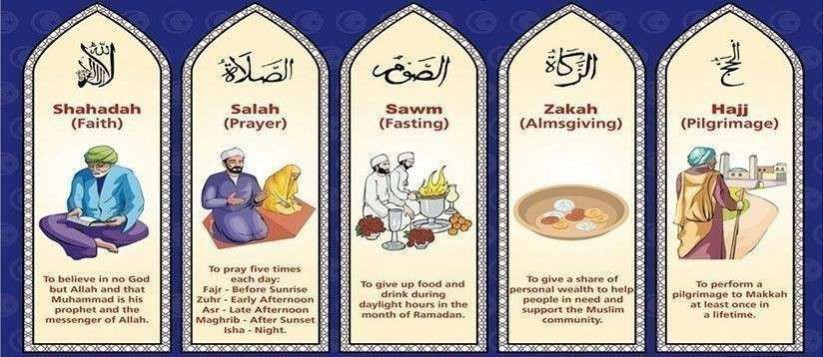
The Five Pillars of Islam are the principles that regulate the private life of Muslims in their dealings with God.

The first of the Five Pillars is Islam’s creed, or confession of faith known as the Shahadah. Every religion contains professions that orient its adherents’ lives. Islam’s wastes no words. Brief, simple, and explicit, it consists of a single sentence: “There is no god but God, and Muhammad is His Prophet.” The first half of the proclamation announces the cardinal principle of monotheism. “There is no god but Allah.” There is no god but the God. More directly still, there is no God but God, for the word is not a common noun embracing a class of objects; it is a proper name designating a unique being and him only. The second affirmation—that “Muhammad is God’s prophet”—registers the Muslim’s faith in the authenticity of Muhammad and in the validity of the book he transmitted. 

The first pillar is Shahadah, which is creed, or confession of faith, “There is no god but God, and Muhammad is His Prophet.”

At least once during his or her lifetime a Muslim must say the Shahadah correctly, slowly, thoughtfully, aloud, with full understanding and with heartfelt conviction. In actuality Muslims pronounce it often, especially its first half, La ilaha illa ’llah. In every crisis and at every moment when the world threatens to overwhelm them, not excepting the approach of death, “There is no god but God” will spring to their lips. “A pious man, seized by rage, will appear suddenly to have been stopped in his tracks as he remembers the Shahadah and, as it were, withdraws, putting a great distance between himself and his turbulent emotions. A woman crying out in childbirth will as suddenly fall silent, remembering; and a student, bowed anxiously over his desk in an examination hall, will raise his head and speak these words, and a barely audible sigh of relief passes through the whole assembly. This is the ultimate answer to all questions.”

The idea of One God, or of the “Oneness of Reality” is very calming; because of its truth.

The second pillar of Islam is the canonical prayer, in which the Koran adjures the faithful to “be constant” (29:45).  Muslims are admonished to be constant in prayer to keep their lives in perspective. The Koran considers this the most difficult lesson people must learn. Though they are obviously creatures, having created neither themselves nor their worlds, they can’t seem to get this straight and keep placing themselves at the center of things, living as if they were laws unto themselves. This produces havoc. When we ask, then, why Muslims pray, a partial answer is: in response to life’s natural impulse to give thanks for its existence. The deeper answer, however, is the one with which this paragraph opened: to keep life in perspective—to see it objectively, which involves acknowledging human creatureliness before its Creator. In practice this comes down to submitting one’s will to God’s (islam) as its rightful sovereign.

The second pillar of Islam is the prayer that adjures the faithful to “be constant” in order to keep their lives in perspective—to see it objectively. In practice this comes down to submitting one’s will to the oneness of reality (God).

How often should Muslims pray? There is an account in the Koran that speaks to this point. One of the crucial events in Muhammad’s life, we are told, was his renowned Night Journey to Heaven. On a certain night in the month of Ramadan, he was spirited on a wondrous white steed with wings to Jerusalem and upward from there through the seven heavens to the presence of God, who instructed him that Muslims were to pray fifty times each day. On his way back to earth, he stopped in the sixth heaven, where he reported the instruction to Moses, who was incredulous. “Fifty times a day!” he said in effect. “You’ve got to be kidding. That will never work. Go back and negotiate.” Muhammad did so and returned with the number reduced to forty, but Moses was not satisfied. “I know those people,” he said. “Go back.” This routine was repeated four more times, with the number reduced successively to thirty, twenty, ten, and then five. Even this last figure struck Moses as excessive. “Your people are not capable of observing five daily prayers,” he said. “I have tested men before your time and have labored most earnestly to prevail over the [sons of] Isra’il, so go back to your Lord and ask Him to make things lighter for your people.” This time, however, Muhammad refused. “I have asked my Lord till I am ashamed, but now I am satisfied and I submit.” The number remained fixed at five.

The prayer when done earnestly is a very satisfying learning experience. However, when a prayer is done mechanically it feels like a waste of time, which it is.

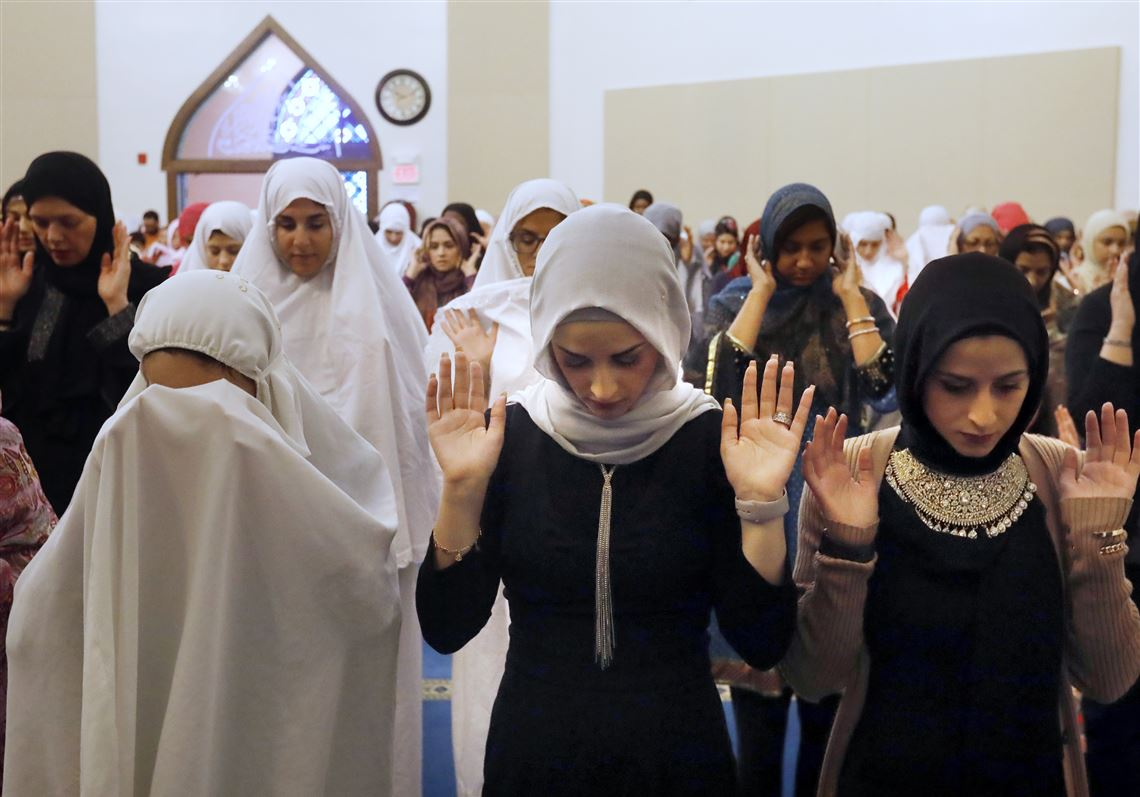
The times of the five prayers are likewise stipulated: on arising, when the sun reaches its zenith, its mid-decline, sunset, and before retiring. The schedule is not absolutely binding. The Koran says explicitly, for example, that “When you journey about the earth it is no crime that you come short in prayer if you fear that those who disbelieve will attack you.” Under normal conditions, however, the fivefold pattern should be maintained. While in Islam no day of the week is as sharply set apart from the others as is the Sabbath for the Jews or Sunday for the Christians, Friday most nearly approximates a weekly holy day. Congregational worship is not stressed as much in Islam as it is in Judaism and Christianity; even so, Muslims are expected to pray in mosques when they can, and the Friday noon prayer is emphasized in this respect. Visitors to Muslim lands testify that one of the impressive religious sights in the world comes to view when, in a dimly lighted mosque, hundreds of Muslims stand shoulder to shoulder, then repeatedly kneel and prostrate themselves toward Mecca.

The muslim prayer has ritualistic aspects, so as to make it one’s habit; but the ultimate benefit comes from the deep study of the words used to pray.

Although Muslims first prayed in the direction of Jerusalem, a koranic revelation later instructed them to pray in the direction of Mecca; and the realization that Muslims throughout the world do this creates a sense of participating in a worldwide fellowship, even when one prays in solitude. Beyond this matter of direction the Koran says almost nothing, but Muhammad’s teachings and practices moved in to structure the void. Washing, to purify the body and symbolically the soul, precedes the prayer, which begins in dignified, upright posture but climaxes when the supplicant has sunk to his or her knees with forehead touching the floor. This is the prayer’s holiest moment, for it carries a twofold symbolism. On the one hand, the body is in a fetal position, ready to be reborn. At the same time it is crouched in the smallest possible space, signifying human nothingness in the face of the divine. 

Muslims throughout the world pray exactly in the same manner creates a sense of participating in a worldwide fellowship, even when one prays in solitude. 

As for prayer’s content, its standard themes are praise, gratitude, and supplication. There is a Muslim saying that every time a bird drinks a drop of water it lifts its eyes in gratitude toward heaven. At least five times each day, Muslims do likewise. 

The standard themes of the Muslim prayer are praise, gratitude, and supplication. 

The third pillar of Islam is charity. Material things are important in life, but some people have more than others. Why? Islam is not concerned with this theoretical question. Instead, it turns to the practical issue of what should be done about the disparity. Its answer is simple. Those who have much should help lift the burden of those who are less fortunate. It is a principle that twentieth-century democracies have embraced in secular mode in their concept of the welfare state. The Koran introduced its basic principle in the seventh century by prescribing a graduated tax on the haves to relieve the circumstances of the have-nots. 

The third pillar of Islam is charity. Those who have much should help lift the burden of those who are less fortunate. Koran prescribes a graduated tax on the haves to relieve the circumstances of the have-nots.

Details aside, the figure the Koran set for this tax was 2 1/2 percent. Alongside the tithe of Judaism and Christianity (which, being directed more to the maintenance of religious institutions than to the direct relief of human need, is not strictly comparable), this looks modest until we discover that it refers not just to income but to holdings. Poorer people owe nothing, but those in the middle and upper income brackets should annually distribute among the poor one-fortieth of the value of all they possess. 

Those in the middle and upper income brackets should annually distribute among the poor one-fortieth of the value of all they possess. It is for the direct relief of human need and not for the maintenance of religious institutions.

And to whom among the poor should this money be given? This too is prescribed: to those in immediate need; to slaves in the process of buying their freedom; to debtors unable to meet their obligations; to strangers and wayfarers; and to those who collect and distribute the alms. 

And to whom among the poor should this money be given is also prescribed.

The fourth pillar of Islam is the observance of Ramadan. Ramadan is a month in the Islamic calendar—Islam’s holy month, because during it Muhammad received his initial revelation and (ten years later) made his historic Hijrah (migration) from Mecca to Medina. To commemorate these two great occasions, able-bodied Muslims (who are not ill or involved in crises like war or unavoidable journeys) fast during Ramadan. From the first moment of dawn to the setting of the sun, neither food nor drink nor smoke passes their lips; after sundown they may partake in moderation. As the Muslim calendar is lunar, Ramadan rotates around the year. When it falls in the winter its demands are not excessive. When, on the other hand, it falls during the scorching heat of the summer, to remain active during the long days without so much as a drop of water is an ordeal. 

The fourth pillar of Islam is the observance of Ramadan, a holy month, during which one fasts from the first moment of dawn to the setting of the sun. Neither food nor drink nor smoke passes their lips; after sundown they may partake in moderation. 

Why, then, does the Koran require it? For one thing, fasting makes one think, as every Jew who has observed the fast of Yom Kippur will attest. For another thing, fasting teaches self-discipline; one who can endure its demands will have less difficulty controlling the demands of appetites at other times. Fasting underscores the creature’s dependence on God. Human beings, it is said, are as frail as rose petals; nevertheless, they assume airs and pretensions. Fasting calls one back to one’s frailty and dependence. Finally, fasting sensitizes compassion. Only those who have been hungry can know what hunger means. People who have fasted for twenty-nine days within the year will be apt to listen more carefully when next approached by someone who is hungry.

Fasting makes one think. It underscores the creature’s dependence on God. Fasting teaches self-discipline; one who can endure its demands will have less difficulty controlling the demands of appetites at other times.

Islam’s fifth pillar is pilgrimage. Once during his or her lifetime every Muslim who is physically and economically in a position to do so is expected to journey to Mecca, where God’s climactic revelation was first disclosed. The basic purpose of the pilgrimage is to heighten the pilgrim’s devotion to God and his revealed will, but the practice has fringe benefits as well. It is, for example, a reminder of human equality. Upon reaching Mecca, pilgrims remove their normal attire, which carries marks of social status, and don two simple sheet-like garments. Thus everyone, on approaching Islam’s earthly focus, wears the same thing. Distinctions of rank and hierarchy are removed, and prince and pauper stand before God in their undivided humanity. Pilgrimage also provides a useful service in international relations. It brings together people from various countries, demonstrating thereby that they share a loyalty that transcends loyalty to their nations and ethnic groupings. Pilgrims pick up information about other lands and peoples, and return to their homes with better understanding of one another. 

Islam’s fifth pillar is pilgrimage. Once during his or her lifetime every Muslim who is physically and economically in a position to do so is expected to journey to Mecca, where God’s climactic revelation was first disclosed.

The Five Pillars of Islam consist of things Muslims do to keep the house of Islam erect. There are also things they should not do. Gambling, thieving, lying, eating pork, drinking intoxicants, and being sexually promiscuous are some of these. Even Muslims who transgress these rulings acknowledge their acts as transgressions. 

The Five Pillars of Islam consist of things Muslims do to keep the house of Islam erect. 

With the exception of charity, the precepts we have considered in this section pertain to the Muslim’s personal life. We turn now to the social teachings of Islam.

.

ISLAM: Basic Theological Concepts

Reference: Islam

[NOTE: In color are Vinaire’s comments.]

Judaism restricted monotheism to the people of Israel. Christians compromised their monotheism by deifying Christ. Muslims see monotheism as Islam’s contribution not simply to the Arabs but to religion in its entirety. 

With a few striking exceptions, which will be noted, the basic theological concepts of Islam are virtually identical with those of Judaism and Christianity, its forerunners. We shall confine our attention in this section to four that are the most important: God, Creation, the Human Self, and the Day of Judgment. 

The concepts of God, Creation, the Human Self, and the Day of Judgment in Islam are virtually identical with those of Judaism and Christianity.

As in the other historical religions, everything in Islam centers on its religious Ultimate, God. God is immaterial and therefore invisible. For the Arabs this cast no doubt on his reality, for they never succumbed to the temptation—sorely reinforced by modern materialistic attitudes—to regard only the visible as the real; one of the tributes the Koran pays to Muhammad is that “he did not begrudge the Unseen.” As desert dwellers, the notion of invisible hands that drove the blasts that swept the desert and formed the deceptive mirages that lured the traveler to his destruction was always with them. 

To Muslims God is immaterial and, therefore, invisible; but this cast no doubt on his reality.

Thus the Koran did not introduce the Arab to the unseen world of spirit, nor even to monotheism, since certain sensitive souls known as hanifs had already moved to that position before Muhammad. Its innovation was to remove idols from the religious scene and focus the divine in a single invisible God for everyone. It is in this sense that the indelible contribution of Islam to Arabic religion was monotheism. 

Arabs were already introduced to monotheism before Koran appeared on the scene. Its innovation was to remove idols from the religious scene and focus the divine in a single invisible God for everyone.

We must immediately add that Muslims see monotheism as Islam’s contribution not simply to the Arabs but to religion in its entirety. Hinduism’s prolific images are taken as proof that it never arrived at the worship of the single God. Judaism was correctly instructed through its Shema—“Hear O Israel, the Lord our God, the Lord is One”—but its teachings were confined to the people of Israel. Christians, for their part, compromised their monotheism by deifying Christ. Islam honors Jesus as a prophet and accepts his virgin birth; Adam’s and Jesus’ souls are the only two that God created directly. The Koran draws the line at the doctrine of the Incarnation and the Trinity, however, seeing these as inventions that blur the Divine/human distinction. In the words of the Koran: “They say the God of mercy has begotten a son. Now have you uttered a grievous thing…. It is not proper for God to have children” (3:78, 19:93). Muslims are not fond of parental images for God, even when employed metaphorically. To speak of human beings as “God’s children” casts God in too human a mode. It is anthropomorphic. 

Judaism restricted monotheism to the people of Israel. Christians compromised their monotheism by deifying Christ. Muslims see monotheism as Islam’s contribution not simply to the Arabs but to religion in its entirety. 

Turning to the koranic depiction of God’s nature, the first thing that strikes us is its awesomeness, its fear-inspiring power. Verse 7:143 contains the koranic account of Moses’ request to see God. When God showed himself instead to a neighboring mountain, thereby “sending it crashing down, Moses fell down senseless.”

Turning to the koranic depiction of God’s nature, the first thing that strikes us is its awesomeness, its fear-inspiring power. 

Power of this order—it is infinite, for God is omnipotent—inspires fear, and it is fair to say that Muslims fear Allah. This, however, is not cringing fear in the face of a capricious tyrant. Rather, Muslims argue, it is the only appropriate emotion—any other involves denial in the technical, psychological sense of the word—when human beings face up to the magnitude of the consequences that follow from being on the right or wrong side of an uncompromisingly moral universe; one, moreover, in which beliefs and convictions are decisive because they generate actions. If nihilism is the dissipation of difference, a kind of moral leveling-out through entropy, Allah’s universe is its exact opposite. Good and evil matter. Choices have consequences, and to disregard them would be as disastrous as climbing a mountain blindfolded. Belief in the Koran occupies the decisive place it does because it is the analogue to a mountaineer’s assessment of Mount Everest: Its majesty is evident, but so are the dangers it presents. Mistakes could be disastrous. Koranic images of heaven and hell are pressed into full service here; but once we come to terms with the fear that life’s inbuilt precariousness inspires, other lesser fears subside. The second, supporting root of the word islam is peace. 

In Allah’s universe good and evil matter. Beliefs and convictions are decisive because they generate actions. Choices have consequences, and to disregard them would be as disastrous as climbing a mountain blindfolded. 

It is important to remember this last point, because the holy dread that Allah inspires led early Western students of the Koran to think that it outstrips God’s mercy. Allah was seen to be a stern and wrathful judge, domineering and ruthless. This is a clear misreading; God’s compassion and mercy are cited 192 times in the Koran, as against 17 references to his wrath and vengeance. He who is Lord of the worlds is also

the Holy, the Peaceful, the Faithful, the Guardian over His servants, the Shelterer of the orphan, the Guide of the erring, the Deliverer from every affliction, the Friend of the bereaved, the Consoler of the afflicted; in His hand is good, and He is the generous Lord, the gracious, the Hearer, the Near-at-Hand, the Compassionate, the Merciful, the Very-forgiving, whose love for man is more tender than that of the mother-bird for her young.

Allah was seen to be a stern and wrathful judge, domineering and ruthless. This is a clear misreading; God’s compassion and mercy are cited 192 times in the Koran, as against 17 references to his wrath and vengeance. 

Thanks to Allah’s mercy, the world of the Koran is finally a world of joy. There is air, and sun, and confidence—not only in ultimate justice but also in help along the way and pardon for the contrite.

By the noonday brightness, and by the night when it darkens, your Lord has not forsaken you, neither has He been displeased. Surely the Hereafter shall be better for you than the past; and in the end He will be bounteous to you, and you will be satisfied. Did He not find you an orphan, and give you a home; erring, and guided you; needy, and enriched you? (93:1–8)

Thanks to Allah’s mercy, the world of the Koran is finally a world of joy. There is air, and sun, and confidence—not only in ultimate justice but also in help along the way and pardon for the contrite.

Standing beneath God’s gracious skies, the Muslim can at any moment lift heart and soul directly into the divine presence, there to receive both strength and guidance for life’s troubled course. The access is open because, though the human and the divine are infinitely different, no barrier separates them.

Is He not closer than the vein of your neck? You need not raise your voice, for he knows the secret whisper, and what is yet more hidden…. He knows what is in the land and in the sea; no leaf falls but He knows it; nor is there a grain in the darkness under the earth, nor a thing, green or sere, but it is recorded. (6:12, 59)

The access to divine presence is open because, though the human and the divine are infinitely different, no barrier separates them.

From God we can turn to Creation as our second theological concept. The Koran abounds in lyrical descriptions of the natural world. Here, though, the point is that that world is not presented as emerging from the divine by some process of inbuilt emanation, as Hindu texts suggest. It was created by a deliberate act of Allah’s will: “He has created the heavens and the earth” (16:3). This fact carries two important consequences. First, the world of matter is both real and important. Herein lies one of the sources of Islamic science, which during Europe’s Dark Ages flourished as nowhere else on earth. Second, being the handiwork of Allah, who is perfect in both goodness and power, the material world must likewise be good. “You do not see in the creation of the All-merciful any imperfection. Return your gaze…. It comes back to you dazzled” (67:4). Here we meet a confidence in the material aspects of life and existence that we will find shared by the other two Semitically originated religions, Judaism and Christianity. 

The natural world is created by a deliberate act of Allah’s will. The world of matter is both real and important. Like Allah, it is perfect.

Foremost among God’s creations is the human self, whose nature, koranically defined, is our third doctrinal subject. “He has created man,” we read in Surah 16:3, and the first thing that we note about this creation is its sound constitution. This could have been inferred, given its Maker, but the Koran states it explicitly: “Surely We have created humanity of the best stature” (95:4). The koranic word for human nature in its God-established original is fitra, and it has been stained by no catastrophic fall. The closest Islam comes to the Christian doctrine of original sin is in its concept of ghaflah, or forgetting. People do forget their divine origin, and this mistake needs repeatedly to be corrected. But their fundamental nature is unalterably good, so they are entitled to self-respect and a healthy self-image. 

Foremost among God’s creations is the human self. It is of the state of purity and innocence. No catastrophic fall has stained it (no original sin). It does forget its divine origin and this mistake needs repeatedly to be corrected.

With life acknowledged as a gift from its Creator, we can turn to its obligations, which are two. The first of these is gratitude for the life that has been received. The Arabic word “infidel” is actually shaded more toward “one who lacks thankfulness” than one who disbelieves. The more gratitude one feels, the more natural it feels to let the bounty that has entered flow through one’s life and on to others, for to hoard it would be as unnatural as trying to dam a waterfall. The ingrate, the Koran tells us, “covers” or “hides” God’s blessings and thereby fails to enjoy the link with the Creator that every moment provides. 

With life acknowledged as a gift from its Creator, we can turn to its obligations, which are two. The first of these is gratitude for the life that has been received. The Arabic word “infidel” is actually shaded more toward “one who lacks thankfulness” than one who disbelieves.

The second standing human obligation recalls us to the name of this religion. The opening paragraphs of this chapter informed us that islam means surrender, but we now need to probe this attribute more deeply. 

Thoughts of surrender are so freighted with military connotations that it requires conscious effort to notice that surrender can mean a wholehearted giving of oneself—to a cause, or in friendship and love. William James shows how central surrender is to all religion.

When all is said and done, we are in the end absolutely dependent on the universe; and into sacrifices and surrenders of some sort, deliberately looked at and accepted, we are drawn and pressed as into our only permanent positions of repose. Now in those states of mind which fall short of religion, the surrender is submitted to as an imposition of necessity, and the sacrifice is undergone at the very best without complaint. In the religious life, on the contrary, surrender and sacrifice are positively espoused: even unnecessary givings-up are added in order that the happiness may increase. Religion thus makes easy and felicitous what in any case is necessary. 

“Islam” means surrender. But, the thoughts of surrender are so freighted with military connotations that it requires conscious effort to notice that surrender can mean a wholehearted giving of oneself—to a cause, or in friendship and love. 

To this account of surrender’s virtues we can add in Islamic parlance that to be a slave to Allah is to be freed from other forms of slavery—ones that are degrading, such as slavery to greed, or to anxiety, or to the desire for personal status. It also helps here if we alternate the word “surrender” with “commitment”; for in addition to being exempt from military associations, commitment suggests moving toward rather than giving up. In this reading Islam emerges as a religion that aims at total commitment; commitment in which nothing is withheld from the Divine. This explains why Abraham is by far the most important figure in the Koran, for he passed the ultimate test of willingness to sacrifice his own son if that was required. 

Islam emerges as a religion that aims at total commitment; commitment in which nothing is withheld from the Divine. 

Two final features of the human self provide a fitting transition to our final theological doctrine, the Day of Judgment, for it is there that they come into sharpest relief. The two are the soul’s individuality and its freedom. 

My view: The soul’s individuality is its system of postulates. The soul’s freedom is its ability to postulate.

To begin with the first of these: Coming to Islam (as we do in this book) from the “no self” of Buddhism and the social self of Confucianism, we are struck by the stress the Koran places on the self’s individuality: its uniqueness and the responsibility that devolves on it alone. In India the all-pervading cosmic spirit comes close to swallowing the individual self, and in China the self is so ecological that where it begins and ends is hard to determine. Islam and its Semitic allies reverse this drift, regarding individuality as not only real but good in principle. Value, virtue, and spiritual fulfillment come through realizing the potentialities that are uniquely one’s own; in ways that are not inconsequential, those possibilities differ from those of every other soul that ever has lived, or ever will live in the future. As an important Muslim philosopher has written, “This inexplicable finite centre of experience is the fundamental fact of the universe. All life is individual; there is no such thing as universal life. God Himself is an individual; He is the most unique individual.”

Buddha’s stand was “no permanent self”. India’s all-pervading cosmic spirit (God) is the ultimate system of postulates that is flexible but consistent. The individual self is a unique system of postulates. The individual self can approach God only by realizing that its own system of postulates can be flexible and consistent. So, there is no inconsistency among the major religions.

The individuality of the human soul is everlasting, for once it is created it never dies. Never, though, is its distinctness more acutely sensed than on the Day of Judgment. “O son of Adam, you will die alone, and enter the tomb alone, and be resurrected alone, and it is with you alone that the reckoning will be made” (Hasan al-Basri). This reckoning and its correlate, responsibility, lead directly to the issue of the soul’s freedom, and it must be admitted that in Islam human freedom stands in tension with God’s omnipotence, which points toward predestination. Islamic theology has wrestled interminably with this tension without rationally resolving it. It concludes that the workings of the Divine Decree remain a mystery to humans, who nevertheless are granted sufficient freedom and responsibility to make genuine moral and spiritual decisions. “Whoever gets to himself a sin, gets it solely on his own responsibility…. Whoever goes astray, he himself bears the whole responsibility of wandering” (4:111, 10:103). 

Individuality of the human soul depends neither on the body, nor on the personality, mind or the system of postulates it holds. The individuality of the human soul depends on the ability to postulate that it shares with God. In God, however, this ability is infinitely flexible and consistent. This is freedom, the opposite of which is predestination.

As for the issue of judgment itself, Muslims consider it to be one of the illusions of modernity that we can, as it were, slip quietly away and not be noticed so long as we live (according to our own opinion) decent and harmless lives and do not draw attention to ourselves. It is the tearing away of all such illusions of security that characterizes the doctrine of the Last Judgment and its anticipation in the Koran. “When the sun shall be folded up, and the stars shall fall, and when the mountains shall be set in motion…and the seas shall boil…. Then shall every soul know what it has done” (81, passim). It is against this background that the Koran presents life as a brief but immensely precious opportunity, offering a once-and-for-all choice. Herein lies the urgency that informs the entire book. The chance to return to life for even a single day to make good use of their opportunities is something “the losers,” facing their Reckoning, would treasure beyond anything they desired while they were still alive (14:14). 

The doctrine of Last Judgement is basically your “karma” (the things you have done) catching up with you. Life is a a brief but immensely precious opportunity, offering a once-and-for-all choice to set things right.

Depending on how it fares in its Reckoning, the soul will repair to either the heavens or the hells, which in the Koran are described in vivid, concrete, and sensual imagery. The masses of the faithful consider them to be actual places, which is perhaps the inevitable consequence of such depiction. In the heavens we are treated to fountains, cool shades, and chaste houris in gardens beneath which rivers flow; to carpets, cushions, goblets of gold, and sumptuous food and drink. In the hells there are burning garments, molten drinks, maces of iron, and fire that splits rocks into fragments. To say that these are nothing but symbols of the posthumous worlds—more rightly regarded as posthumous conditions of experience—is not to explain them away; but the object of the book is to present the hereafter in images of such vividness “that the hearts of those who do not believe in the Hereafter may incline to it” (6:113). The sharpness of the contrast between heaven and hell is intended to pull the hearer/reader of the Koran out of the spiritual lethargy that ghaflah, forgetfulness, induces.

In Islam, the sharpness of the contrast drawn between heaven and hell is intended to pull the hearer/reader of the Koran out of the spiritual lethargy that ghaflah, forgetfulness, induces.

The device works in periods of spiritual awareness and rebirth. In modern times it may be less effective for worldly-minded Muslims. In defense of allegorical interpretations of the images, liberal Muslims quote the Koran itself: “Some of the signs are firm—these are the basis of the book—and others are figurative” (3:5). Also supporting less materialistic views of paradise is Muhammad’s statement that for the favored, “to see God’s face night and morning [is] a felicity which will surpass all the pleasures of the body, as the ocean surpasses a drop of sweat.” Underlying the differences of interpretation, the belief that unites all Muslims concerning the afterlife is that each soul will be held accountable for its actions on earth with its future thereafter dependent upon how well it has observed God’s commands. “We have hung every man’s actions around his neck, and on the last day a wide-open book will be laid before him” (17:13). 

Underlying the differences of interpretation, the belief that unites all Muslims concerning the afterlife is that each soul will be held accountable for its actions on earth with its future thereafter dependent upon how well it has observed God’s commands. 

As a final point: If all this talk of judgment still seems to cast God too much in the role of punisher, we can resort to verses in the Koran that remove Allah from direct involvement altogether. There souls judge themselves. What death burns away is self-serving defenses, forcing one to see with total objectivity how one has lived one’s life. In the uncompromising light of that vision, where no dark and hidden corners are allowed, it is one’s own actions that rise up to accuse or confirm. Once the self is extracted from the realm of lies, the falsities by which it armored itself become like flames, and the life it there led like a shirt of Nessus. 

What death burns away is self-serving defenses, forcing one to see with total objectivity how one has lived one’s life. In the uncompromising light of that vision it is one’s own actions that rise up to accuse or confirm.

God, Creation, the Human Self, and the Day of Judgment—these are the chief theological pegs on which the Koran’s teachings hang. In spite of their importance, however, the Koran is “a book which emphasizes deed rather than idea” (Muhammad Iqbal). It is to these deeds that we turn in the next two sections.

God, Creation, the Human Self, and the Day of Judgment—these are the chief theological pegs on which the Koran’s teachings hang. 

.