Author Archives: vinaire

I am originally from India. I am settled in United States since 1969. I love mathematics, philosophy and clarity in thinking.

The Spirit (old)

[I wrote this essay back in July 1995 and passed it on to some of my Christian friends.  This essay gave rise to a lively discussion at that time. Since then my understanding has evolved. The ability to think has evolved from some primeval impulse that has always been there.]

Spirit and Capability

The spirit is the ability to create. It is not the outcome of creation. A person thinks an idea. That idea is not the person. It is that ability to think which is the person’s beingness or spirit.

The body is an outcome of evolution. The personality is the outcome of past experiences. Like the idea they are created things but on a much more complex scale. They are the outcome of certain processes.

It is the capability that brings about these processes at the first place that constitutes the spirit. The spirit is not the processes or their outcomes. Creativity and native intelligence resides in the spirit and not in the body or personality.

Like a computer program, the body or the personality appears to display creativity and intelligence, but they are nothing more than fixed patterns. They only serve to modulate and restrict the spirit, which is animating them.

True beingness of Man is the spirit and not the body.

It is his capability to create, to observe, understand, and resolve, to feel, which defines him, and not his body or personality.

.

Spirit and Programming

The brain is a part of the body. By “programming” the brain one tries to further modulate and restrict the person. A person is not this programming. This programming only alters the basic person, which is the spirit. Hypnotism has that effect of “programming” the brain. Similar “programming” occurs through blind agreements not accompanied by any real experience and understanding.

Blind faith in religious scriptures is of the same order of “programming”. It is not accompanied by personal realization. It forms the basis of religious fanaticism. Many individuals and churches have manipulated that blind faith to further their own materialistic ends. They even deny the possibility of personal realization saying that no more “revelations” are possible.

.

Spirit and God

It is true that God has created Man in his own image. But that “image” in common is not the physical body or personality. It is the ability to be self-determined, the ability to be cause, the ability to create, which is in common with God. In God that ability is infinite.

The basic person is the spirit, which is natively creative, intelligent and constructive. He does not need “programming” or indoctrination to be good. Instead, he needs to be freed from the “programming” of the past that has restricted and molded him into the feeble, cowardly, and destructive expression he has become.

To think a person’s beingness is his body or personality is a materialistic viewpoint. Lets get rid of that false idea right now. Let us recognize the spirit that a person truly is.
 .

The Psychology of Fantasy

Reference: Wikipedia – Psychoanalysis
Reference: Wikipedia – Fantasy (psychology)

“Freudian psychoanalysis refers to a specific type of treatment in which the “analysand” (analytic patient) verbalizes thoughts, including free associations, fantasies, and dreams…”

A psychoanalytic patient is encouraged to verbalize his or her fantasies so that the psychoanalyst may induce the unconscious conflicts causing the patient’s symptoms.

But, fantasy is basically imagination. It is a visualisation of desired scenarios and conditions.

“Fantasy in a psychological sense is broadly used to cover two different senses, conscious and unconscious. In the unconscious sense, it is sometimes spelled “phantasy”…

“… He [Sigmund Freud] considered that men and women ‘cannot subsist on the scanty satisfaction which they can extort from reality. “We simply cannot do without auxiliary constructions”, as Theodor Fontane once said…[without] dwelling on imaginary wish-fulfillments’. As childhood adaptation to the reality principle developed, so too ‘one species of thought activity was split off; it was kept free from reality-testing and remained subordinated to the pleasure principle alone. This activity is fantasying…continued as day-dreaming. He compared such phantasising to the way a ‘nature reserve preserves its original state where everything…including what is useless and even what is noxious, can grow and proliferate there as it pleases’.

But fantasy is essential to bringing about a new and improved reality. All progress in science and humanities has come about as a result of fantasies.

“Daydreams for Freud were thus a valuable resource. ‘These day-dreams are cathected with a large amount of interest; they are carefully cherished by the subject and usually concealed with a great deal of sensitivity…such phantasies may be unconscious just as well as conscious’. He considered ‘These phantasies include a great deal of the true constitutional essence of the subject’s personality’ and that the energetic man ‘is one who succeeds by his efforts in turning his wishful phantasies into reality’, while the artist ‘can transform his phantasies into artistic creations instead of into symptoms…the doom of neurosis’.”

To fantasize is a natural function of the mind. A fantasy may simply indicate the area where a person’s attention goes to, and that’s about it.

The source of psychological symptoms may be determined as follows:

(1) First spot the key area where a person’s attention is either fixed or where it cannot be focused.

(2) Then look further into that area of non-optimum attention for inconsistencies.

(3) Keep looking until all inconsistensies are found and resolved.

No verbalization or analysis is needed. All that is required is looking per Attention.

.

Glossary

Fantasy
Origin: “a making visible, display.” Fantasy is basically imagination, especially when extravagant and unrestrained. It is a visualisation of desired scenarios and conditions. Fantasy is essential to bringing about a new and improved reality. All progress in science and humanities has come about as a result of fantasies. 

.

Talk and Relief

Reference: Wikipedia – Psychoanalysis

“Freudian psychoanalysis refers to a specific type of treatment in which the “analysand” (analytic patient) verbalizes thoughts, including free associations, fantasies, and dreams, from which the analyst induces the unconscious conflicts causing the patient’s symptoms and character problems, and interprets them for the patient to create insight for resolution of the problems.”

From my experience, it is not necessary for a person to verbalize his or her thoughts, and invite someone else to analyze them for him or her, in order to obtain relief.

A person knows his or her own self better than anybody else ever could. All the answers one would ever need are available to the person from within himself or herself. One only needs to wade through one’s confusions to finally spot those answers.

So, no analysis is needed, nor any advice. What may be needed is guidance on how to go about looking, and some friendly encouragement to keep on looking untill the answers are found. Neither guidance nor encouragement lead to violation of a person’s privacy.

One does not have to verbalize one’s intimate thoughts to obtain relief.

.

The Psychology of Free Association

Reference: The Scientific Method & Humanities

Reference: Free association (psychology) from Wikipedia

From Buddhism we get the following principle:

Looking at things just as they are can dissolve problems, confusions and suffering.

One of the applications of this principle is in the free association practiced in psychoanalysis.

Free Association is looking at the mind without interfering with it.

“In free association, psychoanalytic patients are invited to relate whatever comes into their minds during the analytic session, and not to censor their thoughts. This technique is intended to help the patient learn more about what he or she thinks and feels, in an atmosphere of non-judgmental curiosity and acceptance.”

A person can freely associate by oneself. The presence of a trusted therapist simply makes it easier for a person to do so.

“The method of free association has no linear or preplanned agenda, but works by intuitive leaps and linkages which may lead to new personal insights and meanings. When used in this spirit, free association is a technique in which neither therapist nor patient knows in advance exactly where the conversation will lead, but it tends to lead to material that matters very much to the patient. Its goal is not to unearth specific answers or memories, but to instigate a journey of co-discovery which can enhance the patient’s integration of thought, feeling, agency, and selfhood.”

It is “looking at the mind without interfering with it,” which contributes to any discovery. Relating what is in the mind to the therapist is secondary to looking and it is not the primary contributor to discovery and relief.

.

Glossary

Free Association
In free association one looks at the mind without interfering with it. Attention may flip from place to place; but as one keeps looking non-judgmentally without resistance, a pattern may emerge. As one keeps looking, the pattern may reveal some inconsistency. Such free association is non-verbal.

.

The Scientific Method & Humanities

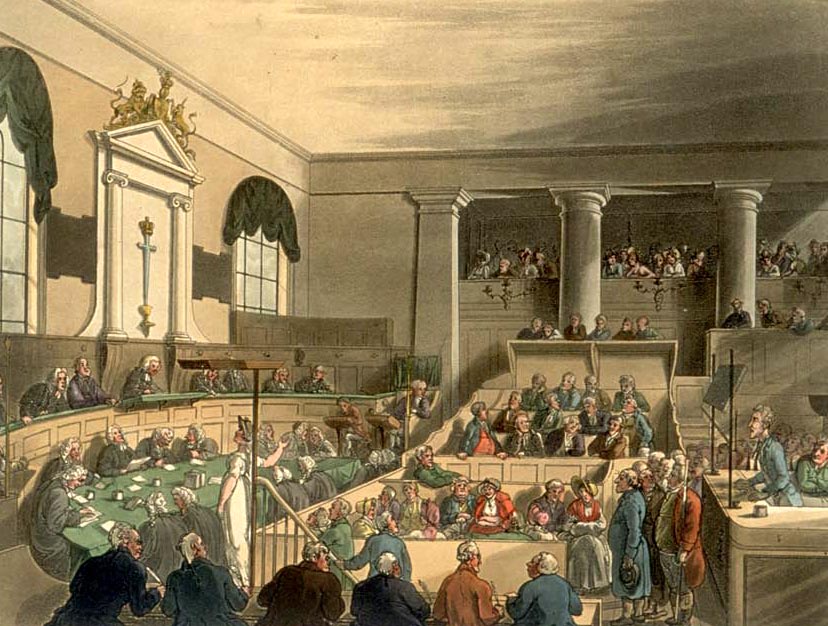
Old_Bailey_Microcosm_edited

Reference: Scientific method from Wikipedia 

.

From Wikipedia we get the general steps of the Scientific Method as follows:

(1) Use your experience

  • Consider the problem.
  • Try to make sense of it.
  • Look for previous explanations.

(2) Form a conjecture

  • State an explanation.

(3) Deduce a prediction from that explanation

  • Predict consequences that may follow from that explanation.

(4) Test (Experiment)

  • Check for the opposite of each consequence to disprove the conjecture.

Note that this method can never absolutely verify (prove the truth of) the conjecture. It can only falsify the conjecture. If the conjecture is disproven then one goes back to step (2). If the conjecture cannot be disproven then one starts again with step (1).

We have had pretty good success applying this scientific method to physical problems. We have running water and air conditioning in our houses. We can communicate over long distances. We can travel at faster than the speed of sound. In these instances the success can be verified objectively. Underlying these successes are basic principles that have proven themselves out time and time again.

But how about the success in applying this scientific method to the spiritual aspects of the universe? Do we have basic spiritual principles here that are equivalent to such basic principles as the conservation of mass and energy?

Let’s consider the problem of human suffering. This problem can be witnessed both objectively and subjectively. Science has helped us reduce the physical aspects of this suffering by conditioning  the immediate physical environment around us. Can Science also help us reduce the mental aspects of this suffering?

Buddhism is said to be the earliest scientific approach to the problem of human suffering on the mental plane. The method recommended by Buddha is called Vipassana meditation. This method is based on the premise,

“If you look at things just as they are, you gradually gain the insight that makes the suffering more tolerable. It does not prevent the suffering that comes from growing old, getting sick, etc., but you can be peaceful in its presence. Following those insights you naturally develop a conduct that enhances peace and happiness.”

Buddhism is said to have brought civilization to three-quarters of the world at the peak of its popularity. Are there conjectures in Buddhism that measure up to being scientific?

The first conjecture from Buddhism may be stated as follows.

Looking at things just as they are can dissolve problems, confusions and suffering.

.

Glossary

Science
Origin: “to know.” Science is systematic knowledge of the physical or material world gained through observation and experimentation.

Conjecture 
Origin: “to throw together, form a conclusion.” To conjecture is to form an expression of an opinion or theory without sufficient evidence for proof.

.