Author Archives: vinaire

I am originally from India. I am settled in United States since 1969. I love mathematics, philosophy and clarity in thinking.

Postulates in Hinduism

Reference: Postulate Mechanics

  1. The world is all that can be known
  2. The beginning, end, and all in-between.
  3. The goal of religion is to actualize the human potential.
  4. In Hinduism, this goal comes under the heading of Yoga.
  5. Yoga means “uniting” through disciplined training of body and mind.
    • .
    • .
  6. There are multiple paths to this common destination
  7. Each for a basic spiritual personality type:
  8. Reflective, emotional, active and experimentalist.
  9. The first step of every yoga involves 
  10. the cultivation of good habits.
    • .
    • .
  11. These good habits are: Non-injury, truthfulness, non-stealing, 
  12. Self-control, cleanliness, contentment, self-discipline.
  13. And a compelling desire to reach the goal. 
  14. Different spiritual personality types
  15. Seek the same Goa differently.
    • .
    • .
  16. The reflective personality seeks the goal through knowledge.
  17. He reflects deeply to get at the bottom of things.
  18. He knows that he is not the things that he possesses.
  19. He is neither the body, nor the mind, nor his personality.
  20. This helps disentangle Self from its lesser identifications.
    • .
    • .
  21. The emotional personality seeks the goal through love.
  22. God to him represents his chosen personal ideal.
  23. He worships God by constantly repeats God’s name,
  24. He directs toward God the love that lies at the base of his heart. 
  25. This helps transfer his worldly attachments to an attachment to God.
    • .
    • .
  26. The active personality seeks the goal through work.
  27. He is dedicated to his work and performs it selflessly.
  28. He does each thing as if it were the only thing to be done.
  29. Having done it, he turns to the next duty in similar spirit. 
  30. The thought of self simply does not arise on this path.
    • .
    • .
  31. The progress may be accelerated through psychophysical Exercises.
  32. Such exercises follow the path of contemplation.
  33. First one settles the bodily and sensual distractions with discipline.
  34. Then one settles the mental distractions by releasing them.
  35. Then one resolves the anomalies by contemplating over them.
    • .
    • .
  36. Different stages of life call for their own appropriate conduct.
  37. The first stage in life till early twenties is that of the student.
  38. The second stage, beginning with marriage, is that of the householder.
  39. The third stage of life is that of retirement from social obligations.
  40. The final stage wherein the goal is actually reached is the state of the sannyasin.
    • .
    • .
  41. People are different; so they occupy different stations in the social order.
  42. The brahmins stood supreme in honor and psychological power.
  43. The kshatriyas stood supreme In salary and social power.
  44. Next were the Vaishyas or producers, such as, artisans and farmers.
  45. The last were the Shudras, or unskilled laborers.
    • .
    • .
  46. God is beyond things that can be sensed.
  47. God is pure beingness, awareness and bliss.
  48. God is also the archetype of the noblest reality.
  49. God is the Creator, Preserver, and Destroyer.
  50. God is the consistent whole.
    • .
    • .
  51. As the soul passes through this world
  52. Living through all its incarnations.
  53. His present condition is the product of his past. 
  54. His present decisions determine his future.
  55. This world grants all his wishes, but with consequences.
    • .
    • .
  56. It is a world of good-evil, pleasure-pain, knowledge-ignorance.
  57. And this is the way things will remain.
  58. This world is a training ground for the human spirit.
  59. God, souls and nature have the same divine basis.
  60. There are hallucinations, perceptions and superconsciousness.
    • .
    • .
  61. The world is lila, God’s play.
  62. Everyone is like an actor on the stage.
  63. Seen in perspective, the world is ultimately benign.
  64. It has no permanent hell and threatens no eternal damnation.
  65. Beyond this world lies the boundless good, which all will achieve in the end.

.

Ancient Greek Philosophers

Reference: The Story of Philosophy 


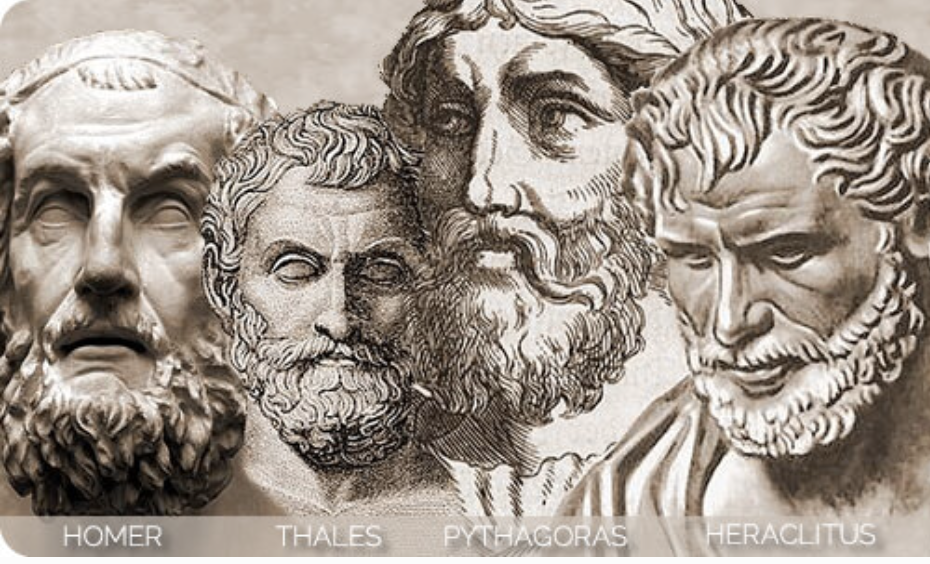
Homer (born c. 8th century BCE)

Homer’s philosophy, as reflected in his epic poems, encompasses several key themes:

  1. Divine intervention in human affairs: The gods actively participate in and influence human events. This supernatural causation is seen as more powerful than natural human agency.
  2. Whimsical nature of the gods: The gods are often portrayed as capricious and divided among themselves, leading to an unpredictable causal order in the natural world.
  3. Morality and power: Humans worship the gods not for their moral qualities but for their power. Ethical concepts are present but not consistently applied by gods or humans.
  4. Human agency and fate: While divine intervention is prominent, human actions and decisions also play a crucial role in shaping events.
  5. Heroism and honor: Homer’s works foster ideals of heroism, glory, and honor, which shaped ancient Greek culture and education.
  6. Limited transcendence: Homer suggests that humans can aspire to transcendence but should be wary of seeking total transcendence beyond the human condition.
  7. Tension between home and knowledge: The Odyssey explores the conflict between the desire for exploration and the longing for home, representing the human struggle between particular and universal aspects of existence.

Homer’s works served as a foundation for Greek religion, community, and knowledge. While later philosophers like Plato criticized Homer’s portrayal of the gods and morality, his influence on Greek thought and subsequent Western philosophy is undeniable.


Thales (c. 626/623  – c. 548/545 BC)

  1. Materialism: Thales believed that the physical world could be explained through natural, observable principles.
  2. Monism: He proposed that everything in the universe could be traced back to a single substance – water.
  3. Rational inquiry: Thales used observation and logical reasoning to develop his theories, setting a precedent for scientific investigation.
  4. Unification of nature: By proposing water as the fundamental substance, Thales attempted to find a unifying principle in nature.

.

Pythagoras  (c. 570 – c. 495 BC)

  1. Mathematics as the foundation of reality: Pythagoras believed that numbers were the building blocks of the universe and that everything could be understood through numerical relationships.
  2. Metempsychosis: He taught the concept of the transmigration of souls, believing that the soul was immortal and would pass into another body after death.
  3. Ethical behavior: Pythagoras emphasized the importance of cultivating virtues like wisdom, courage, and self-control to achieve harmony and balance in life.
  4. Moderation: He advocated for restraint and self-discipline, believing that excess led to imbalance and disharmony1.
  5. Divine source: Pythagoras believed in a single, divine source of all things, which he called the Monad.
  6. Interconnectedness: He taught that everything in the universe was interconnected.
  7. Transcendent realm: Pythagoras believed in the existence of a transcendent realm of reality, which he called the world of Forms.
  8. Religious practices: He developed a system of religious beliefs and practices, including the worship of various gods and the use of music and dance in ceremonies.
  9. Dietary restrictions: Pythagoras prescribed a strict way of life that included dietary restrictions as part of religious ritual and self-discipline.

.

Eleatic School (fl. 6th and 5th century BCE)

  1. Monism: a single, unchanging reality that is indivisible and eternal.
  2. Immutability: reality cannot change, and all perceived changes are mere illusions.
  3. Unity of Being: the true explanation of things lies in the conception of a universal unity of being.
  4. Rejection of Sensory Experience: relied on logical standards of clarity and necessity as criteria for truth.
  5. Denial of Change and Motion: change and motion are impossible… our senses deceive us.
  6. Logical Reasoning: Zeno of Elea, employed logical arguments and paradoxes to support their views.
  7. Critique of Pluralism: opposed the explanation of existence in terms of primary matter… opposed Heraclitus’ theory of perpetual change.

.

Parmenides (fl. Just before 500 BC)

  1. Reality is One: all of reality is a single, unchanging, and indivisible entity.
  2. Change is Impossible: true reality cannot come into being or cease to exist. 
  3. Truth vs. Appearance: There is timeless truth and a false world of appearance. 
  4. Rejection of Nothingness: “nothing” cannot exist or be thought about. 
  5. Limitations of Sensory Perception: questioned the reliability of human senses.
  6. Logical Reasoning: employed deductive arguments to support his claims.

.

Heraclitus (fl. 500 BCE)

  1. Universal flux: everything is constantly changing.
  2. Unity of opposites: opposites are interconnected and define each other… conflict and opposition are essential for creating unity.
  3. Fire as the fundamental element: fire represents change and energy. 
  4. Logos (reason or word): emphasized Logos as the universal principle governing all things.
  5. Nature of Reality: the true nature of reality was hidden from ordinary people.

.

Zeno of Elea (c. 490-425 BCE)

  1. Monism: reality is a single, eternal, and unchanging entity called “Being”.
  2. Rejection of plurality and motion: claimed these concepts led to logical contradictions.
  3. Paradoxes: He developed a series of paradoxes, most famously those concerning motion.
  4. Critique of sense perception: sense perception is unreliable for understanding true reality.
  5. Use of reductio ad absurdum:  argumentative technique to deconstruct commonly held beliefs.
  6. Influence on dialectics: Used contradictory ideas to develop thinking.

.

Protagoras (c. 490 BC – c. 420 BC)

  1. Relativism and Subjectivism
    1. Denied the existence of objective truth and values.
    2. Truth and knowledge are relative to individual perception and experience.
    3. What is perceived as true or false, good or bad, depends entirely on the individual’s perspective.
  2. Humanism
    1. Emphasized human interests and values. 
    2. Human experience and perception should form the basis of all knowledge and ethical decisions.
  3. Ethics and Politics
    1. Societies must create laws and moral codes through practical agreement.
    2. What is ‘right’ is what benefits the community and is agreed upon by its members.
  4. Rhetoric and Argumentation
    1. Emphasized the power of persuasive speech in shaping public opinion and policy.
  5. Agnosticism
    1. No means of knowing whether gods exist or not.
    2. Human life is too short.

.

Gorgias (c. 485–c. 380 BCE)

  1. Ontology and Epistemology
    1. Nothing exists.
    2. Even if something exists, it is incomprehensible to humans.
    3. Even if it is comprehensible, it cannot be communicated or interpreted to others.
  2. Rhetoric and Logos
    1. Rhetoric is the supreme art, capable of persuading an audience on any subject.
    2. Logos (speech) is a “powerful lord” with effects comparable to drugs on the body.
    3. The orator had an ethical obligation to avoid deception
  3. Truth and Knowledge
    1. Absolute forms of knowledge or virtue do not exist. 
    2. Truth could only be found within a given moment.
    3. Effective argumentation is more important than universal truths.
  4. Virtue 
    1. Virtue was relative to each situation.
    2. Virtue varied between different roles and contexts.

.

Empedocles (fl. 444–443 BC)

  1. Four Elements: all matter in the universe is composed of four root elements: earth, air, fire, and water. 
  2. Love and Strife: two opposing forces—Love and Strife—act upon the elements.
  3. Cosmic Cycle: The universe is continually undergoing the cycles of creation and destruction.

.

Prodicus (c. 465 BC – c. 395 BC)

  1. Semantics and Language
    1. Meticulous approach to language
    2. Pioneering work in distinguishing between synonyms and exploring precise word meanings
  2. Naturalistic Theology
    1. Gods were originally representations of natural elements and forces
    2. They explained aspects of the natural world humans depended on for survival
    3. Deities like Demeter and Dionysus were personifications of grain and wine, respectively
  3. Ethics and Morality
    1. Human virtues arose from practical, real-world experiences and needs
  4. Atheism and Religious Skepticism
    1. Viewed gods as personifications of natural phenomena rather than divine beings
  5. Cultural Development
    1. Religion was part of a broader narrative of social institutions and moral values
    2. Early humans first worshipped physical entities crucial for survival
    3. They deified exceptional individuals who invented useful things
  6. Relativism
    1. What is good for one person may not be good for another

.

Hippias (c. 460–c. 399 BCE)

  1. Nature
    1. There are unwritten natural laws that apply universally to all people.
  2. “Like is kin to like by nature” 
    1. All men are neighbors and kinsmen.
  3. Positive law
    1. Positive laws are a human construct that can be altered.
    2. They can potentially act as a “tyrant” against human nature.
  4. Unity of all mankind
    1. Advocated for the essential unity of all mankind.
    2. A progenitor of the doctrine of natural law and the social-contract theory of the state.
  5. Self-sufficiency
    1. Wore only items he had made himself.
  6. Greek Literature
    1. Focused on the meaning of words, the value of rhythm, and literary style.

.

Leucippus (fl. 5th century BCE) 

  1. Atoms and Void: Both atoms (indivisible particles) and the void (empty space) are infinite.
  2. Mechanical Materialism: all phenomena could be explained through the motion and interaction of atoms.
  3. Homogeneous Atoms: all atoms are qualitatively the same, differing only in shape and size1.
  4. Eternal Motion: atoms are in constant motion, creating a deterministic world where everything is caused by atomic collisions.
  5. Cosmic Formation: cosmos began as a vortex of atoms that formed celestial bodies. 
  6. Response to Eleatic Philosophy: By accepting the existence of the void, Leucippus could explain motion and plurality2.
  7. Necessity: a law of necessity governed all things in nature.

.

Democritus (c. 460 – c. 370 BC)

  1. Atomic Theory: tiny, indivisible eternal particles moving through empty space.
  2. Natural Laws: all events are governed by natural laws—sensory data and reason
  3. Materialism: There is no divine intervention or command.
  4. Ethics: ethical behavior stems from understanding the consequences of one’s actions.
  5. Perception: perception occurs when atoms from external objects interact with the atoms in the soul. 
  6. Knowledge: sensory experiences are subjective interpretations rather than objective realities.
  7. Cosmology: there are infinite worlds in various stages of development within an infinite universe. 

.

The Misjudgment

Reference: Postulate Mechanics

.

The Misjudgment

Misjudgments result in overt actions that are irrational and do not make sense. Such actions lead to embarrassment and even harm. They occur because the person does not know how to properly respond to some situation. It is perceived as a lack of responsibility.

When a misjudgment is deeply embedded, the person continues to commit overt actions that are harmful. He is perceived to have evil intentions, and others start to thwart his efforts. He, therefore, gets enmeshed into problems and upsets that pile up and generate anxieties in him. As these anxieties pile up over time they generate mental mass. This phenomenon is called GPM for Goal-Problem-Mass.

Usually the person feels pressure due to his misjudgments and overt actions. He wants to be rehabilitated, but he withholds talking about his overt action because he conceives that telling it would be another overt act. When the burden becomes too great he is driven to justify his actions by finding fault or displacing blame.

As he continues to commit overt acts he seeks to minimize his power. He separates himself from others, and even seeks to dispose of himself. Thus, he gets into this dwindling spiral that leads to a degradation of himself.

.

Misconception

The various phenomena, such as, problems, upsets, overt/withholds, evil intentions, and mental mass are generally not seen as connected, but they all have their basis in misjudgments.

.

More Misconceptions

You may discover more misconceptions on your own, if you contemplate on each sentence of the above definition with mindfulness. Please see:

The 12 Aspects of Mindfulness

Then, you may end up improving upon this definition too.

Good luck!

.

Holding: Philosophy

Reference: Postulate Mechanics

See Glossary below.

  1. Philosophy, literally means, “the love of wisdom.”
  2. Religion looks inward at the Beingness subjectively.
  3. But philosophy looks outward at the Universe objectively.
  4. Philosophy is the front trench in the siege of truth.
  5. The captured territory becomes the domain of science.
    • .
    • .
  6. Plato called philosophy, “that dear delight”
  7. To Browning, it was finding the meaning of life.
  8. To Thoreau, it was to live according to dictates of wisdom.
  9. To Bacon, it was to seek good things of the mind.
  10. For Truth will not make us rich, but it will make us free.
    • .
    • .
  11. Philosophy contemplates on the following fields of study:
    1. The Logic
    2. The Esthetics
    3. The Ethics
    4. The Politics
    5. The Metaphysics
  12. Logic is the study of ideal method in thought and research
  13. Esthetics is the study of ideal form, or beauty.
  14. Ethics is the study of ideal conduct, or good and evil.
  15. Politics is the study of ideal social organization.
    • .
    • .
  16. Metaphysics studies the “ultimate reality” of all things as,
    1. Ontology
    2. Philosophical psychology
    3. Epistemology
  17. Ontology studies the real and final nature of “matter.”
  18. Philosophical psychology studies the real and final nature of “mind.”
  19. Epistemology studies the interrelation of “mind” and “matter”
  20. To understand the processes of perception and knowledge.
    • .
    • .
  21. Philosophy is a rational inquiry that examines even its own methods critically.
  22. Philosophy brings the noblest pleasure, the joy of understanding.
  23. It sucks the experiences dry of their secret and subtle meanings.
  24. Science without philosophy cannot save us from despair.
  25. Science gives us knowledge, but only philosophy can give us wisdom. 
    • .
    • .

.

Glossary

—A—

ABSURDISM
The doctrine that human beings live in essential isolation in a meaningless and irrational world. [The philosophy of ABSURDISM is an acknowledgement that there are anomalies in this universe.]

—B—

—C—

CONSCIOUSNESS
Consciousness is the ability to sense. There is primitive consciousness only, “to evolve”, in the “primary substance.” This leads to evolution. As the substance and its form evolve, its consciousness also evolves. This consciousness is weak in inanimate objects, greater in animate organisms, and the greatest in the humankind. There is no consciousness independent of the universe. The common denominator of all consciousness is “to evolve.” The ultimate evolved consciousness is yet to be realized.

—D—

—E—

EMPIRICAL
From direct sensations and experience (not from abstract theory).

EMPIRICISM
[1520–30; <Latin empīricus<Greek empeirikós experienced, equivalent to em-em-2 + peir- (stem of peirân to attempt) + -ikos-ic] In philosophy, empiricism is an epistemological theory that holds that knowledge or justification comes only or primarily from sensory experience. It is one of several views within epistemology, along with rationalism and skepticism. Empiricism emphasizes the central role of empirical evidence in the formation of ideas, rather than innate ideas or traditions. However, empiricists may argue that traditions (or customs) arise due to relations of previous sensory experiences.

ENERGY (RADIATION)
Energy (radiation) is a substance which fills the atom beyond its nucleus. It is not solid. It is more like “liquid” because it is the material substance thinned out thousands of times. From electron to microwave we have continually thinning substance. Light has substance because it has momentum that can be sensed and measured. Energy substance does not have center of mass, therefore, there are no discrete energy particles. The concept of energy quanta relates to the consistency of energy substance and how it is sensed through interactions.

EPICUREANISM
The philosophical system or doctrine of Epicurus, holding that the external world is a series of fortuitous combinations of atoms and that the highest good is pleasure, interpreted as freedom from disturbance or pain. See https://en.wikipedia.org/wiki/Epicureanism. Epicurus believed that the greatest good was to seek modest, sustainable pleasure in the form of a state of tranquility and freedom from fear, and the absence of bodily pain, through knowledge of the workings of the world and limiting desires. [This is quite agreeable to me.]

EXISTENTIALISM
A philosophical movement that stresses the individual’s unique position as a self-determining agent responsible for making meaningful, authentic choices in a universe seen as purposeless or irrational.

—F—

FASIFIABILITY
There has been a long standing criterion of verifiability. It states that only statements verifiable through direct observation are meaningful. We now add to it the logical criterion falsifiability. A theory or hypothesis is falsifiable if it can be logically contradicted by a possible direct sensation or experience. For example, a theory “all crows are black” is falsifiable because it is possible that there is a white crow, even though none has been spotted yet. Therefore, just like verifiability, falsifiability also acts as a deductive standard of evaluation of scientific theories and hypotheses. its purpose is to make the theory predictive and testable, and thus useful in practice. The predictions about unobserved things based on previous observations is never totally certain. This is emphasized by the falsifiability criterion.

A theory that promises something to be absolute is non-scientific. Therefore, the falsifiability criterion can also be used to distinguish between science and non-science.

—G—

GOD
This is a postulate in religion: The creator and ruler of the universe and source of all moral authority; the supreme being. A superhuman being or spirit worshiped as having power over nature or human fortunes; a deity.

—H—

—I—

INDUCTION
The predictions about unobserved things based on previous observations. This is not totally rational.

—J—

—K—

—L—

LOGICAL POSITIVISM
A form of positivism, developed by members of the Vienna Circle, which considers that the only meaningful philosophical problems are those which can be solved by logical analysis.

Only statements verifiable through direct observation are meaningful.

—M—

MATERIAL
The material substance comes in the forms of solids, liquids and gases. All of these forms of material substance can be reduced to discrete particles. These discrete material particles have a solid form and a center of mass. The ultimate material particles are protons and neutrons.

MATERIALISM
Materialism holds matter to be the fundamental substance in nature, and all things, including mental states and consciousness, are results of material interactions. Material pertains to the substance or substances of which a thing is made or composed. [Origin: “belonging to matter.”] Philosophy defines matter as that which by integrative organization forms chemical substances and living things. [Origin: “woody part of a tree.”]

According to philosophical materialism, mind and consciousness are by-products … of material processes (such as the biochemistry of the human brain and nervous system), without which they cannot exist. 

—N—

NIHILISM
An extreme form of skepticism: the denial of all real existence or the possibility of an objective basis for truth. Different nihilist positions hold variously that human values are baseless, that life is meaningless, that knowledge is impossible, or that some set of entities do not exist.

NOMINALISM
The doctrine that general or abstract words do not stand for objectively existing entities and that universals are no more than names assigned to them.

—O—

—P—

PANPSYCHISM
A theory that all matter has some form of consciousness.

PANENTHEISM
The belief or doctrine that God is greater than the universe and includes and interpenetrates it. [What is beyond the universe is Unknowable.]

PANTHEISM
The doctrine that God is the transcendent reality of which the material universe and human beings are only manifestations: it involves a denial of God’s personality and expresses a tendency to identify God and nature.

PESSIMISM
The doctrine that the existing world is the worst of all possible worlds, or that all things naturally tend to evil.

PHENOMENALISM
The doctrine that human knowledge is confined to or founded on the realities or appearances presented to the senses.

POSITIVISM
[First recorded in 1640–50; from Latin positus, past participle of pōnere “to place, put”]

Positive = explicitly stated, stipulated, or expressed, philosophical sense of ‘imposed on the mind by experience’.

Positivism = concerned with positive facts and phenomena, and excluding speculation upon ultimate causes or origins.

A philosophical theory that holds that all genuine knowledge is either positive—a posteriori and exclusively derived from experience of natural phenomena and their properties and relations—or true by definition, that is, analytic and tautological. This philosophy does not allow for free conceptual construction. Generally, positivists attempted to introduce scientific methods to their respective fields.

PRAGMATISM
An approach that assesses the truth of meaning of theories or beliefs in terms of the success of their practical application.

PRIMARY SUBSTANCE
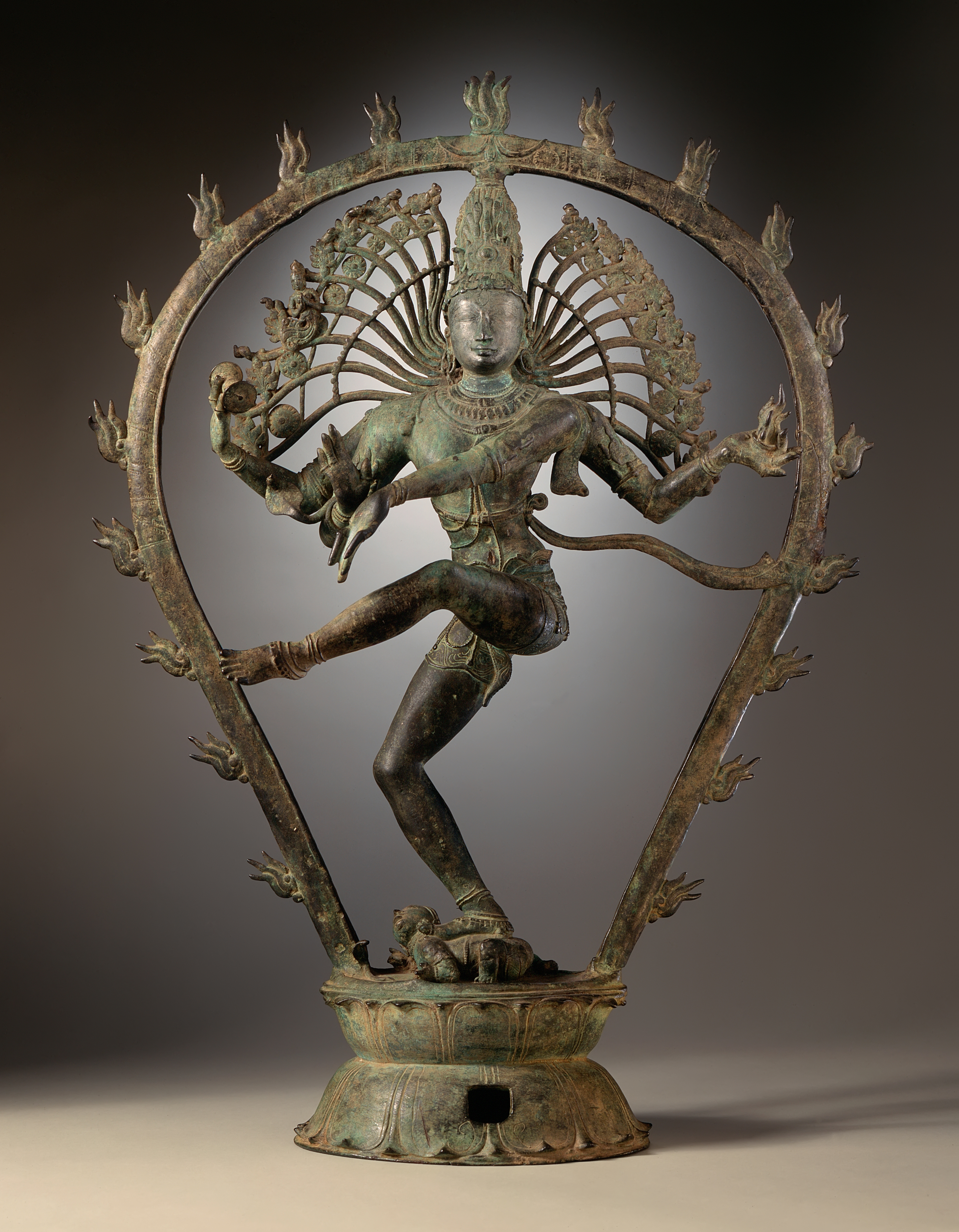
The intellectual “substance-in-itself.” It is what a substance inherently is. In Hinduism, it is symbolized as SHIVA, which is then formed into substances through SHAKTI.

—Q—

—R—

REALISM
The doctrine that universals have a real objective existence; that objects of sense perception have an existence independent of the act of perception. (In literature) attempts to represent subject-matter truthfully, avoiding speculative fiction and supernatural elements.

—S—

SCIENTIFIC REALISM
The universe described by science is real. Scientific theories are approximately true. 

SKEPTICISM
Maintains that real knowledge of things is impossible; doubts or questions the possibility of real knowledge of any kind; universal doubt.

SOPHISTS
Sophists were traveling teachers of wisdom, who looked within upon their own thought and nature, rather than out upon the world of things. They were all clever men (Gorgias and Hippias, for example), and many of them were profound (Protagoras, Prodicus); there is hardly a problem or a solution in our current philosophy of mind and conduct which they did not realize and discuss. They asked questions about anything; they stood unafraid in the presence of religious or political taboos; and boldly subpoenaed every creed and institution to appear before the judgment-seat of reason. In politics they divided into two schools. One, like Rousseau, argued that nature is good, and civilization bad; that by nature all men are equal, becoming unequal only by class-made institutions: and that law is an invention of the strong to chain and rule the weak. Another school, like Nietzsche, claimed that nature is beyond good and evil; that by nature all men are unequal; that morality is an invention of the weak to limit and deter the strong; that power is the supreme virtue and the supreme desire of man; and that of all forms of government the wisest and most natural is aristocracy.

SPECTRUM OF SUBSTANCE
The primary substance evolves into thought substance (SPACE), energy substance (ENERGY), and material substance (MATTER) by gradual condensation. This process of evolution is essentially the process of forming. This process may be called TIME. This gives us the spectrum of substance.

SPIRITUALISM
Any of various doctrines maintaining that the ultimate reality is spirit or mind.

SUBSTANCE
Origin: “That which stands under.” A thing is made of substance. The substance is a spectrum that extends from tangible matter to intangible light to ephemeral thought. This whole spectrum of substance is substantial enough to be sensed one way or another. The substance may be divided broadly as material substance, energy substance and thought substance.

—T—

THEISM
Belief in the existence of a divine reality; usually referring to monotheism (one God), as opposed to pantheism (all is God), polytheism (many gods), and atheism (without God).

THOUGHT
The thought substance is the material substance thinned out trillions of times. It is more like “gaseous”. Its space is filling the universe almost. Here we see space also expanding and time becoming swifter compared to material space and time. We encounter “quantum entanglement” when thought (and energy) space and time are superimposed over material space and time.

—U—

—V—

—W—

—X—

—Y—

—Z—

.

Postulate Mechanics: Postulates of Beingness

Reference: Postulate Mechanics

  1. The Self and Substance are simply there.
  2. The Self identifying with Substance produces Beingness.
  3. The goal of the beingness is to assimilate the knowable.
  4. The beingness evolves continually towards that goal.
  5. At the forefront of this evolution is the human Individual.
    • .
    • .
  6. The core of individual is the body, a matrix of matter and energy.
  7. The body is surrounding by a Mental Matrix of thought.
  8. The goal of the mental matrix is to assimilate all sensations.
  9. The assimilation may fail when there are Fixations.
  10. The fixations lead to aberrations in the individual.
    • .
    • .
  11. Freud talked about the “unconsciousness mind.”
  12. But that simply points to the failure to assimilate.
  13. Hubbard talked about the “reactive mind.”
  14. But that simply points to the fixations.
  15. The resolution of aberration is assimilation of fixations.
    • .
    • .
  16. The severest fixation is an Engram.
  17. It is a trauma containing pain and unconsciousness.
  18. The solution is to recall the traumatic incident.
  19. And spot its starting point and the duration.
  20. Then discover its content by repetitive recounting.
    • .
    • .
  21. The common manifestation of fixation is a Misjudgment.
  22. Misjudgments leads to overt actions that
    1. Do not make sense.
    2. Lead to embarrassment.
    3. Result in harm to self and others.
    4. Become criminal when extreme.
  23. Overts are followed by withholds and justifications.
  24. Together they form Goal-Problem-Mass (GPM).
  25. The GPMs are traced back to underlying misjudgments.
    • .
    • .
  26. Most subtle fixations are Misconception.
  27. These are erroneous postulates held very closely.
  28. They is discovered by observing the postulates.
    1. Using a top down sequencing approach.
    2. And noticing the anomalies.
  29. In general, fixations are resolved by deep but relaxed concentration.
  30. Such concentration is the practice of The 12 Aspects of Mindfulness.
    1. Observe without Desires
    2. Observe without Assuming
    3. Observe what is Missing
    4. Observe the Incomprehensible
    5. Observe all Senses
    6. Let the Mind Un-stack
    7. Experience Fully
    8. Do not suppress
    9. Associate Data freely
    10. Observe beyond Name and Form
    11. Contemplate thoughtfully
    12. Let it be effortless
      • .
      • .
  31. Desires make one want certain outcomes.
  32. And that leads to speculations.
  33. Acknowledge the desires you have
  34. And see things as they are!
  35. Look closely at The Anomaly suspected.
    • .
    • .

.