Author Archives: vinaire

I am originally from India. I am settled in United States since 1969. I love mathematics, philosophy and clarity in thinking.

SCN 8-8008: Patterns of Energy

Reference: The Book of Scientology

Patterns of Energy

Please see the original section at the link above.

.

Summary

.

Comments

The substance is “one” (continuous, consistent and harmonious). This property of oneness is maintained as the substance acquires patterns. Ideally, these patterns must be in balance with each other. Any imbalance creates ridges. The imbalance adjusts itself under processing.

.

Einstein 1920 (XXV) Gaussian Co-ordinates

Reference: Einstein’s 1920 Book

Section XXV (Part 2)
Gaussian Co-ordinates

Please see Section XXV at the link above.

.

Summary

Gauss invented a method for the mathematical treatment of continua in general, in which “size-relations” (“distances” between neighbouring points) are defined. To every point of a continuum are assigned as many numbers (Gaussian co-ordinates) as the continuum has dimensions. This is done in such a way, that only one meaning can be attached to the assignment, and that numbers (Gaussian co-ordinates) which differ by an indefinitely small amount are assigned to adjacent points.

The Gaussian co-ordinate system is a logical generalization of the Cartesian co-ordinate system. It is also applicable to non-Euclidean continua, but only when, with respect to the defined “size” or “distance,” small parts of the continuum under consideration behave more nearly like a Euclidean system, the smaller the part of the continuum under our notice.

.

Final Comments

.

Einstein 1920 (XXIV) Euclidean and Non-Euclidean Continuum

Reference: Einstein’s 1920 Book

Section XXIV (Part 2)
Euclidean and Non-Euclidean Continuum

Please see Section XXIV at the link above.

.

Summary

.

Final Comments

The Euclidean geometry is basically considering the surface of a sphere of infinite radius. Such a surface appears flat and it supports straight lines. These are boundary conditions that represent a substance of total flexibility. Within this boundary is substance that varies in the flexibility of its structure, such that the farthest point from the boundary is totally rigid.

The Euclidean geometry arbitrarily assumes a substance of totally rigid structure at the boundary and within that boundary throughout. The non-Euclidean geometry introduces the required flexibility, and the methods of Riemann accounts for the variations in that flexibility.

This flexibility represents the variations in the inertia of matter or, more generally, the variations in the consistency of substance filling the space-time.

.

Einstein 1920 (XXIII) Rotating Body of Reference

Reference: Einstein’s 1920 Book

Section XXIII (Part 2)
Behaviour of Clocks and Measuring Rods on a Rotating Body of Reference

Please see Section XXIII at the link above.

.

Summary

.

Final Comments

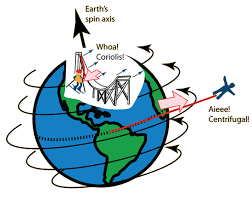
The space-time continuum in the gravitational field of a rotating body of reference shall have a varying sense of  inertia/consistency associated with different locations.

.

Einstein 1920 (XXII) A Few Inference

Reference: Einstein’s 1920 Book

Section XXII (Part 2)
A Few Inferences from the General Theory of Relativity

Please see Section XXII at the link above.

.

Summary

.

Final Comments

The most natural condition in this universe is the presence of gravitational fields. The general theory of relativity considers the effect of this condition on the space-time continuum.

The gravitational fields may be visualized as rotating motions much like whirlpools in the sea of energy. The substance in gravitational fields accelerates toward a center, where it collects and condenses.

.