Author Archives: vinaire

I am originally from India. I am settled in United States since 1969. I love mathematics, philosophy and clarity in thinking.

Physics II: Chapter 1

Reference: Beginning Physics II

Chapter 1: WAVE MOTION

.

KEY WORD LIST

Wave Motion, Pulse, Amplitude, Transverse Wave, Longitudinal Wave, Velocity Of Propagation, Propagation Constant, Wave Equation, Wavelength, Wave Energy And Power, Wave Reflection, Principle Of Superposition, Interference Patterns, Standing Wave, Nodes And Anti-Nodes, Natural Frequency, Fundamental Frequency, Harmonics, Overtones, Resonant Frequencies, Resonance, Pressure & Displacement Nodes

.

GLOSSARY

For details on the following concepts, please consult Chapter 1.

WAVE MOTION
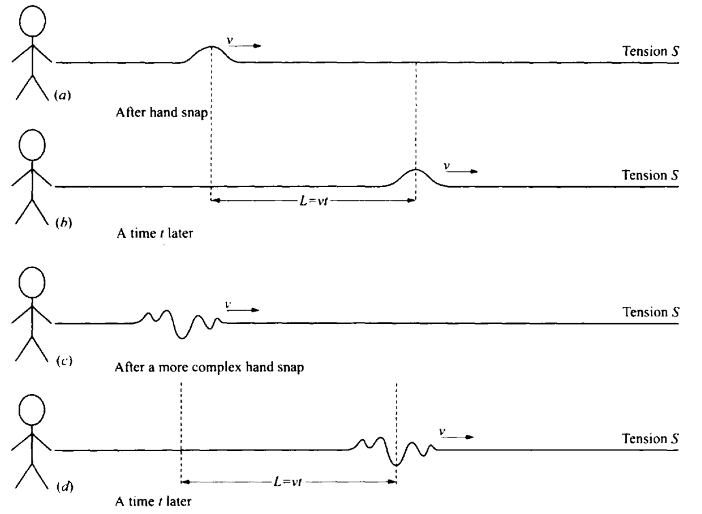
The wave motion is a process in which the physical matter itself does not move over significant distances beyond their initial positions, while the energy can be transferred over large distances. The transferred energy can carry information, so that wave motion allows the transfer of information over large distances as well.

PULSE
A pulse is a single stroke, vibration, or undulation. The molecules move perpendicular to the direction in which the pulse moves. The shape of the pulse travels as one set of molecules after another go through the vertical motion. The pulse carries the vertical kinetic energy of the moving molecules, and the associated potential energy due to momentary stretching of the cord, in the pulse region.

AMPLITUDE
Amplitude is the maximum vertical displacement of the pulse.

TRANSVERSE WAVE
The pulse in a cord is an example of a transverse wave, where molecules move to and fro at right angles to the direction of propagation of the wave.

LONGITUDINAL WAVE
In a longitudinal wave the molecules actually move to and fro along the direction of the propagation of the wave. This would be a pulse of pressure travelling through the air in a pipe. This air pulse is a primitive example of a sound wave.

VELOCITY OF PROPAGATION
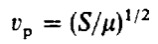
The velocity of propagation vp of the pulse in a cord would increase with increase in tension S in the cord. On the other hand, it would decrease with increase in mass per unit length μ.

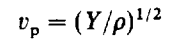
The propagation of sound in a solid would increase with increase in intrinsic stiffness as measured by the Young’s modulus Y, and with decrease in its density ρ.

The propagation of sound in a fluid would increase with increase in its Bulk modulus B, and with decrease in its density ρ.

PROPAGATION CONSTANT
We define the propagation constant for the wave as, k = ω/vp so that

WAVE EQUATION
The vertical position of the cord, at a definite horizontal position x along the cord, at any time t is,

This indicates that the vertical displacement of any point x along the cord, the cord exhibits SHM of the same amplitude and frequency with the term in the sine function involving x acting as a phase constant that merely shifts the time at which the vertical motion passes a given point in the cycle.

WAVELENGTH (λ)
The wavelength is the spatial periodicity of the wave, i.e., the length along the x-axis that one moves to go through one complete cycle of the wave.

WAVE ENERGY AND POWER
For the case of a transverse sinusoidal wave travelling in a cord, or a longitudinal wave travelling in a tube, the energy per unit length is,

And, the power transfer across any point of cross-section is,

WAVE REFLECTION
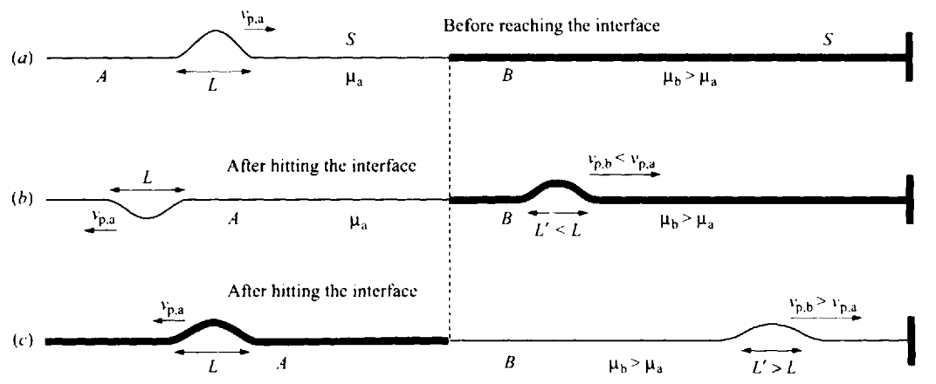
When the far end of the cord is tied down, the reflection is 180° out of phase.

When the far end of the cord is not tied down but free, the reflection is in phase.

A more general case is somewhere in-between these two extremes.

PRINCIPLE OF SUPERPOSITION
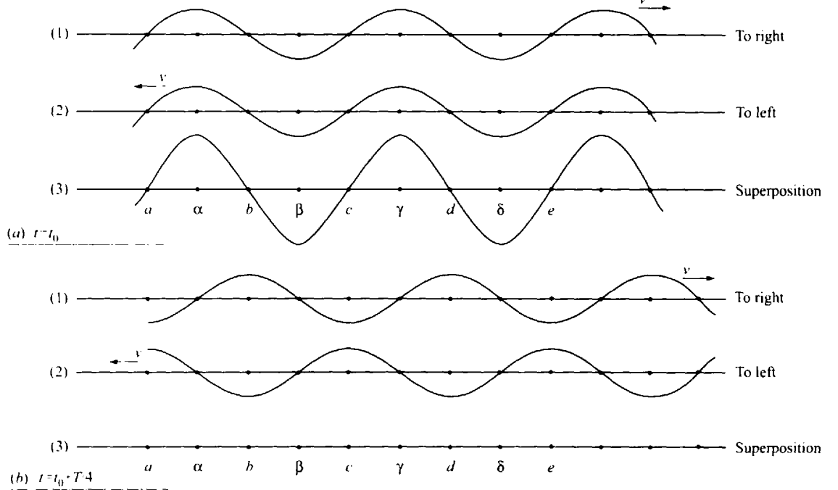
The actual displacement of molecules from their equilibrium position, at any given location in a medium, at any instant of time, when more than one wave is traveling through that medium, is just the vector sum of the displacements that each would separately have caused at the same location at that same instant of time.

INTERFERENCE PATTERNS
When two waves pass the same point in a medium they are said to interfere. If they correspond to long wave trains having the same wavelength, then certain regular patterns can appear, such as points that never move and points that move maximally. Such patterns are called interference patterns.

STANDING WAVE
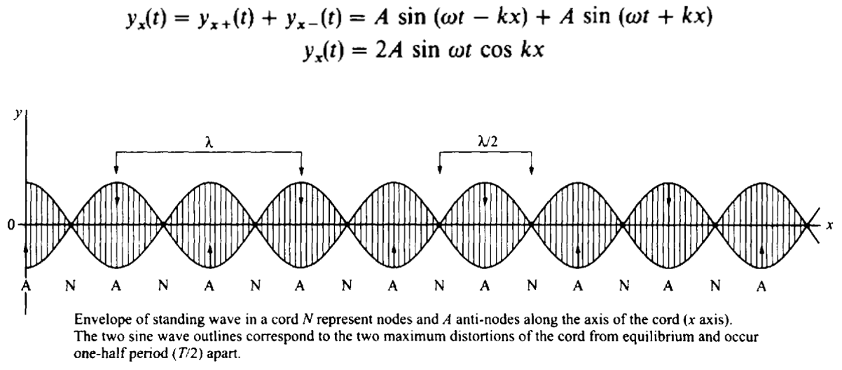
An examination of the actual “superimposed” wave may reveal some points on the cord that seem not to move at all as the waves pass each other, while other points midway between them move up and down with double the amplitude of either wave. The actual wave motion of the cord is therefore not a traveling wave, since in a traveling wave every point in the cord moves up and down in succession. The wave caused by the interference of these two traveling waves is therefore called a standing wave. It has the same frequency.

NODES AND ANTI-NODES
The points that don’t move are called nodes, and the points that move maximally are called anti-nodes.

NATURAL FREQUENCY
Many physical systems, when stimulated can be made to vibrate or oscillate with definite frequencies. In each of these cases there is a single “natural” frequency associated with the system. In more complex structures, many “natural” frequencies of vibration can occur.

FUNDAMENTAL FREQUENCY
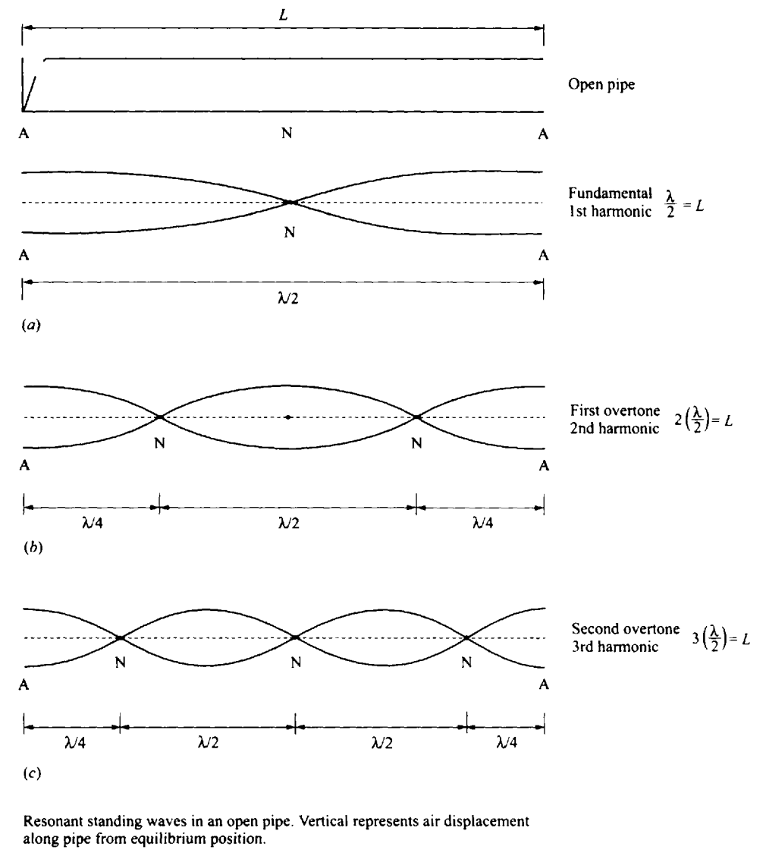
The fundamental frequency, f1, is the lowest possible natural frequency.

HARMONICS
The integer multiples of the fundamental frequency, fn, are called harmonics.

OVERTONES
The overtones are the successive natural frequencies above the fundamental.

RESONANT FREQUENCIES
Such “natural” frequencies, which are characteristic of the particular system or structure, are also called the resonant frequencies of the system.

RESONANCE
If one stimulates the system at one of the resonant frequencies, one can stimulate huge amplitude oscillations, sometimes to the point of destroying the structure. This is because, when stimulating a system at a resonant frequency it is extremely easy to transfer energy to the system.

PRESSURE & DISPLACEMENT NODES
In a longitudinal wave, the pressure variation is zero at the pressure node; and the displacement variation is zero at the displacement node. A pressure node is a displacement anti-node and vice versa.

.

CHRISTIANITY: The Historical Jesus

Reference: Christianity

[NOTE: In color are Vinaire’s comments.]

Jesus’ mission had been to crack the shell of Judaism in which revelation was encased and release that revelation to a ready and waiting world.

Of all the great religions Christianity is the most widespread and has the largest number of adherents. The figure is probably inflated, but registries list almost one out of every three persons today as Christian, bringing the number into the neighborhood of one and one-half billion.

Christianity is the most widespread religion and has the largest number of adherents.

Nearly two thousand years of history have brought an astonishing diversity to this religion. From the majestic pontifical High Mass in St. Peter’s to the quiet simplicity of a Quaker meeting; from the intellectual sophistication of Saint Thomas Aquinas to the moving simplicity of spirituals such as “Lord, I want to be a Christian”; from St. Paul’s in London, the parish Church of Great Britain, to Mother Teresa in the slums of Calcutta—all this is Christianity. From this dazzling and often bewildering complex, it will be our task to indicate first the central strands that unite this religion, and then its three major divisions: Roman Catholicism, Eastern Orthodoxy, and Protestantism.

Christianity is also the most diverse religion.

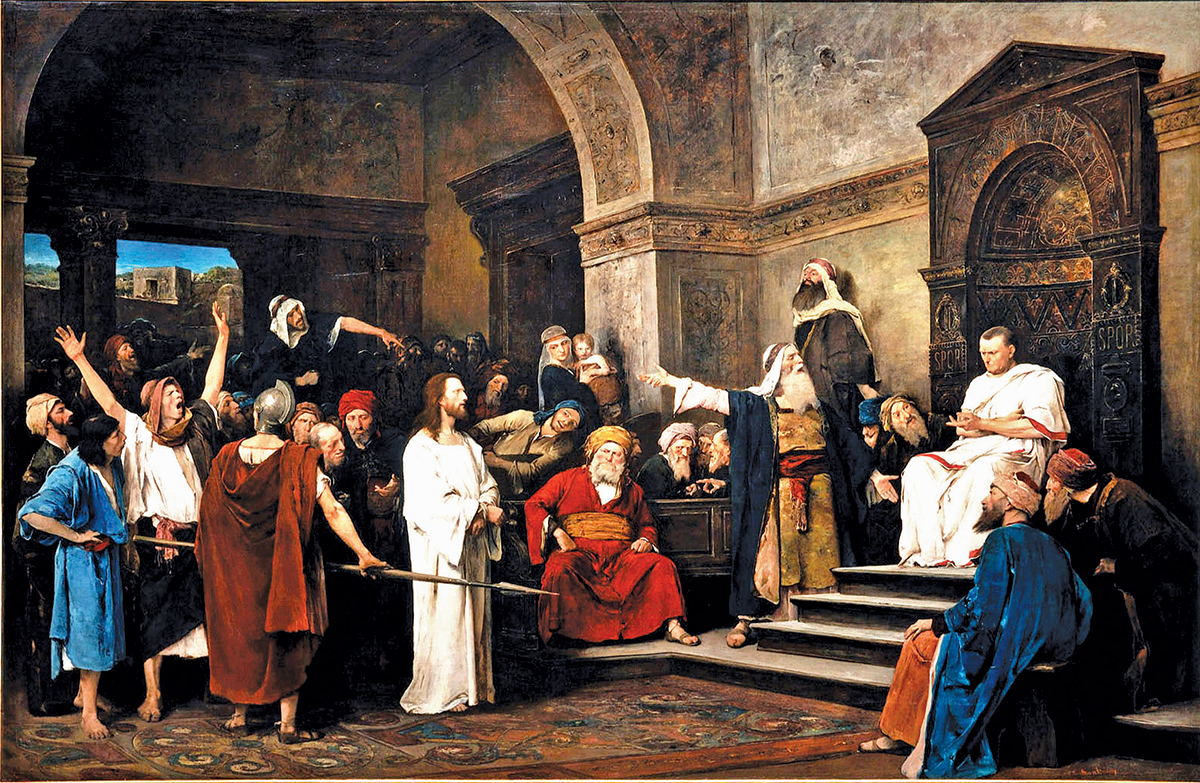
Christianity is basically a historical religion. That is to say, it is founded not on abstract principles but in concrete events, actual historical happenings. The most important of these is the life of a Jewish carpenter who, as has often been pointed out, was born in a stable, was executed as a criminal at age thirty-three, never traveled more than ninety miles from his birthplace, owned nothing, attended no college, marshaled no army, and instead of producing books did his only writing in the sand. Nevertheless, his birthday is kept across the world and his death day sets a gallows against almost every skyline. Who was he? 

Christianity is founded not on abstract principles but in concrete events, actual historical happenings. 

The biographical details of Jesus’ life are so meager that early in this century some investigators went so far as to suggest that he may never have lived. That possibility was soon rejected, but the impact of Albert Schweitzer’s century-dominating Quest for Historical Jesus reduced what the world was hearing about Jesus from biblical scholars to two points: We know almost nothing about him; and of the little we know, what is most certain is that he was wrong—this last referred to his putative belief that the world would quickly come to an end. As this is not much to build a Church on, it is fortunate that “the extreme historical skepticism that has marked most Jesus study in this century is abating.” Classicists have remarked that if the canons for historical reliability that have been erected for the Bible had been required in their studies, our view of the Greco-Roman world (which seems to be reasonably in place) would be in shambles.

Historically, we know almost nothing about Jesus Christ.

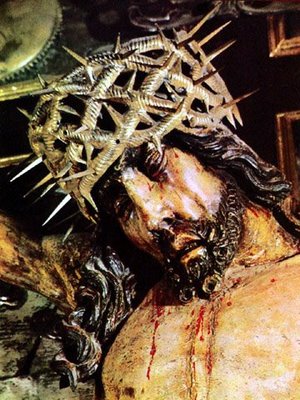
Who, then, was this Jesus whom New Testament scholars are beginning to return to view? He was born in Palestine during the reign of Herod the Great, probably around 4 B.C.—our reckoning of the centuries that purports to date from his birth is almost certainly off by several years. He grew up in or near Nazareth, presumably after the fashion of other normal Jews of the time. He was baptized by John, a dedicated prophet who was electrifying the region with his proclamation of God’s coming judgment. In his early thirties he had a teaching-healing career, which lasted between one and three years and was focused largely in Galilee. In time he incurred the hostility of some of his own compatriots and the suspicion of Rome, which led to his crucifixion on the outskirts of Jerusalem. From these facts that fix the framework of Jesus’ life, we turn to the life that was lived within that framework.

We only have a framework of Jesus’ brief 33 years long life.

Minimally stated, Jesus was a charismatic wonder-worker who stood in a tradition that stretched back to the beginnings of Hebrew history. The prophets and seers who comprised that tradition mediated between the everyday world, on the one hand, and a Spirit world that enveloped it. From the latter they drew power, which they used both to help people and to challenge their ways. We shall expand this capsule characterization by considering successively (a) the Spirit world, to which Jesus was exceptionally oriented and which powered his ministry; (b) his deployment of his Spirit-derived powers in the alleviation of human suffering; and (c) the new social order he sought to effect.

Jesus drew power from the spirit world, which he deployed to alleviate human suffering and affect a new social order.

“The Spirit of the Lord Is Upon Me.” According to Luke Jesus opened his ministry by quoting this statement from Isaiah and adding, “Today this scripture has been fulfilled.” We must attend to this Spirit that Jesus experienced as empowering him, for there can be no understanding of his life and work if it is omitted.

In what has proved to be one of our century’s most durable books about religion, The Varieties of Religious Experience, William James tells us that “in its broadest terms, religion says that there is an unseen order, and that our supreme good lies in rightful relations to it.” Until recently, modern science seemed to question the reality of unseen entities; but with Eddington’s observation that the world is more like a mind than a machine, and astrophysicists’ reports that 90 percent of the “matter” in the universe is invisible in the sense that it impacts none of their instruments, scientific skepticism has begun to subside. The point here, however, is that the biblical tradition in which Jesus stood can only be read as a continuous, sustained-and-demanding dialogue of the Hebrew people with the unseen order that William James emphasizes. They called that order Spirit (as in the opening verses of the Bible, where Spirit plays over primordial waters to create the world) and, sensing it as intensely alive, they populated it with beings such as angels, archangels, cherubim, and seraphim. Its center, however, was Yahweh, whom they viewed personally: as shepherd, king, lord, father (and less commonly, mother), and lover. Though Spirit was typically pictured as being above the earth—images of ladders to Heaven are routine—that was only to stress its distinctness from, and superiority over, the mundane world. The two were not spatially separated, and were in continuous interaction. God walked in the garden of Eden, and “the whole earth is full of God’s glory,” his radiant presence.

“In its broadest terms, religion says that there is an unseen order, and that our supreme good lies in rightful relations to it.” 

Not only was Spirit not spatially removed; though invisible, it could be known. Often it would take the initiative and announce itself. It did this supremely to Moses on Mount Sinai, but it also spoke in a still small voice to Elijah, in lions’ roars to other prophets, and in dramatic events like the Exodus. Concurrently, human beings could take the initiative in contacting it. Fasting and solitude were means for doing so, and Jews who felt the call would periodically remove themselves from the world’s distractions to commune with the divine through these aids. It will not be amiss to think of them as soaking themselves in Spirit during these vigils, for when they return to the world they often give evidence of having almost palpably absorbed something: Spirit and its attendant power.

Spirit is invisible but not spatially removed; and often it takes the initiative and announces itself. 

That Jesus stood in the Jewish tradition of Spirit-filled mediators is the most important fact for understanding his historical career. His immediate predecessor in this tradition was John the Baptist; and it is a testament to his spiritual power that it was his initiation (baptism) of Jesus that opened his third or spiritual eye, as Asians would say, causing him to see “the heavens opened and the Spirit descending upon him like a dove.” Having descended, the Spirit “drove” Jesus into the wilderness where, during forty days of prayer and fasting, he consolidated the Spirit that had entered him. Having done so he reentered the world, empowered.

Jesus stood in the Jewish tradition of Spirit-filled mediators.

“By the Spirit of God I Cast Out Demons.” If science no longer discounts invisible realities, it has also grown open to the prospect that they may be powerful, for experiments now suggest that “the energy inherent in one cubic centimeter of empty space is greater than the energy of all the matter in the known universe.” Whatever the fate of that particular hypothesis, the Jews accepted the supremacy of Spirit over nature without question. The Spirit-filled personages of the Bible have power. To say that they were charismatic is to say they had power to attract people’s attention, but that is only the beginning of the matter. The reason they attracted notice was the exceptional power they possessed. They “had something,” as we say—something ordinary mortals lack. That something was Spirit. The Bible frequently depicts them as “filled with the power of the Spirit,” a power that enabled them at times to influence the natural course of events. They healed diseases, cast out demons, and occasionally quelled storms, parted waters, and caused the dead to return to life. The Gospels attribute these powers to Jesus copiously. Again and again they report people flocking to him, drawn by his wonder-working reputation. “They brought to him all who were sick or possessed with demons,” we read, “and the whole city was gathered together about the door.” A New Testament scholar comments that “despite the difficulty which miracles pose for the modern mind, on historical grounds it is virtually indisputable that Jesus was a healer and exorcist.”

“Despite the difficulty which miracles pose for the modern mind, on historical grounds it is virtually indisputable that Jesus was a healer and exorcist.”

He could have been that—indeed, he could have been “the most extraordinary figure in…the stream of Jewish charismatic healers,” as the same New Testament scholar goes on to say—without attracting more than local attention. What made him outlive his time and place was the way he used the Spirit that coursed through him not just to heal individuals but—this was his aspiration—to heal humanity, beginning with his own people.

What made Jesus outlive his time and place was the way he used the Spirit that coursed through him not just to heal individuals but to heal humanity, beginning with his own people.

“Thy Kingdom Come, on Earth.” Politically, the position of the Jews in Jesus’ time was desperate. They had been in servitude to Rome for the better part of a century and, along with their loss of freedom, were being taxed almost beyond endurance. Existing responses to their predicament were four. The Sadducees, who were relatively well off, favored making the best of a bad situation and accommodated themselves to Hellenistic culture and Roman rule. The other positions hoped for change. All three recognized that the change would have to be effected by Yahweh, and all assumed that the Jews needed to do something that would prompt his intervention. Two of the three were renewal movements. The Essenes considered the world as too corrupt to allow for Judaism to renew itself within it, so they dropped out. Withdrawing into property-sharing communes, they devoted themselves to lives of disciplined piety. The Pharisees, on the other hand, remained within society and sought to revitalize Judaism through adhering strictly to the Mosaic law, especially its holiness code. Representatives of the fourth position have been referred to as Zealots, but it is doubtful that they were sufficiently organized to deserve a name. Despairing that any change could occur without brute force, they launched sporadic acts of resistance that culminated in the catastrophic revolt of 66–70 A.D., which led to the second destruction of the Temple in Jerusalem.

The position of the Jews in Jesus’ time under Roman rule was desperate. Existing responses to their predicament were in terms of the Sadducees, the Essenes, the Pharisees, and the Zealots.

Into this political cauldron Jesus introduced a fifth option. Unlike the Sadducees, he wanted change. Unlike the Essenes, he stayed in the world. Unlike the advocates of the military option, he extolled peacemakers and urged that even enemies be loved. It was the Pharisees that Jesus stood closest to, for the difference between them was one of emphasis only. The Pharisees stressed Yahweh’s holiness, while Jesus stressed Yahweh’s compassion; but the Pharisees would have been the first to insist that Yahweh was also compassionate, and Jesus that Yahweh was holy. The difference appears at first to be small, but in actuality it proved to be too large for a single religion to accommodate. We must understand why this was the case. 

Jesus stood closest to the Pharisees but the difference proved to be too large for a single religion to accommodate.

Grounding themselves in the understanding of Yahweh as majestic holiness, the Pharisees went on to affirm the accepted version of Jewish self-understanding. Being holy himself, Yahweh wanted to hallow the world as well, and to accomplish this aim he selected the Jews to plant for him, as it were, a beachhead of holiness in human history. On Mount Sinai he had prescribed a holiness code, faithful observance of which would make of the Hebrews “a nation of priests.” Yahweh’s dictum to them, “You shall be holy, as I the Lord your God am holy,” became the Pharisees’ watchword. It was laxity in the observance of the holiness code that had reduced the Jews to their degraded state, and only the wholehearted return to it would reverse that state. 

The Pharisees were devoted to the holiness code prescribed on Mount Sinai by Yahweh.

Much of this Jesus subscribed to, but there was an important feature of the holiness program he found unacceptable: the lines that it drew between people. Beginning by categorizing acts and things as clean or unclean (foods and their preparation, for example), the holiness code went on to categorize people according to whether they respected those distinctions. The result was a social structure that was riven with barriers: between people who were clean and unclean, pure and defiled, sacred and profane, Jew and Gentile, righteous and sinner. Having concluded that Yahweh’s central attribute was compassion, Jesus saw social barriers as an affront to that compassion. So he parleyed with tax collectors, dined with outcasts and sinners, socialized with prostitutes, and healed on the sabbath when compassion prompted doing so. This made him a social prophet, challenging the boundaries of the existing order and advocating an alternative vision of the human community. 

Jesus subscribed to the holiness code except for the lines it drew between the Jew and Gentile. 

Jesus was deeply Jewish; at the same time he stood in sharp tension with Judaism. (One is tempted to claim this as an important aspect of his Jewishness, for no religion has manifest, and on the whole encouraged, internal criticism to the extent that this one has.) Jesus saw the holiness code and the distinctions that followed from it as having been needed to lift the Jews to a purity that surpassed their neighbors. His own encounter with God, however, led him to the conviction that, as practiced in his time, the purity system had created social divisions that compromised God’s compassion, which compassion the Pharisees equally subscribed to in principle. 

Jesus objected to the fact that the compassion of Jews did not extend to the Gentile.

It is important to emphasize that the issue was not God’s compassion; it was whether the social system that the holiness code in its outworkings had structured was compassionate. Jesus’ conviction that it was not put him at odds with the Pharisees, but his protest did not prevail. It did, however, attract enough attention to alarm the Roman authorities, which led to Jesus’ arrest and execution on charges of treason. 

This put Jesus at odds with the Pharisees, and it attracted enough attention to alarm the Roman authorities.

Thereafter the future of the “Jesus people” lay with the wider world. In time Christians came to read this development positively. To their eyes God’s revelation to the Jews was too important to be confined to a single ethnic group. Jesus’ mission had been to crack the shell of Judaism in which revelation was encased and release that revelation to a ready and waiting world. Putting it this way does not cancel the need for a continuing Jewish presence. Until the world is regenerated, the witness of a nation of priests remains relevant.

Jesus’ mission had been to crack the shell of Judaism in which revelation was encased and release that revelation to a ready and waiting world.

.

BUDDHISM: The Man Who Woke Up

Reference: Buddhism

[NOTE: In color are Vinaire’s comments.]

Two sentences from his valedictory have echoed through the ages. “All compounded things decay. Work out your own salvation with diligence.”

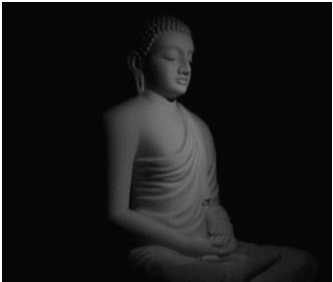
Buddhism begins with a man. In his later years, when India was afire with his message and kings themselves were bowing before him, people came to him even as they were to come to Jesus asking what he was. How many people have provoked this question—not “Who are you?” with respect to name, origin, or ancestry, but “What are you? What order of being do you belong to? What species do you represent?” Not Caesar, certainly. Not Napoleon, or even Socrates. Only two: Jesus and Buddha. When the people carried their puzzlement to the Buddha himself, the answer he gave provided an identity for his entire message.

“Are you a god?” they asked. “No.” “An angel?” “No.” “A saint?” “No.” “Then what are you?” 

Buddha answered, “I am awake.”

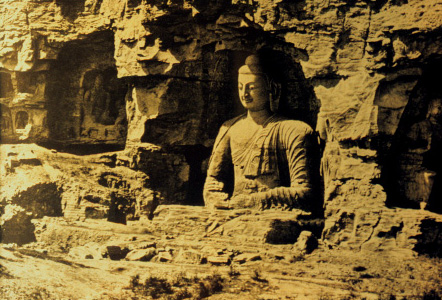
His answer became his title, for this is what Buddha means. The Sanskrit root budh denotes both to wake up and to know. Buddha, then, means the “Enlightened One,” or the “Awakened One.” While the rest of the world was wrapped in the womb of sleep, dreaming a dream known as the waking state of human life, one of their number roused himself. Buddhism begins with a man who shook off the daze, the doze, the dream-like vagaries of ordinary awareness. It begins with a man who woke up. 

Buddha means the “Enlightened One,” or the “Awakened One.” Buddhism begins with a man who shook off the daze, the doze, the dream-like vagaries of ordinary awareness. It begins with a man who woke up. 

His life has become encased in loving legend. We are told that the worlds were flooded with light at his birth. The blind so longed to see his glory that they received their sight; the deaf and mute conversed in ecstasy of the things that were to come. Crooked became straight; the lame walked. Prisoners were freed from their chains and the fires of hell were quenched. Even the cries of the beasts were hushed as peace encircled the earth. Only Mara, the Evil One, did not rejoice.

The birth of Buddha was accompanied with an age of great hope.

The historical facts of his life are roughly these: He was born around 563 B.C. in what is now Nepal, near the Indian border. His full name was Siddhartha Gautama of the Sakyas. Siddhartha was his given name, Gautama his surname, and Sakya the name of the clan to which his family belonged. His father was a king, but as there were then many kingdoms in the subcontinent of India, it would be more accurate to think of him as a feudal lord. By the standards of the day his upbringing was luxurious. “I wore garments of silk and my attendants held a white umbrella over me. My unguents were always from Banaras.” He appears to have been exceptionally handsome, for there are numerous references to “the perfection of his visible body.” At sixteen he married a neighboring princess, Yasodhara, who bore a son whom they called Rahula.

Buddha was born in a prosperous family with a luxurious life.

He was, in short, a man who seemed to have everything: family, “the venerable Gautama is well born on both sides, of pure descent”; appearance, “handsome, inspiring trust, gifted with great beauty of complexion, fair in color, fine in presence, stately to behold”; wealth, “he had elephants and silver ornaments for his elephants.” He had a model wife, “majestic as a queen of heaven, constant ever, cheerful night and day, full of dignity and exceeding grace,” who bore him a beautiful son. In addition, as heir to his father’s throne, he was destined for fame and power.

He had a well-balanced personality, a great family and a bright future.

Despite all this there settled over him in his twenties a discontent, which was to lead to a complete break with his worldly estate. 

Yet, he was not contented with his life.

The source of his discontent is impounded in the legend of The Four Passing Sights, one of the most celebrated calls to adventure in all world literature. When Siddhartha was born, so this story runs, his father summoned fortunetellers to find out what the future held for his heir. All agreed that this was no usual child. His career, however, was crossed with one basic ambiguity. If he remained with the world, he would unify India and become her greatest conqueror, a Chakravartin or Universal King. If, on the other hand, he forsook the world, he would become not a world conqueror but a world redeemer. Faced with this option, his father determined to steer his son toward the former destiny. No effort was spared to keep the prince attached to the world. Three palaces and 40,000 dancing girls were placed at his disposal; strict orders were given that no ugliness intrude upon the courtly pleasures. Specifically, the prince was to be shielded from contact with sickness, decrepitude, and death; even when he went riding, runners were to clear the roads of these sights. One day, however, an old man was overlooked, or (as some versions have it) miraculously incarnated by the gods to effect the needed lesson: a man decrepit, broken-toothed, gray-haired, crooked and bent of body, leaning on a staff, and trembling. That day Siddhartha learned the fact of old age. Though the king extended his guard, on a second ride Siddhartha encountered a body racked with disease, lying by the roadside; and on a third journey, a corpse. Finally, on a fourth occasion he saw a monk with shaven head, ochre robe, and bowl, and on that day he learned of the life of withdrawal from the world. It is a legend, this story, but like all legends it embodies an important truth. For the teachings of the Buddha show unmistakably that it was the body’s inescapable involvement with disease, decrepitude, and death that made him despair of finding fulfillment on the physical plane. “Life is subject to age and death. Where is the realm of life in which there is neither age nor death?”

From childhood his life was shielded from contact with sickness, decrepitude, and death. So, his first encounters with old age, disease and death were quite shocking, and so was his encounter with a monk and with the idea of life of withdrawal from the world.

Once he had perceived the inevitability of bodily pain and passage, fleshly pleasures lost their charm. The singsong of the dancing girls, the lilt of lutes and cymbals, the sumptuous feasts and processions, the elaborate celebration of festivals only mocked his brooding mind. Flowers nodding in the sunshine and snows melting on the Himalayas cried louder of the evanescence of worldly things. He determined to quit the snare of distractions his palace had become and follow the call of a truth-seeker. One night in his twentyninth year he made the break, his Great Going Forth. Making his way in the post-midnight hours to where his wife and son were locked in sleep, he bade them both a silent goodbye, and then ordered the gatekeeper to bridle his great white horse. The two mounted and rode off toward the forest. Reaching its edge by daybreak, Gautama changed clothes with the attendant who returned with the horse to break the news, while Gautama shaved his head and, “clothed in ragged raiment,” plunged into the forest in search of enlightenment. 

The young Siddhartha became acutely aware of the meaninglessness of his opulent life. He determined to follow the call of a truth-seeker, and escaped to a life in the forest. 

Six years followed, during which his full energies were concentrated toward this end. “How hard to live the life of the lonely forest dweller…to rejoice in solitude. Verily, the silent groves bear heavily upon the monk who has not yet won to fixity of mind!” The words bear poignant witness that his search was not easy. It appears to have moved through three phases, without record as to how long each lasted or how sharply the three were divided. His first act was to seek out two of the foremost Hindu masters of the day and pick their minds for the wisdom in their vast tradition. He learned a great deal—about raja yoga especially, but about Hindu philosophy as well; so much in fact that Hindus came to claim him as their own, holding that his criticisms of the religion of his day were in the order of reforms and were less important than his agreements. In time, however, he concluded that he had learned all that these yogis could teach him.

His search was not easy. He sought out the foremost Hindu masters of the day and pick their minds for the wisdom in their vast tradition. He learned all that these yogis could teach him and still found answers to be missing.

His next step was to join a band of ascetics and give their way an honest try. Was it his body that was holding him back? He would break its power and crush its interference. A man of enormous will power, the Buddha-to-be outdid his associates in every austerity they proposed. He ate so little—six grains of rice a day during one of his fasts—that “when I thought I would touch the skin of my stomach I actually took hold of my spine.” He would clench his teeth and press his tongue to his palate until “sweat flowed from my armpits.” He would hold his breath until it felt “as if a strap were being twisted around my head.” In the end he grew so weak that he fell into a faint; and if the maiden Sujata had not been around to feed him some warm rice gruel, he could easily have died.

He then joined a band of ascetics and practiced asceticism to such a degree that he could easily have died.

This experience taught him the futility of asceticism. He had given this experiment all anyone could, and it had not succeeded—it had not brought enlightenment. But negative experiments carry their own lessons, and in this case asceticism’s failure provided Gautama with the first constructive plank for his program: the principle of the Middle Way between the extremes of asceticism, on the one hand, and indulgence on the other. It is the concept of the rationed life, in which the body is given what it needs to function optimally, but no more.

Neither the indulgence to the whims of the body nor the practice of asceticism was the answer. The solution lay in the principle of the Middle way. The body is to be given what it needs to function optimally, but no more.

Having turned his back on mortification, Gautama devoted the final phase of his quest to a combination of rigorous thought and mystic concentration along the lines of raja yoga. One evening near Gaya in northeast India, south of the present city of Patna, he sat down under a peepul tree that has come to be known as the Bo Tree (short for bodhi or enlightenment). The place was later named the Immovable Spot, for tradition reports that the Buddha, sensing that a breakthrough was near, seated himself that epoch-making evening vowing not to arise until enlightenment was his.

Gautama then devoted himself to a combination of rigorous thought and mystic concentration along the lines of raja yoga. 

The records offer as the first event of the night a temptation scene reminiscent of Jesus’ on the eve of his ministry. The Evil One, realizing that his antagonist’s success was imminent, rushed to the spot to disrupt his concentrations. He attacked first in the form of Kama, the God of Desire, parading three voluptuous women with their tempting retinues. When the Buddha-to-be remained unmoved, the Tempter switched his guise to that of Mara, the Lord of Death. His powerful hosts assailed the aspirant with hurricanes, torrential rains, and showers of flaming rocks, but Gautama had so emptied himself of his finite self that the weapons found no target to strike and turned into flower petals as they entered his field of concentration. When, in final desperation, Mara challenged his right to do what he was doing, Gautama touched the earth with his right fingertip, whereupon the earth responded, thundering, “I bear you witness” with a hundred, a thousand, and a hundred thousand roars. Mara’s army fled in rout, and the gods of heaven descended in rapture to tend the victor with garlands and perfumes.

Finally Gautama understood what lay beyond all those desires for the indulgence and survival of the body.

Thereafter, while the Bo Tree rained red blossoms that full-mooned May night, Gautama’s meditation deepened through watch after watch until, as the morning star glittered in the transparent sky of the east, his mind pierced at last the bubble of the universe and shattered it to naught, only, wonder of wonders, to find it miraculously restored with the effulgence of true being. The Great Awakening had arrived. Gautama’s being was transformed, and he emerged the Buddha. The event was of cosmic import. All created things filled the morning air with their rejoicings and the earth quaked six ways with wonder. Ten thousand galaxies shuddered in awe as lotuses bloomed on every tree, turning the entire universe into “a bouquet of flowers set whirling through the air.” The bliss of this vast experience kept the Buddha rooted to the spot for seven entire days. On the eighth he tried to rise, but another wave of bliss broke over him. For a total of forty-nine days he was lost in rapture, after which his “glorious glance” opened onto the world. 

The Great Awakening was momentous.

Mara was waiting for him with one last temptation. He appealed this time to what had always been Gautama’s strong point, his reason. Mara did not argue the burden of reentering the world with its banalities and obsessions. He posed a deeper challenge. Who could be expected to understand truth as profound as that which the Buddha had laid hold of? How could speech-defying revelation be translated into words, or visions that shatter definitions be caged in language? In short, how show what can only be found, teach what can only be learned? Why bother to play the idiot before an uncomprehending audience? Why not wash one’s hands of the whole hot world—be done with the body and slip at once into nirvana? The argument was so persuasive that it almost carried the day. At length, however, the Buddha answered, “There will be some who will understand,” and Mara was banished from his life forever.

The last doubt was about the near impossibility of bringing this awakened state to others. Should one be satisfied with attaining enlightenment oneself.

Nearly half a century followed, during which the Buddha trudged the dusty paths of India until his hair was white, step infirm, and body nothing but a burst drum, preaching his ego-shattering, life-redeeming message. He founded an order of monks and nuns, challenged the deadness of brahmin society, and accepted in return the resentment, queries, and bewilderment his stance provoked. His daily routine was staggering. In addition to training monks and overseeing the affairs of his order, he maintained an interminable schedule of public preaching and private counseling, advising the perplexed, encouraging the faithful, and comforting the distressed. “To him people come right across the country from distant lands to ask questions, and he bids all welcome.” Underlying his response to these pressures and enabling him to stand up under them was the pattern of withdrawal and return that is basic to all creativity. The Buddha withdrew for six years, then returned for forty-five. But each year was likewise divided: nine months in the world, followed by a three-month retreat with his monks during the rainy season. His daily cycle, too, was patterned to this mold. His public hours were long, but three times a day he withdrew, to return his attention (through meditation) to its sacred source.

Buddha devoted his life to bringing enlightenment broadly in the society, while withdrawing regularly to return his attention to its sacred source.

After an arduous ministry of forty-five years, at the age of eighty and around the year 483 B.C., the Buddha died from dysentery after eating a meal of dried boar’s flesh in the home of Cunda the smith. Even on his deathbed his mind moved toward others. In the midst of his pain, it occurred to him that Cunda might feel responsible for his death. His last request, therefore, was that Cunda be informed that of all the meals he had eaten during his long life, only two stood out as having blessed him exceptionally. One was the meal whose strength had enabled him to reach enlightenment under the Bo Tree, and the other the one that was opening to him the final gates to nirvana. This is but one of the deathbed scenes that The Book of the Great Decease has preserved. Together they present a picture of a man who passed into the state in which “ideas and consciousness cease to be” without the slightest resistance. Two sentences from his valedictory have echoed through the ages. “All compounded things decay. Work out your own salvation with diligence.”

Two sentences from his valedictory have echoed through the ages. “All compounded things decay. Work out your own salvation with diligence.”

.

Christianity

Reference: The World’s Religions

  1. The Historical Jesus
  2. The Christ of Faith
  3. The End and the Beginning
  4. The Good News
  5. The Mystical Body of Christ
  6. The Mind of the Church
  7. Roman Catholicism
  8. Eastern Orthodoxy
  9. Protestantism
  10. Suggestions for Further Reading

.

Buddhism

Reference: The World’s Religions

  1. The Man Who Woke Up
  2. The Silent Sage
  3. The Rebel Saint
  4. The Four Noble Truths
  5. The Eightfold Path
  6. Basic Buddhist Concepts
  7. Big Raft and Little
  8. The Secret of the Flower
  9. The Diamond Thunderbolt
  10. The Image of the Crossing
  11. The Confluence of Buddhism and Hinduism in India
  12. Suggestions for Further Reading

.