
Reference: SC: Psychology
.
Ancient history – BCE
- c. 1550 BCE – The Ebers Papyrus mentioned depression and thought disorders.
- c. 600 BCE – Many cities in Greece had temples to Asklepios that provided cures for psychosomatic illnesses.
- 540–475 Heraclitus
- c. 500 Alcmaeon[3] – suggested theory of humors as regulating human behavior (similar to Empedocles‘ elements)
- 500–428 Anaxagoras
- 490–430 Empedocles proposed a first natural, non-religious system of factors that create things around, including human characters. In his model he used four elements (water, fire, earth, air) and four seasons to derive diversity of natural systems.
- 490–421 Protagoras
- 470–399 Socrates – Socrates has been called the father of western philosophy, if only via his influence on Plato and Aristotle. Socrates made a major contribution to pedagogy via his dialectical method and to epistemology via his definition of true knowledge as true belief buttressed by some rational justification.
- 470–370 Democritus – Democritus distinguished between insufficient knowledge gained through the senses and legitimate knowledge gained through the intellect—an early stance on epistemology.
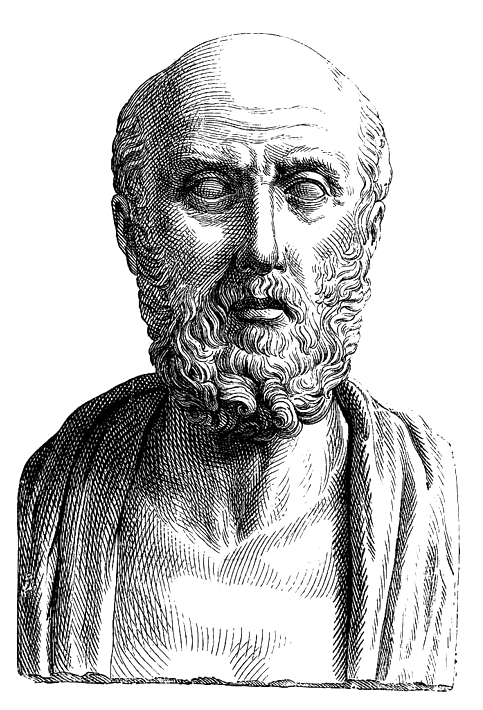
- 460 BC – 370 BCE – Hippocrates introduced principles of scientific medicine based upon naturalistic observation and logic, and denied the influence of spirits and demons in diseases. Introduced the concept of “temperamentum”(“mixture”, i.e. 4 temperament types based on a ratio between chemical bodily systems. Hippocrates was among the first physicians to argue that brain, and not the heart is the organ of psychic processes.
- 387 BCE – Plato suggested that the brain is the seat of mental processes. Plato’s view of the “soul” (self) is that the body exists to serve the soul: “God created the soul before the body and gave it precedence both in time and value, and made it the dominating and controlling partner.” from Timaeus
- c. 350 BCE – Aristotle wrote on the psuchê (soul) in De Anima, first mentioning the tabula rasa concept of the mind.
- c. 340 BCE – Praxagoras
- 371–288 Theophrastus
- 341–270 Epicurus
- c. 320 Herophilus
- c. 300–30 Zeno of Citium taught the philosophy of Stoicism, involving logic and ethics. In logic, he distinguished between imperfect knowledge offered by the senses and superior knowledge offered by reason. In ethics, he taught that virtue lay in reason and vice in rejection of reason. Stoicism inspired Aaron Beck to introduce cognitive behavioral therapy in the 1970s.
- 304–250 Erasistratus
- 123–43 BCE – Themison of Laodicea was a pupil of Asclepiades of Bithynia and founded a school of medical thought known as “methodism.” He was criticized by Soranus for his cruel handling of mental patients. Among his prescriptions were darkness, restraint by chains, and deprivation of food and drink. Juvenal satirized him and suggested that he killed more patients than he cured.
- c. 100 BCE – The Dead Sea Scrolls noted the division of human nature into two temperaments.
.
