Monthly Archives: April 2019

OT 1948: Auditing

Reference: DIANETICS: The Original Thesis

This paper presents Chapter 11 from the book DIANETICS: THE ORIGINAL THESIS by L. RON HUBBARD. The contents are from the original publication of this book by The Hubbard Dianetic Foundation, Inc. (1948).

The paragraphs of the original material (in black) are accompanied by brief comments (in color) based on the present understanding.  Feedback on these comments is appreciated.

The heading below is linked to the original materials.

.

Auditing

The auditing technique consists of assisting the preclear’s analytical mind or some part of it with the auditor’s analytical mind. The auditor then functions during each successive period of auditing, and only during the periods themselves, as an extra analytical mind of the preclear.

The mindfulness auditing technique consists of concentrating on a clearly recognized aberration while letting the mind unwind through free association.

The job of the auditor is to help the auditee find the aberration that is real and ready to be concentrated on. He then encourages the auditee to apply the auditing technique as above. He simply listens to and acknowledges the auditee and does not interfere otherwise. In mindfulness meditation, the auditee is the auditor.

The reactive mind was received during the dispersal or inactivity of the analytical mind. The reactive mind is removed by “returning” the preclear to the engram, and laying its contents before the scrutiny of the analytical mind.

The “engram” is the clearly recognized aberration. The mind is allowed to freely associate all experiences related to that aberration.

This technique may be considered the lowest common denominator of a number of techniques. Anything which will serve this purpose and permit auditing to be accomplished efficiently is valid technique.

The optimum is purely personal affinity brought about by understanding and communication with the preclear on agreeable subjects. Another and almost useless method is narcosynthesis together with the various drugs and hypnotics used to produce sleep. Methods can be found such as faith healing, books on medical hypnosis, the techniques of Indian medicine men and so forth. It is pointless to delineate these methods here. They are currently available under the name of hypnotism but a caution should be enjoined that hypnosis as itself is not at all acceptable to Dianetics and indeed has extremely limited use. Briefly, however, it must be remarked that if hypnotism is studied to advance these techniques, all positive suggestion and post-hypnotic suggestion must be avoided as these suggestions depend for their effectiveness upon the already existing content of the reactive mind and will only form additional locks.

Drugs, hypnosis, faith healing, suggestions, etc., are not part of this procedure. The auditor never suggests anything to the auditee (preclear). He helps the auditee isolate the aberration through objective observation and discussion.

Any and all so-called hypnotic drugs have definite drawbacks since they, like so many other things, may be termed “shot-gun” methods. These paralyze not only the analytical mind but the remainder of the organism so that it is nearly impossible to obtain the proper somatic reaction in the preclear. They are not anesthetics but anesthesias. By using them the auditor instantly denies himself the main material which will lead him to the engram, which is to say, restimulated physical pain. Such restimulated pain is never of very great magnitude and is obliterated by the use of anesthesias.

Drugs may interfere with the free association ability of the mind. Free association is key to the success of this auditing procedure. Free association may bring up hard to face realities and physical pain, but it is never of great magnitude.

At no time should the auditor permit the preclear to be under the delusion that he is being hypnotized. This is mentioned because hypnotism is a current fad and the principles of Dianetics have nothing whatever to do with hypnotism. Both are based upon simple natural laws but have between them an enormous gulf. One is the tool of the charlatan and the other is the science of the human mind.

Regression in its simplest form, hereafter called return, is employed in dianetic auditing. It would be an extraordinary case which required revivification. Return is the method of retaining the body and the awareness of the subject in present time while he is told to go back to a certain incident. Dates are not mentioned. His size is not mentioned. Various means are used to restimulate his memory. Any of the perceptics may be employed to return him to some period of his past. He is told simply to “go back to the time when_________.” He is asked to recount what he can of the incident. He is told that he is “right there” and that he can “recall this.” Little else is said by the auditor save those hints necessary to return the preclear to the proper time.

Hypnotism and regression are a substitute for concentration of the mind. They are externally controlled procedures, whereas, concentration is exercised by the person himself. Dianetic technique of “return” also falls under the category of external control, and it is not allowed in the mindfulness auditing procedure.

The preclear is not allowed at any moment to revivify in that period since the data is drained as a surcharge from his time track to present time. He is told that he can remember this in present time since that will occasion the somatics to return to present time. Most of the data is located by observing some somatic pain in the individual or some somatic aberration and seeking to discover wherein it was received.

In free association the mental matrix associates the data elements in the present. Any past memory is reconstructed in the present. Free association is releasing the tension in the mind. Any effort to forcibly associate data only generates more tension in the mind.

The somatics are employed primarily because the motor controls possess a less disturbed time track than the sensory strip. Anything which tends to lighten these somatics is then antipathetic to auditing. It must be remembered that there is no aberration without an accompanying somatic. The somatics alone, being physical ills of one sort or another, hold the aberrated content of the reactive mind in place. The motor controls can be returned to a period although the conscious or analytical mind believes itself to be entirely in present time. By talking to the muscles or motor controls or various bodily aches and pains, the auditor can shift them at will up and down their time track. This time track is not connected to the analytical mind and speech, but is apparently a parallel time track with greater reliability than the sensory track. The precision of data contained in the motor control time track is enormous. Muscles can be made to tense or relax. Coughs, aches, and pains can be made to come and go simply by uttering the right words for the engrams, or the wrong words.

One may concentrate on the somatic aspect of the aberration, such as, “pain in the _______”. Somatic may be defined as part of a larger aberration which is a sort of confusion. Dianetics believes in controlling the attention and the autonomic responses of the auditee but that is not necessary to accomplish the purpose of auditing.

It is the primary task of the auditor to cause the time tracks of the motor strip and the sensory strip to come into parallel. That the time track exists in the strips has not been proven but they can so be considered for the purposes of this explanation. That they exist is extremely apparent. The motor strip time track can be asked questions down to the smallest moment of time, and the area of an engram can be so located and its character determined.

There is no simple time track. The primary task of the auditor is to help the auditee find the right aberration to concentrate on. The auditor does not do the auditing for the auditee. If the auditee runs into difficulty, the auditor’s task is to discuss the aberration objectively until the auditee understands what to concentrate on.

As an analogy, a dream may be considered as the reception by the remaining analytical mind of a distortedly reflected and indirectly received picture of the engrams. This applies only when the dream is specifically directed at the reactive mind. It will be found that a preclear with a large and active reactive mind does not dream to any great extent in normal sleep but that a release may dream pleasantly and consistently. A dream in its normal function is that powerful and original mechanism called the imagination compositing or creating new pictures.

The use of the dream is not highly technical and has little value in Dianetics. The auditor gleans data from the preclear by his own remarks about any subject, or by the preclear’s illogicalness on a subject. The auditor tells the preclear to dream about this data. When the preclear has had the dream he is directed to go back to the engram causing the dream. Quite often he will do so. If he does not, or if he becomes hostile, it is certain that an engram exists on the subject.

A Dianetic auditor observes what the auditee says and how he acts, to guess at the content of his engramic node. He then asks the auditee to concentrate on it. But this can get very complicated.

The Mindfulness auditor simply finds the area about the auditee that naturally draws auditee’s attention. The auditor then discusses it with the auditee to isolate what the auditee wants most to concentrate on. Only that aberration can be audited that is real to the auditee. The auditee may have a glaring aberration, but if it not real to him, it cannot be audited.

The lie detector, the encephalograph and many other means are of limited usefulness in determining both the character and the extent of the engrams since into these as into the dreams can be fed the restimulators of the preclear. A codified restimulator list can be created which will be found to be common to most preclears. It should include all types of illnesses, accidents, the common trite phrases of the society, and names of various persons who commonly surround a child during his childhood. Such a codified restimulator list would be interesting for experiment and every auditor can compose his own. These are best composed after auditing the individual preclear and after inquiry into his life to determine the various irrationalities of thought. In that engrams are identity thought, the remarks of the preclear about his engrams will be found to be included in the content of those engrams. When the preclear is asked to imagine a bad situation at certain ages and under hypnotic conditions, he will very often deliver up a complete engram. The auditor must realize that every remark that a preclear makes while he is going over his reactive mind is probably some part of the content of that reactive mind. That mind is literal. The words the preclear uses when referring to it must be literally evaluated.

Dianetics uses a lie-detector type instrument called “E-meter” as an aid in auditing. The auditor uses it to note the subtle reactions of the auditee, and to guide the auditee’s attention accordingly. The E-meter has been misused greatly by interpreting its reaction in such a way that it goes against what the auditee thinks and feels. Such a dependence on a mechanical instrument can greatly retard the progress in auditing and can even be harmful.

.

Final Comments

KEY WORDS: Reverie, Returning, Repeater Technique

Hubbard was an accomplished hypnotist. It is obvious from reading his ORIGINAL THESIS (1948) that the Dianetics procedure is derived from his experience with the mind as a hypnotist. I have no doubt that Hubbard’s intention was to undo hypnotic effects using his knowledge of hypnotism. That is how the Dianetic procedure came about. But in spite of all his precautions the Dianetic procedure is not totally clean of hypnotic elements. The primary hypnotic element in Dianetic procedure is ‘returning’ that digs into the mind.

We know through mindfulness that the mind shall immediately present the data asked for, if it is available. Some more data may come up with contemplation based on free association. But if certain data asked for is not coming up then there is a reason for it. That reason has to do with mind’s self-protective mechanism. Some other data needs to be unwound first before this data could be made available.

Digging into the mind forcefully can upset the matrix of the mind, rearranging it in unpredictable ways that could be damaging to the mind. Dianetics procedure does require forceful probing. In defense, It is said that the E-meter tells the auditor if the data is available or not and this makes the Dianetic procedure safe. But there are innumerable accounts of misinterpretation of e-meter. The reaction of e-meter is not always what it is interpreted to mean.

.
Einstein 1938: General Relativity and Its Verification

Reference: Evolution of Physics

This paper presents Chapter III, section 13 from the book THE EVOLUTION OF PHYSICS by A. EINSTEIN and L. INFELD. The contents are from the original publication of this book by Simon and Schuster, New York (1942).

The paragraphs of the original material (in black) are accompanied by brief comments (in color) based on the present understanding.  Feedback on these comments is appreciated.

The heading below is linked to the original materials.

.

General Relativity and Its Verification

The general theory of relativity attempts to formulate physical laws for all c.s. The fundamental problem of the theory is that of gravitation. The theory makes the first serious effort, since Newton’s time, to reformulate the law of gravitation. Is this really necessary? We have already learned about the achievements of Newton’s theory, about the great development of astronomy based upon his gravitational law. Newton’s law still remains the basis of all astronomical calculations. But we also learned about some objections to the old theory. Newton’s law is valid only in the inertia! c.s. of classical physics, in c.s. defined, we remember, by the condition that the laws of mechanics must be valid in them. The force between two masses depends upon their distance from each other. The connection between force and distance is, as we know, invariant with respect to the classical transformation. But this law does not fit the frame of special relativity. The distance is not invariant with respect to the Lorentz transformation. We could try, as we did so successfully with the laws of motion, to generalize the gravitational law, to make it fit the special relativity theory, or, in other words, to formulate it so that it would be invariant with respect to the Lorentz and not to the classical transformation. But Newton’s gravitational law opposed obstinately all our efforts to simplify and fit it into the scheme of the special relativity theory. Even if we succeeded in this, a further step would still be necessary: the step from the inertial c.s. of the special relativity theory to the arbitrary c.s. of the general relativity theory. On the other hand, the idealized experiments about the falling lift show clearly that there is no chance of formulating the general relativity theory without solving the problem of gravitation. From our argument we see why the solution of the gravitational problem will differ in classical physics and general relativity.

General relativity attempts to integrate gravitation into the laws of physics. Newton’s law of gravitation is valid only in the inertial c.s. in which inertia and characteristics of space remain constant, but that is not the case on a broader scale. We need to update the Gravitational law not only for the basis of motion used in special relativity, but also for the non-inertial c.s. In other words, we need to update the gravitational law for changing absolute value of inertia.

We have tried to indicate the way leading to the general relativity theory and the reasons forcing us to change our old views once more. Without going into the formal structure of the theory, we shall characterize some features of the new gravitational theory as compared with the old. It should not be too difficult to grasp the nature of these differences in view of all that has previously been said.

(1) The gravitational equations of the general relativity theory can be applied to any c.s. It is merely a matter of convenience to choose any particular c.s. in a special case. Theoretically all c.s. are permissible. By ignoring the gravitation, we automatically come back to the inertial c.s. of the special relativity theory.

A coordinate system is defined by its level of inertia and the rate at which that inertia is changing.

(2) Newton’s gravitational law connects the motion of a body here and now with the action of a body at the same time in the far distance. This is the law which formed a pattern for our whole mechanical view. But the mechanical view broke down. In Maxwell’s equations we realized a new pattern for the laws of nature. Maxwell’s equations are structure laws. They connect events which happen now and here with events which will happen a little later in the immediate vicinity. They are the laws describing the changes of the electromagnetic field. Our new gravitational equations are also structure laws describing the changes of the gravitational field. Schematically speaking, we could say: the transition from Newton’s gravitational law to general relativity resembles somewhat the transition from the theory of electric fluids with Coulomb’s law to Maxwell’s theory.

The gravitational field is a field of substance that is varying in inertia. Inertia is a measure of substantial-ness of the substance.  Inertia affects the motion of the substance in the field. There are laws describing the changes in the field.

(3) Our world is not Euclidean. The geometrical nature of our world is shaped by masses and their velocities. The gravitational equations of the general relativity theory try to disclose the geometrical properties of our world.

The geometrical properties in a gravitation field are really the relationships among inertia, space, time and motion. The space and time characteristics are changing according to the laws of inertia and motion.

Let us suppose, for the moment, that we have succeeded in carrying out consistently the programme of the general relativity theory. But are we not in danger of carrying speculation too far from reality? We know how well the old theory explains astronomical observations. Is there a possibility of constructing a bridge between the new theory and observation? Every speculation must be tested by experiment, and any results, no matter how attractive, must be rejected if they do not fit the facts. How did the new theory of gravitation stand the test of experiment? This question can be answered in one sentence: The old theory is a special limiting case of the new one. If the gravitational forces are comparatively weak, the old Newtonian law turns out to be a good approximation to the new laws of gravitation. Thus all observations which support the classical theory also support the general relativity theory. We regain the old theory from the higher level of the new one.

Even if no additional observation could be quoted in favour of the new theory, if its explanation were only just as good as the old one, given a free choice between the two theories, we should have to decide in favour of the new one. The equations of the new theory are, from the formal point of view, more complicated, but their assumptions are, from the point of view of fundamental principles, much simpler. The two frightening ghosts, absolute time and an inertial system, have disappeared. The clue of the equivalence of gravitational and inertial mass is not overlooked. No assumption about the gravitational forces and their dependence on distance is needed. The gravitational equations have the form of structure laws, the form required of all physical laws since the great achievements of the field theory.

Some new deductions, not contained in Newton’s gravitational law, can be drawn from the new gravitational laws. One, the bending of light rays in a gravitational field, has already been quoted. Two further consequences will now be mentioned.

Light rays bend in a gravitation field because light has a very small amount of inertia. General relativity predicts the amount of bend more accurately.

If the old laws follow from the new one when the gravitational forces are weak, the deviations from the Newtonian law of gravitation can be expected only for comparatively strong gravitational forces. Take our solar system. The planets, our earth among them, move along elliptical paths around the sun. Mercury is the planet nearest the sun. The attraction between the sun and Mercury is stronger than that between the sun and any other planet, since the distance is smaller. If there is any hope of finding a deviation from Newton’s law, the greatest chance is in the case of Mercury. It follows, from classical theory, that the path described by Mercury is of the same kind as that of any other planet except that it is nearer the sun. According to the general relativity theory, the motion should be slightly different. Not only should Mercury travel around the sun, but the ellipse which it describes should rotate very slowly, relative to the c.s. connected with the sun. This rotation of the ellipse expresses the new effect of the general relativity theory. The new theory predicts the magnitude of this effect. Mercury’s ellipse would perform a complete rotation in three million years! We see how small the effect is, and how hopeless it would be to seek it in the case of planets farther removed from the sun.

The deviation of the motion of the planet Mercury from the ellipse was known before the general relativity theory was formulated, and no explanation could be found. On the other hand, general relativity developed without any attention to this special problem. Only later was the conclusion about the rotation of the ellipse in the motion of a planet around the sun drawn from the new gravitational equations. In the case of Mercury, theory explained successfully the deviation of the motion from the Newtonian law.

General relativity successfully explains the path of Mercury around the sun, whereas Newtonian law gives an error. The error occurs due to stronger than usual gravitational forces between Mercury and Sun, which are accounted for in the general relativity equation but not by the Newtonian law.

But there is still another conclusion which was drawn from the general relativity theory and compared with experiment. We have already seen that a clock placed on the large circle of a rotating disc has a different rhythm from one placed on the smaller circle. Similarly, it follows from the theory of relativity that a clock placed on the sun would have a different rhythm from one placed on the earth, since the influence of the gravitational field is much stronger on the sun than on the earth.

We remarked on p. 103 that sodium, when incandescent, emits homogeneous yellow light of a definite wave-length. In this radiation the atom reveals one of its rhythms; the atom represents, so to speak, a clock and the emitted wave-length one of its rhythms. According to the general theory of relativity, the wave-length of light emitted by a sodium atom, say, placed on the sun should be very slightly greater than that of light emitted by a sodium atom on our earth.

Gravitational redshift is also predicted accurately by general relativity.

The problem of testing the consequences of the general relativity theory by observation is an intricate one and by no means definitely settled. As we are concerned with principal ideas, we do not intend to go deeper into this matter, and only state that the verdict of experiment seems, so far, to confirm the conclusions drawn from the general relativity theory.

General relativity has been tested only for higher gravity than earth’s gravity.

.

Newton’s law of gravitation is valid only in the inertial coordinate system in which inertia and characteristics of space remain constant. This law needs to be updated for coordinate systems that cover the whole range of inertia. Transformation among such systems must account for change in inertia.  

Inertia is a measure of substantial-ness of the substance.  The natural uniform motion of a body is reciprocal to its inertia. Gravity being equivalent to acceleration is a field of varying inertia. General relativity seems to provide the law describing the changes in inertia in the gravitational field.

The geometrical properties in a gravitation field are really the relationships among inertia and motion. The space and time characteristics are changing with changes in inertia and motion. General relativity attempts to integrate the laws of physics over the whole range of inertia.

Like special relativity, general relativity works only in the material domain because the basis of light does not exactly represent zero inertia. That approximation, however, is adequate for the material domain.

.

OT 1948: The Auditor’s Code

Reference: DIANETICS: The Original Thesis

This paper presents Chapter 10 from the book DIANETICS: THE ORIGINAL THESIS by L. RON HUBBARD. The contents are from the original publication of this book by The Hubbard Dianetic Foundation, Inc. (1948).

The paragraphs of the original material (in black) are accompanied by brief comments (in color) based on the present understanding.  Feedback on these comments is appreciated.

The heading below is linked to the original materials.

.

The Auditor’s Code

Not because it is a pleasant thing to do or because it is a noble idea, the auditor must always treat a preclear in a certain definite way which can be outlined as the auditor’s code. Failure to follow this code will cause trouble to the auditor, will considerably lengthen and disturb his work and may endanger the preclear. The auditor in the first place, at the optimum, should be himself cleared; otherwise he will find that many of his own engrams are restimulated as he listens to the engrams of his preclears. This restimulation may cause his own engrams to become chronic, victimizing him with various allergies and delusions and causing him to be, at best, extremely uncomfortable. An auditor can audit while he himself is being cleared as this is a peculiar and special method of locating his own engrams, since they become restimulated. Becoming painful to him, they can be found and speedily removed. Even if he is not himself cleared, the auditor must act like a Clear towards the preclear. The auditor’s code is the natural activity of a Clear.

In mindfulness meditation, a person is both the auditee and the auditor. In place of the auditor’s code he uses the discipline of mindfulness. An auditor must apply this code to oneself and others for the benefit of all.

The auditor must act toward the preclear exactly in the way that the preclear as an organism would desire that his own conscious analytical mind would react to and consider the organism. An affinity must therefore be maintained at all costs.

The analytical mind is made up of the fully assimilated mental matrix. Its effort is to assimilate the engramic and aberrated nodes. This is accomplished by recognizing the aberration and following it to fully recognize its source. The auditor supports this effort fully. He does not deviate from this effort by adding other considerations.

The auditor must never permit himself to lose his temper, become aggravated, to scold or badger or antagonize the preclear in any way. To do so would not merely disturb the comfort of the preclear but might additionally derange him and might even prohibit further beneficial therapy by the auditor.

The code is nearly “Christlike.”

The auditor approaches the situation objectively and does not become rattled. He maintains his own mental matrix in an assimilated state. He becomes aware when his own aberrated nodes are activated, and uses the discipline of mindfulness to defuse them.

The auditor must be confident in that he must continually reassure the preclear when restimulated engrams cause despondency on the preclear’s part. A cheerful optimistic presence encourages the preclear through his most painful experiences.

The auditor is confident in the application of mindfulness and is continually reassuring others of its success in a cheerful and optimistic manner. He keeps the attention extroverted and objective.

The auditor must be courageous, never permitting himself to be intimidated by either the aggression or hostility of the preclear.

The auditor recognizes any aggression or hostility to be due to dramatizations and does not react to them. He courageously applies mindfulness to defuse that behavior.

The auditor must be kind, never indulging in hostilities or personal prejudices. The auditor must be trustworthy, never betraying or capriciously denying a preclear and above all never breaking his word to the preclear. An auditor must be clean, for personal odors or bad breath may be restimulators to the preclear or may disturb him. The auditor must take care not to offend the concepts or sensibilities of the preclear.

The auditor is kind and aware of the needs that are there. He can be trusted for his skills and actions to bring assimilation to the mental matrix. He keeps good hygiene. His approach is just right to help overcome a difficulty.

The auditor must be persistent, never permitting the case of the preclear to either resist him or to remain unsolved until it is in a proper tone four, since the restimulation of engrams is a malady unto itself unless they are being properly exhausted.

The auditor proceeds systematically with the help of the assimilated mental matrix to resolve the aberrated nodes as aberrations are presented. He never gives up.

The auditor must be patient, never hurrying or harassing the preclear beyond the needs of stirring an engram into view. He must be willing to work at any and all times necessary and for the length of time necessary to exhaust the engrams in process of elimination.

The auditor approaches the aberrated node on a gradient by letting the mind unwind as it may. He handles the aberrated node as soon as it becomes available. He is patient and willing to work whenever and as long as needed.

In addition to these things it may be remarked that a definite affinity is established between the auditor and preclear during the auditing. In the case of opposite sexes this affinity may amount to an infatuation. The auditor must remain aware of this and know that he can and should redirect the infatuation to some person or activity other than himself when auditing is at an end. Not to do so is to produce an eventual situation wherein the preclear may have to be rebuffed with consequent trouble for the auditor.

Over time there is a deep and mutual understanding established between the auditor and the auditee. The auditor respects this trust and understanding and never takes advantage of it for personal gains.

.

Final Comments

KEY WORDS: Auditor, Preclear, E-meter, Auditor’s Code

The auditor has the responsibility of keeping his own mental matrix well assimilated and not disturbed by his own aberrated nodes, while helping others assimilate their aberrated and engramic nodes.

.

Einstein 1938: Geometry and Experiment

Reference: Evolution of Physics

This paper presents Chapter III, section 12 from the book THE EVOLUTION OF PHYSICS by A. EINSTEIN and L. INFELD. The contents are from the original publication of this book by Simon and Schuster, New York (1942).

The paragraphs of the original material (in black) are accompanied by brief comments (in color) based on the present understanding.  Feedback on these comments is appreciated.

The heading below is linked to the original materials.

.

Geometry and Experiment

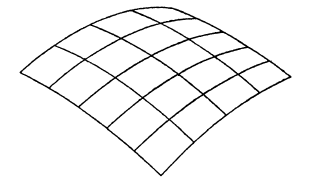
Our next example will be even more fantastic than the one with the falling lift. We have to approach a new problem; that of a connection between the general relativity theory and geometry. Let us begin with the description of a world in which only two-dimensional and not, as in ours, three-dimensional creatures live. The cinema has accustomed us to two-dimensional creatures acting on a two-dimensional screen. Now let us imagine that these shadow figures, that is, the actors on the screen, really do exist, that they have the power of thought, that they can create their own science, that for them a two-dimensional screen stands for geometrical space. These creatures are unable to imagine, in a concrete way, a three-dimensional space just as we are unable to imagine a world of four dimensions. They can deflect a straight line; they know what a circle is, but they are unable to construct a sphere, because this would mean forsaking their two-dimensional screen. We are in a similar position. We are able to deflect and curve lines and surfaces, but we can scarcely picture a deflected and curved three-dimensional space.

By living, thinking, and experimenting, our shadow figures could eventually master the knowledge of the two-dimensional Euclidean geometry. Thus, they could prove, for example, that the sum of the angles in a triangle is 180 degrees. They could construct two circles with a common centre, one very small, the other large. They would find that the ratio of the circumferences of two such circles is equal to the ratio of their radii, a result again characteristic of Euclidean geometry. If the screen were infinitely great, these shadow beings would find that once having started a journey straight ahead, they would never return to their point of departure.

Let us now imagine these two-dimensional creatures living in changed conditions. Let us imagine that someone from the outside, the “third dimension”, transfers them from the screen to the surface of a sphere with a very great radius. If these shadows are very small in relation to the whole surface, if they have no means of distant communication and cannot move very far, then they will not be aware of any change. The sum of angles in small triangles still amounts to 180 degrees. Two small circles with a common centre still show that the ratio of their radii and circumferences are equal. A journey along a straight line never leads them back to the starting-point.

But let these shadow beings, in the course of time, develop their theoretical and technical knowledge. Let them find means of communication which will enable them to cover large distances swiftly. They will then find that starting on a journey straight ahead, they ultimately return to their point of departure. “Straight ahead” means along the great circle of the sphere. They will also find that the ratio of two circles with a common centre is not equal to the ratio of the radii, if one of the radii is small and the other great.

If our two-dimensional creatures are conservative, if they have learned the Euclidean geometry for generations past when they could not travel far and when this geometry fitted the facts observed, they will certainly make every possible effort to hold on to it, despite the evidence of their measurements. They could try to make physics bear the burden of these discrepancies. They could seek some physical reasons, say temperature differences, deforming the lines and causing deviation from Euclidean geometry. But, sooner or later, they must find out that there is a much more logical and convincing way of describing these occurrences. They will eventually understand that their world is a finite one, with different geometrical principles from those they learned. They will understand that, in spite of their inability to imagine it, their world is the two-dimensional surface of a sphere. They will soon learn new principles of geometry, which though differing from the Euclidean can, nevertheless, be formulated in an equally consistent and logical way for their two-dimensional world. For the new generation brought up with a knowledge of the geometry of the sphere, the old Euclidean geometry will seem more complicated and artificial since it does not fit the facts observed.

The spherical surface of earth appears to be a planar surface to us, but the difference become obvious as we are able to travel larger distances in shorter time. We would have to adjust our thinking about the natural geometry of earth.

Let us return to the three-dimensional creatures of our world.

What is meant by the statement that our three-dimensional space has a Euclidean character? The meaning is that all logically proved statements of the Euclidean geometry can also be confirmed by actual experiment. We can, with the help of rigid bodies or light rays, construct objects corresponding to the idealized objects of Euclidean geometry. The edge of a ruler or a light ray corresponds to the line; the sum of the angles of a triangle built of thin rigid rods is 180 degrees; the ratio of the radii of two circles with a common centre constructed from thin unbendable wire is equal to that of their circumference. Interpreted in this way, the Euclidean geometry becomes a chapter of physics, though a very simple one.

But we can imagine that discrepancies have been discovered: for instance, that the sum of the angles of a large triangle constructed from rods, which for many reasons had to be regarded as rigid, is not 180 degrees. Since we are already used to the idea of the concrete representation of the objects of Euclidean geometry by rigid bodies, we should probably seek some physical force as the cause of such unexpected misbehaviour of our rods. We should try to find the physical nature of this force and its influence on other phenomena. To save the Euclidean geometry, we should accuse the objects of not being rigid, of not exactly corresponding to those of Euclidean geometry. We should try to find a better representation of bodies behaving in the way expected by Euclidean geometry. If, however, we should not succeed in combining Euclidean geometry and physics into a simple and consistent picture, we should have to give up the idea of our space being Euclidean and seek a more convincing picture of reality under more general assumptions about the geometrical character of our space.

The geometric character of our space is not necessarily straight and rigid, as described by Euclidean geometry.

The necessity for this can be illustrated by an idealized experiment showing that a really relativistic physics cannot be based upon Euclidean geometry. Our argument will imply results already learned about inertial CS and the special relativity theory.

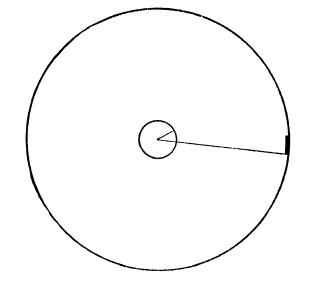
Imagine a large disc with two circles with a common centre drawn on it, one very small, the other very large. The disc rotates quickly. The disc is rotating relative to an outside observer, and there is an inside observer on the disc. We further assume that the CS of the outside observer is an inertial one. The outside observer may draw, in his inertial CS, the same two circles, small and large, resting in his CS but coinciding with the circles on the rotating disc. Euclidean geometry is valid in his CS since it is inertial, so that he will find the ratio of the circumferences equal to that of the radii. But how about the observer on the disc? From the point of view of classical physics and also the special relativity theory, his CS is a forbidden one. But if we intend to find new forms for physical laws, valid in any CS, then we must treat the observer on the disc and the observer outside with equal seriousness. We, from the outside, are now watching the inside observer in his attempt to find, by measurement, the circumferences and radii on the rotating disc. He uses the same small measuring stick used by the outside observer. “The same” means either really the same, that is, handed by the outside observer to the inside, or, one of two sticks having the same length when at rest in a CS.

The inside observer on the disc begins measuring the radius and circumference of the small circle. His result must be the same as that of the outside observer. The axis on which the disc rotates passes through the centre. Those parts of the disc near the centre have very small velocities. If the circle is small enough, we can safely apply classical mechanics and ignore the special relativity theory. This means that the stick has the same length for the outside and inside observers, and the result of these two measurements will be the same for them both. Now the observer on the disc measures the radius of the large circle. Placed on the radius, the stick moves, for the outside observer. Such a stick, however, does not contract and will have the same length for both observers, since the direction of the motion is perpendicular to the stick. Thus three measurements are the same for both observers: two radii and the small circumference. But it is not so with the fourth measurement! The length of the large circumference will be different for the two observers. The stick placed on the circumference in the direction of the motion will now appear contracted to the outside observer, compared to his resting stick. The velocity is much greater than that of the inner circle, and this contraction should be taken into account. If, therefore, we apply the results of the special relativity theory, our conclusion here is: the length of the great circumference must be different if measured by the two observers. Since only one of the four lengths measured by the two observers is not the same for them both, the ratio of the two radii cannot be equal to the ratio of the two circumferences for the inside observer as it is for the outside one. This means that the observer on the disc cannot confirm the validity of Euclidean geometry in his CS.

Einstein is right that the stick is not rigid, but the stick expands in length rather than shrinks because greater speed comes from increasing wavelength with dilution of inertia. The observer has nothing to do with it. It is the law of nature that matters.

After obtaining this result, the observer on the disc could say that he does not wish to consider CS in which Euclidean geometry is not valid. The breakdown of the Euclidean geometry is due to absolute rotation, to the fact that his CS is a bad and forbidden one. But, in arguing in this way, he rejects the principal idea of the general theory of relativity. On the other hand, if we wish to reject absolute motion and to keep up the idea of the general theory of relativity, then physics must all be built on the basis of a geometry more general than the Euclidean. There is no way of escape from this consequence if all CS are permissible.

The changes brought about by the general relativity theory cannot be confined to space alone. In the special relativity theory we had clocks resting in every CS, having the same rhythm and synchronized, that is, showing the same time simultaneously. What happens to a clock in a non-inertial CS? The idealized experiment with the disc will again be of use. The outside observer has in his inertial CS perfect clocks all having the same rhythm, all synchronized. The inside observer takes two clocks of the same kind and places one on the small inner circle and the other on the large outer circle. The clock on the inner circle has a very small velocity relative to the outside observer. We can, therefore, safely conclude that its rhythm will be the same as that of the outside clock. But the clock on the large circle has a considerable velocity, changing its rhythm compared to the clocks of the outside observer and, therefore, also compared to the clock placed on the small circle. Thus, the two rotating clocks will have different rhythms and, applying the results of the special relativity theory, we again see that in our rotating CS we can make no arrangements similar to those in an inertial CS.

Space and time, and therefore, geometry is affected by change in inertia. Euclidean geometry is limited to the average inertia of the material universe.

To make clear what conclusions can be drawn from this and previously described idealized experiments, let us once more quote a dialogue between the old physicist O, who believes in classical physics, and the modern physicist M, who knows the general relativity theory. O is the outside observer, in the inertial CS, whereas M is on the rotating disc.

O. In your CS, Euclidean geometry is not valid. I watched your measurements and I agree that the ratio of the two circumferences is not, in your CS, equal to the ratio of the two radii. But this shows that your CS is a forbidden one. My CS, however, is of an inertial character, and I can safely apply Euclidean geometry. Your disc is in absolute motion and, from the point of view of classical physics, forms a forbidden CS, in which the laws of mechanics are not valid.

M. I do not want to hear anything about absolute motion. My CS is just as good as yours. What I noticed was your rotation relative to my disc. No one can forbid me to relate all motions to my disc.

O. But did you not feel a strange force trying to keep you away from the centre of the disc? If your disc were not a rapidly rotating merry-go-round, the two things which you observed would certainly not have happened. You would not have noticed the force pushing you toward the outside nor would you have noticed that Euclidean geometry is not applicable in your CS Are not these facts sufficient to convince you that your CS is in absolute motion?

M. Not at all! I certainly noticed the two facts you mention, but I hold a strange gravitational field acting on my disc responsible for them both. The gravitational field, being directed toward the outside of the disc, deforms my rigid rods and changes the rhythm of my clocks. The gravitational field, non-Euclidean geometry, clocks with different rhythms are, for me, all closely connected. Accepting any CS, I must at the same time assume the existence of an appropriate gravitational field with its influence upon rigid rods and clocks.

Gravitational field is related to change in inertia. It, therefore, has effect on space-time geometry.

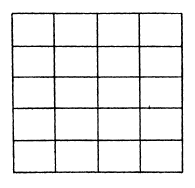
O. But are you aware of the difficulties caused by your general relativity theory? I should like to make my point clear by taking a simple non-physical example. Imagine an idealized American town consisting of parallel streets with parallel avenues running perpendicular to them. The distance between the streets and also between the avenues is always the same. With these assumptions fulfilled, the blocks are of exactly the same size. In this way I can easily characterize the position of any block. But such a construction would be impossible without Euclidean geometry. Thus, for instance, we cannot cover our whole earth with one great ideal American town. One look at the globe will convince you. But neither could we cover your disc with such an “American town construction”. You claim that your rods are deformed by the gravitational field. The fact that you could not confirm Euclid’s theorem about the equality of the ratio of radii and circumferences shows clearly that if you carry such a construction of streets and avenues far enough you will, sooner or later, get into difficulties and find that it is impossible on your disc. Your geometry on your rotating disc resembles that on a curved surface, where, of course, the streets-and-avenues construction is impossible on a great enough part of the surface. For a more physical example take a plane irregularly heated with different temperatures on different parts of the surface. Can you, with small iron sticks expanding in length with temperature, carry out the “parallel-perpendicular” construction which I have drawn below? Of course not! Your “gravitational field” plays the same tricks on your rods as the change of temperature on the small iron sticks.

M. All this does not frighten me. The street-avenue construction is needed to determine positions of points, with the clock to order events. The town need not be American, it could just as well be ancient European. Imagine your idealized town made of plasticine and then deformed. I can still number the blocks and recognize the streets and avenues, though these are no longer straight and equidistant. Similarly, on our earth, longitude and latitude denote the positions of points, although there is no “American town” construction.

O.  But I still see a difficulty. You are forced to use your “European town structure”. I agree that you can order points, or events, but this construction will muddle all measurement of distances. It will not give you the metric properties of space as does my construction. Take an example. I know, in my American town, that to walk ten blocks I have to cover twice the distance of five blocks. Since I know that all blocks are equal, I can immediately determine distances.

M.  That is true. In my “European town” structure, I cannot measure distances immediately by the number of deformed blocks. I must know something more; I must know the geometrical properties of my surface. Just as everyone knows that from 0° to 10° longitude on the Equator is not the same distance as from 0° to 10° longitude near the North Pole. But every navigator knows how to judge the distance between two such points on our earth because he knows its geometrical properties. He can either do it by calculations based on the knowledge of spherical trigonometry, or he can do it experimentally, sailing his ship through the two distances at the same speed. In your case the whole problem is trivial, because all the streets and avenues are the same distance apart. In the case of our earth it is more complicated; the two meridians 0° and 10° meet at the earth’s poles and are farthest apart on the Equator. Similarly, in my “European town structure”, I must know something more than you in your “American town structure”, in order to determine distances. I can gain this additional knowledge by studying the geometrical properties of my continuum in every particular case.

Geometry based on constant inertia may be compared to the geometry of a flat surface. Geometry based on changing inertia may be compared to the geometry of a surface that is changing in a new dimension of inertia. It is no longer flat.

O. But all this only goes to show how inconvenient and complicated it is to give up the simple structure of the Euclidean geometry for the intricate scaffolding which you are bound to use. Is this really necessary?

M. I am afraid it is, if we want to apply our physics to any CS, without the mysterious inertial CS. I agree that my mathematical tool is more complicated than yours, but my physical assumptions are simpler and more natural.

We are simply adding a new dimension of inertia to Physics.

The discussion has been restricted to two-dimensional continua. The point at issue in the general relativity theory is still more complicated, since it is not the two-dimensional, but the four-dimensional time-space continuum. But the ideas are the same as those sketched in the two-dimensional case. We cannot use in the general relativity theory the mechanical scaffolding of parallel, perpendicular rods and synchronized clocks, as in the special relativity theory. In an arbitrary CS we cannot determine the point and the instant at which an event happens by the use of rigid rods, rhythmical and synchronized clocks, as in the inertial CS of the special relativity theory. We can still order the events with our non-Euclidean rods and our clocks out of rhythm. But actual measurements requiring rigid rods and perfect rhythmical and synchronized clocks can be performed only in the local inertial CS For this the whole special relativity theory is valid; but our “good” CS is only local, its inertial character being limited in space and time. Even in our arbitrary CS we can foresee the results of measurements made in the local inertial CS But for this we must know the geometrical character of our time-space continuum.

Our idealized experiments indicate only the general character of the new relativistic physics. They show us that our fundamental problem is that of gravitation. They also show us that the general relativity theory leads to further generalization of time and space concepts.

The mathematics of general relativity may be simplified and explained with the knowledge above.

.


Final Comment

In special relativity, the new idea added is that velocity of light is the basis of all motion. In general relativity the new idea added is that space-time has a new dimension of gravity.

Gravity is equivalent to acceleration. Acceleration is change in velocity. Velocity is equivalent to inertia. Therefore, a gravitation field exists because inertia in that space is changing.

Euclidean geometry corresponds to inertia of Earth. Geometry will be very different for a black hole whose inertia is much greater. We may say that in a gravitational field, the space-time characteristics of geometry are also changing along with inertia.
.

OT 1948: Dramatization

Reference: DIANETICS: The Original Thesis

This paper presents Chapter 9 from the book DIANETICS: THE ORIGINAL THESIS by L. RON HUBBARD. The contents are from the original publication of this book by The Hubbard Dianetic Foundation, Inc. (1948).

The paragraphs of the original material (in black) are accompanied by brief comments (in color) based on the present understanding.  Feedback on these comments is appreciated.

The heading below is linked to the original materials.

.

Dramatization

Dramatization is the duplication of an engramic content, entire or in part, by an aberree in his present time environment. Aberrated conduct is entirely dramatization. Aberrated conduct will occur only when and if an engram exists in the reactive mind of the aberree. That conduct will be a duplication of such an engram. The degree of dramatization is in direct ratio to the degree of restimulation of the engrams causing it. A mild dramatization would be a similarity to the engram. A severe dramatization would be an identity with the engram.

The aberrated conduct provides a clue to the content of the engram.

The general tone of an aberree, when high—when his person is unwearied and he is well and not directly menaced in his environment—does not permit as great an influence by the reactive mind, since the tone level of the entire individual possesses too great a differential from the tone of the engram. As the general tone of the individual approaches the tone level of the engram under restimulation, dramatization becomes more severe.

The analytical mind is present to the degree that the general tone of the aberree is high. As this general tone lowers through ill health, reverses, or constant restimulation of the reactive mind, the analytical mind is proportionately less aware. Dramatization is demonstrated by the aberree in inverse ratio to the potential of the analytical mind. A geometrical progression is entered as general tone lowers to cause the analytical mind to lose its entire awareness potential.

Dramatization indicates that the person is in weakened state of mind due to weariness.

Once every engram contains, as the common denominator of all engrams, the unconsciousness of the organ which is the analytical mind, dramatizations gain rapidly as this interaction progresses.

In the presence of a relatively high analytical mind awareness-potential, dramatization takes the form of similarity. The data of the engram is present but is interspersed with or modified by justified thought. The physical pain which is always present as part of the dramatization is equally mild, a duplication of the pain which was present during the engram. The awareness potential of the analytical mind reduces in the restimulation of the engram which again reduces the general tone.

When a person is not so weary, the dramatization is more in the form of justified thought.

The aberree is subject to almost continuous dramatization of one engram or another as the restimulators appear in his vicinity. (Although the aberration may be so mild as to include only some chronically affected organ.) Complete dramatization is complete identity. It is the engram in full force in present time with the aberree taking one or more parts of the dramatis personae present in the engram. He may dramatize all the actors or merely one of them. His dramatization is identity, is unreasoned and always entirely reactive. When the analytical mind reaches the low point of awareness potential it held during the engramic incident, that point is also forced upon the aberree as a part of the dramatization. The aberree may also dramatize himself as he was at the moment of the engram’s receipt.

The words, physical actions, expressions, and emotions of an aberree undergoing an identity dramatization are those of the single or various dramatis personae present in the engram.

When less weary, the person is more himself, but he is introverted and trying to figure out his own behavior. Under greater weariness, the person behaves more like the impressions from other personalities.

An engram, which can be dramatized, may at any time in an aberree’s future be dramatized as an identity dramatization, when and if his general tone is low and his environment becomes infiltrated by restimulators.

An aberree, because of high general tone and other factors, may not suffer the restimulation of an engram for a number of years after its receipt. A large number of engrams may be present and undramatized in any aberree, if he has never been presented with their particular restimulators in an optimum moment for restimulation. The common denominator of all insanity is the absence of all or almost all awareness potential in the analytical mind. Insanity can be acute or chronic. Any identity dramatization is insanity, by which is meant the entire absence of rationality.

Any identity dramatization is insanity, by which is meant the entire absence of rationality.

The aberree commonly and chronically dramatizes locks. The engramic content may compel or repress the aberree whenever restimulated. An irrational person is irrational to the degree that he dramatizes or succumbs to engramic content in his reactive mind. The computations which can be made on the basis of dramatization are infinite. The reactive mind thinks in identities. Dramatizations are severe as they approach identity with the engrams which force them into being in the conduct of the aberree. The Dianeticist can profit in many ways by these principles of dramatization. By examination of the rage or apathy or hysteria patterns of the preclear, the Dianeticist will find himself in possession of the exact character of the engrams for which he is searching.

The impressions repress a person’s own personality and force other personalities on him.

In the case of the manic, the fanatic, or the zealot an engram has entirely blocked at least one of the purpose lines deriving from a dynamic. The engram may be called an “assist engram.” Its own surcharge (not the dynamic force) leads the individual to believe that he has a high purpose which will permit him to escape pain. This “purpose” is a false purpose not ordinarily sympathetic with the organism, having a hectic quality derived from the pain which is part of it, even though that pain is not wittingly experienced. This “assist engram” is using the native ability of the organism to accomplish its false “purpose” and brings about a furious and destructive effort on the part of the individual who, without this “assist engram” could have better accomplished the same goal. The worst feature of the “assist engram” is that the effort it commands is engramic dramatization of a particular sort, and if the engram itself is restimulated the individual becomes subject to the physical pain and fear which the entire experience contained. Therefore, the false purpose itself is subject to sporadic “sag.” This sag becomes longer and longer in duration between periods of false thrust. It is easy to confuse, in casual observation, an “assist engram” and an actual, valid drive, unless one also observes the interspersed periods of “sag.” The “assist engram” may or may not occasionally accomplish something, but it does accomplish a confusion in the society that the dynamics of the individual are derived from his bad experiences. This is a thing which is emphatically untrue.

The unassimilated impressions divert the natural drive of the person. He sags when he resists this diversion.

Inherently the individual has great will power. This however can be aberrated. Will power or its absence occasions the attitude of the aberree toward his reactive mind.

The prevention of the dramatization of an engram or a lock further reduces dynamic thrust of the aberree. Chronic prevention lowers his general tone toward the break point. Unhampered dramatization, as it contains restimulation of a physical pain and the reduced potential of the analytical mind, produces other harmful effects.

Unhampered dramatization introduces irrationality in high drive. Prevention of dramatization, as through punishment, lowers the drive and pushes the person into apathy.

Necessity can and does render inactive the entire reactive mind. Dramatization occurs most often in the absence of necessity or when the reactive mind has obscured the presence of necessity.

Rationality may be restored under necessity.

Dramatization is residual in the motor controls including speech and can be allayed by the physical exhaustion of the individual. The organism during dramatization tends to revivify toward the moment of the engram’s occurrence—the engram containing, as one of its identity parts, the complete physical condition of the organism as at the moment of laying-in of the engram.

Dramatization can be allayed by the physical exhaustion of the individual.

There is no folly or facet of human activity which cannot be dramatized. An immediate alleviation can be achieved when addressing an aberree who is in identity dramatization by acting upon the fact that the conditions of auditing, with no exception, already exist; i.e., the preclear returned to the moment of occurrence. Affinity may be established and dianetic auditing begun at once. He can be persuaded to listen for the phrases he is uttering and they can be alleviated by exhaustion on routine procedure.

Recognition of engramic phrases uttered during dramatization may be used through dianetic procedure to reduce the pressure to dramatize.

.

Final Comments

KEY WORDS: Anaten, Justification, Introversion, Engramic phrases.

The main points of this chapter are as follows:

The contents of the engramic node are dramatized when that node is activated by similar content appearing in the environment. There is no aspect of human activity, which cannot be dramatized.

A person is more prone to dramatization when he is sick, tired or worn out. Rest, sleep, nutritious food, and change of environment may help reduce the dramatization.

He may be persuaded to listen to the phrases he is uttering as part of the dramatization. He may then meditate on those phrases with mindfulness and see what comes up. As the understanding about those phrases dawns, it diffuses the engramic node.

.