
Reference: Einstein’s 1920 Book
Section XIII (Part 1)
Theorem of the Addition of Velocities. The Experiment of Fizeau
Please see Section XIII at the link above.
.
Summary
To verify the results from the special theory of relativity, an experiment needs to be devised in which the v/c ratio is small but not insignificant, so one can see that more than simple addition of velocities (per Galelei transformations) is required to match the reality.
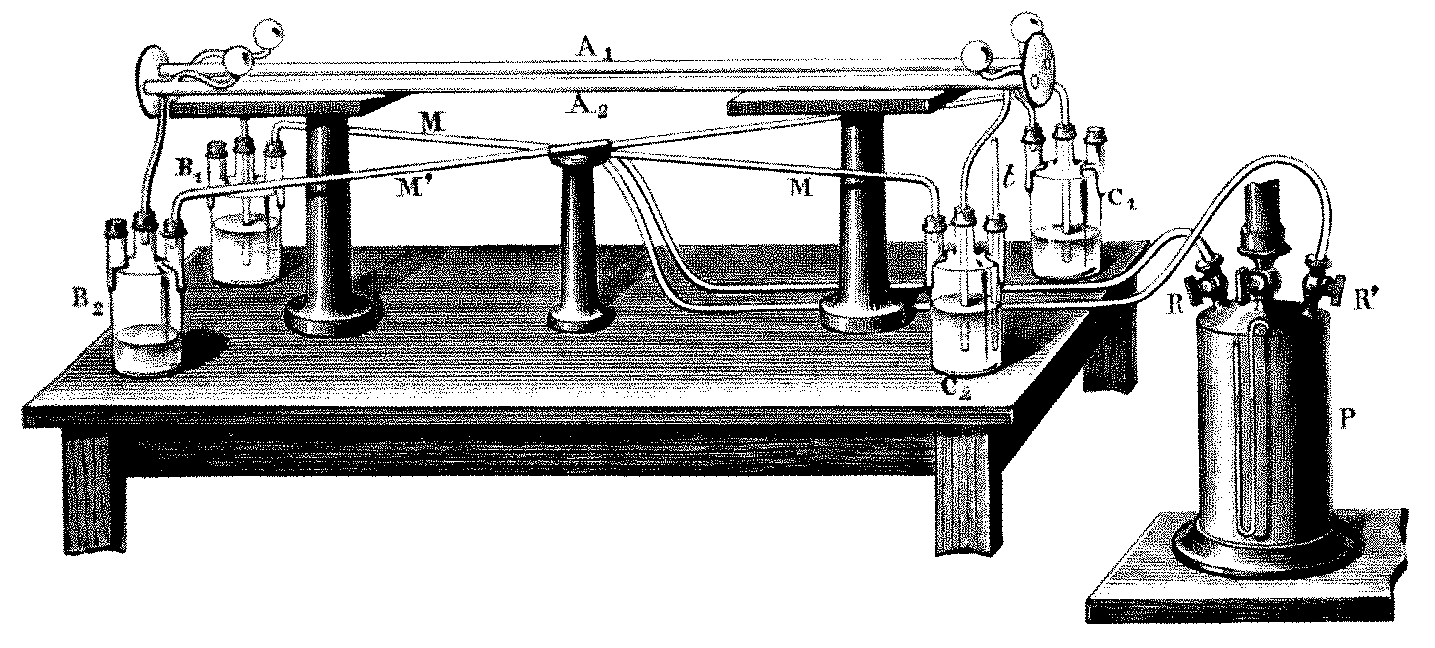
An experiment, which was performed by Fizeau, meets this requirement. When the experimental results are compared with theoretical calculations, they are verified by the transformation of the special theory of relativity, rather than the simple addition of the two velocities. The experimental result thus validates the special theory of relativity.
Fizeau’s experiment presents the circumstance in which the theorem of the addition of velocities employed in classical mechanics does not work. Maxwell-Lorentz theory explained the difference by the use of particular hypotheses as to the electromagnetic structure of matter. But the special theory of relativity uses more general and a much simpler hypothesis to come up with the same conclusion.
.
Comments
Addition of velocities is valid when the velocities are of about the same order of magnitude. Lorentz transformation becomes crucial when the velocities to be added are very different in their orders of magnitude.
.
