Physics and Brainwashing

Reference: Essays on Substance

Physics and Brainwashing

Brainwashing occurs when a person cannot see what is there. He only sees what agrees with his mental state.

At one time people believed that the sun revolves around the earth. The Catholic Church pushed that as a fact on the population. It even punished Galileo for saying that it was earth that revolved around the sun.

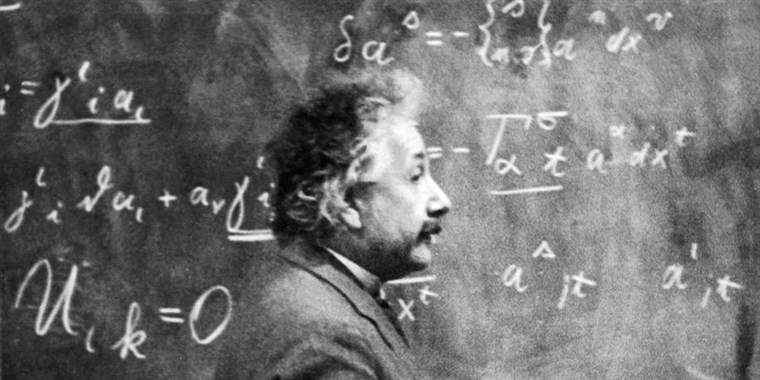
The above is an example of a brainwashed state of mind, that could not see the inconsistency that Copernicus revealed with his brilliant observation and math. Similar problem was faced by Einstein about his brilliant ideas.

Today all kind of inconsistencies are simply swallowed by gullible people and even by scientists who cannot see inconsistency because of their mental fixations. It is so bad that they would rather change their view of reality instead.

This is happening today with respect to strange interpretations of the mathematics of General Relativity and Quantum Mechanics. Until such inconsistencies are confronted head on as demanded by The Scientific Method, the scientific progress will remain at a standstill.

Yes, there is mind-blowing progress in Technology, but let’s not confuse that with scientific progress.

.

Theory of Substance and GR

Reference: Essays on Substance

Theory of Substance and GR

According to general relativity, gravity is the curvature of spacetime caused by masses and energy. The theory of Substance does not replace or extend the established results of General Relativity. It simply clarifies the following:

(1) Spacetime that curves is not an abstract mathematical concept. It is actual substance that curves. That substance is everything but matter.

(2) Gravity is not just the influence of matter and energy on some abstract spacetime. It is the mutual influence of all substance (matter, energy and aether) on each other. There is no empty spacetime.

(3) The theory of Substance also reveals the existence of a precise inverse relationship between consistency (mass) and motion that is hidden inside the math of General Relativity.

(4) Gravity is a dynamic equilibrium between the inherent properties of consistency (mass) and motion of all substance (matter, energy and aether). You cannot ignore the consistency and motion associated with aether that is hidden within the abstraction of spacetime. 

.

The Speed of Light

Reference: Essays on Substance

The Speed of Light

The theory of relativity postulates that the speed is light, in vacuum, is a universal constant. But this speed is affected by gravitational fields, and that is taken into account in General relativity. The reason speed of light is affected by gravity is because light has a small amount of consistency. This consistency is like very diluted mass. Therefore, light has inertia, though it is extremely small compared to the inertia of matter.

The theory of Substance postulates that the property of consistency (or mass) is inherent to all substance. This includes the whole spectrum of electromagnetic (EM) energy. The consistency of gamma rays at the upper end of the EM spectrum is close to the consistency of electrons. So, the EM spectrum continues as the spectrum of matter as shown in The Rigidity of Mass.

The theory of Substance also postulates that the property of motion in vacuum is inherent to all substances. We are aware of this for light, but light is not unique in this respect. The motion of all bodies, such as, moon, planet, sun, star, etc., is inherent to them.

These two inherent properties of substance—consistency and motion—have an extremely precise inverse relationship that leads to constant speed of substance. For example, light has a very precise constant speed because its motion is exactly balanced by its consistency. We are only aware this in regard to the visible light that forms a very small part of the EM spectrum, but based on The Rigidity of Mass, one would expect the speed of radio waves to be faster than the speed of light, and the speed of gamma rays to be slower.

The idea that the speed of light is a property of electromagnetic waves and that it arises from the vacuum’s permittivity and permeability is based on Maxwell’s theory.  Maxwell’s theory is based on the postulate of aether, and the precise properties of aether are yet to be determined. So Maxwell’s theory provides some average relationships only. The mathematical model used by Maxwell was an ingenious breakthrough for its time, and Einstein could build up from there. The mathematical model used by Einstein for General Relativity is extremely accurate. 

The theory of Substance does not change anything. It simply provides some insights that are lost in the complex mathematics of twentieth century. In GR, the curvature of space is actually the curvature of substance other than matter. That substance is made up of cosmic rays, electromagnetic radiation and the black-box of “aether.” The mass actually decreases with speed, while space and time expand.

The theory of Substance applies non-mathematical live logic to the substance from sub-atomic to cosmic scale. It reveals why Quantum Mechanics has become so complex and unreal. It provides insights to simplify that complexity.

.

Is Aether still there?

Reference: Essays on Substance

Is Aether still there?

The concept of aether is currently a black box that has been filled with various conjectures since ancient times. Einstein’s theory of relativity rendered classical luminiferous aether unnecessary as a medium for light. However, Einstein did not get completely rid of aether. In 1920, during a lecture at the University of Leiden, Einstein discussed the idea of a relativistic aether, which was fundamentally different from the classical luminiferous aether. 

This new concept of aether in Einstein’s view was not a material substance with mechanical properties, but rather a way to describe the physical qualities of space itself. Einstein stated, “According to the general theory of relativity space is endowed with physical qualities. In this sense there exists an aether. Space without an aether is unthinkable.”

Einstein was right. Space is defined in terms of dimensions, and the dimensions must belong to some substance. The theory of Substance postulates aether to be that aspect of THOUGHT that can be sensed. We all have sensed when somebody is looking at us, even when that person is out of our sight. This happens often in a crowded space, such as, an airport.

Modern cosmology has introduced concepts such as dark matter and dark energy. These are conjectures derived from inconsistencies observed in the calculations of gravitational influences at cosmic scale. Of course, these conjectures are different from earlier conjectures used to fill the black box of aether; but they are black enough to be held in a black box.

.

Is Energy Substance?

Reference: Essays on Substance

Is Energy Substance?

The approach of science is systematic and empirical, meaning it is not matter-centric. The theory of Substance punctures the current Matter-Centric Fixation in Physics.

The theory of Substance is inspired by the equivalence of matter and energy that was established by Einstein based on the common property of momentum.

Newton defined momentum as “quantity of motion”. Newton’s concept of motion was revolutionary and formed the foundation of classical mechanics. His idea of MOTION involved the following key concepts.

  1. Inertia
  2. Force
  3. Momentum
  4. Acceleration
  5. Relativity of Motion

Newton arranged these concepts in terms of the following three laws:

1. Newton’s First Law states that an object at rest remains at rest, and an object in motion remains in motion at constant speed and in a straight line, unless acted upon by an unbalanced force. This law, also known as the law of inertia, describes the natural tendency of objects to resist changes in their state of motion.

2. Newton’s Second Law quantifies the relationship between force, mass, and acceleration. Newton defined motion in terms of momentum, which is the product of an object’s mass and velocity. The law states that the force acting on an object is equal to the rate of change of its momentum over time. This law could then be formulated in a mathematical form.

3. Newton’s Third Law states that for every action, there is an equal and opposite reaction. This law describes the interaction between objects and the forces they exert on each other.

Newton’s formulation of momentum was crucial in developing the concept of conservation of momentum, which can be derived from his laws of motion. This definition of momentum remains fundamental in classical mechanics and continues to be used in modern physics.

In classical mechanics “mass” is used as a constant because variation in mass with respect to time (as considered in Newton’s Second Law) are so small that they cannot be measured in the domain of matter, yet they are there. They only become significant when we compare the momentum of electromagnetic energy to the momentum of matter. It took an Einstein to recognize this. And so a new category of substance was born.

The characteristic of substance is momentum, change in which is sensed as force. This characteristic is common to both matter and energy. When humans interface with the physical universe, it is the sensation of force, which they recognize as substance. But the matter-centric fixation says, “There is no substance other than matter.”

The theory of Substance punctures this fixation by pointing out that electromagnetic energy is also a substance on the same grounds as matter. It is a substance because we can sense it.

When the mater-centric fixation, “There is no substance other than matter,” is punctured, a much clearer view emerges in the subject of physics.

.