Holding: Quantum Mechanics

QUANTUM MECHANICS

—A—

—B—

—C—

CBFU (Cosmic Background Field of Understanding)
Cosmic Background Field of Understanding (CBFU) refers to a physically structured, coherence-preserving spinor field. The term “Understanding” is used to denote internal phase alignment and field coherence, not cognition.

NOTE: Here thought is being viewed as a substance and it is being given a structure. This structure is being looked upon ideally as continuous, consistent and harmonious. The mathematical terminology obscures this simple understanding.

CBFU-G (Cosmic Background Field of Understanding Gravity)
The theory retains all classical predictions while offering a causal explanation for curvature, geodesics, and time itself. CBFU-G is not a rejection of established physics; rather, it informs, unifies, and completes it. Newton, Einstein, and the Standard Model are all shown to be correct within their domains — each a projection of deeper ”spinor-torsion coherence dynamics.” This paper presents the mathematical and conceptual foundations for that reinterpretation, alongside candidate field equations, variable definitions, and simulation principles.

NOTE: Curvature and geodesics describe the structure of substance. Time describes the duration of substance. All scientific theories aim to bring about better continuity, consistency and harmony in our understanding of physical and spiritual reality. ”Spinor-torsion coherence dynamics” is a theoretical mathematical description given to the structure and motion of substance.

CBFU-G MODEL

The above prototype Lagrangian expresses the core dynamics of the CBFU-G model. It encodes a scalar field Φ as the informational substrate, perturbed by spinor activity ψψ, and torsional coupling τ. This field-theoretic structure models how coherence is lost under mass-energy perturbation, giving rise to gravitational phenomena without invoking a force. The Lagrangian for the CBFU model includes four terms: 

  1. The first term represents the kinetic energy of the scalar field Φ. 
  2. The second term is a potential energy function governing how Φ evolves. 
  3. The third term couples Φ to the spinor field, encoding how spinor activity perturbs the background field. 
  4. The fourth term couples Φ to torsion τ, representing the energy stored in spinor twisting under deformation.

NOTE: The first term looks at the motion of substance. The second term looks at how the consistency of substance responds to its motion. The third term models the relationship between the motion and consistency of substance. The fourth term represents deformation of the structure as the equilibrium between motion and consistency is maintained.

COHERENCE
In field theory, coherence refers to the correlated behavior of a field, indicating a consistent phase relationship between different points in space or time. This concept is crucial in understanding the behavior of quantum systems, classical fields, and their interactions. Coherence can manifest in various ways, such as coherent states in quantum field theory, where a field behaves like a classical wave, or in the context of Coherence Field Theory (CFT), which proposes that coherence is a fundamental property underlying all physical phenomena. 

NOTE: Coherence is essentially the oneness (continuity, consistency and harmony) of all phenomena.

COHERENCE FIELD THEORY (CFT)
Coherence Field Theory (CFT) generally refers to the idea that physical phenomena, particularly in the context of consciousness and electromagnetism, can be understood through the lens of coherent electromagnetic fields. It posits that consciousness, or aspects of it, may be linked to the dynamics of these fields. CFT aims to explain how the brain’s electrical activity, as part of a larger electromagnetic field, can give rise to conscious experience through the principles of coherence. 

COHERENT STATES
In quantum field theory, coherent states are specific quantum states that closely resemble classical field behavior. They are particularly useful for describing systems where a large number of particles are in the same quantum state, like photons in a laser beam or phonons in a crystal. These states are characterized by their ability to maintain a well-defined phase relationship, exhibiting properties similar to classical waves. 

CONSCIOUSNESS
CFT suggests that the brain’s electrical activity, often described as brainwaves (delta, theta, etc.), can be understood as part of a larger electromagnetic field. CFT proposes that consciousness arises from the dynamic interactions and coherence within these fields. 

—D—

DECOHERENCE
Decoherence is the process where a quantum system loses its coherence, or wave-like properties, due to interactions with its environment. This interaction causes the system to transition from a superposition of states to a single, definite state, similar to how a classical system behaves. Essentially, it’s the loss of quantum behavior as a system interacts with the outside world. 

NOTE: Decoherence simply refers to a violation of oneness, or an anomaly.

DISCRETE-TIME SUBSTRATE
A “discrete-time substrate” refers to a mathematical model of a system where a substance, or “substrate,” change at specific intervals, rather than continuously. 

NOTE: This refers to a context where the system’s continuous behavior is measured or modeled in sequential steps.

—E—

EMERGENT PHENOMENON
An emergent phenomenon is a complex behavior or property that arises from the interaction of simpler components within a system, where the whole is more than the sum of its parts. These emergent properties are not directly predictable or easily explained by analyzing the individual components alone. Essentially, emergent phenomena demonstrate that complex systems can exhibit behaviors that are novel and cannot be reduced to the properties of their individual elements. 

—F—

FIELD
A field exists even within the most condensed particle of matter, such as, the neutron and proton, or even quark. Since the “particle” of gravity is the whole universe, the field of gravity exists throughout the universe as space. 

FIELD-SUBSTANCE
This is the non-structured aspect of substance that starts as a wave of disturbance. This wave congeals into greater substantial-ness as it follows paths of smaller and smaller radius. This leads to a pattern similar to a “whirlpool”. The substantial-ness increases as one approaches the center of this whirlpool formation.  The electromagnetic spectrum provides the progression of substantial-ness of field-substance. The substantial-ness of field-substance is measured in terms of QUANTIZATION.
The field-substance, as electromagnetic phenomenon, is identified as “energy” as in “mass-energy equivalence” but it is not the same thing as the classical notion of energy. This mis-identification of field-substance as “energy” generates confusion. (1888) Maxwell’s electromagnetic waves are demonstrated experimentally to be a field-substance.

FORCE
In CBFU, force becomes spinor reactance. Google could not find the concept of “spinor reactance.”

—G—

GEODESIC
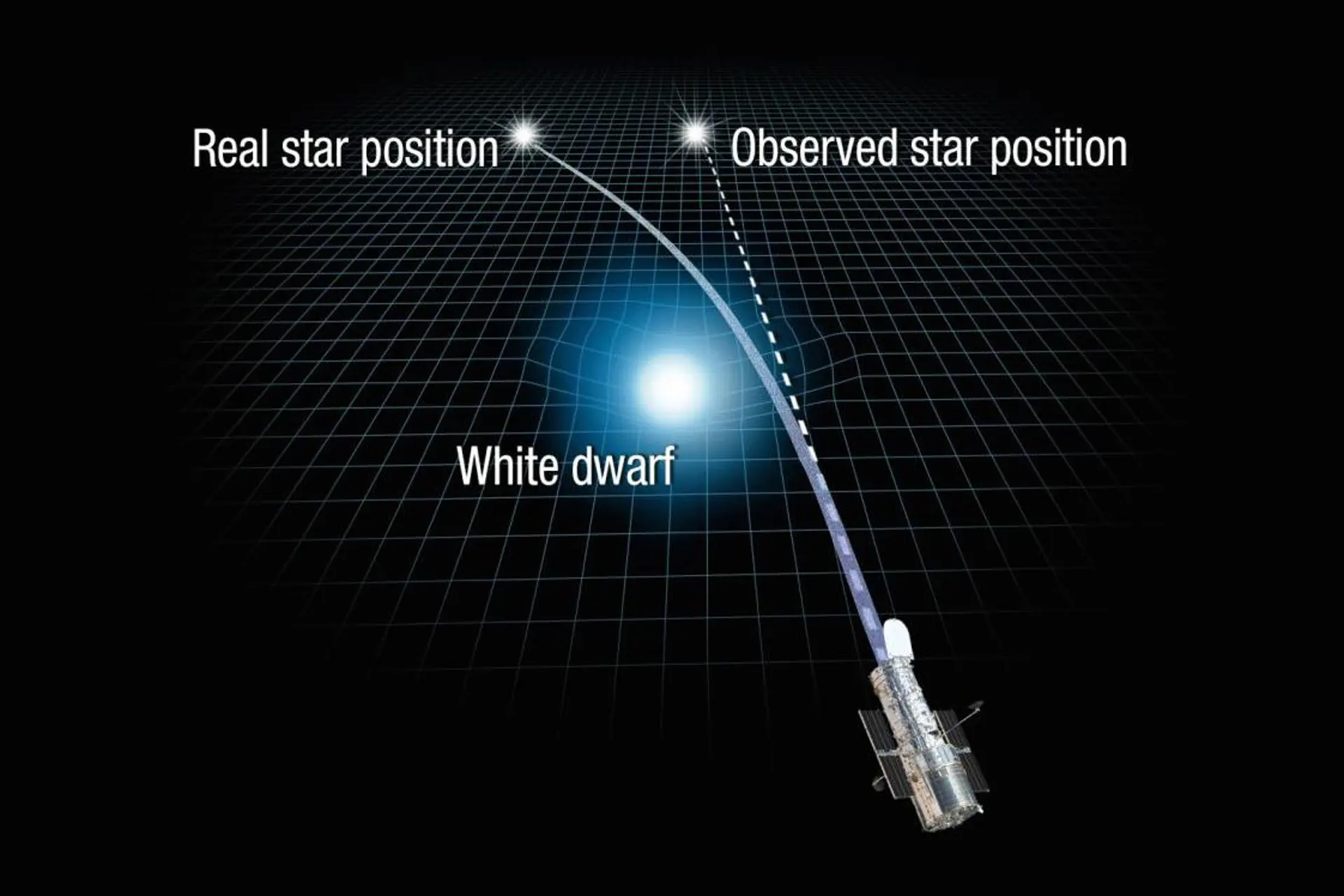
In general relativity, a geodesic generalizes the notion of a “straight line” to curved spacetime. Importantly, the world line of a particle free from all external, non-gravitational forces is a particular type of geodesic. In other words, a freely moving or falling particle always moves along a geodesic.

GRAVITATION
Gravitation emerges as the geometry of constrained time propagation. 

GRAVITATIONAL WAVE
Gravitational waves are ripples in the fabric of spacetime caused by some of the most energetic events in the universe.The most powerful and commonly detected gravitational waves come from binary systems of extremely dense objects. These systems generate strong gravitational waves as they spiral towards each other and eventually merge. The strength of gravitational waves depends on the mass of the objects involved, speed of their motion, and the degree of asymmetry in the system. It’s worth noting that while any accelerating mass technically produces gravitational waves, only the most massive and rapidly moving objects create waves strong enough to be detected with current technology.

GRAVITY
Newton’s theory of gravity was remarkable. He unified the visualization of motion both on earth and in the heavens with the concept of gravity. Einstein showed that space and motion was not unrelated to the objects moving through that space. The problem is that Einstein’s theory doesn’t work too well when applied to the atomic and subatomic world, where the standard models works very well. Gravity has infinite range, 10^40 times weaker than the strong force in femtometer range, Gravity is not covered by the standard model. Gravity is the lowest common denominator of the spectrum of substance. This explains why gravity acts on everything in this universe. This also explains why no “gravitons” have been detected because we may be dealing with just one graviton of the size of the universe. 

GRAVITY, RELATIVITY, AND QUANTUM MECHANICS
Quantum Mechanics and Special Relativity may be unified through the concepts of SUBSTANCE and CONSISTENCY. Quantum Mechanics is not the mechanics of ultra-small. It is the mechanics of mass that has suddenly become less concentrated. Special Relativity is not about relative speeds. It is about the consistencies in the range of light relative to the mass of matter. From Classical Mechanics to Quantum Mechanics to Special Relativity we have physical laws dealing with substance whose consistency is rapidly decreasing. Gravity is the case of extremely low consistency of substance.

—H—

—I—

INERTIA
Newtonian inertia, also known as Newton’s first law of motion, states that an object at rest will stay at rest, and an object in motion will stay in motion with the same velocity (speed and direction) unless acted upon by an external force. This tendency of objects to resist changes in their state of motion is called inertia. In CBFU, Inertia is recast as the continuity of uncompressed spinor coherence.

—J—

—K—

—L—

—M—

MANIFOLD
A manifold is basically a set of points that can be represented by one or more coordinate systems. The plane is a manifold, the surface of a sphere is a manifold, three-dimensional space is a manifold, and yes, so is four-dimensional spacetime. Each of these can be covered by a finite number of coordinate charts.

MANIFOLD, EINSTEIN
The physical significance of what is called an Einstein manifold is that it’s a mathematical representation of a spacetime that is dominated by a cosmological constant, aka. “vacuum energy”. If our current views of accelerating expansion due to vacuum energy are correct, then the far distant future of our universe will appear increasingly closely represented by an Einstein manifold.

MASS AND QUANTUM REGION
Mass appears to “melt” at the boundary of the nucleus and acquire a “liquid” state that fills rest of the atom. Mass then appears to “evaporate” at the boundary of the atom and acquire a “gaseous” state that fills the interatomic space. The steepest gradient of mass occurs between the nuclear and the electronic region. The gradient of mass is relatively smooth between the atom and its environment.

METRIC
In physics, a metric is a numerical value derived from measurements to be used in math equations for calculating and predicting outcomes. 

—N—

—O—

OBSERVER EFFECT
In quantum mechanics, the act of observing a particle changes how it behaves. This is because the instruments used to observe the particle alter its state.

—P—

PERTURBATION THEORY
One very effective technique is to take a difficult problem and replace it by an easier one that is very similar. As long as the differences between the original problem and the approximation are small enough, you can make reasonably accurate predictions. Perturbation theory is used to simplify solutions in quantum field theory. Precise solutions to the mathematics of quantum field theory are not even possible, so we need working approximations that we can make as precise as needed.

PHOTOELECTRIC EFFECT
(1887) Discovery of photoelectric effect showed the interaction of the photon energy levels with the electron energy levels. Einstein referred to the photon energy levels as “quanta”.

PHOTON
A photon is an energy particle, meaning it is the energy of an interaction within the electromagnetic spectrum. A photon does not exist in the absence of interaction.

—Q—

QUANTA
Newton’s mechanics dealt only with material particles. Maxwell’s equations introduced continuous fields. Thus, there was an inconsistency that was bridged over by the discovery of quanta. Quanta provides a gradient from continuous field to discrete material particles… consistency of radiation is confused with energy-packets …

QUANTIZATION
QUANTIZATION is the process of congealing through which the field-substance gradually becomes more substantial and discrete. Quantization parallels the increasing frequency of the elecromagnetic spectrum. When the field-substance transitions into material-substance with the formation of nucleus at the upper end of the spectrum, the process of quantization appears as increasing INERTIA of the material-substance.

Quantization refers to the process of transitioning from classical mechanics to quantum mechanics, where physical quantities are discretized into indivisible units called quanta.

Quantization is gradient changes in the consistency of substance. Increasing quantization means increasing structure. Thus, quantization leads to discrete consistencies among field-substance, such as those assigned to orbitals. 

(1877) Statistical mechanics leads to quantization in terms of energy levels. Increasing quantization leads to atomic orbitals and then to molecular orbitals. 

(1885) Hydrogen atom has its own identifying structure of energy levels.

(1905) Einstein introduces the concept of quantization… Even light becomes quantized as one moves up the electromagnetic spectrum. 

QUANTIZE
To quantize is to restrict the number of possible values of (a quantity) or states of (a system) so that certain variables can assume only certain discrete magnitudes.

QUANTUM
A QUANTUM is an radiation particle. It is the discrete amount drawn from a continuum for an interaction at the atomic level.

QUANTUM ELECTRODYNAMICS (QED)
Quantum electrodynamics is the name of the modern theory that governs the interaction between electrically charged particles. Quantum mechanically, two quantum particles can interact by exchanging photons in many different ways. One of the tenets of quantum electrodynamics is that you have to average all possible configurations of different ways 2 particles can interact. In fact, one of the weird aspects of quantum mechanics is that you can’t say which specific interaction happened. They all did, and they all need to be taken into account. When you add them all up, you find that the sum of all interactions looks very much like the classical picture. In this way, the simplified quantum idea of individual photon exchanges can connect to the familiar classical world of a smooth electromagnetic field. QED is the most accurate theory ever devised.

NOTE: Charge has to do with the gradient of consistency.

QUANTUM ENTANGLEMENT
Quantum entanglement is the phenomenon of a group of particles being generated, interacting, or sharing spatial proximity in such a way that the quantum state of each particle of the group cannot be described independently of the state of the others, including when the particles are separated by a large distance.

QUANTUM MECHANICS
The fundamental feature of quantum mechanics that distinguishes it from classical mechanics is that particles of a particular type are indistinguishable from one another. Thus, the “particles” of quantum mechanics together form a uniform medium. In atoms, the electronic region seems to be layered on a gradient of consistency. These layers do not overlap or cross each other per Pauli Exclusion Principle.

QUANTUM NUMBERS
The quantum numbers describe values of conserved quantities in the dynamics of a quantum system. Together, a specification of all of the quantum numbers of a quantum system fully characterize a basis state of the system, and can in principle be measured together.

QUANTUM “PARTICLES” 
Quantum “particles” are not really discrete particles; but they have a very high consistency like syrup. Quantum “particles” participate in discrete interactions like matter. 

QUANTUM SPINOR STRUCTURE
A quantum spinor structure is a generalization of the classical concept of a spinor structure in differential geometry, applied to quantum spaces, particularly those described by noncommutative geometry. It involves constructing quantum analogs of classical spinor-related objects like Dirac operators and spinor bundles within the framework of quantum principal bundles. This allows for the study of quantum phenomena, including those related to Dirac operators on quantum spaces like Hopf fibrations. 

QUANTUM STATE
A quantum state is a state of a quantized system which is described by a set of quantum numbers.

QUANTUM SUBSTRATE DYNAMICS (QSD)
Quantum Substrate Dynamics (QSD) is a proposed field theory where mass, gravity, and inertia emerge from phase-stable excitations within a physical substrate, rather than being fundamental properties. It is a Lorentz-invariant model that attempts to unify quantum mechanics and general relativity by describing phenomena like black holes as fluidic phase transitions. QSD posits that gravity arises from tension gradients in the substrate, inertia comes from resistance at coherence boundaries, and mass is a “coherence-locked phase lattice”.

QUANTUM VACUUM
In quantum field theory, the quantum vacuum state is the quantum state with the lowest possible energy. Generally, it contains no physical particles. The term zero-point field is sometimes used as a synonym for the vacuum state of a quantized field which is completely individual. 

QUBIT
A qubit, or quantum bit, is the basic unit of quantum information, analogous to a bit in classical computing. Unlike bits, which can be either 0 or 1, qubits can exist in a superposition of both states simultaneously, or even in a combination of both, represented as a quantum state. This unique property allows quantum computers to perform complex calculations that are impossible for classical computers. 

—R—

—S—

SPACE
Space is the metric of distances.

SPACETIME
Spacetime is, according to Einstein’s description, a mathematical construct and has no material properties. Spacetime is a metric. 

SPINOR
https://www.youtube.com/watch?v=O12Y0DkLDf8
https://www.youtube.com/@eigenchris

SPINOR FIELD
A spinor field is a quantum field that describes particles with half-integer spin, like electrons, protons, and neutrons. Unlike scalar or vector fields, spinor fields transform under a specific representation of the rotation or Lorentz group, known as the spin representation. This means that when rotated by 2π radians, a spinor field does not return to its original state, but it does when rotated by 4π radians. 

NOTE: Spinor field is some kind of a mathematical structure that is being assigned to thought substance. This structure has the property of oneness (continuity, consistency and harmony).

SPINOR SUBSTRATE
“Spinor substrate” refers to the influence of a substrate material on the spin properties of materials deposited on it, particularly in the context of spintronics and quantum technologies. The substrate can affect the spin state of molecules, the spin-orbit splitting in surface alloys, and the dynamics of spin qubits. 

NOTE: This is basically talking about the effect of thought on matter along the lines of oneness (continuity, consistency and harmony).

SPIN QUBITS
Spin qubits are a type of qubit, the basic unit of quantum information, that utilizes the spin of an electron or other particle to encode quantum information. These qubits are a leading candidate for building scalable quantum computers due to their small size, potential for high density, and compatibility with established semiconductor manufacturing techniques. 

SUBSTANCE
Substance is that which is substantial enough to be sensed and perceived. We may divide the substance of this universe into three categories: (1) matter, (2) radiation, and (3) thought. Matter has extremely high consistency called mass. Radiation has a such small consistency that it is considered to have no mass. Thought has still less consistency that cannot be sensed physically. It can only be sensed mentally. Consistency means “a degree of density, firmness, viscosity, etc.” We have decreasing consistency from matter to radiation to thought. Matter and radiation are considered to be physical substances. Thought is considered to be a metaphysical substance, or even a spiritual substance.

SUBSTRATE
QSD (Quantum Substrate Dynamics) proposes a coherent, underlying physical field from which phenomena like mass and gravity emerge.

NOTE: Substrate simply refers to substance (matter, radiation and thought).

—T—

TAUTOLOGY
Tautology is a needless repetition of an idea, especially in words other than those of the immediate context, without imparting additional force or clearness. The opposite of tautology is getting a better understanding of an idea by looking at it more closely, and expressing it using simple but richer language. This requires seeing things as they are, as in mindfulness. Metaphors may satisfy subjective feelings, but to carry critical thinking forward one needs terminology accompanied by simple but precise definitions. What guides one toward increasing refinement is the awareness of CONSISTENCY among all phenomena. This is the essence of the Scientific Method. Ultimate refinement comes down to the postulates one is reasoning from. The challenge then becomes communicating one’s postulates in the simplest language possible.

TIME
Time is the metric of the rate and duration of an observed action.

TIME DILATION
Time dilation is a phenomenon predicted by Einstein’s theory of relativity where the passage of time is not absolute but relative to the observer’s frame of reference. Essentially, clocks in motion relative to each other will tick at different rates. This difference can be due to differences in velocity or gravitational potential. 

TORSIONAL CYCLES
Torsional cycles, in the context of mechanics and materials science, refer to the twisting or rotating motion around a central axis, often involving cyclical or repeating patterns of twisting. In mathematics and algebraic geometry, “torsion” refers to a specific property of algebraic cycles, which are geometric objects defined by polynomial equations, and can be related to twisting or rotational symmetries in these spaces. 

—U—

—V—

VACUUM ENERGY
Vacuum energy is an underlying background energy that exists in space throughout the entire Universe. The vacuum energy is a special case of zero-point energy that relates to the quantum vacuum. Unsolved problem in physics: Why does the zero-point energy of the vacuum not cause a large cosmological constant?

—W—

WAVE-FUNCTION COLLAPSE
NOTE: This phrase essentially refers to a POSTULATE.

—X—

—Y—

—Z—

ZERO POINT ENERGY
Zero-point energy is the lowest possible energy that a quantum mechanical system may have. Unlike in classical mechanics, quantum systems constantly fluctuate in their lowest energy state as described by the Heisenberg uncertainty principle.

.

The Human Aspiration

Reference: BOOK: The Life Divine

Book I, Chapter 1 – The Human Aspiration

This chapter looks at the human aspiration for the body-mind-spirit system to be immortal. The ultimate miracle would be an animal consciousness no longer seeking but possessed of Truth and Light. Matter is a form of veiled Life. Life is a form of veiled Consciousness. Consciousness may itself be only a form and a veil of higher states which are beyond Mind. The problem is that of reconciling the opposites, such as, spirit and matter. 

.

Summary

(By Perplexity AI)
Book 1, Chapter 1 of “The Life Divine” by Sri Aurobindo is titled “The Human Aspiration” and serves as the foundational introduction to the whole work.

Core Summary
Sri Aurobindo begins by exploring humanity’s deepest yearnings: the universal aspiration toward God, Light, Freedom, and Immortality. Despite these spiritual longings, human life is fraught with contradictions—Matter versus Spirit, Imperfection versus Perfection—which seem to obstruct their fulfillment. However, Aurobindo contends that these apparent conflicts are not obstacles but necessary means for evolution and progress, as Nature uses contradiction to foster advancement.

Key Ideas

  • The Human Aspiration: Humanity’s most fundamental drive is a pursuit of spiritual ideals: Truth, Light, Bliss, Immortality. This longing survives skepticism and periods of disbelief and continues to resurface across ages.
  • Progress Through Contradiction: The conflicting aspects of existence—such as the gulf between Matter and Spirit—function as complements from a higher perspective, driving evolution and inner growth rather than holding it back.
  • Nature’s Difficult Way: Life advances through struggle, division, and contradiction, but from the viewpoint of the Infinite, these are sanctioned as part of the divine process of manifestation.
  • A Higher Harmony: The way forward is not to remain stuck in contradictions, but to rise above them and discover a deeper harmony, revealing the concealed divine essence behind life’s phenomena.
  • Man as Laboratory of the Divine: Sri Aurobindo poetically presents man as the ‘laboratory’ in which Nature works to manifest the Supreme, with the ultimate goal being the full realization of God within and without.

Themes

  1. Aspiration: Deep yearning for the divine: God, Light, Freedom, Immortality
  2. Evolution Through Division: Contradictory forces foster advancement
  3. Harmony and Complementarity: Contradictions are reconciled as complements at a higher level
  4. Manifestation of the Divine: Man is destined to manifest divinity and actualize higher consciousness

Spiritual and Philosophical Context
Sri Aurobindo juxtaposes ancient Rishi wisdom with contemporary mental quests, suggesting that the earliest human preoccupations are also the highest aspirations of the mind. The chapter thus establishes a context for the rest of “The Life Divine”: the journey of consciousness from dividing ignorance toward unity and fulfillment in the Divine.

This opening sets the tone for the entire treatise, framing human existence as a meaningful passage from striving and contradiction toward divine realization and the harmonization of our deepest aspirations.

.

BOOK: The Life Divine

THE LIFE DIVINE by Sri Aurobindo was first written and published serially in the monthly review Arya between August 1914 and January 1919. The original language of composition was English.
1. The Life Divine Book I
2. The Life Divine Book II

BOOK 1 – OMNIPRESENT REALITY AND THE UNIVERSE 

  1. The Human Aspiration
    Impulse toward perfection.
  2. The Two Negations: The Materialist Denial
    The materialist negation denies spirit, and affirms that only matter or force is real.
  3. The Two Negations: The Refusal of the Ascetic
    The ascetic insists on pure spirit as the sole reality, free from change, death.
  4. Reality Omnipresent
    World and non-being are affirmations of omnipresent Reality.
  5. The Destiny of the Individual
    Liberation of the individual is the keynote of the definitive divine action.
  6. Man in the Universe
    Universe and individual are necessary to each other, and the conditions of the universe provide the means for our progress.
  7. The Ego and the Dualities
    Dualities (pain, etc.) are the first inevitable outcome of the attempt to realize unity through the self-limitation of the ego. [Dualities are two ends of a dimension. Ego-spirit is a dimension of the mind.]
  8. The Methods of Vedantic Knowledge
    Vedanta starts from reason but uses intuition as the final authority, in order to know truths that are beyond ordinary experience. [What is being referred to as intuition here are actually postulates.]
  9. The Pure Existent
    The pure existence can be known by identity, intuition, but not by thought. [Identity and intuition are postulates; but thought is reason.]
  10. Conscious Force
    The existent is also a self-aware force of consciousness, Chit. [Consciousness grows out of the assimilation of postulates.]
  11. Delight of Existence: The Problem
    If delight is the nature of existence, how can pain exist?… [Pain-delight is a dimension. Pain is force that indicates a lack of assimilation.]
  12. Delight of Existence: The Solution
    Delight is at the root of all experiences, hidden behind our superficial responses… [Delight is an outcome of assimilation]
  13. The Divine Maya
    The power of the self-existence to measure out and order itself is the higher Maya. At the level of mind, this is seen as a lower Maya… [Higher Maya points to greater assimilation. Mind, as lower Maya, is struggling to assimilate anomalies.]
  14. The Supermind as Creator
    Supermind is the intermediary creatrix between the one and the divided many. It puts forth forms out of its own substance. [Supermind is doing real-time assimilation.]
  15. The Supreme Truth-Consciousness
    The supermind is a cosmic vision and a power of projecting concentration, everywhere present as an ordering self-knowledge. [Supermind is focused on real-time assimilation.]
  16. The Triple Status of Supermind
    Supermind takes a triple status in its role as the intermediary between the absolute Sacchidananda and the separate mind. The triple status is: 1) equal self-extension, 2) individual divine, Jivatman, 3) divine projected into existence, the psychic. [The supermind is boring into the Unknowable by postulating and assimilating. 1) It is doing so evenly and impartially wherever anomalies appear. 2) This function is the constant of Individual divine. 3) The psychic being is the continual progress.]
  17. The Divine Soul
    The divine soul in itself, not descended into the ignorance. [It is real-time resolution of anomalies.]
  18. Mind and Supermind
    The fundamental error, Avidya, of mind lies in conceiving of things as separate. This is the final stage of the apprehending movement, Prajnana, of the supermind. [Avidya lies in the inability to spot anomalies.]
  19. Life
    Life is a universal operation of conscious-force, acting to create, maintain, and destroy forms. [Life is a universal operation of assimilation.]
  20. Death, Desire and Incapacity
    Death, desire, and incapacity are necessary processes of life as it is in a limited form. [Assimilation results in evolution of forms.]
  21. The Ascent of Life
    Life ascends through four statuses: physical matter; vitality; mind; and spirit. It has different expressions at each stage.
  22. The Problem of Life
    The problem of life is that it is an infinite force in a divided action, which results in the clash of forces. [As the violations of oneness among postulates are approached, a tremendous inertia towards assimilation is encountered. This is the inertia of fixed ideas.]
  23. The Double Soul in Man
    Like all principles, the soul has a surface form and a true form. The surface is the desire-soul, whereas the true form is the psychic being, the caitya purusha. [Here we have an anomaly inherent to the postulate. To solve it requires a technique like Subject Clearing.]
  24. Matter
    Matter is the result of the dividing action of cosmic mind, causing extreme fragmentation as the basis of evolution. In reality it is a form of conscious-force, but we know it only as the senses contact it. [Matter is in extreme violation of oneness, because it is closest to the raw postulates; and, therefore, it requires the most unpacking.]
  25. The Knot of Matter
    Matter presents a practical difficulty, due to three characteristics: its self-lost inconscience; its bondage to material law; and the principle of division and struggle. [Matter is utterly unconscious of its own source and unity, it is split into multiplicity of forms and opposing forces, and has become totally mechanical.]
  26. The Ascending Series of Substance
    Substance itself has an ascending series from matter to the spirit, and in each level there is less bondage to form, greater force, flexibility, and power of transmutation. [Substance has an ascending series from matter to radiation to thought in terms of increasing motion and flexibility.]
  27. The Sevenfold Chord of Being
    Mind, life, matter, supermind, sat-chit-ananda is the sevenfold chord. The nodus of the psyche adds an eighth. [This is mapping of the Divine Being into a graded hierarchy from pure Spirit down to physical existence.]
  28. Supermind, Mind and the Overmind Maya
    Overmind is the link between supermind and mind, and has ranges (higher mind, etc.). Overmind itself is still a realm of knowledge, the higher Maya. [There are many gradations of mind from ego to spirit.]

BOOK 2 – THE KNOWLEDGE AND THE IGNORANCE 

  1. Indeterminates, Cosmic Determinations and the Indeterminable
    Specific things (determinates) arise in the infinite (indeterminable) because a secret involved consciousness is behind the material universe. The freedom of the infinite from specific form is positive, not negative. [The “secret involved consciousness” is the Unknowable.]
  2. Brahman, Purusha, Ishwara—Maya, Prakriti, Shakti
    In each status of being, the spirit takes a poise proper to that level. Brahman meets us in three general modes of self (Brahman, Purusha, Ishwara) and power of self (Maya, Prakriti, Shakti). The Reality can simultaneously inhabit the individual and the cosmic, time and timelessness, etc.
  3. The Eternal and the Individual
    The question of the individual comes from the reason thinking of the temporary ego as the individual. In reality there is a Person (purusha) behind the individual, which has a spiritual unity with other selves and the world. All particulars have the absolute behind them, and the presence of the human individual is the key to the divine unfolding.
  4. The Divine and the Undivine
    The experience of what is undivine (suffering, limitation, etc.) is because consciousness is limited, not the divine being. It is a necessary consequence of the divine limiting itself, and of a progressive evolution. Even so, our revolt against them is necessary, and part of the adventure of the soul in self-concealing and self-finding.
  5. The Cosmic Illusion: Mind, Dream and Hallucination
    Dreams and hallucinations do not provide a valid analogy for the world, since they are themselves based on realities. Dreams are a transcript or symbol of reality, but so is the surface consciousness. It appears that mind is not an original creator, but rather an instrument of ignorance of a truth-consciousness. [The reality is an outcome of postulates and not an illusion by itself unless it is distorted.]
  6. Reality and the Cosmic Illusion
    Classical theory of illusion is that there is a sole reality, and the phenomenal world is an illusion. But the premises for this do not hold up. The true premise is that an eternal oneness supports an eternal dynamism, and there are multiple real statuses of being and consciousness. So the real question is how these statuses (knowledge and ignorance) arose, and what is the relation between them. [Natural laws are an outcome of oneness of postulates. They are not an illusion in themselves; but an ignorance of these laws may lead to illusion.]
  7. The Knowledge and the Ignorance
    If mind were the original form of consciousness, then illusion might be the source of the world. But the integral view (from the Vedas), is that ignorance is a limited form of knowledge. [The source of illusion is the ignorance of anomalies, that have remained unresolved.]
  8. Memory, Self-Consciousness and the Ignorance
    A consideration of memory leads us to see an eternal conscious being who supports the action of mind in time on a basis of stable consciousness free from time. Our surface being is really our deeper self adventuring through time, using memory as coin of experience.
  9. Memory, Ego and Self-Experience
    Memory and ego are devices used by the mental being; they do not constitute direct or continuous experience of past, present, future. There is in fact one being, but the immutable self is not experienced by the surface mental consciousness.
  10. Knowledge by Identity and Separative Knowledge
    Knowledge goes from identity in the absolute to separative ignorance on the surface. Opening to the subliminal is the critical movement in developing knowledge by direct contact, and the cosmic being.
  11. The Boundaries of the Ignorance
    In our surface mentality we are ignorant of our own inner being, of the world around, and of our superconscient being. The world currents run in us, but we think that these things take place separately.
  12. The Origin of the Ignorance
    Being is unitary, so ignorance must be a movement of the one conscious reality. Just as the experience of passive and active Brahman must be a seeming alternation, not a fundamental one, so the ignorance cannot be primal and original – it must be a partial and relative movement of the reality.
  13. Exclusive Concentration of Consciousness-Force and the Ignorance
    Ignorance is really a positive power of the infinite for exclusive concentration. It is required for the individual to exist and evolve in the cosmos. The ignorance of inconscient matter is complete, but superficial, and underneath it is the awareness of the eternal.
  14. The Origin and Remedy of Falsehood, Error, Wrong and Evil
    Origin of falsehood and evil is a limited consciousness growing out of nescience, personal attachment to the limitation, a consciousness governed by the life-ego. The true solution is to find the soul, become one with all beings, realize the divine, and heal the division between nature and supernature.
  15. Reality and the Integral Knowledge
    Integral conception sees finite/infinite, many/one, etc. as complementary. Both the subjective and the objective must be known, in their entirety, and we must have freedom in our methods. The sevenfold ignorance must be replaced by a sevenfold knowledge.
  16. The Integral Knowledge and the Aim of Life: Four Theories of Existence
    The four theories are the supracosmic; terrestrial; other-worldly; integral. Taking into account the absolute as the origin, and involution/evolution, the only sense of life must be that of an evolution in consciousness towards a perfect expression of the spirit here and elsewhere.
  17. The Progress to Knowledge—God, Man and Nature
    God, individual, nature are the three categories, approaches in our search for knowledge. In the conscious unity, all three are realized and harmonized.
  18. The Evolutionary Process—Ascent and Integration
    Evolution has the triple character of development of forms, progress of consciousness, and integration of previous elements. In each, a latent power of consciousness emerges. Human development so far has been on the surface; the next stage is the conscious and inner development.
  19. Out of the Sevenfold Ignorance Towards the Sevenfold Knowledge
    The method and result of a conscious spiritual evolution is a transformation of the ignorant mental life into the divine life of the truth-conscious spirit, a self-expansion. It is a heightening and a greatening of consciousness.
  20. The Philosophy of Rebirth
    If there is an evolution of consciousness in a body, and an individual soul inhabiting the body, then rebirth is a necessary machinery for progressive experience.
  21. The Order of the Worlds
    Inner experience indicates that there are other worlds, independent of the physical, which communicate with the physical and have influences here. They are based on the seven principles of the spirit (sat-chit-ananda-supermind-mind-life).
  22. Rebirth and Other Worlds; Karma, the Soul and Immortality
    The nature of evolution and other worlds necessitates an internatal period, and ultimately the soul goes to its own plane for assimilation of experiences. The processes of reincarnation involve all our energies and bodies, as well as the conscious will of the soul. What continues is the spiritual person, not the outer personality.
  23. Man and the Evolution
    The true meaning of evolution is the evolution of consciousness in matter. It has produced change in outward forms and in principles of consciousness. At the human level, change through consciousness becomes primary, instead of change of form. Human is an intermediate term, with a future supramental level yet to emerge.
  24. The Evolution of the Spiritual Man
    Spiritual first emerges in common activities, through the mind or emotions. Has been through religion, occultism, spiritual thought, and finally realization. Spiritual realization so far has not been transformative, but still it is to prepare the being. Though the lines are general, there must be a great variety.
  25. The Triple Transformation
    The first transformation comes by the emergence of the psychic being, which uses and then purifies our current instruments through the contact with the divine. It results in a guidance, and a free inflow of all kinds of spiritual experience. The second transformation is the descent from and ascent to the infinity and eternal spiritual consciousness above. The higher ranges of mind begin to form, but its work is still hampered by the disabilities of the lower consciousness. These are preparatory to the supramental transformation.
  26. The Ascent towards Supermind
    Inner awareness and a breaking down of the barrier between inner and outer are the first conditions of this transition. The psychic and spiritual transformations are crucial and prepare the being. The four main stages are higher, illumined, intuitive, and overmind. Each has its own substance, power. The actuality is more complex, owing to the necessity of integration, gradations, interpenetration of degrees, and the necessity to transform the outer, dynamic side of our nature.
  27. The Gnostic Being
    The emergence of the gnostic being will be gradual, and it will be continue to evolve, with a great diversity. It will be the consummation of the spiritual life, always having the experience of the divine, acting from the divine will, in perfect harmony with all forces and beings. Discovery (mind), growth (life), and the body will continue, but based on a divine identity. The person will not be a fixed set of qualities, but rather an index of the infinite behind. Standards of conduct will not be necessary, because the gnostic will automatically obey the inherent law in each instance.
  28. The Divine Life
    Consciousness and life are the keywords of evolution, but they are still imperfect. The foundation of the spiritual and divine life must be an inner growth; the outer is then transformed by that inner reality. A gnostic collectivity is held together by the same principle of oneness, mutuality, harmony as the gnostic individual. The supernature that we have to evolve includes new powers of consciousness, which are natural to it. The perfection of society comes by the perfection of the individuals within it. The gnostic collectivity will harmonize with the life of the ignorance around it, and will be the unfolding of a constant, creative miracle, not a monotone.

.

The Life Divine

Here are a set of lectures that expound on this wonderful book: The Life Divine.
1. The Life Divine Book I
2. The Life Divine Book II

The Life Divine Chapter I & II (Dec 1996)

  1. https://www.youtube.com/watch?v=Cx99EITuhSo Part-1 (12:58)
  2. https://www.youtube.com/watch?v=tZcAMOdz_xw Part-2 (13:23)
  3. https://www.youtube.com/watch?v=mG9nVQIjT6E Part-3 (13:05)
  4. https://www.youtube.com/watch?v=gmx2QqRbBig Part-4 (12:31)
  5. https://www.youtube.com/watch?v=H-unsli-QP0 Part-5 (14:33)
  6. https://www.youtube.com/watch?v=hzccXuRFFYw Part-6 (16:33)
  7. https://www.youtube.com/watch?v=coY6N15V0vE Part-7 (14:18)
  8. https://www.youtube.com/watch?v=5DgPpzC8dKg Part-8 (12:31)
  9. https://www.youtube.com/watch?v=ZbFwj1_p-tA Part-9 (13:45)
  10. https://www.youtube.com/watch?v=hMfnVxGWsvY Part-10 (24:52)
  11. https://www.youtube.com/watch?v=f3YaXDML2Nc Part-11 (10:31)

The Life Divine – Chapters 1 to 7 (April-May 2008)

  1. https://www.youtube.com/watch?v=2LOlJZYfK0g Part 1 (21:30)
  2. https://www.youtube.com/watch?v=dvwqI-Midek Part 2 (21:30)
  3. https://www.youtube.com/watch?v=xxWXHJp9DE4 Part 3 (18:29)
  4. https://www.youtube.com/watch?v=GqYr7zZmOqo Part 4 (21:30)
  5. https://www.youtube.com/watch?v=7ZUcftGAC9g Part 5 (21:30)
  6. https://www.youtube.com/watch?v=K8kRAfUvtX8 Part 6 (18:41)
  7. https://www.youtube.com/watch?v=70wRlbwNW-Y Part 7 (21:30)
  8. https://www.youtube.com/watch?v=mqP3YfUFP-s Part 8 (21:30)
  9. https://www.youtube.com/watch?v=VbyTemoZA0c Part 9 (7:33)
  10. https://www.youtube.com/watch?v=5_WQnUocf84 Part 10 (21:30)
  11. https://www.youtube.com/watch?v=MtS39kJKLg8 Part 11 (21:30)
  12. https://www.youtube.com/watch?v=oOYZ0drp-4M Part 12 (16:48)
  13. https://www.youtube.com/watch?v=AZbapNyR5fI Part 13 (29:41)
  14. https://www.youtube.com/watch?v=oh_iIcENeMg Part 14 (29:30)
  15. https://www.youtube.com/watch?v=mploH7L3XIM Part 15-16 (21:30)
  16. https://www.youtube.com/watch?v=7xmI5sjuaP0 Part 17 (21:30)
  17. https://www.youtube.com/watch?v=NcHDrzc7sPw Part 18 (10:00)
  18. https://www.youtube.com/watch?v=0FbVju94Hh0 Part 19 (21:30)
  19. https://www.youtube.com/watch?v=FHWZTUzNkUw Part 20 (21:30)
  20. https://www.youtube.com/watch?v=Kxinq7R_iOM Part 21 (17:28)
  21. https://www.youtube.com/watch?v=pHGqU05xVs0 Part 22 (21:30)
  22. https://www.youtube.com/watch?v=mKZnIeYdRZI Part 23 (21:30)
  23. https://www.youtube.com/watch?v=Beq_oyssu5w Part 24 (18:09)
  24. https://www.youtube.com/watch?v=aDEjaO5Plhs Part 25 (21:30)
  25. https://www.youtube.com/watch?v=54ziDq6Ag7A Part 26 (21:30)
  26. https://www.youtube.com/watch?v=nmiLwdT8mZY Part 27 (2:48)
  27. https://www.youtube.com/watch?v=JdIQ-jxb82M Part 28 (21:30)
  28. https://www.youtube.com/watch?v=QG4H7ux7WBA Part 29 (21:30)
  29. https://www.youtube.com/watch?v=LT4JrihRdPQ Part 30 (18:04)
  30. https://www.youtube.com/watch?v=8o6ME_S8SgI Part 31 (29:40)
  31. https://www.youtube.com/watch?v=4tvagx9pGcA Part 32 (29:43)
  32. https://www.youtube.com/watch?v=mQS5kdjjEb0 Part 33 (blank)
  33. https://www.youtube.com/watch?v=KGj6hHVE29I Part 34 (21:30)
  34. https://www.youtube.com/watch?v=aPKYjjjJtJk Part 35 (21:30)
  35. https://www.youtube.com/watch?v=lp74y8eoM7w Part 36 (10:53)
  36. https://www.youtube.com/watch?v=EPW1anBKn1I Part 37 (21:30)
  37. https://www.youtube.com/watch?v=JDUEVv_-ICc Part 38 (21:30)
  38. https://www.youtube.com/watch?v=lLdgdUPC_OY Part 39 (17:16)
  39. https://www.youtube.com/watch?v=xWmaC1PCx9g Part 40 (21:30)
  40. https://www.youtube.com/watch?v=QLB6E9kgKFA (Part 41) (21:30)
  41. https://www.youtube.com/watch?v=sKMrubdFXYI (Part 42) (18:46)
  42. https://www.youtube.com/watch?v=R74RRN3ArTQ (Part 43) (21:30)
  43. https://www.youtube.com/watch?v=tfiggu9DGwg (Part 44) (15:34)
  44. https://www.youtube.com/watch?v=47QoDSHEZQE (Part 45) (36:46)
  45. https://www.youtube.com/watch?v=GH8gqW8MKXk (Part 46) (50:38)

.

Gods in Rig Veda

Reference: Subject: The Vedas

What is the meaning of gods in Vedas?

(Perplexity AI response)
The meaning of god in the Vedas is deeply nuanced and centers on the idea of a supreme, all-pervading reality expressed through various forms and forces of nature. The Vedic texts generally use the term “deva,” which means “the shining one,” symbolizing beings or principles of excellence and brilliance that animate the cosmos and govern natural phenomena. Interpreted on different levels—literal, symbolic, and esoteric—the devas represent both concrete deities and abstract principles such as faith, knowledge, and speech, as well as the elements of creation like fire, water, and air.

Vedic Concept of Divinity
The Vedas describe god as both with attributes (saguna) and without attributes (nirguna), emphasizing a reality that cannot be fully captured by form or name. The primordial God of the Vedas is formless and infinite, manifesting as countless deities who function as the basic principles of cosmic and human existence. God is characterized as the source of light, life, and truth—present within and around every being, not separate from creation but immanent and transcendent. Vedic hymns state, “God is one, but sages call him by different names,” affirming the unity behind the multiplicity of divine forms.

The Term Deva
Deva in Vedic literature is derived etymologically from roots meaning “to shine,” “to give,” and “to be radiant.” Devas are not just supernatural beings; they embody virtues, powers, and cosmic functions. The Vedas recognize 33 main devas, grouped equally in the heavens, atmosphere, and earth, symbolizing the infinite number of forces active in creation. Abstract qualities such as charity, knowledge, and speech can also be worshipped as devas, indicating the evolving and inclusive view of divinity in the Vedas.

Unity and Diversity
While multiple gods are worshipped, the underlying Vedic philosophy points to one ultimate reality (Brahman or Parabrahman), out of which all manifestations arise. The Rig Veda affirms: “Truth is one; the wise call it by various names,” encapsulating the Vedic perspective on divinity—unity expressed through infinite diversity.

In essence, the Vedas conceive god not merely as a personal being but as the ground of all existence, manifesting through myriad forms, names, and principles, and accessible to human experience both within and without.

.

What is the root meaning of the word GOD?

(Perplexity AI response)
The root meaning of the word “God” in English traces back to Old English “god,” itself derived from the Proto-Germanic *gudą (or *guthan). Linguists propose two primary Indo-European roots: one is *ǵhu-tó-m, based on the verb *ǵheu(ə)-, which means “to call” or “to invoke,” and another links to the act of pouring libations or offerings. Thus, the earliest meaning of “god” implies “the one who is invoked,” “the one called upon,” or “the one sacrificed to,” which aligns with the ancient conception of divinity as a being called upon in prayer or ritual.

Etymological Lineage
• Old English: god
• Proto-Germanic: *gudą or *guthan
• Proto-Indo-European: *ǵhu-tó-m from *ǵheu(ə)- (“to call, invoke”), or related to the act of pouring libations
• Cognates: Found in Gothic (guþ), Old Norse (guð), German (Gott), Dutch (god), and Persian (khoda)

The word “god” was not present in the earliest Hebrew, Latin, or Greek scriptural manuscripts and emerged in European languages as a generic term for a deity after the spread of Christianity.

In summary, etymological evidence points to “God” originally meaning “one who is invoked or called upon,” reflecting early ritual practices of addressing the divine in prayer and sacrifice.

Comment on “invoke”
“Invoke” means to call for, petition, or bring about something, such as calling on a spirit, a law, or a tool. It can also refer to causing something to happen, implementing a rule, or using a specific function on a computer or in a program. The term has a variety of uses, from formal legal contexts to informal computer commands.

.

GODS
In deep meditation, the Vedic rishis felt wonderful powers come over them. It gave them new insights never before seen or imagined. They postulated those powers and insights to be gods and deities. Later they invoked these powers in meditation.

.