Category Archives: Self-Improvement

These are exercises that one may apply to oneself to improve.

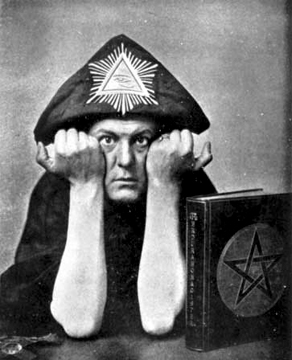
Aliester Crowley’s “The Book of Lies”

[I wrote this commentary back in August 1994. It is presented here without any editing… I added some comments on February 11, 2015.]

COMMENTRY ON CROWLEY’S “THE BOOK OF LIES

FOREWORD

Crowley (1875 – 1947) was 38 years old when this book written by him was first published in London in 1913. Revised edition was published in 1952 with author’s own commentary (circa 1921). First reprint has recently been published in 1992 by SAMUEL WEISER, Box 612, York Beach, Maine 03910.

Crowley’s philosophy derives from eastern thought. It matured in the background provided by Free Masonry.

       “… it is composed of more or less disconnected elements.” An original creation is obviously unique and not connected to anything but itself. At the level of pure creation, there are no connections, and therefore, no logic.

       “… obscure oracles… obscure allusions… cryptograms…” Appearances, such as problems and mysteries, disappear when they are perceived in their entirety. Truth has to be altered to make it persist before it can be communicated.

       “… invoked Dionysus…” In Greek mythology, Dionysus (also known as Bacchus) was the god of wine whose mysteries inspired ecstatic orgiastic worship. Worshipers invoked ecstasy through loud singing, wild dancing, intoxication, drugs, licentiousness, and debauchery. When in a state of ecstasy, ego and identity are completely bypassed and one feels in complete harmony, and this leads to new realizations about life. But where one is dependent on physical vias (sex and drugs) one cannot sustain that ecstatic state and eventually degrades oneself.

       “… the spirit came over me…”  In its native state a being is totally at cause and it can confront and understand anything. When this state occurs, one feels completely in tune with life and totally aware. One is totally THERE and CONFRONTING whatever is there. This brings about an understanding of deeper meanings of life accompanied by indescribable ecstasy.

COMMENT February 11, 2015: I no longer think in terms of “a being at cause,” which was an idea from Scientology. This idea assumes there is a constant called a “being”. There is no such constant. Cause is not a property of being. Cause and effect are relationships that simply occur in associations. In native state the attention is totally free and it has no inertia because it has no fixed structure. A free attention can totally mould itself around whatever it perceives and understand it completely.

       “The entire symbolism… blazed upon my spiritual vision.” Anything that we perceive is a symbol in one form or another. The question is, “What is beyond all symbolism?”

 .

 THE TWO VEILS

       ?          – perplexed, confused… NOT KNOW, WANT TO KNOW

       !           – sudden realization… WONDEROUS ECSTASY OF KNOWING

COMMENT February 11, 2015: One may see “confusion of not knowing” as a veil. But the “ecstasy of knowing” could act as a veil too. One may get stuck in that ecstasy and become unable to mould the attention to what is now there. The flexibility gets lost with slightest bit of structure that stays even as ecstasy.

 .

THE CHAPTER THAT IS NOT A CHAPTER

O!

It refers to Silence. “O” is NOTHING in the absolute sense. “O!” is the exclamation of wonder or ecstasy, which is the ultimate nature of things.

COMMENT February 11, 2015: The ultimate nature of things is that there is no constant, except a wonder about what is there.

.

THE ANTE PRIMAL TRIAD WHICH IS NOT-GOD

Nothing is.                 

– potential CAUSE unmanifested.

COMMENT February 11, 2015: What is not manifested can only be assumed even as “cause.”

Nothing becomes.   

– CAUSE manifests itself.

COMMENT February 11, 2015: What manifests is maybe the assumption. Ha ha.

Nothing is not.           

– CAUSE unmanifested, or its manifestation perverted to something else.

COMMENT February 11, 2015: An assumption is not what is truly there.

.

At a lower harmonic, these basic actions may be perceived as

– being there

– assuming a viewpoint

– taking full responsibility for that viewpoint, or without taking responsibility changing it to something else.

COMMENT February 11, 2015: These earlier ideas were from Scientology. They provide a fixed structure. Any structure has inertia. But the ultimate reality has no inertia.

.

THE FIRST TRIAD WHICH IS GOD

I AM                         

– TOTAL AWARENESS

I utter the word    

– TOTAL CAUSE

I hear the word     

– TOTAL RESPONSIBILITY (a totally willing effect of one’s cause)

.

At a lower harmonic, this is having full awareness at each single moment – BEING THERE and CONFRONTING.

COMMENT February 11, 2015: Many ideas in Scientology have been borrowed from Crowley. Such ideas interiorize attention into a sense of “I”. Such sense of “I” provides a structure that has the property of fixedness. The fixedness gradually congeals into ego. “I” develops as the “center of ego.” It believes itself to be “cause” that can also become “effect.” But cause and effect are truly the result of relationships only. They are not properties of “I”.

.

THE ABYSS

The word is broken up.

– alteration of what was originally created.

There is Knowledge.

– sequences and trail of alterations that can be known.

Knowledge is Relation.

– association among alterations which is logic and knowledge.

These fragments are Creation.

– the alterations hide the original creation, and, therefore, persist.

The broken manifests Light.

– because they persist they can be communicated or exchanged.

.

Mindfulness in Consciousness (old)

See: Exercises: Buddha on Mind (Set 1)

Reference: The 12 Aspects of Mindfulness

After one has established mindfulness in feelings, one may start working on establishing mindfulness in consciousness. Here one takes up key “filters” that one could be looking through in order to become conscious. These may be attitudes that one has somehow imbibed. One examines them and contemplates upon them mindfully.

Note: The Buddhist concept of consciousness is defined here: Consciousness

Here are some excerpts from Satipatthana Sutta: The Foundations of Mindfulness.

“And how, monks, does a monk live contemplating consciousness in consciousness?
“Herein, monks, a monk knows the consciousness with lust, as with lust; the consciousness without lust, as without lust; the consciousness with hate, as with hate; the consciousness without hate, as without hate; the consciousness with ignorance, as with ignorance; the consciousness without ignorance, as without ignorance; the shrunken state of consciousness, as the shrunken state;  the distracted state of consciousness, as the distracted state;  the developed state of consciousness as the developed state; the undeveloped state of consciousness as the undeveloped state; the state of consciousness with some other mental state superior to it, as the state with something mentally higher; the state of consciousness with no other mental state superior to it, as the state with nothing mentally higher; the concentrated state of consciousness, as the concentrated state; the unconcentrated state of consciousness, as the unconcentrated state; the freed state of consciousness, as the freed state; and the unfreed state of consciousness as the unfreed state.
“Thus he lives contemplating consciousness in consciousness internally, or he lives contemplating consciousness in consciousness externally, or he lives contemplating consciousness in consciousness internally and externally. He lives contemplating origination factors in consciousness, or he lives contemplating dissolution-factors in consciousness, or he lives contemplating origination-and-dissolution factors in consciousness. Or his mindfulness is established with the thought, “Consciousness exists,” to the extent necessary just for knowledge and mindfulness, and he lives detached, and clings to nothing in the world. Thus, monks, a monk lives contemplating consciousness in consciousness.”

.

EXERCISE

PURPOSE:   To practice mindfulness with regard to consciousness.

Note: Make sure you understand the Buddhist concept of consciousness. Please see: Consciousness.

  1. At all times be aware of your consciousness.

    In the words of Buddha:
    • Know the consciousness with lust, as with lust;
    • Know the consciousness without lust, as without lust;
    • Know the consciousness with hate, as with hate;
    • Know the consciousness without hate, as without hate;
    • Know the consciousness with ignorance, as with ignorance;
    • Know the consciousness without ignorance, as without ignorance;
    • Know the shrunken state of consciousness, as the shrunken state;
    • Know the distracted state of consciousness, as the distracted state;
    • Know the developed state of consciousness as the developed state;
    • Know the undeveloped state of consciousness as the undeveloped state;
    • Know the state of consciousness with some other mental state superior to it, as the state with something mentally higher;
    • Know the state of consciousness with no other mental state superior to it, as the state with nothing mentally higher;
    • Know the concentrated state of consciousness, as the concentrated state;
    • Know the unconcentrated state of consciousness, as the unconcentrated state;
    • Know the freed state of consciousness, as the freed state;
    • Know the unfreed state of consciousness as the unfreed state;
  2. Look at the consciousness that is uppermost in your mind. Look at what is right there associated with it. Do not go digging for information by trying to remember.

  3. Become thoroughly immersed in the consciousness until you become aware of dominant filter underlying that consciousness

  4. Look at how your condition and attitude toward life is being determined by the filter.

  5. If any thoughts or considerations appear during this process notice them mindfully, and accept them for what they are.

  6. If a picture appears during this process then look at it for what it is. You may make a copy just like it and place it next to it. You may even make more copies until you feel you have enough. Then simply dispose of all these copies in any manner you wish. If some part of a picture is still remaining then repeat this step.

  7. Continue experiencing the consciousness without resistance as long as it is there. Be mindful of the thoughts, considerations, pictures, ideas, etc., that flow along with the consciousness. The filter underlying that consciousness will finally reduce as you practice mindfulness.

  8. Continue with the next consciousness that is now uppermost in the mind from step 2 forward. If there is no specific consciousness to take up, then simply go back to step 1.

  9. Continue contemplating consciousness internally and/or as observed externally.

  10. Be mindful of the origination factors in consciousness, and/or the dissolution factors in consciousness.

  11. Be mindful that consciousness exists to the extent necessary just for knowledge and mindfulness.

  12. Live detached, and cling to nothing in the world.

.

Further references: KHTK Mindfulness

.

Mindfulness in Feelings (old)

See: Exercises: Discerning the Mind

Reference: The 12 Aspects of Mindfulness

After one has established mindfulness with regard to the activities of the body, one may start focusing on feelings to establish mindfulness with regard to them. One locates a feeling that is uppermost in the mind and then immerses oneself completely in it. One looks at the nature of the feeling whether it is worldly or spiritual, whether it is pleasant, painful or neutral. One closely observes significance mixed with that feeling and acknowledges it non-judgmentally for what it is.

Here are some excerpts from Satipatthana Sutta: The Foundations of Mindfulness.

“And how, monks, does a monk live contemplating feelings in feelings?
“Herein, monks, a monk when experiencing a pleasant feeling knows, ‘I experience a pleasant feeling’; when experiencing a painful feeling, he knows, ‘I experience a painful feeling’; when experiencing a neither-pleasant-nor-painful feeling,’ he knows, ‘I experience a neither-pleasant-nor-painful feeling.’ When experiencing a pleasant worldly feeling, he knows, ‘I experience a pleasant worldly feeling’; when experiencing a pleasant spiritual feeling, he knows, ‘I experience a pleasant spiritual feeling’; when experiencing a painful worldly feeling, he knows, ‘I experience a painful worldly feeling’; when experiencing a painful spiritual feeling, he knows, ‘I experience a painful spiritual feeling’; when experiencing a neither-pleasant-nor-painful worldly feeling, he knows, ‘I experience a neither-pleasant-nor-painful worldly feeling’; when experiencing a neither-pleasant-nor-painful spiritual feeling, he knows, ‘I experience a neither-pleasant-nor-painful spiritual feeling.’
“Thus he lives contemplating feelings in feelings internally, or he lives contemplating feelings in feelings externally, or he lives contemplating feelings in feelings internally and externally. He lives contemplating origination factors in feelings, or he lives contemplating dissolution factors in feelings, or he lives contemplating origination-and-dissolution factors in feelings. Or his mindfulness is established with the thought, ‘Feeling exists,’ to the extent necessary just for knowledge and mindfulness, and he lives detached, and clings to nothing in the world. Thus, monks, a monk lives contemplating feelings in feelings.”

.

EXERCISE

PURPOSE:   To practice mindfulness with regard to feelings and sensations.

  1. At all times be aware of your feelings.

    In the words of Buddha:
    • Know when you experience a pleasant feeling, ‘I experience a pleasant feeling’;
    • Know when you experience a painful feeling, ‘I experience a painful feeling’;
    • Know when you experience a neutral feeling, ‘I experience a neutral feeling’;
    • Know when you experience a pleasant worldly feeling, ‘I experience a pleasant worldly feeling;
    • Know when you experience a pleasant spiritual feeling, ‘I experience a pleasant spiritual feeling;
    • Know when you experience a painful worldly feeling, ‘I experience a painful worldly feeling;
    • Know when you experience a painful spiritual feeling, ‘I experience a painful spiritual feeling;
    • Know when you experience a neutral worldly feeling, ‘I experience a neutral worldly feeling;
    • Know when you experience a neutral spiritual feeling, ‘I experience a neutral spiritual feeling;
  2. Look at the feeling that is uppermost in your mind. Look at what is right there associated with it. Do not go digging for information by trying to remember.

  3. See if that feeling has a location in, or on, some part of the body. The feeling may appear not to have any location, or it may appear to be throughout the body. Sometimes the feeling may appear to have a location in the space around the body. In any case, spot the location if there is one.

  4. If there is some medical condition associated with the feeling, make sure you are following the proper medical procedures.

  5. Become thoroughly immersed in the feeling  at its location and feel it unconditionally. The feeling may seem to move to different locations. Thoroughly feel it at whatever location you find it.

  6. If any thoughts or considerations appear during this process notice them mindfully, and accept them for what they are.

  7. If a picture appears during this process then look at it for what it is. You may make a copy just like it and place it next to it. You may even make more copies until you feel you have enough. Then simply dispose of all these copies in any manner you wish. If some part of a picture is still remaining then repeat this step.

  8. Continue experiencing the feeling without resistance as long as it is there. Be mindful of the thoughts, considerations, pictures, ideas, etc., that flow along with the feeling. The feeling will finally reduce and go away as you practice mindfulness.

  9. Continue with the next feeling that is now uppermost in the mind from step 2 forward. If there is no specific feeling to take up then simply go back to step 1.

  10. Continue contemplating feelings internally and/or as observed externally.

  11. Be mindful of the origination factors in feelings, and/or the dissolution factors in feelings.

  12. Be mindful that feelings exist to the extent necessary just for knowledge and mindfulness.

  13. Live detached, and cling to nothing in the world.

.

Further references: KHTK Mindfulness

.

KHTK Exercises based on Buddhism (old)

References:

What is Mindfulness?

The 12 Aspects of Mindfulness

The Foundations of Mindfulness

.

EXERCISE 1

PURPOSE:   To practice mindfulness in breathing.

REFERENCES: 

Mindfulness in Breathing

THE BHAGAVAD GITA: Chapter 2

.

NOTE 1: STAY AWARE OF BREATHING WITHOUT INTERFERING WITH IT. In this exercise breathing  keeps one grounded in reality.

NOTE 2: STAY AWARE OF THE MIND WITHOUT INTERFERING WITH IT. This exercise is objective and not subjective. 

  1. Find a place where you can sit comfortably for a while without being disturbed or distracted.

  2. Make sure you have had enough to eat and rest. You do not want your body to be a distraction.

  3. Sit in a comfortable position with your back straight and upright.  If you are sitting in a chair, keep feet flat on the floor, and hands in the lap.

  4. Be attentive of your breathing. Make no attempt to regulate the breathing. Simply observe the natural pattern of breath going in and out. 

    In the words of Buddha:
    • Ever mindful you breathe in, mindful you breathe out.
    • Breathing in a long breath, know, “I am breathing in a long breath”;
    • Breathing out a long breath, know, “I am breathing out a long breath”;
    • Breathing in a short breath, know, “I am breathing in a short breath”;
    • Breathing out a short breath, know, “I am breathing out a short breath.”
  5. Do not move or do anything. Just be there as an observer. You may close your eyes if you wish.

    NOTE: There may be some scratching, yawning, adjusting the body, etc., as you settle down into the exercise. But after a while, when you really get into the exercise, all such extra motion should go away without much effort.
  6. Do not add anything to this exercise. For example

    • Do not expect any particular outcome
    • Do not try to make your mind blank
    • Do not suppress thoughts, feelings or emotions
  7. While you are being mindful of breathing, experience the whole body.

    In the words of Buddha:
    • Train yourself, “Experiencing the whole body, I shall breathe in.”
    • Train yourself, “Experiencing the whole body, I shall breathe out.”
  8. While you are doing the above, do not interfere with the activities of the body and the mind by way of resisting it, adding thoughts, suppressing thoughts, or anything else. This will gradually calm the activities of the body and mind.

    For example, if the mind is racing, let it race. Let the sensations, feelings, consciousness, ideas, thoughts, etc., come and go as they wish. If the body feels sleepy let it go to sleep; it will be awake again. Simply be mindful of breathing. 

    In the words of Buddha:
    • Train yourself, “Calming the activity of the body, I shall breathe in.”
    • Train yourself, “Calming the activity of the body, I shall breathe out.”
  9. Continue contemplating on the body and its activities, internally and/or as observed externally.

  10. Be mindful of the origination factors in the body, and/or the dissolution factors in the body.

  11. Be mindful that body exists to the extent necessary just for knowledge and mindfulness.

  12. Live detached, and cling to nothing in the world.

  13. Let  the exercise be effortless. End the exercise at a point when you are feeling comfortable. The length of a sitting can be anywhere from 15 minutes to 2 hours or more.

  14. Repeat this exercise until it becomes a natural part of you.

.

After some practice with the above, you may add the following step if you wish.

“Look around in your mind and spot something that is trying to grab your attention. Accept it non-judgmentally, and experience it without resisting.”

 .

EXERCISE 2

PURPOSE:   To practice mindfulness in bodily activities.

REFERENCE: 

Mindfulness in Bodily Activities

.

  1. At all times be aware of the disposition of your body.

    In the words of Buddha:
    • Know, when you are going, “I am going”;
    • Know, when you are standing, “I am standing”;
    • Know, when you are sitting, “I am sitting”;
    • Know, when you are lying down, “I am lying down”;
    • Or just as your body is disposed so you know it.
  2. Carry out the activities of the body with clear comprehension.

    In the words of Buddha, apply clear comprehension
    • in going forward and back;
    • in looking straight on and looking away;
    • in bending and in stretching;
    • in wearing robes and carrying the bowl;
    • in eating, drinking, chewing and savoring;
    • in walking, in standing, in sitting, in falling asleep, in waking, in speaking and in keeping silence.
  3. Reflect on the composition of the body, what the body is enveloped by, and what is inside it.

    In the words of Buddha, reflect on the body thinking thus: 
    ‘There are in this body
    • hair of the head,
    • hair of the body,
    • nails, teeth, skin, flesh,
    • sinews, bones, marrow, kidney,
    • heart, liver, midriff, spleen,
    • lungs, intestines, mesentery, gorge,
    • feces, bile, phlegm, pus,
    • blood, sweat, fat, tears,
    • grease, saliva, nasal mucus,
    • synovial fluid, urine.’
  4. Reflect on the material elements (Solidity, Fluidity, Heat and Motion) of the body.

    In the words of Buddha, reflect on the body by way of the material elements:
    ‘There are in this body
    • the element of earth,
    • the element of water,
    • the element of fire,
    • the element of wind.’
  5. Contemplate upon the impermanence of your own body as and when you come across instances of death.

    In the words of Buddha:
    ‘Verily, also my own body is of the same nature; such it will become and will not escape it…’
    • a body dead one, two, or three days; swollen, blue and festering, thrown in the charnel ground, 
    • a body thrown in the charnel ground, being eaten by crows, hawks, vultures, dogs, jackals or by different kinds of worms, 
    • a body thrown in the charnel ground and reduced to a skeleton with some flesh and blood attached to it, held together by the tendons,
    • a body thrown in the charnel ground and reduced to a skeleton blood-besmeared and without flesh, held together by the tendons,
    • a body thrown in the charnel ground and reduced to a skeleton without flesh and blood, held together by the tendons,
    • a body thrown in the charnel ground and reduced to disconnected bones, scattered in all directions here a bone of the hand, there a bone of the foot, a shin bone, a thigh bone, the pelvis, spine and skull,
    • a body thrown in the charnel ground, reduced to bleached bones of conch like color,
    • a body thrown in the charnel ground reduced to bones, more than a year-old, lying in a heap,
    • a body thrown in the charnel ground, reduced to bones gone rotten and become dust.
  6. Do not add anything to this exercise, such as,

    • Harboring specific expectations
    • Making the mind blank
    • Suppressing thoughts, feelings and emotions
  7. Continue contemplating the body, for what it is, internally and/or as observed externally.

  8. Be mindful of the origination factors in the body, and/or the dissolution factors in the body.

  9. Be mindful that body exists to the extent necessary just for knowledge and mindfulness.

  10. Live detached, and cling to nothing in the world.

  11. Let  this exercise be effortless. 

  12. Do this exercise until it becomes a natural part of you.

.

EXERCISE 3

PURPOSE:   To practice mindfulness with regard to the environment.

.

  1. Look around till you become aware of the limits of the space around you.

    • If you are indoors, then become aware of the floor, ceiling, farthest walls and corners.
    • If you are outdoors, then become aware of the ground, sky, and the horizon in all directions. 
  2. Observe the major features of the scene around you.

  3. Observe the objects in your immediate vicinity.

  4. Become aware of the location of your body in relation to the whole space.

  5. Become aware of the disposition or the movement of your body in this space.

  6. Become aware of other bodies and their disposition or movement in this space.

  7. Contemplate upon the impermanance of this whole scene.

  8. If any sensations, feelings, consciousness, ideas, thoughts, etc., arise, then don’t resist them. Be mindful and let them flow through self. 

  9. If there are any realizations, simply acknowledge them.

  10. Do not add anything to this exercise, such as,

    • Harboring specific expectations
    • Making the mind blank
    • Suppressing thoughts, feelings and emotions
  11. Do this exercise until you can effortlessly maintain this awareness.

.

EXERCISE 4

PURPOSE:   To practice mindfulness with regard to feelings and sensations.

REFERENCE: 

Mindfulness in Feelings

.

  1. At all times be aware of your feelings.

    In the words of Buddha:
    • Know when you experience a pleasant feeling, ‘I experience a pleasant feeling’;
    • Know when you experience a painful feeling, ‘I experience a painful feeling’;
    • Know when you experience a neutral feeling, ‘I experience a neutral feeling’;
    • Know when you experience a pleasant worldly feeling, ‘I experience a pleasant worldly feeling;
    • Know when you experience a pleasant spiritual feeling, ‘I experience a pleasant spiritual feeling;
    • Know when you experience a painful worldly feeling, ‘I experience a painful worldly feeling;
    • Know when you experience a painful spiritual feeling, ‘I experience a painful spiritual feeling;
    • Know when you experience a neutral worldly feeling, ‘I experience a neutral worldly feeling;
    • Know when you experience a neutral spiritual feeling, ‘I experience a neutral spiritual feeling;
  2. Look at the feeling that is uppermost in your mind. Look at what is right there associated with it. Do not go digging for information by trying to remember.

  3. See if that feeling has a location in, or on, some part of the body. The feeling may appear not to have any location, or it may appear to be throughout the body. Sometimes the feeling may appear to have a location in the space around the body. In any case, spot the location if there is one.

  4. If there is some medical condition associated with the feeling, make sure you are following the proper medical procedures.

  5. Become thoroughly immersed in the feeling  at its location and feel it unconditionally. The feeling may seem to move to different locations. Thoroughly feel it at whatever location you find it.

  6. If any thoughts or considerations appear during this process notice them mindfully, and accept them for what they are.

  7. If a picture appears during this process then look at it for what it is. You may make a copy just like it and place it next to it. You may even make more copies until you feel you have enough. Then simply dispose of all these copies in any manner you wish. If some part of a picture is still remaining then repeat this step.

  8. Continue experiencing the feeling without resistance as long as it is there. Be mindful of the thoughts, considerations, pictures, ideas, etc., that flow along with the feeling. The feeling will finally reduce and go away as you practice mindfulness.

  9. Continue with the next feeling that is now uppermost in the mind from step 2 forward. If there is no specific feeling to take up then simply go back to step 1.

  10. Continue contemplating feelings internally and/or as observed externally.

  11. Be mindful of the origination factors in feelings, and/or the dissolution factors in feelings.

  12. Be mindful that feelings exist to the extent necessary just for knowledge and mindfulness.

  13. Live detached, and cling to nothing in the world.

.

EXERCISE 5

PURPOSE:   To practice mindfulness in consciousness.

REFERENCE: 

Mindfulness in Consciousness

.

Note: Make sure you understand the Buddhist concept of consciousness. Please see: Consciousness.

  1. At all times be aware of your consciousness.

    In the words of Buddha:
    • Know the consciousness with lust, as with lust;
    • Know the consciousness without lust, as without lust;
    • Know the consciousness with hate, as with hate;
    • Know the consciousness without hate, as without hate;
    • Know the consciousness with ignorance, as with ignorance;
    • Know the consciousness without ignorance, as without ignorance;
    • Know the shrunken state of consciousness, as the shrunken state;
    • Know the distracted state of consciousness, as the distracted state;
    • Know the developed state of consciousness as the developed state;
    • Know the undeveloped state of consciousness as the undeveloped state;
    • Know the state of consciousness with some other mental state superior to it, as the state with something mentally higher;
    • Know the state of consciousness with no other mental state superior to it, as the state with nothing mentally higher;
    • Know the concentrated state of consciousness, as the concentrated state;
    • Know the unconcentrated state of consciousness, as the unconcentrated state;
    • Know the freed state of consciousness, as the freed state;
    • Know the unfreed state of consciousness as the unfreed state;
  2. Look at the consciousness that is uppermost in your mind. Look at what is right there associated with it. Do not go digging for information by trying to remember.

  3. Become thoroughly immersed in the consciousness until you become aware of dominant filter underlying that consciousness

  4. Look at how your condition and attitude toward life is being determined by the filter.

  5. If any thoughts or considerations appear during this process notice them mindfully, and accept them for what they are.

  6. If a picture appears during this process then look at it for what it is. You may make a copy just like it and place it next to it. You may even make more copies until you feel you have enough. Then simply dispose of all these copies in any manner you wish. If some part of a picture is still remaining then repeat this step.

  7. Continue experiencing the consciousness without resistance as long as it is there. Be mindful of the thoughts, considerations, pictures, ideas, etc., that flow along with the consciousness. The filter underlying that consciousness will finally reduce as you practice mindfulness.

  8. Continue with the next consciousness that is now uppermost in the mind from step 2 forward. If there is no specific consciousness to take up, then simply go back to step 1.

  9. Continue contemplating consciousness internally and/or as observed externally.

  10. Be mindful of the origination factors in consciousness, and/or the dissolution factors in consciousness.

  11. Be mindful that consciousness exists to the extent necessary just for knowledge and mindfulness.

  12. Live detached, and cling to nothing in the world.

.


EXERCISE 6

PURPOSE:   To practice mindfulness in mental hindrances.

REFERENCE:

Mindfulness in Mental Objects (Hindrances)

.

  1. Look and contemplate on SENSE DESIRE.

    • Know when sense-desire is present, “There is sense-desire in me,”
    • Know when sense-desire is not present, “There is no sense-desire in me.”
    • How the arising of the non-arisen sense-desire comes to be;
    • How the abandoning of the arisen sense-desire comes to be;
    • How the non-arising in the future of the abandoned sense-desire comes to be.
    • Do steps 6 – 9 before going to the next step.
  2. Look and contemplate on ANGER.

    • Know when anger is present, “There is anger in me,”
    • Know when anger is not present, “There is no anger in me.”
    • How the arising of the non-arisen anger comes to be;
    • How the abandoning of the arisen anger comes to be;
    • How the non-arising in the future of the abandoned anger comes to be.
    • Do steps 6 – 9 before going to the next step.
  3. Look and contemplate on SLOTH and TORPOR.

    • Know when sloth and torpor are present, “There are sloth and torpor in me,”
    • Know when sloth and torpor are not present, “There are no sloth and torpor in me.”
    • How the arising of the non-arisen sloth and torpor comes to be;
    • How the abandoning of the arisen sloth and torpor comes to be;
    • How the non-arising in the future of the abandoned sloth and torpor comes to be.
    • Do steps 6 – 9 before going to the next step.
  4. Look and contemplate on AGITATION and REMORSE.

    • Know when agitation and remorse are present, “There are agitation and remorse in me,”
    • Know when agitation and remorse are not present, “There are no agitation and remorse in me.”
    • How the arising of the non-arisen agitation and remorse comes to be;
    • How the abandoning of the arisen agitation and remorse comes to be;
    • How the non-arising in the future of the abandoned agitation and remorse comes to be.
    • Do steps 6 – 9 before going to the next step.
  5. Look and contemplate on DOUBT.

    • Know when doubt is present, “There is doubt in me,”
    • Know when doubt is not present, “There is no doubt in me.”
    • How the arising of the non-arisen doubt comes to be;
    • How the abandoning of the arisen doubt comes to be;
    • How the non-arising in the future of the abandoned doubt comes to be.
    • Do steps 6 – 9.
  6. Continue contemplating this hindrance internally and/or as observed externally.

  7. Be mindful of the origination factors in this hindrance, and/or the dissolution factors in this hindrance.

  8. Be mindful that this hindrance exists to the extent necessary just for knowledge and mindfulness.

  9. Live detached, and cling to nothing in the world.

.

EXERCISE 7

PURPOSE:   To practice mindfulness in aggregates of clinging.

REFERENCE: 

Mindfulness in Mental Objects (Clinging)

.

  1. Look and contemplate on aggregate of MATERIAL FORMS.

    • Thus is material form.
    • Thus is the arising of material form.
    • Thus is the disappearance of material form.
    • Do steps 6 – 9 before going to the next step.
  2. Look and contemplate on aggregate of FEELINGS.

    • Thus is feeling.
    • Thus is the arising of feeling.
    • Thus is the disappearance of feeling.
    • Do steps 6 – 9 before going to the next step.
  3. Look and contemplate on aggregate of PERCEPTIONS.

    • Thus is perception.
    • Thus is the arising of perception.
    • Thus is the disappearance of perception.
    • Do steps 6 – 9 before going to the next step.
  4. Look and contemplate on aggregate of FORMATIONS.

    • Thus is formation.
    • Thus is the arising of formation.
    • Thus is the disappearance of formation.
    • Do steps 6 – 9 before going to the next step.
  5. Look and contemplate on aggregate of CONSCIOUSNESS.

    • Thus is consciousness.
    • Thus is the arising of consciousness.
    • Thus is the disappearance of consciousness.
    • Do steps 6 – 9.
  6. Continue contemplating this aggregate internally and/or as observed externally.

  7. Be mindful of the origination factors in this aggregate, and/or the dissolution factors in this aggregate.

  8. Be mindful that this aggregate exists to the extent necessary just for knowledge and mindfulness.

  9. Live detached, and cling to nothing in the world.

.

EXERCISE 8

PURPOSE:   To practice mindfulness in the internal and external sense bases.

REFERENCE: 

Mindfulness in Mental Objects (Sense Bases)

.

  1. Look and contemplate on EYE AND VISUAL FORMS.

    • Know the eye and visual forms
    • Know the fetter that arises dependent on both.
    • Know how the arising of the non-arisen fetter comes to be.
    • Know how the abandoning of the arisen fetter comes to be.
    • Know how the non-arising in the future of the abandoned fetter comes to be.
    • Do steps 7 – 10 before going to the next step.
  2. Look and contemplate on EAR AND SOUNDS

    • Know the ear and sounds
    • Know the fetter that arises dependent on both.
    • Know how the arising of the non-arisen fetter comes to be.
    • Know how the abandoning of the arisen fetter comes to be.
    • Know how the non-arising in the future of the abandoned fetter comes to be.
    • Do steps 7 – 10 before going to the next step.
  3. Look and contemplate on NOSE AND SMELLS.

    • Know the nose and smells
    • Know the fetter that arises dependent on both.
    • Know how the arising of the non-arisen fetter comes to be.
    • Know how the abandoning of the arisen fetter comes to be.
    • Know how the non-arising in the future of the abandoned fetter comes to be.
    • Do steps 7 – 10 before going to the next step.
  4. Look and contemplate on TONGUE AND FLAVORS.

    • Know the tongue and flavors
    • Know the fetter that arises dependent on both.
    • Know how the arising of the non-arisen fetter comes to be.
    • Know how the abandoning of the arisen fetter comes to be.
    • Know how the non-arising in the future of the abandoned fetter comes to be.
    • Do steps 7 – 10 before going to the next step.
  5. Look and contemplate on BODY AND TACTUAL OBJECTS.

    • Know the body and tactual objects
    • Know the fetter that arises dependent on both.
    • Know how the arising of the non-arisen fetter comes to be.
    • Know how the abandoning of the arisen fetter comes to be.
    • Know how the non-arising in the future of the abandoned fetter comes to be.
    • Do steps 7 – 10 before going to the next step.
  6. Look and contemplate on MIND AND MENTAL OBJECTS.

    • Know the mind and mental objects
    • Know the fetter that arises dependent on both.
    • Know how the arising of the non-arisen fetter comes to be.
    • Know how the abandoning of the arisen fetter comes to be.
    • Know how the non-arising in the future of the abandoned fetter comes to be.
    • Do steps 7 – 10 before going to the next step.
  7. Continue contemplating this sense base internally and/or as observed externally.

  8. Be mindful of the origination factors in this sense base, and/or the dissolution factors in this sense base.

  9. Be mindful that this sense base exists to the extent necessary just for knowledge and mindfulness.

  10. Live detached, and cling to nothing in the world.

.

EXERCISE 9

PURPOSE:   To practice mindfulness in the factors of enlightenment.

REFERENCE: 

Mindfulness in Mental Objects (Enlightenment)

.

  1. Look and contemplate on MINDFULNESS.

    • When the enlightenment-factor of mindfulness is present, know, ‘The enlightenment-factor of mindfulness is in me’.
    • When the enlightenment-factor of mindfulness is absent, know, ‘The enlightenment-factor of mindfulness is not in me’.
    • Know how the arising of the non-arisen enlightenment-factor of mindfulness comes to be.
    • Know how perfection in the development of the arisen enlightenment-factor of mindfulness comes to be.
    • Do steps 8 – 11 before going to the next step.
  2. Look and contemplate on INVESTIGATION.

    • When the enlightenment-factor of investigation is present, know, ‘The enlightenment-factor of investigation is in me’.
    • When the enlightenment-factor of investigation is absent, know, ‘The enlightenment-factor of investigation is not in me’.
    • Know how the arising of the non-arisen enlightenment-factor of investigation comes to be.
    • Know how perfection in the development of the arisen enlightenment-factor of investigation comes to be.
    • Do steps 8 – 11 before going to the next step.
  3. Look and contemplate on ENERGY.

    • When the enlightenment-factor of energy is present, know, ‘The enlightenment-factor of energy is in me’.
    • When the enlightenment-factor of energy is absent, know, ‘The enlightenment-factor of energy is not in me’.
    • Know how the arising of the non-arisen enlightenment-factor of energy comes to be.
    • Know how perfection in the development of the arisen enlightenment-factor of energy comes to be.
    • Do steps 8 – 11 before going to the next step.
  4. Look and contemplate on JOY.

    • When the enlightenment-factor of joy is present, know, ‘The enlightenment-factor of joy is in me’.
    • When the enlightenment-factor of joy is absent, know, ‘The enlightenment-factor of joy is not in me’.
    • Know how the arising of the non-arisen enlightenment-factor of joy comes to be.
    • Know how perfection in the development of the arisen enlightenment-factor of joy comes to be.
    • Do steps 8 – 11 before going to the next step.
  5. Look and contemplate on TRANQUILITY.

    • When the enlightenment-factor of tranquility is present, know, ‘The enlightenment-factor of tranquility is in me’.
    • When the enlightenment-factor of tranquility is absent, know, ‘The enlightenment-factor of tranquility is not in me’.
    • Know how the arising of the non-arisen enlightenment-factor of tranquility comes to be.
    • Know how perfection in the development of the arisen enlightenment-factor of tranquility comes to be.
    • Do steps 8 – 11 before going to the next step.
  6. Look and contemplate on CONCENTRATION.

    • When the enlightenment-factor of concentration is present, know, ‘The enlightenment-factor of concentration is in me’.
    • When the enlightenment-factor of concentration is absent,know, ‘The enlightenment-factor of concentration is not in me’.
    • Know how the arising of the non-arisen enlightenment-factor of concentration comes to be.
    • Know how perfection in the development of the arisen enlightenment-factor of concentration comes to be.
    • Do steps 8 – 11 before going to the next step.
  7. Look and contemplate on EQUANIMITY.

    • When the enlightenment-factor of equanimity is present, know, ‘The enlightenment-factor of equanimity is in me’.
    • When the enlightenment-factor of equanimity is absent, know, ‘The enlightenment-factor of equanimity is not in me’.
    • Know how the arising of the non-arisen enlightenment-factor of equanimity comes to be.
    • Know how perfection in the development of the arisen enlightenment-factor of equanimity comes to be.
    • Do steps 8 – 11 before going to the next step. 
  8. Continue contemplating this factor of enlightenment internally and/or as observed externally.

  9. Be mindful of the origination factors in this factor of enlightenment, and/or the dissolution factors in this factor of enlightenment.

  10. Be mindful that this factor of enlightenment exists to the extent necessary just for knowledge and mindfulness.

  11. Live detached, and cling to nothing in the world.

.

EXERCISE 10

PURPOSE:   To practice mindfulness in Four Noble Truths.

REFERENCE:

Mindfulness in Mental Objects (Truths)

.

  1. Look and contemplate on ‘This is suffering.’

  2. Look and contemplate on ‘This is the origin of suffering’

  3. Look and contemplate on ‘This is the cessation of suffering’

  4. Look and contemplate on ‘This is the road leading to the cessation of suffering’

  5. Continue contemplating these noble truths internally and/or as observed externally.

  6. Be mindful of the origination factors in these noble truths, and/or the dissolution factors in these noble truths.

  7. Be mindful that these noble truths exists to the extent necessary just for knowledge and mindfulness.

  8. Live detached, and cling to nothing in the world.

.


Mindfulness in Bodily Activities (old)

See: Exercises: Discerning the Body

Reference: The 12 Aspects of Mindfulness

After practicing some mindfulness with regard to breathing, one may start practicing mindfulness with regard to rest of the body.

Here are some excerpts from Satipatthana Sutta: The Foundations of Mindfulness.

(1)   Being aware of Body’s disposition

“And further, monks, a monk knows, when he is going, ‘I am going’; he knows, when he is standing, ‘I am standing’; he knows, when he is sitting, ‘I am sitting’; he knows, when he is lying down, ‘I am lying down’; or just as his body is disposed so he knows it.”

(2)   Clearly comprehending Body’s activity

“And further, monks, a monk, in going forward and back, applies clear comprehension; in looking straight on and looking away, he applies clear comprehension; in bending and in stretching, he applies clear comprehension; in wearing robes and carrying the bowl, he applies clear comprehension; in eating, drinking, chewing and savoring, he applies clear comprehension; in walking, in standing, in sitting, in falling asleep, in waking, in speaking and in keeping silence, he applies clear comprehension.”

(3)   Reflecting on the composition of the Body

“And further, monks, a monk reflects on this very body enveloped by the skin and full of manifold impurity, from the soles up, and from the top of the head-hairs down, thinking thus: ‘There are in this body hair of the head, hair of the body, nails, teeth, skin, flesh, sinews, bones, marrow, kidney, heart, liver, midriff, spleen, lungs, intestines, mesentery, gorge, feces, bile, phlegm, pus, blood, sweat, fat, tears, grease, saliva, nasal mucus, synovial fluid, urine.’
“Just as if there were a double-mouthed provision bag full of various kinds of grain such as hill paddy, paddy, green gram, cow-peas, sesamum, and husked rice, and a man with sound eyes, having opened that bag, were to take stock of the contents thus: ‘This is hill paddy, this is paddy, this is green gram, this is cow-pea, this is sesamum, this is husked rice.’ Just so, monks, a monk reflects on this very body enveloped by the skin and full of manifold impurity, from the soles up, and from the top of the head-hairs down, thinking thus: ‘There are in this body hair of the head, hair of the body, nails, teeth, skin, flesh, sinews, bones, marrow, kidney, heart, liver, midriff, spleen, lungs, intestines, mesentery, gorge, feces, bile, phlegm, pus, blood, sweat, fat, tears, grease, saliva, nasal mucus, synovial fluid, urine.’”

(4)   Reflecting on Material Elements

“And further, monks, a monk reflects on this very body, however it be placed or disposed, by way of the material elements: ‘There are in this body the element of earth, the element of water, the element of fire, the element of wind.’
“Just as if, monks, a clever cow-butcher or his apprentice, having slaughtered a cow and divided it into portions, should be sitting at the junction of four high roads, in the same way, a monk reflects on this very body, as it is placed or disposed, by way of the material elements: ‘There are in this body the elements of earth, water, fire, and wind.’”

(5)   Contemplating upon the Impermanence of Body

“(a) And further, monks, as if a monk sees a body dead one, two, or three days; swollen, blue and festering, thrown in the charnel ground, he then applies this perception to his own body thus: ‘Verily, also my own body is of the same nature; such it will become and will not escape it.’
“(b) And further, monks, as if a monk sees a body thrown in the charnel ground, being eaten by crows, hawks, vultures, dogs, jackals or by different kinds of worms, he then applies this perception to his own body thus: ‘Verily, also my own body is of the same nature; such it will become and will not escape it.’
“(c) And further, monks, as if a monk sees a body thrown in the charnel ground and reduced to a skeleton with some flesh and blood attached to it, held together by the tendons…
“(d) And further, monks, as if a monk sees a body thrown in the charnel ground and reduced to a skeleton blood-besmeared and without flesh, held together by the tendons…
“(e) And further, monks, as if a monk sees a body thrown in the charnel ground and reduced to a skeleton without flesh and blood, held together by the tendons…
“(f) And further, monks, as if a monk sees a body thrown in the charnel ground and reduced to disconnected bones, scattered in all directions here a bone of the hand, there a bone of the foot, a shin bone, a thigh bone, the pelvis, spine and skull…
“(g) And further, monks, as if a monk sees a body thrown in the charnel ground, reduced to bleached bones of conch like color…
“(h) And further, monks, as if a monk sees a body thrown in the charnel ground reduced to bones, more than a year-old, lying in a heap…
“(i) And further, monks, as if a monk sees a body thrown in the charnel ground, reduced to bones gone rotten and become dust, he then applies this perception to his own body thus: ‘Verily, also my own body is of the same nature; such it will become and will not escape it.’”

(6)   Adjunct to each of the contemplations above

“Thus he lives contemplating the body in the body internally, or he lives contemplating the body in the body externally, or he lives contemplating the body in the body internally and externally. He lives contemplating origination factors in the body, or he lives contemplating dissolution factors in the body, or he lives contemplating origination-and-dissolution factors in the body. Or his mindfulness is established with the thought: “The body exists,” to the extent necessary just for knowledge and mindfulness, and he lives detached, and clings to nothing in the world. Thus also, monks, a monk lives contemplating the body in the body.”
.

EXERCISE

PURPOSE:   To practice mindfulness in bodily activities.

  1. At all times be aware of the disposition of your body.

    In the words of Buddha:
    • Know, when you are going, “I am going”;
    • Know, when you are standing, “I am standing”;
    • Know, when you are sitting, “I am sitting”;
    • Know, when you are lying down, “I am lying down”;
    • Or just as your body is disposed so you know it.
  2. Carry out the activities of the body with clear comprehension.

    In the words of Buddha, apply clear comprehension
    • in going forward and back;
    • in looking straight on and looking away;
    • in bending and in stretching;
    • in wearing robes and carrying the bowl;
    • in eating, drinking, chewing and savoring;
    • in walking, in standing, in sitting, in falling asleep, in waking, in speaking and in keeping silence.
  3. Reflect on the composition of the body, what the body is enveloped by, and what is inside it.

    In the words of Buddha, reflect on the body thinking thus: 
    ‘There are in this body
    • hair of the head,
    • hair of the body,
    • nails, teeth, skin, flesh,
    • sinews, bones, marrow, kidney,
    • heart, liver, midriff, spleen,
    • lungs, intestines, mesentery, gorge,
    • feces, bile, phlegm, pus,
    • blood, sweat, fat, tears,
    • grease, saliva, nasal mucus,
    • synovial fluid, urine.’
  4. Reflect on the material elements (Solidity, Fluidity, Heat and Motion) of the body.

    In the words of Buddha, reflect on the body by way of the material elements:
    ‘There are in this body
    • the element of earth,
    • the element of water,
    • the element of fire,
    • the element of wind.’
  5. Contemplate upon the impermanence of your own body as and when you come across instances of death.

    In the words of Buddha:
    ‘Verily, also my own body is of the same nature; such it will become and will not escape it…’
    • a body dead one, two, or three days; swollen, blue and festering, thrown in the charnel ground, 
    • a body thrown in the charnel ground, being eaten by crows, hawks, vultures, dogs, jackals or by different kinds of worms, 
    • a body thrown in the charnel ground and reduced to a skeleton with some flesh and blood attached to it, held together by the tendons,
    • a body thrown in the charnel ground and reduced to a skeleton blood-besmeared and without flesh, held together by the tendons,
    • a body thrown in the charnel ground and reduced to a skeleton without flesh and blood, held together by the tendons,
    • a body thrown in the charnel ground and reduced to disconnected bones, scattered in all directions here a bone of the hand, there a bone of the foot, a shin bone, a thigh bone, the pelvis, spine and skull,
    • a body thrown in the charnel ground, reduced to bleached bones of conch like color,
    • a body thrown in the charnel ground reduced to bones, more than a year-old, lying in a heap,
    • a body thrown in the charnel ground, reduced to bones gone rotten and become dust.
  6. Do not add anything to this exercise, such as,

    • Harboring specific expectations
    • Making the mind blank
    • Suppressing thoughts, feelings and emotions
  7. Continue contemplating the body, for what it is, internally and/or as observed externally.

  8. Be mindful of the origination factors in the body, and/or the dissolution factors in the body.

  9. Be mindful that body exists to the extent necessary just for knowledge and mindfulness.

  10. Live detached, and cling to nothing in the world.

  11. Let  this exercise be effortless. 

  12. Do this exercise until it becomes a natural part of you.

.

Further references: KHTK Mindfulness

.