Category Archives: Religion

Doing Time Doing Vipassana

Winner of the Golden Spire award at the 1998 San Francisco International Film festival and winner of a 1998 NCCD PASS Award of the American National Council on Crime and Delinquency.

This extraordinary documentary takes viewers into India’s largest prison – known as one of the toughest in the world – and shows the dramatic change brought about by the introduction of Vipassana meditation.

This is the story of a strong woman named Kiran Bedi, the former Inspector General of Prisons in New Delhi. It tells how she strove to transform the notorious Tihar Prison, once a hellhole of crime, and turn it into an oasis of peace. It is a story of an ancient meditation technique, Vipassana, which helps people to take control of their lives and channel them towards their own good and the good of others. But most of all it is the story of the prison inmates who underwent profound change, and who realized that incarceration is not the end but possibly the beginning of a new life.

Produced & Directed by by Ayelet Menahemi & Eilona Ariel, Karuna Films, Ltd., 1997, 52 min.

.

Pariyatti Timeline

At this “hinge of history” that we occupy—the arising of the Second Sāsana—the teaching of the Buddha is available to untold numbers of people. We may take for granted the proliferation of Dhamma practice centers and resources for Dhamma study, and the unprecedented means to find them. Only 70 years ago, practice of the Noble Eightfold Path was confined to a tiny number of renunciates and aspirants in a few countries. Computers, the internet, cell phones, online libraries, websites, social networks, eBooks—harbingers of the Digital Age—were unimagined. The flowering of “numerous arts and sciences to serve human needs under the canopy of civilization” that we live in, is a fleeting wonderment.

The timeline below features noteworthy events of pariyatti (theoretical knowledge of the Buddha’s teaching) as well as examples of advances in communications. Not intending to be comprehensive, we offer this timeline as food for thought and to underscore the great good fortune of our era. For a blink in cosmological time, the possibility of freedom from samsāra is robustly alive and able to be conveyed and dispersed to vast numbers through a myriad of carriers; in this dispensation Pariyatti (the non-profit organization) has its role to play.

“May all beings be able to muster immense zeal!”

A selective timeline of pariyatti

  • c 563 to 483 BCE—Life of Gotama Buddha: in 45 years of teaching the Dhamma the Enlightened One is said to have given over 84,000 discourses
  • 483 BCE—First Council convened outside Rājagaha 3 months afterMahāparinibbāṇa of the Buddha; first compilation of authenticated Pāli Canon (known as Tipiṭaka—literally, “three baskets,” also translated as “three treasuries”)
  • 483 BCE to 1954—Second Council through Fifth Councils were held to recite, redact and authenticate the Tipiṭaka for prosperity. Second in Vesāli, India; Third in Paṭaliputta, India, under the auspices of Emperor Asoka; Fourth in Tambapaṇṇi, Sri Lanka; Fifth in Mandalay, under the auspices of King Mindon. More info.
  • c 1871—Completion of “the world’s largest book” in Mandalay: contemporaneous with Fifth Council, entire Pāli Tipiṭaka inscribed on 729 marble slabs at Kuthodaw Pagoda. Historic temple intact and a place of reverence to this day.
  • 1881Pali Text Society (PTS) founded in Oxford, England to foster and promote the study of Pāli texts
  • 1900—Printed copy of Pāli Tipiṭaka published (in 38 volumes of 400 pages each) by Hanthawaddy Press, Burma (established 1879); described as “true copies of the Piṭaka inscribed on stones by King Mindon”
  • 1944—One of the first computers (Harvard Mark I) is designed
  • 1952 to 1963—The Union of Burma Buddha Sāsana Council in Rangoon publishes The Light of the Dhamma magazine; a sister publication The Light of Buddha is published from 1956 to 1965 in Mandalay
  • 1954 to 1956—Sixth Council (Chaṭṭha Saṅgāyana) convened in Rangoon 2,500 years after Mahāparinibbāṇa; publishes authenticated Tipiṭaka and Commentaries in printed books
  • 1955—Date recognized by many Theravādins as the beginning of the SecondSāsana (arising of the teaching of the Buddha)
  • 1955—S.N. Goenka takes first Vipassana course under Sayagyi U Ba Khin at International Meditation Center (IMC) in Rangoon
  • 1958Buddhist Publication Society (BPS) founded in Kandy, Sri Lanka “to make known the teachings of the Buddha”; becomes a leading publisher of Theravāda works in English, publishing over 800 titles
  • 1969—S.N. Goenka travels from Burma to India to teach Vipassana; he carries printed Chaṭṭha Saṅgāyana Tipiṭaka books, thereby bringing both paṭipatti(practice) and pariyatti (scriptures)
  • 1969—ARPANET (the precursor to the internet) is created
  • 1973—First cell phone is invented
  • 1985Vipassana Research Institute (VRI) is established in Igatpuri, India to conduct research into sources and applications of Vipassana
  • 1986—Pariyatti Book Service is started in California to import books from India and Sri Lanka on Buddha’s teaching for North American meditators
  • 1986—First book on nanotechnology is published
  • 1990—VRI starts project to publish Tipiṭaka and Commentaries in Devanagiri script
  • 1992—Electronic Buddhist Text Initiative started in Berkeley CA, to assist digital preservation and organization of Buddhist canonical texts
  • 1993Access to Insight starts, growing into free online Theravāda library offering over 1,000 suttas and hundreds of articles
  • c 1994—VRI makes Chaṭṭha Saṅgāyana Tipiṭaka CD-ROM available free of charge; sets of Tipiṭaka books in Devanagari script (over 100 volumes each) are printed for free distribution to monasteries, universities, meditation centers, temples, libraries
  • 1995—Vipassana Research Publications of America (VRPA) is started in Seattle, sanctioned by S.N. Goenka; mission to make Vipassana literature more available in West through importing of Pāli Tipiṭaka books (for free distribution to scholars) and English-language titles from VRI
  • 1996—VRPA purchases Pariyatti Book Service; new book publication and import entity is incorporated as Pariyatti
  • 1997 to 1999—Pariyatti becomes North American distributor of Buddhist Publication Society (BPS); Pariyatti and BPS co-publishes first of series of classic titlesVisuddhimagga, the Path of Purification
  • c 2000—Entire Tipiṭaka and Commentaries in 14 scripts available to anyone in the world with access to the internet (www.Tipitaka.org)
  • 2000—Wikipedia is created
  • 2002—Pariyatti becomes North American distributor for Pāli Text Society; Pariyatti has largest North American inventory of PTS titles and one of world’s largest English-language Theravāda collections
  • 2004—Facebook is created
  • 2005 to present—Pariyatti’s expanding online resources “Treasures of Pariyatti” offers permanent repository of and free access to Dhamma literature in danger of being lost; painstaking optical character recognition technology allows rare copies of The Light of the Dhamma and The Light of Buddha to be preserved
  • 2010—Vipassana centers in tradition of Sayagyi U Ba Khin as taught by S.N. Goenka offer over 2,000 10-day Vipassana courses annually, and serve about 120,000 people annually. 
  • Present—Buddhist Publication Society continues digitization of extensive parts of its collection for free online access (at BPS Online Library and accesstoinsight.org)
  • Present—In continuous service since 1881, Pāli Text Society: publishes Pāli texts in Roman script, English translations, and ancillary works including dictionaries and concordance; keeps nearly all its publications in print; provides research scholarships in Pāli studies in various countries; supports the Fragile Palm Leaves Project (identification and preservation of Southeast Asian manuscripts)
  • PresentVipassana Research Institute continues research into Pāli texts and personal effects of Vipassana meditation; many titles are available via free download; monthly newsletter in Hindi and English has 25,000 subscribers worldwide
  • 2012 January 19—41st anniversary of demise of Sayagyi U Ba Khin (1899 to 1971) who proclaimed: “The time-clock of Vipassana has now struck!” and “May all beings be able to muster immense zeal!”

.

The Vedic Pantheon

Reference: Religion

[This is an old essay of mine written in 1996. My viewpoint has somewhat modified since then, but the data in this essay is still agreeable to me at a certain level. Hope it gives you a fresh viewpoint.]

.

Though many conservative Hindus may disagree with me, but my understanding of the various terms used in the Advaita philosophy in Hinduism is as follows:

.

BRAHMAN AND ATMAN 

==========================================
BRAHMAN: The Absolute Potential of Creativity.

==========================================

Brahman is potential and not actual. It is a non-manifestation. Any manifestation would have the attributes of matter, energy, space and time. These attributes are inherent to the Creation, but not to Brahman.

Any form that Man may hold for Brahman (and call it God) would be a form that Man has created to express this concept of the Absolute. But that form would not be Brahman.

The forms applied to Brahman may be visual or audio, or may be just mental or conceptual. Any such forms would have the attributes of matter, energy, space and time. So, none of these forms is Brahman.

Brahman may be inexpressible, but Brahman can be experienced and understood. Brahman is not unknowable.

From the viewpoint of understanding, Brahman (in religion) acts as the reference point for the whole existence, just as Zero (in mathematics) acts as a reference point for all numbers.

=========================================
ATMAN: Brahman manifested as a cause point.

=========================================

When creation occurs, the power to create (which is potential in Brahman) becomes actually expressed. Atman is the beingness we recognize as a “cause point” or a “creator.” There can be infinity of such beingnesses.

Any form that Man may hold for an Atman would be a form that Man has created to express his concept of a cause point or a creator. But that form would not be Atman.  Just like Brahman, Atman is formless.

What we perceive is nothing but a form having the attributes of matter, energy, space and time. Forms are things created. Thus, we can never perceive Atman, the creator of forms.

Actually, Atman is that which is doing the perceiving.

Atman may be understood only in terms of what it is creating. Thus, there are as many Atmans as there are independent creations at any moment.

Atman is an actuality. Brahman is the potential.

.

PARMATMAN AND JIVATMAN 

Paramatman and Jivatman define the two extreme states of Atman. Between these two states lie many other states. As Atman descends from the state of Paramatman it gets increasingly attached to creation, and becomes narrower in its viewpoint.

=====================================
PARAMATMAN: Atman in its supreme state.
=====================================

Paramatman is the supreme state of Atman. In this state the Atman is operating as total cause with full knowledge and responsibility.

The viewpoint of Paramatman is the broadest viewpoint possible, which is concerned with the survival of the whole universe and all things within it. 

===================================
JIVATMAN: Atman in its attached state.
===================================

Jivatman is that state of Atman where it is confusing itself with the body. It is not very causative, nor spiritually aware, nor very responsible. It is constrained by its own considerations.

The viewpoint of Jivatman is quite narrow. It is concerned only with the survival of the things it is attached to, at the expense of everything else.

.

PURUSHA AND PRAKRITI

Purusha and Prakriti symbolize the duality of the Creator and the Creation. This is the prime duality in which Brahman appears.

===============================
PURUSHA: The CREATOR principle
===============================

Purusha is that aspect of Brahman, which is creating existence out of non-existence.

Purusha is the source of all considerations that underlie creation. It is the source of all principles that define the physical universe, such as, the laws of conservation of energy and matter.

===============================
PRAKRITI: The CREATION principle

===============================

Prakriti constitutes the considerations of matter, energy, space and time that underlie all creation.

The FORM of what is created constitutes the matter aspect of Prakriti. An example of this would be the thought that appears out of no where as a divine inspiration.

The MOTION that finally solidifies into a form constitutes the energy aspect of Prakriti. An example of this would be the process by which that thought comes into being.

The DIMENSIONS in which the form exists constitutes the space aspect of Prakriti. An example of this would be the dimensions in which the thought exists and which give the thought its form.

The CHANGES when the creation occurs constitutes the time aspect of Prakriti. An example of this would be the alterations involved in the creation of the thought.

Thus, PRAKRITI is the matter, energy, space, and time aspects of any creation.

.

THE CYCLE OF EXISTENCE AND MAYA

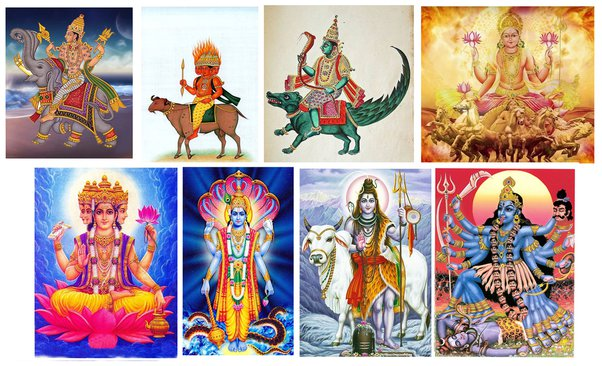
The Hindu Trinity of Brahman, Vishnu, Mahesh defines the cycle of existence: Create, survive, destroy. SURVIVE means “continuous creation.” DESTRUCTION means, “complete disappearance of form,” as in the destruction of illusion. DESTRUCTION does not mean an alteration of form by force, such  as the “destruction” due to a natural calamity.

=============================================

THE CYCLE OF EXISTENCE:

The cycle of CREATE, SURVIVE, and DESTROY.

=============================================

The cycle of Existence consists of three elements: CREATE, SURVIVE, and DESTROY. Hinduism symbolizes these three elements as the gods BRAHMA, VISHNU, and MAHESH.

“To create” is to bring into existence. Thus, we also have non-existence.

“To survive” is to continue in existence. Survival is continuous creation, “Create, create, create…”

“To destroy” is to reduce back to non-existence. Destruction is a cessation of creation, “Create, no-creation.”

=====================================
MAYA: The impermanent nature of existence.
=====================================

MAYA refers to the following characteristic of existence: Anything that is created can also be destroyed. Therefore, anything that is created is impermanent.

A person who regards this impermanent creation as permanent (significant) is said to be under the influence of maya, or deception.

“God Himself is Mahamaya, who deludes the world with Her illusion and conjures up the magic of creation, preservation and destruction.” – Sri Ramakrishna

.

SOME DEFINITIONS

KRISHNA: A great Yogi, who lived the great truth and expounded upon it. Many use the term “Krishna” synonymously with Brahman and Parmatman.

LIFE:          The interaction of the spirit (creator) with the creation. Life may be compared to a game composed of Goals, Freedoms, and Barriers.

I (SELF):    The individual spirit.

MIND:        The instrument to ensure survival in the game of life.

BODY:       The instrument to transmit effort in playing of the game.

EGO:          Part of the mind impersonating as the “I”.

GODS:       The mind’s conception of the ideal states that an individual can be.

.

The Tathagata

The Tathagata
Beyond all coming and going: the Tathagata

Here is an excellent Bachelor’s Thesis
Thinking in Buddhism: Nagarjuna’s Middle Way

From Wikipedia’s article Tathagata:

Thus in this interpretation Tathāgata means literally either, “The one who has gone to suchness” or, “The one who has arrived at suchness”.

The article a little further says,

The aggregates of form, feeling, perception, mental formations, and cognizance that comprise personal identity have been seen to be dukkha (a burden), and an enlightened individual is one with “burden dropped”. The Buddha explains “that for which a monk has a latent tendency, by that is he reckoned, what he does not have a latent tendency for, by that is he not reckoned.

From what happens to the Sensory input, the mind seems to be structured as follows,

1. Perception
2. Experience
3. Information
4. Hypothesis
5. Theory
6. Principles
7. Axioms
8. Self

From this perspective, SELF appears to be

(a) the sum total of what the sensory input has ultimately reduced to

(b) the core of the mind

(c) the repository of all latent tendencies.

In my view the above model supports Buddha’s insight. The self is introduced (added) through sensory input. If the SELF is fixed then it acts as the ultimate inconsistency.

.

Orthodox vs. Universal View

Reference: Religion

The idea of “orthodox” or “universal” thought may differ from person to person.  Still the following comparison demonstrates two different approaches to the understanding of life and its source.

  .

ORTHODOX:   “God has revealed himself through the holy scriptures.  Any other image used for God is false.”

UNIVERSAL:    “God is infinite.  It is a reality beyond any physical reality.  Symbols may be used to help understand this abstract concept but symbols are just symbols and do not substitute for the true understanding of God.”

ANALYSIS:  God is the common reference made to the Cause that created the physical universe.  God is the Creator.  Physical universe is a created thing.  God is infinite. Physical universe is finite.

God has the characteristics of Total Cause, Full Responsibility, All Knowing, Omnipresent, etc. which are considered spiritual.  Physical universe has the characteristics of matter, energy, space, and time which are considered physical. God is not limited by the physical characteristics of matter, energy, space, and time.

An identity has form, shape, and existence and, therefore, it is subject to space and time, energy and matter.  Assumption of any identity for God amounts to reducing the concept of infinite God down to finite physical attributes.

Thus, no identity exists that can fully describe God.

COMMENTS:  If the Holy Scriptures are considered to have revealed an identity for God, such as, “God is male and human like in form” it is a misinterpretation of the scriptures.

Any identity assigned to God is a created symbol.  This may be an image (as an idol or a picture), or an idea of an image (as held in one’s mind), or a name, or a graphic symbol.  No symbol is false as long as it is understood to be a symbol and not God.  Understanding of God does not depend on an exclusive symbol or identity.

God has no identity, but it is an abstract reality that has attributes of Total Cause, Full Determinism, Full Responsibility, All Knowing, Omnipresent, etc.  A true understanding of God is direct and personal. One is guided by the Scriptures, but the final understanding comes through one’s own striving.

 .

ORTHODOX:   “Man is created by God.  An individual is the sum total of his body, mind and spirit.”

UNIVERSAL:    “Body and mind are created entities but spirit is an extension of God.  An individual is essentially the spirit, which possesses a body and a mind.”

ANALYSIS:  Man has the attribute of being causative.  Unlike lower life forms, Man can be fully self-determined.  Man can also display a great sense of responsibility.  He can know and understand. Man is, therefore, endowed with spiritual characteristics of Cause, Determinism, Responsibility, Knowing, Understanding, etc. which exist as total attributes in God.

The individuality of a person is the self-determined cause that creates; whereas, his identity would be the shape, form, structure, role, position, etc. arising out of the creation.  In case of an accomplished actor whose skill is always there no matter what role, the skill would be individuality, and the role would be an identity.

In man, the spirit is the individuality.  The body serves as an identity.  The spirit and the body are two distinctly separate realities.

COMMENTS:  Man has, indeed, the likeness of God, but this likeness is in terms of the spirit and not in terms of the body.  The inherent nature of the spirit is to be cause in the likeness of God.

The spirit is not a created thing because it does not depend on matter, energy, space, and time. The body is a created thing being made up of matter, needing energy to operate, and having existence in space and time.

The body may die, but the spirit can never die. The spirit may approach “death” only by succumbing to ignorance and totally forgetting its true self.  Due to accumulated ignorance, the individual may consider himself to be a body and think and behave like one.

 .

ORTHODOX:   “Man is basically sinful.”

UNIVERSAL:    “Man is basically good. He commits sin out of misunderstanding and ignorance.”

ANALYSIS  A sin is a non-survival action resulting from an incorrect estimation of the effort required to resolve a situation. Correct estimation takes into account the survival of self as well as the survival of others, i.e. family, group, mankind, all life, physical environment, etc.

Incorrect estimation occurs when the data used to resolve a situation is incomplete, false, or otherwise faulty.  A “sin” may result from an innocent misunderstanding, but if the individual does not take responsibility for it, he gets stuck with that misunderstanding from then on.

Where responsibility is lacking, misunderstandings accumulate, and the awareness lessens.  An individual becomes less causative and more machinelike (stimulus-response or reactive) in behavior.

This ignorance results in wholesale sins of omission and commission.  This sinful condition can be eradicated only by removing ignorance and restoring knowledge and understandings.

COMMENTS Knowledge and understanding come from perceiving something truly for what it is without altering it.  Resolution of a situation depends on accurate perception of all data relevant to that situation.

Accurate perception comes from persistence in being there and confronting all aspects of a situation, regardless of how painful it might seem as to one’s own involvement.  Confront is to face without flinching or avoiding.

 .

ORTHODOX:   “Salvation comes from the unquestioned acceptance of  authority of God and its institutions as revealed in the holy scriptures and dictated by the Church.”

UNIVERSAL:    “Freedom comes from increased self-determinism.  This is accomplished by confronting oneself and by accepting responsibility for one’s actions. Understanding of oneself leads to the understanding of God.”

.