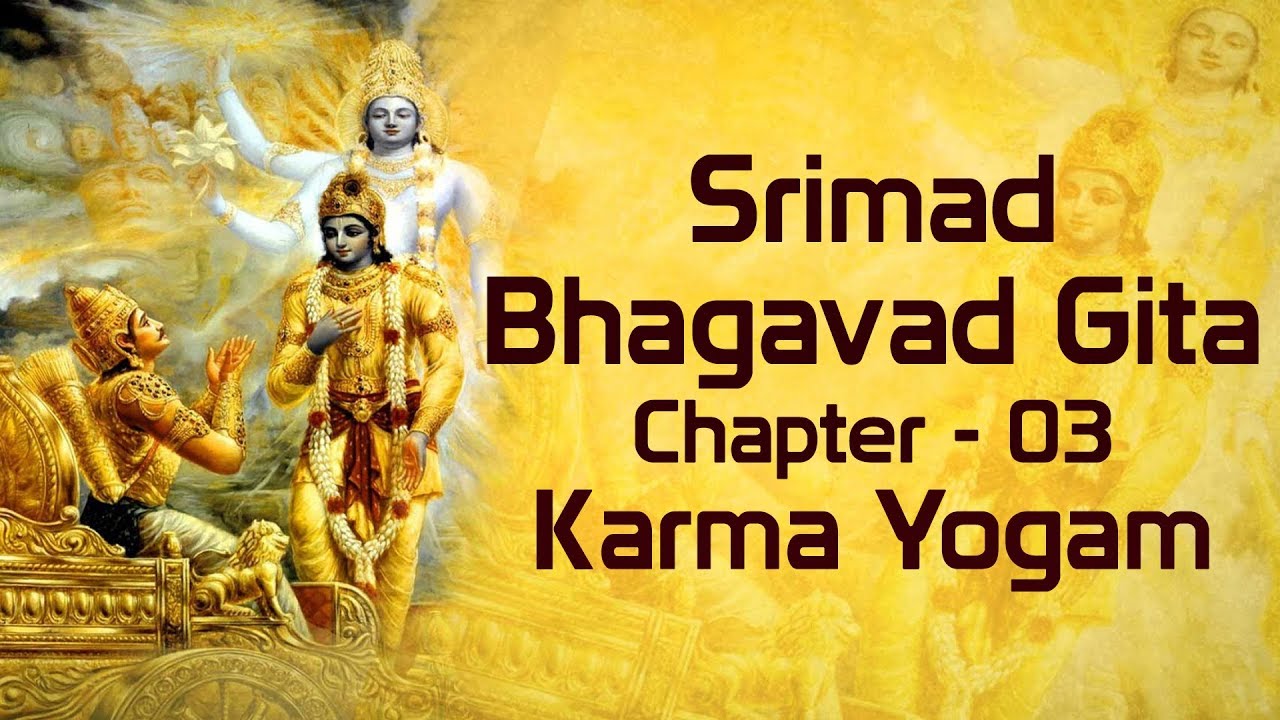
Reference: Course on The Bhagavad Gita
English Translation By Shri Purohit Swami
.
CHAPTER 3
अर्जुनउवाच:
ज्यायसीचेत्कर्मणस्तेमताबुद्धिर्जनार्दन।
तत्किंकर्मणिघोरेमांनियोजयसिकेशव।।3.1।
3.1 Arjuna questioned: My Lord! If Wisdom is above action, why dost Thou advise me to engage in this terrible fight?
व्यामिश्रेणेववाक्येनबुद्धिंमोहयसीवमे।
तदेकंवदनिश्िचत्ययेनश्रेयोऽहमाप्नुयाम्।।3.2।।
3.2 Thy language perplexes me and confuses my reason. Therefore please tell me the only way by which I may, without doubt, secure my spiritual welfare.
BG Verses 3.1-3.2
Arjuna was confused. He just wanted to secure his spiritual welfare. He couldn’t understand why ghastly action was necessary if wisdom was better.
NOTE: Arjuna is thinking of himself only as regard spiritual benefits. This is selfish of him.
श्रीभगवानुवाच:
लोकेऽस्मिन्द्विविधानिष्ठापुराप्रोक्तामयानघ।
ज्ञानयोगेनसांख्यानांकर्मयोगेनयोगिनाम्।।3.3।।
3.3 Lord Shri Krishna replied: In this world, as I have said, there is a twofold path, O Sinless One! There is the Path of Wisdom for those who meditate, and the Path of Action for those who work.
नकर्मणामनारम्भान्नैष्कर्म्यंपुरुषोऽश्नुते।
नचसंन्यसनादेवसिद्धिंसमधिगच्छति।।3.4।।
3.4 No man can attain freedom from activity by refraining from action; nor can he reach perfection by merely refusing to act.
नहिकश्िचत्क्षणमपिजातुतिष्ठत्यकर्मकृत्।
कार्यतेह्यवशःकर्मसर्वःप्रकृतिजैर्गुणैः।।3.5।।
3.5 He cannot even for a moment remain really inactive, for the Qualities of Nature will compel him to act whether he will or no.
कर्मेन्द्रियाणिसंयम्ययआस्तेमनसास्मरन्।
इन्द्रियार्थान्विमूढात्मामिथ्याचारःसउच्यते।।3.6।।
3.6 He who remains motionless, refusing to act, but all the while brooding over sensuous object, that deluded soul is simply a hypocrite.
BG Verses 3.3-3.6
Shri Krishna explained that there are two paths to liberation: the path of knowledge, and the path of action. One cannot achieve liberation by merely abstaining from prescribed duties, nor by merely renouncing sense objects. Life compels us to act anyway. And one who avoids sense objects while dwelling on them mentally, is simply a hypocrite.
NOTE: Arjuna was avoiding his prescribed duty, while also dwelling on physical sense objects.
यस्त्विन्द्रियाणिमनसानियम्यारभतेऽर्जुन।
कर्मेन्द्रियैःकर्मयोगमसक्तःसविशिष्यते।।3.7।।
3.7 But, O Arjuna! All honor to him whose mind controls his senses, for he is thereby beginning to practice Karma-Yoga, the Path of Right Action, keeping himself always unattached.
नियतंकुरुकर्मत्वंकर्मज्यायोह्यकर्मणः।
शरीरयात्रापिचतेनप्रसिद्ध्येदकर्मणः।।3.8।।
3.8 Do thy duty as prescribed, for action for duty’s sake is superior to inaction. Even the maintenance of the body would be impossible if man remained inactive.
यज्ञार्थात्कर्मणोऽन्यत्रलोकोऽयंकर्मबन्धनः।
तदर्थंकर्मकौन्तेयमुक्तसंगःसमाचर।।3.9।।
3.9 In this world people are fettered by action, unless it is performed as a sacrifice. Therefore, O Arjuna, let thy acts be done without attachment, as sacrifice only.
BG Verses 3.7-3.9
When a person practices Karma-Yoga he begins to control his senses and mentally becomes detached from sense objects. Doing the prescribed duty is better than not doing anything. You can’t even maintain your body if you don’t do anything. So, whatever you do, do it as a sacrifice (duty). That way you remain free of any bondage.
NOTE: Karma builds up as a bondage when it is not performed as a sacrifice (to fulfill one’s duty for self, family, society, mankind and the universe).
सहयज्ञाःप्रजाःसृष्ट्वापुरोवाचप्रजापतिः।
अनेनप्रसविष्यध्वमेषवोऽस्त्विष्टकामधुक्।।3.10।।
3.10 In the beginning, when God created all beings by the sacrifice of Himself, He said unto them: Through sacrifice you can procreate, and it shall satisfy all your desires.
देवान्भावयतानेनतेदेवाभावयन्तुवः।
परस्परंभावयन्तःश्रेयःपरमवाप्स्यथ।।3.11।।
3.11 Worship the Powers of Nature thereby, and let them nourish you in return; thus supporting each other, you shall attain your highest welfare.
इष्टान्भोगान्हिवोदेवादास्यन्तेयज्ञभाविताः।
तैर्दत्तानप्रदायैभ्योयोभुङ्क्तेस्तेनएवसः।।3.12।।
3.12 For, fed, on sacrifice, nature will give you all the enjoyment you can desire. But he who enjoys what she gives without returning is, indeed, a robber.
BG Verses 3.10-3.12
Since the beginning, the prescribed duties have existed along side the humankind, as the laws of nature. Prosperity occurs as these duties are acted upon, and the laws of nature are followed. Sacrifice is serving everyone alike without fixation on oneself. Thus, as people support each other through sacrifice, highest welfare is attained. But those who enjoy what is given to them, without giving in return, are verily thieves.
NOTE: Ideal relationship is one in which both parties benefit through sacrifice (give and receive). This is the basis of growth, happiness and evolution. In such a relationship there is no residual karma. This sacrifice is expressed in Physics as the law of conservation where mass/energy given is equal to mass/energy received.
यज्ञशिष्टाशिनःसन्तोमुच्यन्तेसर्वकिल्बिषैः।
भुञ्जतेतेत्वघंपापायेपचन्त्यात्मकारणात्।।3.13।।
3.13 The sages who enjoy the food that remains after the sacrifice is made are freed from all sin; but the selfish who spread their feast only for themselves feed on sin only.
अन्नाद्भवन्तिभूतानिपर्जन्यादन्नसम्भवः।
यज्ञाद्भवतिपर्जन्योयज्ञःकर्मसमुद्भवः।।3.14।।
3.14 All creatures are the product of food, food is the product of rain, rain comes by sacrifice, and sacrifice is the noblest form of action.
कर्मब्रह्मोद्भवंविद्धिब्रह्माक्षरसमुद्भवम्।
तस्मात्सर्वगतंब्रह्मनित्यंयज्ञेप्रतिष्ठितम्।।3.15।।
3.15 All action originates in the Supreme Spirit, which is Imperishable, and in sacrificial action the all-pervading Spirit is consciously present.
एवंप्रवर्तितंचक्रंनानुवर्तयतीहयः।
अघायुरिन्द्रियारामोमोघंपार्थसजीवति।।3.16।।
3.16 Thus he who does not help the revolving wheel of sacrifice, but instead leads a sinful life, rejoicing in the gratification of his senses, O Arjuna, he breathes in vain.
BG Verses 3.13-3.16
The spiritually-minded who sacrifice and then eat are freed from sin; but those who prepare food for self-enjoyment eat sin only. All living beings subsist on food, and food is produced by rains. Rains come from the performance of sacrifice, and sacrifice consists of the prescribed laws of nature (brahma). These laws of nature are well established. A person who is ignorant of this cycle of sacrifice in nature, and lives for his sense gratification only, lives in vain.
NOTE: Those who give and receive, while living in harmony with others do not carry forth unsettled karma; but those who live for themselves only with no benefit to others, end up with a load of unsettled karma. People are interconnected and they share responsibility for the larger community. Their well-being and actions affect each other, for they are part of the same nature.
यस्त्वात्मरतिरेवस्यादात्मतृप्तश्चमानवः।
आत्मन्येवचसन्तुष्टस्तस्यकार्यंनविद्यते।।3.17।।
3.17 On the other hand, the soul who meditates on the Self is content to serve the Self and rests satisfied within the Self; there remains nothing more for him to accomplish.
नैवतस्यकृतेनार्थोनाकृतेनेहकश्चन।
नचास्यसर्वभूतेषुकश्िचदर्थव्यपाश्रयः।।3.18।।
3.18 He has nothing to gain by the performance or non-performance of action. His welfare depends not on any contribution that an earthly creature can make.
तस्मादसक्तःसततंकार्यंकर्मसमाचर।
असक्तोह्याचरन्कर्मपरमाप्नोतिपूरुषः।।3.19।।
3.19 Therefore do thy duty perfectly, without care for the results, for he who does his duty disinterestedly attains the Supreme.
BG Verses 3.17-3.19
A person who has realized Atman has nothing more to accomplish. He has no need to depend on anybody as he lets the laws of nature work through him. So, one should perform actions as per one’s natural duty without attachment to results. This is the path to liberation.
NOTE: The ultimate beingness is to become one with nature and flow with it.
कर्मणैवहिसंसिद्धिमास्थिताजनकादयः।
लोकसंग्रहमेवापिसंपश्यन्कर्तुमर्हसि।।3.20।।
3.20 King Janaka and others attained perfection through action alone. Even for the sake of enlightening the world, it is thy duty to act;
यद्यदाचरति श्रेष्ठस्तत्तदेवेतरो जनः।
स यत्प्रमाणं कुरुते लोकस्तदनुवर्तते।।3.21।।
3.21 For whatever a great man does, others imitate. People conform to the standard which he has set.
न मे पार्थास्ति कर्तव्यं त्रिषु लोकेषु किञ्चन।
नानवाप्तमवाप्तव्यं वर्त एव च कर्मणि।।3.22।।
3.22 There is nothing in this universe, O Arjuna, that I am compelled to do, nor anything for Me to attain; yet I am persistently active.
यदिह्यहंनवर्तेयंजातुकर्मण्यतन्द्रितः।
ममवर्त्मानुवर्तन्तेमनुष्याःपार्थसर्वशः।।3.23।।
3.23 For were I not to act without ceasing, O prince, people would be glad to do likewise.
उत्सीदेयुरिमेलोकानकुर्यांकर्मचेदहम्।
सङ्करस्यचकर्तास्यामुपहन्यामिमाःप्रजाः।।3.24।।
3.24 And if I were to refrain from action, the human race would be ruined; I should lead the world to chaos, and destruction would follow.
सक्ताःकर्मण्यविद्वांसोयथाकुर्वन्तिभारत।
कुर्याद्विद्वांस्तथासक्तश्िचकीर्षुर्लोकसंग्रहम्।।3.25।।
3.25 As the ignorant act, because of their fondness for action, so should the wise act without such attachment, fixing their eyes, O Arjuna, only on the welfare of the world.
BG Verses 3.20-3.25
One may become liberated by focusing on action alone. One should perform one’s duties to set an example for the good of the world. Common people follow the standards set by great men. A great person is persistently engaged in naturally prescribed duties for the sake of others even when he has nothing to gain or attain personally. If natural laws are not demonstrated through action, the humanity is bound to fall into chaos. Those who are ignorant are fixated on results; but the wise act for the welfare of the world.
NOTE: The path to liberation is acting with the view to attain welfare of all.
नबुद्धिभेदंजनयेदज्ञानांकर्मसङ्गिनाम्।
जोषयेत्सर्वकर्माणिविद्वान्युक्तःसमाचरन्।।3.26।।
3.26 But a wise man should not perturb the minds of the ignorant, who are attached to action; let him perform his own actions in the right spirit, with concentration on Me, thus inspiring all to do the same.
प्रकृतेःक्रियमाणानिगुणैःकर्माणिसर्वशः।
अहङ्कारविमूढात्माकर्ताऽहमितिमन्यते।।3.27।।
3.27 Action is the product of the Qualities inherent in Nature. It is only the ignorant man who, misled by personal egotism, says: I am the doer.
तत्त्ववित्तुमहाबाहोगुणकर्मविभागयोः।
गुणागुणेषुवर्तन्तइतिमत्वानसज्जते।।3.28।।
3.28 But he, O Mighty One, who understands correctly the relation of the Qualities to action, is not attached to the act for he perceives that it is merely the action and reaction of the Qualities among themselves.
प्रकृतेर्गुणसम्मूढाःसज्जन्तेगुणकर्मसु।
तानकृत्स्नविदोमन्दान्कृत्स्नविन्नविचालयेत्।।3.29।।
3.29 Those who do not understand the Qualities are interested in the act. Still, the wise man who knows the truth should not disturb the mind of him who does not.
मयि सर्वाणि कर्माणि संन्यस्याध्यात्मचेतसा।
निराशीर्निर्ममो भूत्वा युध्यस्व विगतज्वरः।।3.30।।
3.30 Therefore, surrendering thy actions unto Me, thy thoughts concentrated on the Absolute, free from selfishness and without anticipation of reward, with mind devoid of excitement, begin thou to fight.
BG Verses 3.26-3.30
A wise man should not perturb the minds of the ignorant, who are attached to action. He should simply perform his duties naturally, and be an example that inspires them. The work is carried out by the laws of nature; and not by any individual. The wise man understands the action and reaction in nature; and he does not get entangled in it. And he does not unsettle the mind of those who do not understand this. Therefore, one should surrender any idea of personal self, and simply mind the natural laws while acting.
NOTE: It is obvious that some jnana (understanding) is required in order to follow the path of Karma yoga. No yogic path can be followed mindlessly.
ये मे मतमिदं नित्यमनुतिष्ठन्ति मानवाः।
श्रद्धावन्तोऽनसूयन्तो मुच्यन्ते तेऽपि कर्मभिः।।3.31।।
3.31 Those who always act in accordance with My precepts, firm in faith and without caviling, they too are freed from the bondage of action.
ये त्वेतदभ्यसूयन्तो नानुतिष्ठन्ति मे मतम्।
सर्वज्ञानविमूढांस्तान्विद्धि नष्टानचेतसः।।3.32।।
3.32 But they who ridicule My word and do not keep it, are ignorant, devoid of wisdom and blind. They seek but their own destruction.
सदृशंचेष्टतेस्वस्याःप्रकृतेर्ज्ञानवानपि।
प्रकृतिंयान्तिभूतानिनिग्रहःकिंकरिष्यति।।3.33।।
3.33 Even the wise man acts in character with his nature; indeed, all creatures act according to their natures. What is the use of compulsion then?
इन्द्रियस्येन्द्रियस्यार्थेरागद्वेषौव्यवस्थितौ।
तयोर्नवशमागच्छेत्तौह्यस्यपरिपन्थिनौ।।3.34।।
3.34 The love and hate which are aroused by the objects of sense arise from Nature; do not yield to them. They only obstruct the path.
श्रेयान्स्वधर्मोविगुणःपरधर्मात्स्वनुष्ठितात्।
स्वधर्मेनिधनंश्रेयःपरधर्मोभयावहः।।3.35।।
3.35 It is better to do thine own duty, however lacking in merit, than to do that of another, even though efficiently. It is better to die doing one’s own duty, for to do the duty of another is fraught with danger.
BG Verses 3.31-3.35
Those who follow Karma Yoga as taught here are freed from the bondage of action; but those who disregard these teachings bring about their own ruin. Not following these teachings would be acting against their own nature. Such obstruction arises only when one is controlled by the reaction of senses. It is far better to discharge one’s prescribed duties, even though faultily, than another’s duties perfectly.
NOTE: The writer of Bhagavad Gita (Ved Vyas) is well aware that there will be people who would resist following these teachings. For them, his advice is that it is far better to perform one’s natural prescribed duty than to perform that of another. Therefore, it is very important for a person to know his natural duty.
अर्जुन उवाच:
अथकेनप्रयुक्तोऽयंपापंचरतिपूरुषः।
अनिच्छन्नपिवार्ष्णेयबलादिवनियोजितः।।3.36।।
3.36 Arjuna asked: My Lord! Tell me, what is it that drives a man to sin, even against his will and as if by compulsion?
BG Verse 3.36
This is a very intelligent question because man is impelled to commit sin against his nature. There must be something that overpowers a person’s very nature.
श्रीभगवानुवाच:
कामएषक्रोधएषरजोगुणसमुद्भवः।
महाशनोमहापाप्माविद्ध्येनमिहवैरिणम्।।3.37।।
3.37 Lord Shri Krishna: It is desire, it is aversion, born of passion. Desire consumes and corrupts everything. It is man’s greatest enemy.
धूमेनाव्रियतेवह्निर्यथाऽऽदर्शोमलेनच।
यथोल्बेनावृतोगर्भस्तथातेनेदमावृतम्।।3.38।।
3.38 As fire is shrouded in smoke, a mirror by dust and a child by the womb, so is the universe enveloped in desire.
आवृतंज्ञानमेतेनज्ञानिनोनित्यवैरिणा।
कामरूपेणकौन्तेयदुष्पूरेणानलेनच।।3.39।।
3.39 It is the wise man’s constant enemy; it tarnishes the face of wisdom. It is as insatiable as a flame of fire.
इन्द्रियाणि मनो बुद्धिरस्याधिष्ठानमुच्यते।
एतैर्विमोहयत्येष ज्ञानमावृत्य देहिनम्।।3.40।।
3.40 It works through the senses, the mind and the reason; and with their help destroys wisdom and confounds the soul.
तस्मात्त्वमिन्द्रियाण्यादौ नियम्य भरतर्षभ।
पाप्मानं प्रजहि ह्येनं ज्ञानविज्ञाननाशनम्।।3.41।।
3.41 Therefore, O Arjuna, first control thy senses and then slay desire, for it is full of sin, and is the destroyer of knowledge and of wisdom.
इन्द्रियाणिपराण्याहुरिन्द्रियेभ्यःपरंमनः।
मनसस्तुपराबुद्धिर्योबुद्धेःपरतस्तुसः।।3.42।।
3.42 It is said that the senses are powerful. But beyond the senses is the mind, beyond the mind is the intellect, and beyond and greater than intellect is He.
एवंबुद्धेःपरंबुद्ध्वासंस्तभ्यात्मानमात्मना।
जहिशत्रुंमहाबाहोकामरूपंदुरासदम्।।3.43।।
3.43 Thus, O Mighty-in-Arms, knowing Him to be beyond the intellect and, by His help, subduing thy personal egotism, kill thine enemy, Desire, extremely difficult though it be.
BG Verses 3.37-3.43
That which goes against man’s very nature is the desire, or craving, for sense objects. It shrouds one’s awareness, corrupting the ability of the mind to reason and discern. Therefore, one should first control the senses and desires. No doubt, senses are powerful and they control the body, but greater than senses is the mind, the intelligence and the awareness. It may be difficult, but take recourse to your inherent awareness to overcome this reactivity within you.
NOTE: The ultimate problem is the mind handling its own corruption. The starting point is using meditation to assimilate the incoming sensations.
.
Summary
One cannot attain liberation by avoiding, or suppressing, the situation one is faced with. A person must act to handle the situation. When a person focuses on performing his naturally prescribed duties, the situation becomes manageable.
The prescribed duties consist of natural laws that have existed from the beginning. Prosperity occurs as these laws are followed. The basic law is sacrifice, which is acting without fixation on one’s own gratification; but for the welfare of all. This is how nature works.
All life is interconnected, all responsibility is shared. When life operates in harmony there is no unsettled karma. As a person performs his prescribed duty without attachment to results he becomes one with nature and flows with all other activities effortlessly.
There are always going to be those around who are not acting in harmony. Just be an example and inspiration to them by doing your own prescribed duties to the best of your ability. The wise man understands the action and reaction in nature; and he does not get entangled in it.
Those who follow these teachings of Karma Yoga are well on the path to liberation. It is far better to perform one’s natural prescribed duty than to perform that of another.
The only obstruction to this path is attachment to sense objects and the desires arising as a result. Use your awareness and discernment through meditation to the best of your ability.
.