IN THE NAME OF GOD, THE COMPASSIONATE, THE MERCIFUL (28 – 29)
.
How can you deny God,
Since you were dead
And God gave you life;
And will then kill you,
And then bring you to life;
Then you will be returned to God.
COMMENTARY: God is the ultimate common denominator of all existence. God is formless. To call God a being is giving God a form. God underlies the beingness even.
A person consists of physical and mental forces and energies. Creation is the ever changing flux of physical and mental forces and energies that is always taking different forms. It is simplistic to consider Man to be a body animated by some external entity called God.
Basically we observe the forms being manifested and unmanifested. From this observation we surmise some underlying power, which we call God. How can one deny this?
.
.
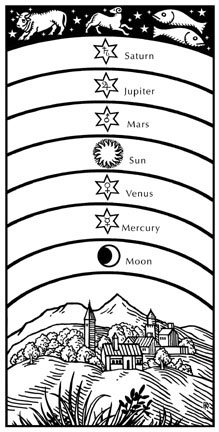
God it is who created for you
All that is on the earth,
Then turned to the heights
And fashioned them into seven heavens;
And God is completely aware
Of all things.
.
COMMENTARY: There are manifestations all around us. These manifestations have all different forms. There is earth and all that is on earth. There is sky and the space beyond containing sun, moon, planets, stars, etc. They are all there maintaining a perfect balance. This is simply awesome.
IN THE NAME OF GOD, THE COMPASSIONATE, THE MERCIFUL (26 – 27)
.
Verily, Allâh is not ashamed to set forth a parable
even of a mosquito or so much more
when it is bigger (or less when it is smaller) than it.
And as for those who believe,
they know that it is the Truth from their Lord,
but as for those who disbelieve,
they say: “What did Allâh intend by this parable?”
By it He misleads many,
and many He guides thereby.
And He misleads thereby only those
who are Al-Fâsiqûn (the rebellious, disobedient to Allâh).
.
COMMENTARY: A parable is a brief story used to teach some truth or moral lesson. What characters the parable uses to convey the truth is of little significance. The significance of a parable is in the truth or the moral lesson it conveys. The social personality would immediately recognize the true significance of a parable and, therefore, would be guided by it. But the antisocial personality would argue about what the parable means. He would get hung up in the story and its characters, and would never recognize the lesson embedded in it. Therefore, he will never receive the guidance provided through that parable.
.
.
Those who break Allâh’s Covenant after ratifying it,
and sever what Allâh has ordered to be joined
(as regards Allâh’s Religion of Islâmic Monotheism,
and to practise its legal laws on the earth
and also as regards keeping good relations with kith and kin),
and do mischief on earth, it is they who are the losers.
.
COMMENTARY: Muhammad saw the majority in the Arabic society being oppressed by a few influential people at the top. These few didn’t care for the welfare of the rest of the society. For them, their personal interests were uppermost. Muhammad spoke against this oppression. He spoke of a society where the consideration of mutual survival was uppermost. He thus provided a powerful cause that appealed to the oppressed majority in the society of his time.
Muhammad further provided a simple interpretation to the religious beliefs of his time in support of his cause. This assured a tidal wave of agreement to his cause. At Madinah when Muhammad accused the influential Jews as having gone astray from their own religious beliefs, he had complete support from the society. He was thus able to overcome any opposition to the cause he espoused. Thus, Islam was born.
IN THE NAME OF GOD, THE COMPASSIONATE, THE MERCIFUL (23 – 25)
.
And if you (Arab pagans, Jews, and Christians)
are in doubt concerning that which We have sent down
(i.e. the Qur’ân)
to Our slave (Muhammad Peace be upon him),
then produce a Sûrah (chapter) of the like thereof
and call your witnesses (supporters and helpers)
besides Allâh, if you are truthful.
.
COMMENTARY: Muhammad used to go into a trance like state. It was during such moments that Qur’an was recited through his lips. These verses were of such excellent poetic quality that no poet could match them. Muhammad himself could not compose such verses under full consciousness. Therefore, these recitations came to be regarded as miraculous. In absence of any known explanation, it was considered that “God was speaking through Muhammad.”
But God is formless per Qur’an. God represents the potential inherent in existence. Only a part of this potential is ordinarily expressed through man. Under special circumstances, such as trance, unutilized potential may be manifested in the form of some extraordinary capabilities.
These verses address the Jews of Madinah, who were making a mockery of Muhammad‘s efforts to preach Qur’an. This verse simply points out that Qur’an expresses extraordinay wisdom that is evident in the unmatched quality and depth of its poetry. Therefore, one should pay attention to it.
.
.
But if you do it not, and you can never do it,
then fear the Fire (Hell) whose fuel is men and stones,
prepared for the disbelievers.
And give glad tidings to those who believe
and do righteous good deeds,
that for them will be Gardens
under which rivers flow (Paradise).
Every time they will be provided
with a fruit therefrom,
they will say:
“This is what we were provided with before,”
and they will be given things in resemblance
(i.e. in the same form but different in taste)
and they shall have therein Azwâjun Mutahharatun
(purified mates or wives –
having no menses, stools, urine, etc.)
and they will abide therein forever.
.
COMMENTARY: This verse expresses anger and a threat of punishment for those who mock the wisdom of Qur’an, and promises rewards to those who pay attention to the wisdom of Qur’an. These ideas of reward (heaven) and punishment (hell) had been used in Christianity prior to Islam. Here the same idea is being given an additional urgency because the Arabic culture of Muhammad’s time was steeped in ignorance compared to other cultures surrounding it. Muhammad was very concerned about this situation.
It is interesting to note that the rewards, which are promised, are sensual in nature. Women are looked upon as objects of pleasure. This reflects the male-dominated Arabic culture of Muhammad’s time.
Note: God is not some powerful entity external to man in control of man’s destiny. That interpretation of God can easily be used to control and oppress man. Unfortunately, that has been done by the anti-social personality in most religions.
IN THE NAME OF GOD, THE COMPASSIONATE, THE MERCIFUL (21 – 22)
.
.
O People!
Serve your Lord,
Who created you
and those before you,
so that you may be conscientious;
who has made the earth a couch for you,
and the heaven a roof,
and who sends water down from the skies,
and who brings forth from it
fruits for your sustenance.
So do not suppose anything to be like God,
When you know.
.
COMMENTARY: This verse can be interpreted in two different ways — one constructive and the other, destructive. A social personality will interpret this verse in a way that it improves conditions in the society. But the antisocial personality will interpret this verse in a way that it suppresses the society. Both interpretations will be discussed here.
The social personality will interpret this verse from the viewpoint that is explained under Qur’an: The Opening. Thus,“Serve your Lord” would mean that one must allow the eternal Laws to express themselves fully through one’s being. This means that the self or ego must be put into servitude.
Self, ego, or identity is essentially the weighted average of all physical and mental forces and energies associated with beingness. This impression of self is continually changing. Self is impermanent. These forces and energies are sustained by the eternal laws that also underlie the existence of the earth and the sky, the phenomenon of rain, growth of food, and man’s means of survival. One must, therefore, put ‘self’ aside and simply understand and follow the eternal Laws unconditionally. One is conscientious and ethical as a result.
Unfortunately, the antisocial personality would interpret this verse quite differently. He would misinterpret “God” as a “superior being” to whom everyone should bow down to in servitude. He would put the eternal Laws in the background and use people’s trust in God for his own purposes. This can be quite destructive as one is told to blindly follow the interpretation of the eternal Laws as provided by the anti-social personality.
NOTE: The actions of anti-social personality always undermine an individual’s ability to think for oneself. In fact, in any environment where one is watched and not allowed to think for oneself, there is always an anti-social personality at work to ensure its own survival at the cost of other’s.
Such suppression was accomplished in the past by monopolizing knowledge and keeping people ignorant. Fortunately, in today’s Information Age, it is becoming increasingly possible to access knowledge and compare it with other knowledge. We have started to see some fundamental changes for the better.
[NOTE: I am not blogging about Islam. I am blogging about knowledge in the tradition of JNANA YOGA (the yoga of knowledge). My interest is to interpret Qur’an from the viewpoint of knowledge that is useful to mankind. I shall be interpreting this knowledge as consistent with my view of God as unknowable.If there is any historical, religious or cultural inconsistency in this material, I shall point it out as such. ~ Vinaire]
QUR’AN: THE COW
IN THE NAME OF GOD, THE COMPASSIONATE, THE MERCIFUL (2 – 20)
.
This book, without doubt
has guidance in it for the conscientious;
those who believe in the unseen,
and steadily practice prayer,
and give of what We have provided them,
.
COMMENTARY: This book (Qur’an) consists of the guidance that would bring prosperity to individuals, families, and societies and even to the mankind. Those who are conscientious and think of the survival of everybody and not just their own self, would, no doubt, instinctively follow this guidance.
These laws and principles are quite abstract and they are not very obvious at first glance. However, those who are conscientious would apply them anyway for the good of all. With diligent study and steady practice, they would in time come to appreciate what is in this book.
Giving is always holier than receiving. Those who are conscientious would share their prosperity and help others improve their condition.
NOTE: God is unknowable. There is no person out there providing us with material prosperity, and handing down this guidance. Actually, these are intuitions arrived at by keen observation.
Prayer is not a mere supplication for relief. Prayer is practicing the principles of Qur’an correctly. Prayer consists of giving rather than receiving.
.
.
and those who believe
what has been sent down to you
and what was sent down before you,
and are certain of the Hereafter.
They follow guidance from their Lord,
and they are the happy ones.
.
COMMENTARY: Those who are conscientious can see the consistency of the truths (laws and principles) revealed in Qur’an with those revealed earlier in the Torah and the Gospel. They know that it is the consequences of their own actions that determine the future. Such people humbly follow the guidance given in Qur’an, and thus achieve success and happiness in their lives.
NOTE: The use of the word “Lord” is poetic. It is not to be taken literally. God is unknowable. Man controls his own destiny. He is his own lord.
Qur’an is describing the characteristics of a SOCIAL PERSONALITY. The social personality naturally operates on the basis of the greatest good for all. The social personality wants to survive and wants others to survive, whereas the ANTISOCIAL PERSONALITY (as described in the subsequent verses) really and covertly wants others to succumb.
.
.
As for the ungrateful who refuse,
it is the same to them
whether you warn them or not;
they do not believe.
God has sealed their hearts
and their hearings,
and covered their eyes;
for them there is a great torment.
.
COMMENTARY:There are some who are ungrateful even when they are helped. Such people do not care for this guidance even when it is explained to them how indispensable it is for survival. Such people really have no feelings in their heart for others. They do not want to hear about doing anything good to others. They do not want to see any good being done to others. For such people there is a great torment.
NOTE: Qur’an is describing here the characteristics of an ANTISOCIAL PERSONALITY. The antisocial personality really and covertly wants others to succumb.
.
.
And among humankind
are those who say
they believe in God and the Last Day
but they do not believe.
They try to deceive God
and those who believe,
but they do not deceive anyone
except themselves,
although they do not know it.
.
COMMENTARY: Unfortunately, such people do exist among humankind. They say that they believe in the welfare of all, and that, like anybody, they too are responsible for their actions, but they don’t really mean it. Such people thinkthat they would survive better if others don’t do so well. So they only pretend to help without really helping. But they don’t deceive anyone except themselves, and they do not even know it.
.
.
There is a sickness in their hearts,
and God has made them sicker;
and theirs is a painful torment,
because they were in fact lying.
And when they are told not to make trouble on earth,
they say they are only doing good.
Is it not that they are in fact
the troublemakers,
without even knowing it?
.
COMMENTARY: Such people are actually sick to their core. They lie and they are tormented by the thought of being found out. Thus, they become sicker. Such people only make trouble even when they say that they have only the best of intentions. Their actions always lead to trouble but they can’t see it.
.
.
And when it is said to them,
“Believe as the people believe,”
they say, “Shall we believe
as imbeciles believe?”
No, it is they,
they who are the imbeciles,
though they do not know.
And when they encounter
those who believe,
they say, “We believe.”
But when they are alone
with their obsessions,
they say,
“We are in fact with you;
we were only joking.”
COMMENTARY: Such people look down upon those who want people to do better. They consider any helpful attitude to be foolishness. But it is they who are fools without knowing it. Such people do not express their contempt openly. Outwardly, they pretend to agree with the idea of everyone working for the common good, but when they are with their own kind they mock the idea of working for anybody’s welfare.
.
.
God will make a joke of them,
amplifying their outrages
as they wander astray.
They are the ones
who have bartered
guidance for error:
thus their trade does not profit
and they are not guided.
.
COMMENTARY: The irony is that such people do not do well but actually suffer greatly in their ignorance. They shun any guidance and go their own stubborn way. Thus, being trapped in their own lies, they are not guided by good sense.
NOTE: This is a sad commentary on the duplicity of human nature. It is not easy to make such people see the error of their ways. Such people have put themselves beyond the pale by despising those who can help them. It is indeed a daunting and frustrating task to handle the blindness of such people.
.
.
What they are like is one who lit a fire,
and when it illumined everything around,
God took their light
and left them in darkness,
unseeing.
Deaf, dumb, and blind,
they will not get back.
Or like a rain cloud from the sky,
in it darkness, thunder,
and lightning.
They put their fingers in their ears
against the peal
in fear of death:
yet God surrounds the ungrateful.
.
COMMENTARY: It is as if everyone around them can see but they can’t see even when a situation is as plain as daylight. They have become deaf, dumb and blind due to their own considerations. There is little chance of them recovering from their condition. Enlightenment comes from courageously facing the stark realities of life however frightening and dangerous they might appear to be. However, such people are so terrified that they keep on running away. Yet they have the potential within them to face the truth if they want to.
.
.
The lightning nearly
takes away their vision.
Every time it sheds light for them,
they walk in it;
and when it grows dark upon them,
they stand still.
And if God willed,
God could remove
their hearing and seeing:
for God has power over all things.
.
COMMENTARY: When such people are forced to face the truth they do so but with little sense of responsibility. And as soon as they are left to themselves, they become deaf, dumb and blind to truth again. But it is just that they have chosen to be so. There is nobody else to blame. But if they want they can recover from this condition.