Category Archives: Postulate Mechanics

Mathematics and Physics

Reference: Essays on Substance

Mathematics and Physics

The postulates of Mathematics do arise from real experience, but they are then extended into abstract concepts that become distant from reality. For example, numbers, and their relationships arise from our experience with counting and accounting of distances and directions, but they are then extended to ideas, such as, zero and infinity that are abstract concepts only, and can be interpreted in many ways.

Mathematics has developed along the lines of establishing consistency among its postulates. The abstract postulates have become part of its woof and warp. When mathematics is applied to physics, its abstractions have to tested against real observations. Establishing consistency between the mathematical abstractions and real observations benefits both mathematics and physics.

A scientific hypothesis starts from real observations that are not quite consistent with established theories. The scientist generates a hypothesis to resolve that inconsistency. He may create a mathematical model to flush out as many inconsistencies as possible from his hypothesis.

The hypothesis may make new postulates. These postulates need to be properly justified. When we talk about subjectivity, we are talking about unjustified, arbitrary postulates.

So the scientist develops experiments to test the postulates of his hypothesis. These experiments can be conducted using physical equipment in a lab. The resulting measurements are then compared against the predictions from the hypothesis. A consistency between the two helps the hypothesis to be accepted as a theory.

When mathematical interpretations of the hypotheses and theories start to become complex, unreal, or simply pointless then it is time to develop thought experiments to further test the hypotheses and theories for inconsistencies. The theory of relativity and quantum mechanics are very mathematically oriented. They have espoused ideas about space and time that conflict with reality. Such ideas need to be carefully examined with well designed thought experiments that use live logic.

The thought experiments shall examine the postulates of the hypothesis for consistency with established principles. It will also examine the logical continuity among the ideas and observations leading to those postulates. Finally it will examine the harmony, which these new postulates bring to the broad scene of scientific principles.

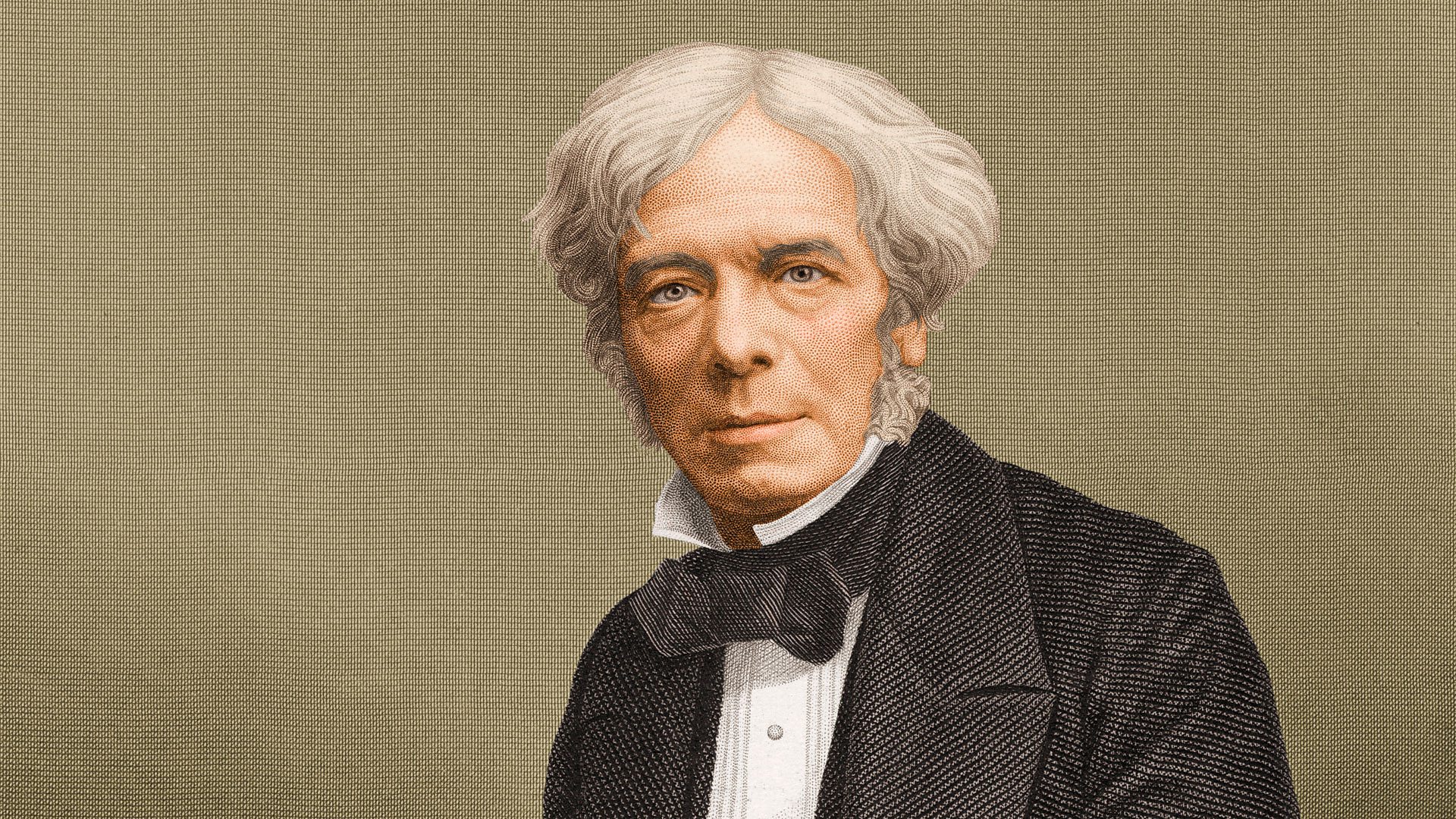
The resolution of inconsistencies arising between a hypothesis and the reality of scientific principles may also bring into view basic concepts that are missing both in mathematics as well as in physics. This is what Faraday was insisting in his essay quoted below:

Faraday 1857: On the Conservation of Force

.
Motion and Relativity

Reference: Essays on Substance

Motion and Relativity

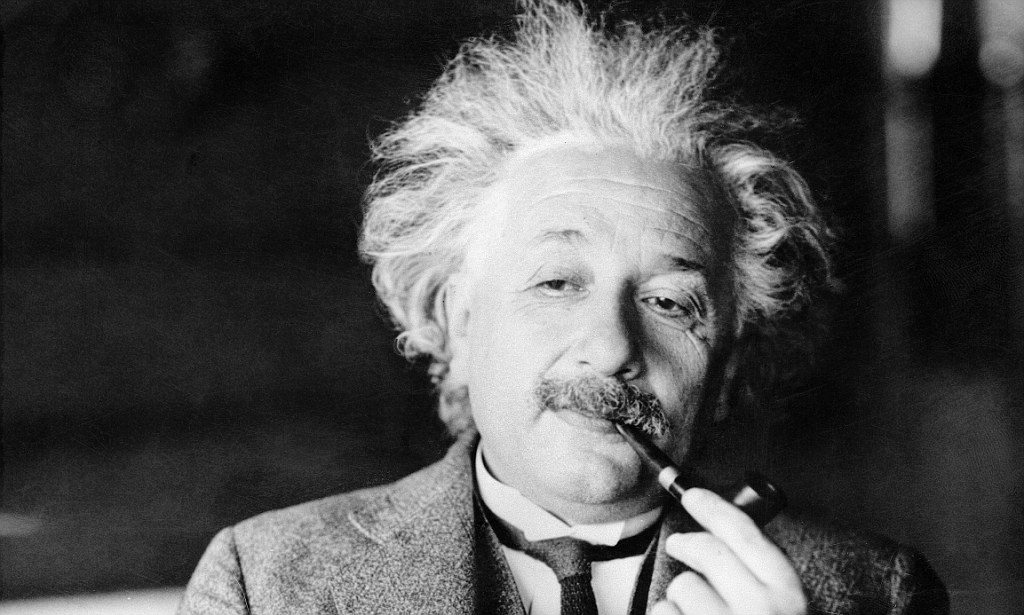
When you look at motion on a large scale you see what is missing from the Special Theory of Relativity of Einstein. You can say that light move at the speed of 3 x 10⁸ relative to the Earth; but you cannot say that Earth moves at the same speed relative to light. 

Einstein’s theory is tied to the inertial frame of reference of matter. But even then it doesn’t differentiate between the nature of the speed of the train from the nature of the speed of the platform in the opposite direction. The platform having much higher inertia has a much smaller absolute motion than the train. But the theory of relativity treats both motions the same way.

Newton’s relativity worked  as simple addition of speeds when the two bodies involved had comparable masses. But that mathematical relationship failed when the two bodies involved had a large difference in their masses, as is the case between the masses of Mercury and the Sun. Einstein solved that problem by figuring out a way to take into account the effect of the difference in inertia of Mercury and Sun on the relative speed.

Einstein did it by indirectly “extrapolating” between the inertia/consistency of matter and light, and applying that gradient to the differential of inertia between Mercury and the Sun. This was a genius move. The value of ‘c’ is that gradient. 

But ‘c’ is an approximation that works for heavenly bodies. It does not work at the atomic level because there are no “material particles” within the atom. Now that we know this, a more accurate value for ‘c’ can be determined for atoms.

.

Motion-Inertia Relationship

Reference: Essays on Substance

Motion-Inertia Relationship

According to Motion and Gravity, motion increases as inertia decreases. This is visible on a cosmic scale. The reason Newton did not point to this relationship is because for changes in speeds of objects, the corresponding change in inertia is so small that it cannot be measured.

This observation adds to the Newton’s laws of motion. We may say,

When a particle of matter is accelerated, its mass decreases. The decrease in mass is proportional to the increase in its speed.

A little math for it is provided in the graphics below.

The configuration of a system of bodies in free space is determined strictly by the equilibrium among their consistency and motion, where consistency and motion are tightly related in an inverse relationship. This equilibrium is confused with the gravitational force of attraction. There is no one-way gravitational force of attraction. 

A constant velocity in free space means that the acceleration of the body is exactly balanced by its inertia. Thus, it becomes possible to control motion by controlling the inertia of a body, or vice versa. This is likely to be one of the areas of future technology.

.

Motion and Gravity (old)

Please see PM Chapter 9: Inertia & Gravity.

Reference: Essays on Substance

Motion and Gravity

The moons revolve around their planet, the planets revolve around their sun, and the suns revolve around the center of their galaxies in perfect equilibrium. Such an equilibrium is dynamic in the sense that it continually adjusts to changing conditions. This describes the motion of the heavenly bodies in free space. 

In this free space, an object with infinite mass shall be fixed in its location because its inertia is infinite. Another object with lesser mass shall have lesser inertia, and it will have motion relative to the first object. It may seem that the first object also has motion relative to the second object but that would be an illusion. We thus have a measure of absolute motion in terms of inertia.

The most massive body with maximum inertia shall be at the center of the galaxy. We recognize that as a black hole. All other bodies in the galaxy are in an equilibrium of motion relative to this black hole according to their mass or inertia. Their position in space at any instant is determined by this equilibrium. We recognize this equilibrium as GRAVITY.

In general, there is a balance among motion and inertia of a system of bodies. Near infinite inertia will correspond to near zero motion. Near zero inertia shall correspond to near infinite motion. The lesser is the inertia, the greater is the motion. As the inertia of a body lessens its motion increases. Light has very large motion but it is still finite. That means that, though it is extremely small, light still has some measure of inertia.

Inertia is related to the thickness of substance. The greater is the thickness the greater is inertia. Light also has some thickness. Therefore, the presence of light, or electromagnetic energy, shall also contribute to the dynamic configuration of the overall gravity.

.

Postulates in Hinduism

Reference: Postulate Mechanics

  1. The world is all that can be known
  2. The beginning, end, and all in-between.
  3. The goal of religion is to actualize the human potential.
  4. In Hinduism, this goal comes under the heading of Yoga.
  5. Yoga means “uniting” through disciplined training of body and mind.
    • .
    • .
  6. There are multiple paths to this common destination
  7. Each for a basic spiritual personality type:
  8. Reflective, emotional, active and experimentalist.
  9. The first step of every yoga involves 
  10. the cultivation of good habits.
    • .
    • .
  11. These good habits are: Non-injury, truthfulness, non-stealing, 
  12. Self-control, cleanliness, contentment, self-discipline.
  13. And a compelling desire to reach the goal. 
  14. Different spiritual personality types
  15. Seek the same Goa differently.
    • .
    • .
  16. The reflective personality seeks the goal through knowledge.
  17. He reflects deeply to get at the bottom of things.
  18. He knows that he is not the things that he possesses.
  19. He is neither the body, nor the mind, nor his personality.
  20. This helps disentangle Self from its lesser identifications.
    • .
    • .
  21. The emotional personality seeks the goal through love.
  22. God to him represents his chosen personal ideal.
  23. He worships God by constantly repeats God’s name,
  24. He directs toward God the love that lies at the base of his heart. 
  25. This helps transfer his worldly attachments to an attachment to God.
    • .
    • .
  26. The active personality seeks the goal through work.
  27. He is dedicated to his work and performs it selflessly.
  28. He does each thing as if it were the only thing to be done.
  29. Having done it, he turns to the next duty in similar spirit. 
  30. The thought of self simply does not arise on this path.
    • .
    • .
  31. The progress may be accelerated through psychophysical Exercises.
  32. Such exercises follow the path of contemplation.
  33. First one settles the bodily and sensual distractions with discipline.
  34. Then one settles the mental distractions by releasing them.
  35. Then one resolves the anomalies by contemplating over them.
    • .
    • .
  36. Different stages of life call for their own appropriate conduct.
  37. The first stage in life till early twenties is that of the student.
  38. The second stage, beginning with marriage, is that of the householder.
  39. The third stage of life is that of retirement from social obligations.
  40. The final stage wherein the goal is actually reached is the state of the sannyasin.
    • .
    • .
  41. People are different; so they occupy different stations in the social order.
  42. The brahmins stood supreme in honor and psychological power.
  43. The kshatriyas stood supreme In salary and social power.
  44. Next were the Vaishyas or producers, such as, artisans and farmers.
  45. The last were the Shudras, or unskilled laborers.
    • .
    • .
  46. God is beyond things that can be sensed.
  47. God is pure beingness, awareness and bliss.
  48. God is also the archetype of the noblest reality.
  49. God is the Creator, Preserver, and Destroyer.
  50. God is the consistent whole.
    • .
    • .
  51. As the soul passes through this world
  52. Living through all its incarnations.
  53. His present condition is the product of his past. 
  54. His present decisions determine his future.
  55. This world grants all his wishes, but with consequences.
    • .
    • .
  56. It is a world of good-evil, pleasure-pain, knowledge-ignorance.
  57. And this is the way things will remain.
  58. This world is a training ground for the human spirit.
  59. God, souls and nature have the same divine basis.
  60. There are hallucinations, perceptions and superconsciousness.
    • .
    • .
  61. The world is lila, God’s play.
  62. Everyone is like an actor on the stage.
  63. Seen in perspective, the world is ultimately benign.
  64. It has no permanent hell and threatens no eternal damnation.
  65. Beyond this world lies the boundless good, which all will achieve in the end.

.