Category Archives: Philosophy

ARISTOTLE: The Historical Background

Reference: The Story of Philosophy

This paper presents Chapter II, Section 1 from the book THE STORY OF PHILOSOPHY by WILL DURANT. The contents are from the 1933 reprint of this book by TIME INCORPORATED by arrangement with Simon and Schuster, Inc.

The paragraphs of the original material (in black) are accompanied by brief comments (in color) based on the present understanding.  Feedback on these comments is appreciated.

The heading below is linked to the original materials.

.

I. The Historical Background 

Aristotle was born at Stagira, a Macedonian city some two hundred miles to the north of Athens, in the year 384 B. C. His father was friend and physician to Amyntas, King of Macedon and grandfather of Alexander. Aristotle himself seems to have become a member of the great medical fraternity of Asclepiads. He was brought up in the odor of medicine as many later philosophers were brought up in the odor of sanctity; he had every opportunity and encouragement to develop a scientific bent of mind; he was prepared from the beginning to become the founder of science. 

We have a choice of stories for his youth. One narrative represents him as squandering his patrimony in riotous living, joining the army to avoid starvation, returning to Stagira to practice medicine, and going to Athens at the age of thirty to study philosophy under Plato. A more dignified story takes him to Athens at the age of eighteen, and puts him at once under the tutelage of the great Master; but even in this likelier account there is sufficient echo of a reckless and irregular youth, living rapidly. The scandalized reader may console himself by observing that in either story our philosopher anchors at last in the quiet groves of the Academy. 

Aristotle was a riotous youth who anchored at last in the quiet groves of the Academy.

Under Plato he studied eight—or twenty—years; and indeed the pervasive Platonism of Aristotle’s speculations—even of those most anti-Platonic—suggests the longer period. One would like to imagine these as very happy years: a brilliant pupil guided by an incomparable teacher, walking like Greek lovers in the gardens of philosophy. But they were both geniuses; and it is notorious that geniuses accord with one another as harmoniously as dynamite with fire. Almost half a century separated them; it was difficult for understanding to bridge the gap of years and cancel the incompatibility of souls. Plato recognized the greatness of this strange new pupil from the supposedly barbarian north, and spoke of him once as the Nous of the Academy,—as if to say, Intelligence personified. Aristotle had spent money lavishly in the collection of books (that is, in those printless days, manuscripts); he was the first, after Euripides, to gather together a library; and the foundation of the principles of library classification was among his many contributions to scholarship. Therefore Plato spoke of Aristotle’s home as “the house of the reader,” and seems to have meant the sincerest compliment; but some ancient gossip will have it that the Master intended a sly but vigorous dig at a certain book-wormishness in Aristotle. A more authentic quarrel seems to have arisen towards the end of Plato’s life: Our ambitious youth apparently developed an “Oedipus complex” against his spiritual father for the favors and affections of philosophy, and began to hint that wisdom would not die with Plato; while the old sage spoke of his pupil as a foal that kicks his mother after draining her dry. The learned Zeller, in whose pages Aristotle almost achieves the Nirvana of respectability, would have us reject these stories; but we may presume that where there is still so much smoke there was once a flame. 

Aristotle, however, maintained his mental independence even at the Academy.

The other incidents of this Athenian period are still more problematical. Some biographers tell us that Aristotle founded a school of oratory to rival Isocrates; and that he had among his pupils in this school the wealthy Hermias, who was soon to become autocrat of the city-state of Atarneus. After reaching this elevation Hermias invited Aristotle to his court; and in the year 344 B. C. he rewarded his teacher for past favors by bestowing upon him a sister (or a niece) in marriage. One might suspect this as a Greek gift; but the historians hasten to assure us that Aristotle, despite his genius, lived happily enough with his wife, and spoke of her most affectionately in his will. It was just a year later that Philip, King of Macedon, called Aristotle to the court at Pella to undertake the education of Alexander. It bespeaks the rising repute of our philosopher that the greatest monarch of the time, looking about for the greatest teacher, should single out Aristotle to be the tutor of the future master of the world. 

Aristotle tutored Alexander, the future master of the world.

Philip was determined that his son should have every educational advantage, for he had made for him illimitable designs. His conquest of Thrace in 356 B. C. had given him command of gold mines which at once began to yield him precious metal to ten times the amount then coming to Athens from the failing silver of Laurium; his people were vigorous peasants and warriors, as yet unspoiled by city luxury and vice: here was the combination that would make possible the subjugation of a hundred petty city-states and the political unification of Greece. Philip had no sympathy with the individualism that had fostered the art and intellect of Greece but had at the same time disintegrated her social order; in all these little capitals he saw not the exhilarating culture and the unsurpassable art, but the commercial corruption and the political chaos; he saw insatiable merchants and bankers absorbing the vital resources of the nation, incompetent politicians and clever orators misleading a busy populace into disastrous plots and wars, factions cleaving classes and classes congealing into castes: this, said Philip, was not a nation but only a welter of individuals—geniuses and slaves; he would bring the hand of order down upon this turmoil, and make all Greece stand up united and strong as the political center and basis of the world. In his youth in Thebes he had learned the arts of military strategy and civil organization under the noble Epaminondas; and now, with courage as boundless as his ambition, he bettered the instruction. In 338 B. C. he defeated the Athenians at Chaeronea, and saw at last a Greece united, though with chains. And then, as he stood upon this victory, and planned how he and his son should master and unify the world, he fell under an assassin’s hand. 

Of course, Alexander’s father, Philip of Macedon, had his own philosophy as a ruler.

Alexander, when Aristotle came, was a wild youth of thirteen; passionate, epileptic, almost alcoholic; it was his pastime to tame horses untamable by men. The efforts of the philosopher to cool the fires of this budding volcano were not of much avail; Alexander had better success with Bucephalus than Aristotle with Alexander. “For a while,” says Plutarch, “Alexander loved and cherished Aristotle no less than as if he had been his own father; saying that though he had received life from the one, the other had taught him the art of living.” (“Life,” says a fine Greek adage, “is the gift of nature; but beautiful living is the gift of wisdom.”) “For my part,” said Alexander in a letter to Aristotle, “I had rather excel in the knowledge of what is good than in the extent of my power and dominion.” But this was probably no more than a royal-youthful compliment; beneath the enthusiastic tyro of philosophy was the fiery son of a barbarian princess and an untamed king; the restraints of reason were too delicate to hold these ancestral passions in leash; and Alexander left philosophy after two years to mount the throne and ride the world. History leaves us free to believe (though we should suspect these pleasant thoughts) that Alexander’s unifying passion derived some of its force and grandeur from his teacher, the most synthetic thinker in the history of thought; and that the conquest of order in the political realm by the pupil, and in the philosophic realm by the master, were but diverse sides of one noble and epic project—two magnificent Macedonians unifying two chaotic worlds. 

Alexander’s wild nature and ancestral passions were barely influenced by the philosophy of Aristotle.

Setting out to conquer Asia, Alexander left behind him, in the cities of Greece, governments favorable to him but populations resolutely hostile. The long tradition of a free and once imperial Athens made subjection—even to a brilliant world-conquering despot—intolerable; and the bitter eloquence of Demosthenes kept the Assembly always on the edge of revolt against the “Macedonian party” that held the reins of city power. Now when Aristotle, after another period of travel, returned to Athens in the year 334 B. C., he very naturally associated with this Macedonian group, and took no pains to conceal his approval of Alexander’s unifying rule. As we study the remarkable succession of works, in speculation and research, which Aristotle proceeded to unfold in the last twelve years of his life; and as we watch him in his multifold tasks of organizing his school, and of coordinating such a wealth of knowledge as probably never before had passed through the mind of one man; let us occasionally remember that this was no quiet and secure pursuit of truth; that at any minute the political sky might change, and precipitate a storm in this peaceful philosophic life. Only with this situation in mind shall we understand Aristotle’s political philosophy, and his tragic end. 

Aristotle approved of Alexander’s unifying rule, but his philosophic life was not very peaceful; this lead to his tragic end.

.

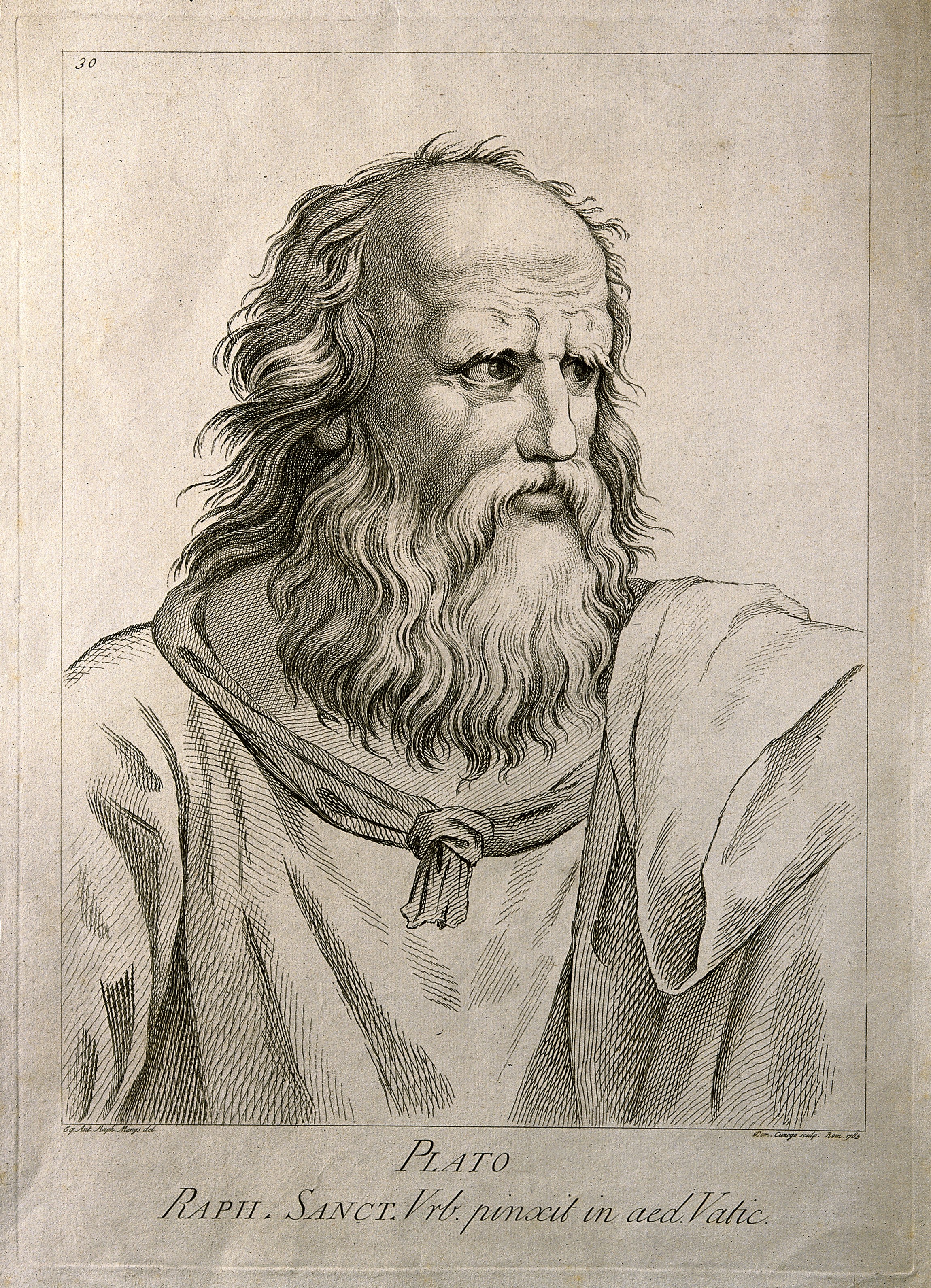
PLATO: Criticism

Reference: The Story of Philosophy 

This paper presents Chapter I, Section 10 from the book THE STORY OF PHILOSOPHY by WILL DURANT. The contents are from the 1933 reprint of this book by TIME INCORPORATED by arrangement with Simon and Schuster, Inc.

The paragraphs of the original material (in black) are accompanied by brief comments (in color) based on the present understanding.  Feedback on these comments is appreciated.

The heading below is linked to the original materials.

.

X. CRITICISM 

And now what shall we say of this whole Utopia? Is it feasible? And if not, has it any practicable features which we could turn to contemporary use? Has it ever in any place or measure been realized? 

At least the last question must be answered in Plato’s favor. For a thousand years Europe was ruled by an order of guardians considerably like that which was visioned by our philosopher. During the Middle Ages it was customary to classify the population of Christendom into laboratores (workers), bellatores (soldiers), and oratores (clergy). The last group, though small in number, monopolized the instruments and opportunities of culture, and ruled with almost unlimited sway half of the most powerful continent on the globe. The clergy, like Plato’s guardians, were placed in authority not by the suffrages, of the people, but by their talent as shown in ecclesiastical studies and administration, by their disposition to a life of meditation and simplicity, and (perhaps it should be added) by the influence of their relatives with the powers of state and church. In the latter half of the period in which they ruled, the clergy were as free from family cares as even Plato could desire; and in some cases, it would seem, they enjoyed no little of the reproductive freedom accorded to the guardians. Celibacy was part of the psychological structure of the power of the clergy; for on the one hand they were unimpeded by the narrowing egoism of the family, and on the other their apparent superiority to the call of the flesh added to the awe in which lay sinners held them, and to the readiness of these sinners to bare their lives in the confessional. 

Plato intended people to be fitting in a society in the best way possible according to their nature. On the surface Plato’s ideas seem to have been quite successful under Catholicism, but did they really accomplish what Plato intended? Catholicism did use the power of religion to keep people in line. But that did not help people evolve per their potential.

Much of the politics of Catholicism was derived from Plato’s ”royal lies,” or influenced by them: the ideas of heaven, purgatory, and hell, in their medieval form, are traceable to the last book of the Republic; the cosmology of scholasticism comes largely from the Timaeus; the doctrine of realism (the objective reality of general ideas) was an interpretation of the doctrine of Ideas; even the educational “quadrivium” (arithmetic, geometry, astronomy and music) was modeled on the curriculum outlined in Plato. With this body of doctrine the people of Europe were ruled with hardly any resort to force; and they accepted this rule so readily that for a thousand years they contributed plentiful material support to their rulers, and asked no voice in the government. Nor was this acquiescence confined to the general population; merchants and soldiers, feudal chieftains and civil powers all bent the knee to Rome. It was an aristocracy of no mean political sagacity; it built probably the most marvelous and powerful organization which the world has ever known. 

Plato’s ideas built a powerful organization in Catholicism, but that organization has been only as stable as its “royal lies” (the postulates of Catholic theism). This organization suppressed the seeking of scientific knowledge, which has been its undoing.

The Jesuits who for a time ruled Paraguay were semi-Platonic guardians, a clerical oligarchy empowered by the possession of knowledge and skill in the midst of a barbarian population. And for a time the Communist Party which ruled Russia after the revolution of November, 1917, took a form strangely reminiscent of the Republic. They were a small minority, held together almost by religious conviction, wielding the weapons of orthodoxy and excommunication, as sternly devoted to their cause as any saint to his, and living a frugal existence while ruling half the soil of Europe. 

A society built on Plato’s republic is only as successful as it paves the way for the evolution of the civilization.

Such examples indicate that within limits and with modifications, Plato’s plan is practicable; and indeed he himself had derived it largely from actual practice as seen on his travels. He had been impressed by the Egyptian theocracy: here was a great and ancient civilization ruled by a small priestly class; and compared with the bickering and tyranny and incompetence of the Athenian Ecclesia Plato felt that the Egyptian government represented a much higher form of state (Laws, 819). In Italy he had stayed for a time with a Pythagorean community, vegetarian and communist, which had for generations controlled the Greek colony in which it lived. In Sparta he had seen a small ruling class living a hard and simple life in common in the midst of a subject population; eating together, restricting mating for eugenic ends, and giving to the brave the privilege of many wives. He had no doubt heard Euripides advocate a community of wives, the liberation of slaves, and the pacification of the Greek world by an Hellenic league (Medea, 230; Fragm., 655) ; no doubt, too, he knew some of the Cynics who had developed a strong communist movement among what one would now call the ‘Socratic Left. In short, Plato must have felt that in propounding his plan he was not making an impossible advance on realities which his eyes had seen.

Plato’s Republic is a utopia, which has been approximated to various degrees. Its ultimate weakness lies in the need for external control of human nature.

Yet critics from Aristotle’s day to ours have found in the Republic many an opening for objection and doubt. “These things and many others,” says the Stagyrite, with cynical brevity, ”have been invented several times over in the course of ages.” It is very pretty to plan a society in which all men will be brothers; but to extend such a term to all our male contemporaries is to water out of it all warmth and significance. So with common property: it would mean a dilution of responsibility; when everything belongs to everybody nobody will take care of anything. And finally, argues the great conservative, communism would fling people into an intolerable continuity of contact; it would leave no room for privacy or individuality; and it would presume such virtues of patience and cooperation as only a saintly minority possess. ”We must neither assume a standard of virtue which is above ordinary persons, nor an education which is exceptionally favored by nature and circumstance; but we must have regard to the life which the majority can share, and to the forms of government to which states in general can attain.”

All warmth and significance goes out the window when external controls are enforced. Whether the property is common or not, people may not take responsibility for it. The need for privacy may not get fulfilled when one is living in a close nit community. It may be difficult to enforce a strict standard of virtue and education.

So far Plato’s greatest (and most jealous) pupil; and most of the criticisms of later date strike the same chord. Plato underrated, we are told, the force of custom accumulated in the institution of monogamy, and in the moral code attached to that institution; he underestimated the possessive jealousy of males in supposing that a man would be content to have merely an aliquot portion of a wife; he minimized the maternal instinct in supposing that mothers would agree to have their children taken from them and brought up in a heartless anonymity. And above all he forgot that in abolishing the family he was destroying the great nurse of morals and the chief source of those cooperative and communistic habits which would have to be the psychological basis of his state; with unrivaled eloquence he sawed off the branch on which he sat.

To all these criticisms one can reply very simply, that they destroy a straw man. Plato explicitly exempts the majority from his communistic plan; he recognizes clearly enough that only a few are capable of the material self-denial which he proposes for his ruling class; only the guardians will call every guardian brother or sister; only the guardians will be without gold or goods. The vast majority will retain all respectable institutions—property, money, luxury, competition, and whatever privacy they may desire. They will have marriage as monogamic as they can bear, and all the morals derived from it and from the family; the fathers shall keep their wives and the mothers shall keep their children ad libitum and nauseam. As to the guardians, their need is not so much a communistic disposition as a sense of honor, and love of it; pride and not kindness is to hold them up. And as for the maternal instinct, it is not strong before the birth, or even the growth, of the child; the average mother accepts the new-born babe rather with resignation than with joy; love for it is a development, not a sudden miracle, and grows as the child grows, as it takes form under the painstaking care of the mother; not until it has become the embodiment of maternal artistry does it irrevocably catch the heart.

Some of the ideas of Plato’s conflict with natural instincts, such as, monogamy, the maternal instinct and the family; but they apply only to a very small minority of guardians who operate basically on the sense of honor and pride in their function.

Other objections are economic rather than psychological. Plato’s republic, it is argued, denounces the division of every city into two cities, and then offers us a city divided into three. The answer is that the division in the first case is by economic conflict; in Plato’s state the guardian and auxiliary classes are specifically excluded from participation in this competition for gold and goods. But then the guardians would have power without responsibility; and would not this lead to tyranny? Not at all; they have political power and direction, but no economic power or wealth; the economic class, if dissatisfied with the guardians’ mode of rule, could hold up the food supply, as Parliaments control executives by holding up the budget. Well, then, if the guardians have political but not economic power, how can they maintain their rule? Have not Harrington and Marx and many others shown that political power is a reflex of economic power, and becomes precarious as soon as economic power passes to a politically subject group—as to the middle classes in the eighteenth century?

In Plato’s republic the wealthy do not rule the poor. Instead the centers of political and economic powers are separated. But how practical is this?

This is a very fundamental objection, and perhaps a fatal one. The answer might be made that the power of the Roman Catholic Church, which brought even kings to kneel at Canossa, was based, in its earlier centuries of rule, rather on the inculcation of dogmas than on the strategy of wealth. But it may be that the long dominion of the Church was due to the agricultural condition of Europe: an agricultural population is inclined to supernatural belief by its helpless dependence on the caprice of the elements, and by that inability to control nature which always leads to fear and thence to worship; when industry and commerce developed, a new type of mind and man arose, more realistic and terrestrial, and the power of the Church began to crumble as soon as it came into conflict with this new economic fact. Political power must repeatedly readjust itself to the changing balance of economic forces. The economic dependence of Plato’s guardians on the economic class would very soon reduce them to the controlled political executives of that class; even the, manipulation of military power would not long forestall this inevitable issue—any more than the military forces of revolutionary Russia could prevent the development of a proprietary individualism among the peasants who controlled the growth of food, and therefore the fate of the nation. Only this would remain to Plato: that even though political policies must be determined by the economically dominant group, it is better that those policies should be administered by officials specifically prepared for the purpose, than by men who stumble out of commerce or manufacturing into political office without any training in the arts of statesmanship. 

The reality is that the economically dominant group will eventually control the political policies. Control through dogmas is not possible when the economic centers become independent. Political power must repeatedly readjust itself to the changing balance of economic forces. It is good if political policies are implemented by officials specifically prepared for the purpose.

What Plato lacks above all, perhaps, is the Heracleitean sense of flux and change; he is too anxious to have the moving picture of this world become a fixed and still tableau. He loves order exclusively, like any timid philosopher; he has been frightened by the democratic turbulence of Athens into an extreme neglect of individual values; he arranges men in classes like an entomologist classifying flies; and he is not averse to using priestly humbug to secure his ends. His state is static; it might easily become an old-fogey society, ruled by inflexible octogenarians hostile to invention and jealous of change. It is mere science without art; it exalts order, so dear to the scientific mind, and quite neglects that liberty which is the soul of art; it worships the name of beauty, but exiles the artists who alone can make beauty or point it out. It is a Sparta or a Prussia, not an ideal state. 

Plato lacks the sense of flux and change, for he dreams up an orderly and static society. America incorporates that flux and change.

And now that these unpleasant necessities are candidly written down, it remains to do willing homage to the power and profundity of Plato’s conception. Essentially he is right—is he not?—what this world needs is to be ruled by its wisest men. It is our business to adapt his thought to our own times and limitations. Today we must take democracy for granted: we cannot limit the suffrage as Plato proposed; but we can put restrictions on the holding of office, and in this way secure that mixture of democracy and aristocracy which Plato seems to have in mind. We may accept without quarrel his contention that statesmen should be as specifically and thoroughly trained as physicians; we might establish departments of political science and administration in our universities; and when these departments have begun to function adequately we might make men ineligible for nomination to political office unless they were graduates of such political schools. We might even make every man eligible for an office who had been trained for it, and thereby eliminate entirely that complex system of nominations in which the corruption of our democracy has its seat; let the electorate choose any man who, properly trained and qualified, announces himself as a candidate. In this way democratic choice would be immeasurably wider than now, when Tweedledum and Tweedledee stage their quadrennial show and sham. Only one amendment would be required to make quite democratic this plan for the restriction of office to graduates in administrative technique; and that would be such equality of educational opportunity as would open to all men and women, irrespective of the means of their parents, the road to university training and political advancement. It would be very simple to have municipalities and counties and states offer scholarships to all graduates of grammar school, high school and college who had shown a certain standard of ability, and whose parents were financially unable to see them through the next stage of the educational process. That would be a democracy worthy of the name. 

It is true that this world needs to be ruled by its wisest men. Today we must take democracy of universal suffrage for granted and put restrictions on the holding of office. Statesmen should be as specifically and thoroughly trained as physicians.

Finally, it is only fair to add that Plato understands that his Utopia does not quite fall within the practicable realm. He admits that he has described an ideal difficult of attainment; he answers that there is nevertheless a value in painting these pictures of our desire; man’s significance is that he can image a better world, and will, some part of it at least into reality; man is an animal that makes Utopias. ‘We look before and after and pine for what is not.” Nor is it all without result: many a dream has grown limbs and walked, or grown wings and flown, like the dream of Icarus that men might fly. After all, even if we have but drawn a picture, it may serve as goal and model of our movement and behavior; when sufficient of us see the picture and follow its gleam, Utopia will find its way upon the map. Meanwhile “in heaven there is laid up a pattern of such a city, and he who desires may behold it, and beholding, govern himself accordingly. But whether there really is or ever will be such a city on earth, … he will act according to the laws of that city, and no other” (592). The good man will apply even in the imperfect state, the perfect law. 

Man must dream a better world, and the closest outcome will be forged from the laws of nature.

Nevertheless, with all these concessions to doubt, the Master was bold enough to risk himself when a chance offered to realize his plan. In the year 387 B. C. Plato received an invitation from Dionysius, ruler of the then flourishing and powerful Syracuse, capital of Sicily, to come and turn his kingdom into Utopia; and the philosopher, thinking like Turgot that it was easier to educate one man—even though a king—than a 

whole people, consented. But when Dionysius found that the plan required either that he should become a philosopher or cease to be a king, he balked; and the upshot was a bitter quarrel. Story has it that Plato was sold into slavery, to be rescued by his friend and pupil Anniceris; who, when Plato’s Athenian followers wished to reimburse him for the ransom he had paid, refused, saying that they should not be the only ones privileged to help philosophy. This (and, if we may believe Diogenes Laertius, another similar) experience may account for the disillusioned conservatism of Plato’s last work, the Laws. 

Plato’s utopia requires that the human nature be conquered, such that those in power want to resolve anomalies for the sake of knowledge.

And yet the closing years of his long life must have been fairly happy. His pupils had gone out in every direction, and their success had made him honored everywhere. He was at peace in his Academe, walking from group to group of his students and giving them problems and tasks on which they were to make research and, when he came to them again, give report and answer. La Rochefoucauld said that “few know how to grow old.” Plato knew: to learn like Solon and to teach like Socrates; to guide the eager young, and find the intellectual love of comrades. For his students loved him as he loved them; he was their friend as well as their philosopher and guide. 

Plato’s love was to research and to teach.

One of his pupils, facing that great abyss called marriage, invited the Master to his wedding feast. Plato came, rich with his eighty years and joined the merry-makers gladly. But as the hours laughed themselves away, the old philosopher retired into a quiet corner of the house, and sat down on a chair to win a little sleep. In the morning, when the feast was over, the tired revelers came to wake him. They found that during the night, quietly and without ado, he had passed from a little sleep to an endless one. All Athens followed him to the grave. 

Plato had a great life and he passed away peacefully at the age of eighty.

.

PLATO: The Ethical Solution

Reference: The Story of Philosophy 

This paper presents Chapter I, Section 9 from the book THE STORY OF PHILOSOPHY by WILL DURANT. The contents are from the 1933 reprint of this book by TIME INCORPORATED by arrangement with Simon and Schuster, Inc.

The paragraphs of the original material (in black) are accompanied by brief comments (in color) based on the present understanding.  Feedback on these comments is appreciated.

The heading below is linked to the original materials.

.

IX. THE ETHICAL SOLUTION 

And now our political digression is ended, and we are ready at last to answer the question with which we began—What is justice? There are only three things worth while in this world—justice, beauty and truth; and perhaps none of them can be defined. Four hundred years after Plato a Roman procurator of Judea asked, helplessly, ”What is truth?”—and philosophers have not yet answered, nor told us what is beauty. But for justice Plato ventures a definition. “Justice,” he says, “is the having and doing what is one’s own.” (433). 

Plato says, “Justice is the having and doing what is one’s own.” What is one’s own, in total honesty, would simply be one’s inherent nature.

This has a disappointing sound; after so much delay we expected an infallible revelation. What does the definition mean? Simply that each man shall receive the equivalent of what he produces, and shall perform the function for which he is best fit. A just man is a man in just the right place, doing his best, and giving the full equivalent of what he receives. A society of just men would be therefore a highly harmonious and efficient group; for every element would be in its place, fulfilling its appropriate function like the pieces in a perfect orchestra. Justice in a society would be like that harmony of relationships whereby the planets are held together in their orderly (or, as Pythagoras would have said, their musical) movement. So organized, a society is fit for survival; and justice receives a kind of Darwinian sanction. Where men are out of their natural places, where the business man subordinates the statesman, or the soldier usurps the position of the king—there the coordination, of parts is destroyed, the joints decay, the society disintegrates and dissolves. Justice is effective coordination. 

Plato’s dream for justice requires that man be totally natural and without any aberrations.

And in the individual too, justice is effective coordination, the harmonious functioning of the elements in a man, each in its fit place and each making its cooperative contribution to behavior. Every individual is a cosmos or a chaos of desires, emotions and ideas; let these fall into harmony, and the individual survives and succeeds; let them lose their proper place and function, let emotion try to become the light of action as well as its heat (as in the fanatic), or let thought try to become the heat of action as well as its light, (as in the intellectual)—and disintegration of personality begins, failure advances like the inevitable night. Justice is a taxis ki cosmos—anorder and beauty—of the parts of the soul; it is to the soul as health is to the body. All evil is disharmony: between man and nature, or man and men, or man and himself.

It is true that that basis for justice, beauty and truth is harmony, continuity and consistency, but how does one achieve that?

So Plato replies to Thrasymachus and Callicles, and to all Nietzscheans forever: Justice is not mere strength, but harmonious strength—desires and men falling into that order which constitutes intelligence and organization; justice is not the right of the stronger, but the effective harmony of the whole. It is true that the individual who gets out of the place to which his nature and talents adapt him may for a time seize some profit and advantage; but an inescapable Nemesis pursues him—as Anaxagoras spoke of the Furies pursuing any planet that should wander out of its orbit; the terrible baton of the Nature of Things drives the refractory instrument back to its place and its pitch and its natural note. The Corsican lieutenant may try to rule Europe with a ceremonious despotism fitted better to an ancient monarchy than to a dynasty born overnight; but he ends on a prison-rock in the sea, ruefully recognizing that he is “the slave of the Nature of Things.” Injustice will out. 

According to Plato, justice is not the right of the stronger, but the effective harmony of the whole. Injustice will out. But this is theoretical and, generally, not practical.

There is nothing bizarrely new in this conception; and indeed we shall do well to suspect, in philosophy, any doctrine which plumes itself on novelty. Truth changes her garments frequently (like every seemly lady), but under the new habit she remains always the same. In morals we need not expect startling innovations: despite the interesting adventures of Sophists and Nietzscheans, all moral conceptions revolve about the good of the whole. Morality begins with association and interdependence and organization; life in society requires the concession of some part of the individual’s sovereignty to the common order; and ultimately the norm of conduct becomes the welfare of the group. Nature will have it so, and her judgment is always final; a group survives, in competition or conflict with another group, according to its unity and power, according to the ability of its members to cooperate for common ends. And what better cooperation could there be than that each should be doing that which he can do best? This is the goal of organization which every society must seek, if it would have life. Morality, said Jesus, is kindness to the weak; morality, said Nietzsche, is the bravery of the strong; morality, says Plato, is the effective harmony of the whole. Probably all three doctrines must be combined to find a perfect ethic; but can we doubt which of the elements is fundamental? 

The ethical solution depends on sorting out the aberrated nature of man. So we are back at square one. But at least we have “the effective harmony of the whole” as Plato’s idea of morality.

.

PLATO: The Political Solution

Reference: The Story of Philosophy

Note: The original Text is provided below.
Previous / Next

.

Summary

.

Comments

.

Original Text

Automatically—without any hypocrisy of voting. Democracy means perfect equality of opportunity, especially in education; not the rotation of every Tom, Dick and Harry in public office. Every man shall have an equal chance to make himself fit for the complex tasks of administration; but only those who have proved their mettle (or, in our myth, their metal), and have emerged from all tests with the insignia of skill, shall be eligible to rule. Public officials shall be chosen not by votes, nor by secret cliques pulling the unseen wires of democratic pretense, but by their own ability as demonstrated in the fundamental democracy of an equal race. Nor shall any man hold office without specific training, nor hold high office till he has first filled a lower office well (Gorgias, 514-5). 

Democracy depends on equal opportunity in education. Democratic elections should depend on ability rather than on votes. 

Is this aristocracy? Well, we need not be afraid of the word, if the reality is good which it betokens: words are wise men’s counters, without value of their own; they are the money only of fools and politicians. We want to be ruled by the best, which is what aristocracy means; have we not, Carlyle-like; yearned and prayed to be ruled by the best? But we have come to think of aristocracies as hereditary: let it be carefully noted that this Platonic aristocracy is not of that kind; one would rather call it a democratic aristocracy. For the people, instead of blindly electing the lesser of two evils presented to them as candidates by nominating cliques, will here be themselves, everyone of them, the candidates; and will receive an equal chance of educational election to public office. There is no caste here; no inheritance of position or privilege; no stoppage of talent impecuniously born; the son of a ruler begins on the same level, and receives the same treatment and opportunity, as the son of a boot-black; if the ruler’s son is a dolt he falls at the first shearing; if the boot-black’s son is a man of ability the way is clear for him to become a guardian of the state (423). Career will be open to talent wherever it is born. This is a democracy of the schools—a hundredfold more honest and more effective than a democracy of the polls. 

It will be a huge problem if education is politicized. 

And so, “setting aside every other business, the guardians will dedicate themselves wholly to the maintenance of freedom in the state, making this their craft and engaging in no work which does not bear upon this end” (395). They shall be legislature and executive and court in one; even the laws shall not bind them to a dogma in the face of altered circumstance; the rule of the guardians shall be a flexible intelligence unbound by precedent. 

The primary task of education should be to develop the ability to think critically that can be trusted by others. But the trust from others requires that they themselves must be able to think critically to some degree.

But how can men of fifty have a flexible intelligence? Will they not be mentally plaster-casted by routine? Adeimantus (echoing, no doubt, some hot brotherly debate in Plato’s home) objects that philosophers are dolts or rogues, who would rule either foolishly, or selfishly, or both. “The votaries of philosophy who carry on the study not only in youth with a view to education, but as the pursuit of their maturer years—these men for the most part grow into very strange beings, not to say utter scoundrels; and the result with those who may be considered the best of them is, that they are made useless to the world by the very study which you extol” (487). This is a fair enough description of some be-spectacled modern philosophers; but Plato answers that he has guarded against this difficulty by giving his philosophers the training of life as well as the erudition of the schools; that they will in consequence be men of action rather than merely men of thought—men seasoned to high purposes and noble temper by long experience and trial. By philosophy Plato means an active culture, wisdom that mixes with the concrete busy-ness of life; he does not mean a closeted and impractical metaphysician; Plato “is the man who least resembles Kant, which is (with all respect) a considerable merit.” 

The ability to think critically and wisely must be supported by practical experience that comes from active living.

So much for incompetence; as for rascality we may provide against that by establishing among the guardians a system of communism: 

In the first place none of them should have any property beyond what is absolutely necessary; neither should they have a private house, with bars and bolts, closed against any one who has a mind to enter; their provisions should be only such as are required by trained warriors, who are men of temperance and courage; their agreement is to receive from the citizens a fixed rate of pay, enough to meet the expenses of the year, and no more; and they will have common meals and live together, like soldiers in a camp. Gold and silver we will tell them that they have from God; the diviner metal is within them, and they have therefore no need of that earthly dross which passes under the name of gold, and ought not to pollute the divine by earthly admixture, for that commoner metal has been the source of many unholy deeds; but their own is undefiled. And they alone of all the citizens may not touch or handle silver or gold, or be under the same roof with them, or wear them, or drink from them. And this will be their salvation, and the salvation of the State. But should they ever acquire homes or lands or moneys of their own, they will become housekeepers and husbandmen instead of guardians; enemies and tyrants instead of allies of the other citizens; hating and being hated, plotting and being plotted against, they will pass through life in much greater terror of internal than of external enemies; and the hour of ruin, both to themselves and to the rest of the State, will be at hand (416-17), 

To develop character during training, greed should curbed as much as possible. It is interesting to note that much of Capitalism has been guided by greed.

This arrangement will make it unprofitable, as well as dangerous, for the guardians to rule as a clique seeking the good of their class rather than that of the community as a whole. For they will be protected from want; the necessities and modest luxuries of a noble life will be theirs in regular provision, without the searing and wrinkling care of economic worry. But by the same token they will be precluded from cupidity and sordid ambitions; they will always have just so much of the world’s goods, and no more; they will be like physicians establishing, and themselves accepting, a dietary for a nation. They will eat together, like consecrated men; they will sleep together in single barracks, like soldiers sworn to simplicity. “Friends should have all things in common,” as Pythagoras used to say (Law 807). So the authority of the guardians will be sterilized, and their power made poisonless; their sole reward will be honor and the sense of service to the group. And they will be such men as from the beginning have deliberately consented to so materially limited a career; and such men as at the end of their stern training will have learned to value the high repute of the statesman above the crass emoluments of the office-seeking politicians or the “economic man.” At their coming the battles of party politics will be no more. 

The guardians will be trained to have a simple life and just enough wants that will be amply fulfilled by the state. Their sole reward will be honor and the sense of service to the group.

But what will their wives say to all this? Will they be content to forego the luxuries of life and the conspicuous consumption of goods? The guardians will have no wives. Their communism is to be of women as well as of goods. They are to be freed not only from the egoism of self, but from the egoism of family; they are not to be narrowed to the anxious acquisitiveness of the prodded husband; they are to be devoted not to a woman. but to the community. Even their children shall not be specifically or distinguishably theirs; all children of guardians shall be taken from their mothers at birth and brought up in common; their particular parentage will be lost in the scuffle (460). All the guardian-mothers will care for all the guardian-children; the brother-hood of man, within these limits, will graduate from phrase to fact; every boy will be a brother to every other boy, every girl a sister, every man a father, and every woman a mother. 

The guardians will have a common family. This is a controversial point.

But whence will these women come? Some, no doubt, the guardians will woo out of the industrial or military classes; others will have become, by their own right, members of the guardian class. For there is to be no sex barrier of any kind in this community; least of all in education—the girl shall have the same intellectual opportunities as the boy, the same chance to rise to the highest positions in the state. When Glaucon objects (458 f) that this admission of woman to any office, provided she has passed the tests, violates the principle of the division of labor, he receives the sharp reply that division of labor must be by aptitude and ability, not by sex; if a woman shows herself capable of political administration, let her rule; if a man shows himself to be capable only of washing dishes, let him fulfill the function to which Providence has assigned him.

There is no discrimination for the duties of the guardians based on sex.

Community of wives does not mean indiscriminate mating; rather there is to be strict eugenic supervision of all reproductive relations. The argument from the breeding of animals here starts its wandering career: if we get such good results in breeding cattle selectively for qualities desired, and from breeding only from the best in each generation, why should we not apply similar principles to the matings of mankind? (459). For it is not enough to educate the child properly; he must be properly born, of select and healthy ancestry; “education should begin before birth” (Laws, 789). Therefore no man or woman shall procreate unless in perfect health; a health certificate is to be required of every bride and groom (Laws; 772). Men may reproduce only when they are above thirty and under forty-five; women only when they are above twenty and under forty. Men unmarried by thirty-five are to be taxed into felicity (Laws, 771). Off-spring born of unlicensed matings, or deformed, are to be exposed and left to die. Before and after the ages specified for procreation, mating is to be free, on condition that the fetus be aborted. “We grant this permission with strict orders to the parties to do all in their power to prevent any embryo from seeing the light; and if any should force its way to birth, they must understand that the offspring of such a union cannot be maintained, and they must make their arrangements accordingly” (461). The marriage of relatives is prohibited, as inducing degeneration (310). “The best of either sex should be united with the best as often as possible, and the inferior with the inferior; and they are to rear the off-spring of the one sort but not that of the other; for this is the only way of keeping the flock in prime condition. … Our braver and better youth, beside their other honors and rewards, are to be permitted a greater variety of mates; for such fathers ought to have as many sons as possible” (459-60). 

Children must be properly born, of select and healthy ancestry requiring strict eugenic supervision of all reproductive relations. This point happens to be very controversial.

But our eugenic society must be protected not only from disease and deterioration within, but from enemies without. It must be ready, if need be, to wage successful war. Our model community would of course be pacific, for it would restrict population within the means of subsistence; but neighboring states not so managed might well look upon the orderly prosperity of our Utopia as an invitation to raid and rapine. Hence, while deploring the necessity, we shall have, in our intermediate class, a sufficient number of well-trained soldiers, living a hard and simple life like the guardians, on a stated modicum of goods supplied by their “maintainers and fore-fathers,” the people. At the same time every precaution must be taken to avoid the occasions of war. The primary occasion is overpopulation (373); the second is foreign trade, with the inevitable disputes that interrupt it. Indeed, competitive trade is really a form of war; “peace is only a name” (Laws, 622). It will be well then to situate our ideal state considerably inland, so that it shall be shut out from any high development of foreign commerce. “The sea fills a country with merchandise and money-making and bargaining; it breeds in men’s minds habits of financial greed and faithlessness, alike in its internal and in its foreign relations” (Laws, 704-7). Foreign trade requires a large navy to protect it; and navalism is as bad as militarism. “In every case the guilt of war is confined to a few persons, and the many are friends” (471). The most frequent wars are precisely the vilest—civil wars, wars of Greek against Greek; let the Greeks form a pan-Hellenic league of nations, uniting lest “the whole Greek race some day fall under the yoke of barbarian peoples” (469). 

It is best to have the capacity to defend one’s state, while avoiding the occasions of war.  But increase in population causes war and war serves to control population. Maybe broad education can help control population better. Foreign trade has the overtones of the greed of Capitalism that may lead to war.

So our political structure will be topped with a small class of guardians; it will be protected by a large class of soldiers and “auxiliaries”; and it will rest on the broad base of a commercial, industrial, and agricultural population. This last or economic class will retain private property, private mates, and private families. But trade and industry will “be regulated by the guardians to prevent excessive individual wealth or poverty; anyone acquiring more than four times the average possession of the citizens must relinquish the excess to the state (Laws, 714 f). Perhaps interest will be forbidden, and profits limited (Laws, 920). The communism of the guardians is impracticable for the economic class; the distinguishing characteristics of this class are powerful instincts of acquisition and competition; some noble souls among them will be free from this fever of combative possession, but the majority of men are consumed with it; they hunger and thirst not after righteousness, nor after honor, but after possessions endlessly multiplied. Now men engrossed in the pursuit of money are unfit to rule a state; and our entire plan rests on the hope that if the guardians rule well and live simply, the economic man will be willing to let them monopolize administration if they permit him to monopolize luxury. In short, the perfect society would be that in which each class and each unit would be doing the work to which its nature and aptitude best adapted it; in which no class or individual would interfere with others, but all would co-operate in difference to produce an efficient and harmonious whole (433-4). That would be a just state. 

There should be a small ruler class of guardians, a larger class of warriors, and a very broad class of a commercial, industrial, and agricultural population. There should not be too much disparity of wealth among population. Excess wealth should go to state to be used for improving the infrastructure of the society.

In short, the perfect society would be that in which each class and each unit would be doing the work to which its nature and aptitude best adapted it; in which no class or individual would interfere with others, but all would co-operate in difference to produce an efficient and harmonious whole.

.

PLATO: The Psychological Solution

Reference: The Story of Philosophy

Note: The original Text is provided below.
Previous / Next

.

Summary

.

Comments

.

Original Text

Well, then, what is to be done? 

We must begin by “sending out into the country all the inhabitants of the city who are more than ten years old, and by taking possession of the children, who will thus be protected from the habits of their parents” (540). We cannot build Utopia with young people corrupted at every turn by the example of their elders. We must start, so far as we can, with a clean slate. It is quite possible that some enlightened ruler will empower us to make such a beginning with some part or colony of his realm. (One ruler did, as we shall see.) In any case we must give to every child, and from the outset, full equality of educational opportunity; there is no telling where the light of talent or genius will break out; we must seek it impartially everywhere, in every rank and race. The first turn on our road is universal education.

For the first ten years of life, education shall be predominantly physical; every school is to have a gymnasium and a playground; play and sport are to be the entire curriculum; and in this first decade such health will be stored up as will make all medicine unnecessary. “To require the help of medicine because by lives of indolence and luxury men have filled themselves like pools with waters and winds. … flatulence and catarrh—is not this a disgrace? … Our present system of medicine may be said to educate diseases,” to draw them out into a long existence, rather than to cure them. But this is an absurdity of the idle rich. “When a carpenter is ill he asks the physician for a rough and ready remedy—an emetic, or a purge, or cautery, or the knife. And if anyone tells him that he must go through a course of dietetics, and swathe and swaddle his head, and all that sort of thing, he replies at once that he has no time to be ill, and that he sees no good in a life that is spent in nursing his disease to the neglect of his ordinary calling; and therefore, saying good-bye to this sort of physicians, he resumes his customary diet, and either gets well and lives and does his business, or, if his constitution fails, he dies and has done with it” (405-6). We cannot afford to have a nation of malingerers and invalids; Utopia must begin in the body of man. 

But mere athletics and gymnastics would make a man too one-sided. “How shall we find a gentle nature which has also. great courage?—for they seem to be inconsistent with each other” (375). We do not want a nation of prize-fighters and weight-lifters. Perhaps music will solve our problem: through music the soul learns harmony and rhythm, and even a disposition to justice; for “can he who is harmoniously constituted ever be unjust? Is not this, Glaucon, why musical training is so powerful, because rhythm and harmony find their way into the secret places of the soul, bearing grace in their movements and making the soul graceful?” (401; Protagoras, 326). Music moulds character, and therefore shares in determining social and political issues. “Damon tells me—and I can quite believe it—that when modes of music change, the fundamental laws of the state change with them.”*

*[Cf. Daniel O’Connell: ”Let me write the songs of a nation, and I care not who makes its laws.”]

Music is valuable not only because it brings refinement of feeling and character, but also because it preserves and restores health. There are some diseases which can be treated only through the mind. (Charmides, 157): so the Corybantic priest treated hysterical women with wild pipe music, which excited them to dance and dance till they fell to the ground exhausted, and went to.sleep; when they awoke they were cured. The unconscious sources of human thought are touched and soothed by such methods;. and it is in these substrata of behavior and feeling that genius sinks its roots. “No man when conscious attains to true or inspired intuition, but rather when the power of intellect is fettered in sleep or by disease or dementia”; the prophet (mantike) or genius is akin to the madman (manike) (Phredrus, 244). 

Plato passes on to a remarkable anticipation of “psychoanalysis.” Our political psychology is perplexed, he argues, because we have.not adequately studied the various appetites or instincts of man. Dreams may give us a clue to some of the subtle and more elusive of these dispositions. 

Certain of the unnecessary pleasures and instincts are deemed to be unlawful; every man appears to have them, but in some persons they are subjected to the control of law and reason [“sublimated”], and the better desires prevailing over them, they are either wholly suppressed, or reduced in strength and number; while in other persons these desires are stronger and more abundant. I mean particularly those desires which are awake when the reasoning and taming and ruling power [“censor”] of the personality is asleep; the wild beast in our nature, gorged with meat and drink, starts up and walks about naked, and surfeits at his will; and there is no conceivable folly or crime, however shameless or unnatural—not excepting incest or parricide [“Oedipus complex”]—of which such a nature may not be guilty. … But when a man’s pulse is healthy and temperate, and he goes to sleep cool and rational, … having indulged his appetites neither too much nor too little, but just enough to lay them to sleep, … he is then least likely to be the sport of fanciful and lawless visions. … In all of us, even in good men, there is such a latent wild beast nature, which peers out in sleep (571-2). 

Music and measure lend grace and health to the soul and to the body; but again, too much music is as dangerous as too much athletics. To be merely an athlete is to be nearly a savage; and to be merely a musician is to be “melted and softened beyond what is good” (410). The two must be combined; and after sixteen the individual practice of music must be abandoned, though choral singing, like communal games, will go on throughout life. Nor is music to be merely music; it must be used to provide attractive forms for the sometimes unappetizing contents of mathematics, history and science; there is no reason why for the young these difficult studies should not be smoothed into verse and beautified with song. Even then these studies are not to be forced upon an unwilling mind; within limits a libertarian spirit must prevail.

The elements of instruction … should be presented to the mind in childhood, but not with any compulsion; for a freeman should be a freeman too in the acquisition of knowledge. … Knowledge which is acquired under compulsion has no hold on the mind. Therefore do not use compulsion, but let early education be rather a sort of amusement; this will better enable you to find out the natural bent of the child (536). 

With minds so freely growing, and bodies made strong by sport and outdoor life of every kind, our ideal state would have a firm psychological and physiological base broad enough for every possibility and every development. But a moral basis must be provided as well; the members of the community must make a unity; they must learn that they are members of one another; that they owe to one another certain amenities and obligations. Now since men are by nature acquisitive, jealous, combative, and erotic, how shall we persuade them to behave themselves? By the policeman’s omnipresent club? It is a brutal method, costly and irritating. There is a better way, and that is by lending to the moral requirements of the community the sanction of supernatural authority. We must have a religion. 

Plato believes that a nation cannot be strong unless it believes in God. A mere cosmic force, or first cause, or elan vital,. that was not a person, could hardly inspire hope, or devotion, or sacrifice; if could not offer comfort to the hearts of the distressed, nor courage to embattled souls. But a living God can do all this, and can stir or frighten the self-seeking individualist into some moderation of his greed, some control of his passion. All the more so if to belief in God is added belief in personal immortality: the hope of another life gives us courage to meet our own death, and to bear with the death of our loved ones; we are twice armed if we fight with faith. Granted that none of the beliefs can be demonstrated; that God may be after all only the personified ideal of our love and our hope, and that the soul is like the music of the lyre, and dies with the instrument that gave it form: yet surely (so runs the argument, Pascal-like, of the Phaedo) it will do us no harm to believe, and it may do us and our children immeasurable good. 

For we are likely to have trouble with these children of ours if we undertake to explain and justify everything to their simple minds. We shall have an especially hard time when they arrive at the age of twenty, and face the first scrutiny and test of what they have learned in all their years of equal education. Then will come a ruthless weeding out; the Great Elimination, we might call it. That test will be no mere academic examination; it will be practical as well as theoretical: “there shall also be toils and pains and conflicts prescribed for them” (413). Every kind of ability will have a chance to show itself, and every sort of stupidity will be hunted out into the light. Those who fail will be assigned to the economic work of the nation; they will be business men, and clerks, and factory workers, and farmers. The test will be impartial and impersonal; whether one is to be a farmer or a philosopher will be determined not by monopolized opportunity or nepotic favoritism; the selection will be more democratic than democracy. 

Those who pass this first test will receive ten more years of education and training, in body and mind and character. And then they will face a second test, far severer than the first. Those who fail will become the auxiliaries, or executive aides and military officers of the state. Now it is just in these great eliminations that we shall need every resource of persuasion to get the eliminated to accept their fate with urbanity and peace. For what is to prevent that great unselected majority, in the first test, and that lesser but more vigorous and capable second group of Eliminees, from shouldering arms and smashing this Utopia of ours into a mouldering reminiscence? What is to prevent them from establishing there and then a world in which again mere number or mere force will rule, and the sickly comedy of a sham democracy will reenact itself da capo ad nauseam? Then religion and faith will be our only salvation: we shall tell these young people that the divisions into which they have fallen are God-decreed and irrevocable—not all their tears shall wipe out one word of it. We shall tell them the myth of the metals : 

“Citizens, you are brothers, yet God has framed you differently. Some of you have the power of command; and these he has made of gold, wherefore they have the greatest honor; others of silver, to be auxiliaries; others again, who are to be husbandmen and craftsmen, he has made of brass and iron; and the species will generally be preserved in the children. But as you are of the same original family, a golden parent will sometimes have a silver son, or a silver parent a golden son. And God proclaims … that if the son of a golden or a silver parent has an admixture of brass or iron, then nature requires a transposition of ranks; and the eye of the ruler must not be pitiful towards his child because he has to descend in the scale to become a husbandman or an artisan, just as there may be others sprung from the artisan class who are raised to honor, and become guardians and auxiliaries. For an oracle says that when a man of brass or iron guards the state, it will be destroyed” (415). 

Perhaps with this “royal fable” we shall secure a fairly general consent to the furtherance of our plan. 

But now what of the lucky remnant that ride these successive waves of selection? 

They are taught philosophy. They have now reached the age of thirty; it would not have been wise to let them “taste the dear delight too early; … for young men, when they first get the taste of philosophy in their mouths, argue for amusement, and are always contradicting and refuting, … like puppy-dogs who delight to tear and pull at all who come near them” (539). This dear delight, philosophy, means two things chiefly: to think clearly, which is metaphysics; and to rule wisely, which is politics. First then, our young Elite must learn to think clearly. For that purpose they shall study the doctrine of Ideas. 

But this famous doctrine of Ideas, embellished and obscured by the fancy and poetry of Plato, is a discouraging maze to the modern student, and must have offered another severe test to the survivors of many siftings. The Idea of a thing might be the “general idea” of the class to which it belongs (the Idea of John, or Dick, or Harry, is Man); or it might be the law or laws according to which the thing operates (the Idea of John would be the reduction of all his behavior to “natural laws”); or it might be the perfect purpose and ideal towards which the thing and its class may develop (the Idea of John is the John of Utopia). Very probably the Idea is all of these—idea, law and ideal. Behind the surface phenomena and particulars which greet our senses, are generalizations, regularities, and directions of development, unperceived by sensation but conceived by reason and thought. These ideas, laws and ideals are more permanent—and therefore more “real”—than the sense-perceived particular things through which we conceive and deduce them: Man is more permanent than Tom, or Dick, or Harry; this circle is born with the movement of my pencil and dies under the attrition of my eraser, but the conception Circle goes on forever. This tree stands, and that tree falls; but the laws which determine what bodies shall fall, and when, and how, were without beginning, are now, and ever shall be, without end. There is, as the gentle Spinoza would say, a world of things perceived by sense, and a world of laws inferred by thought; we do not see the law of inverse squares but it is there, and everywhere; it was before anything began, and will survive when all the world of things is a finished tale. Here is a bridge: the sense perceives concrete and iron to a hundred million tons; but the mathematician sees, with the mind’s eye, the daring and delicate adjustment of all this mass of material to the laws of mechanics and mathematics and engineering, those laws according to which all good bridges that are made must be made; if the mathematician be also a poet, he will see these laws upholding the bridge; if the laws were violated the bridge wouId collapse into the stream beneath; the laws are the God that holds up the bridge in the hollow of his hand. Aristotle hints something of this when he says that by Ideas Plato meant what Pythagoras meant by ”number” when he taught that this is a world of numbers (meaning presumably that the world is ruled by mathematical constancies and regularities). Plutarch tells us that according to Plato “God always geometrizes”; or, as Spinoza puts the same thought, God and the universal laws of structure and operation are one and the same reality. To Plato, as to Bertrand Russell, mathematics is therefore the indispensable prelude to philosophy, and its highest form; over the doors of his Academy Plato placed, Dantesquely, these words, “Let no man ignorant of geometry enter here.”*

*[The details of the argument for the interpretation here given of the doctrine of Ideas may be followed in D. G. Ritchie’s Plato, Edinburgh, 1902, especially pp. 49 and 85]

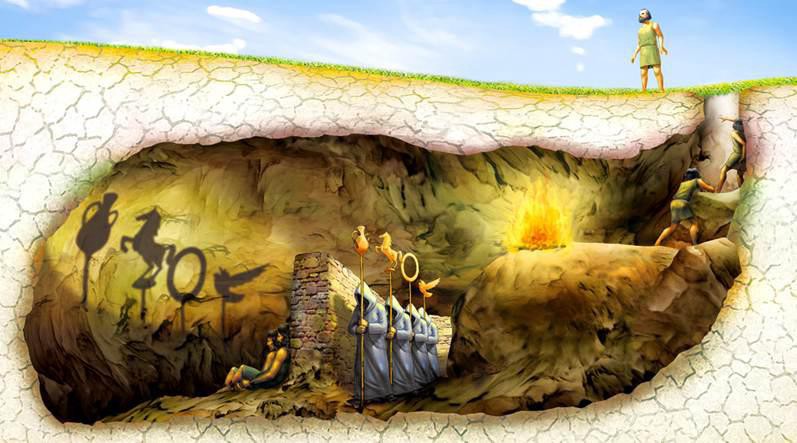
Without these Ideas—these generalization, regularities and ideals—the world would be to us as it must seem to the first-opened eyes of the child, a mass of unclassified and un-meaning particulars of sensation; for meaning can be given to things only by classifying and generalizing them, by finding the laws of their beings, and the purposes and goals of their activity. Or the world without Ideas would be a heap of book-titles fallen haphazard out of the catalogue, as compared to the same titles arranged in order according to their classes, their sequences and their purposes; it would be the shadows in a cave as compared with the sunlit realities without, which cast those fantastic and deceptive shadows within (514). Therefore the essence of a higher education is the search for Ideas: for generalizations, laws of sequence, and ideals of development; behind things we must discover their relation and meaning, their mode and law of operation, the function and ideal they serve or adumbrate; we must classify and coordinate our sense experience in terms of law and purpose; only for lack of this does the mind of the imbecile differ from the mind of Caesar. 

Well, after five years of training in this recondite doctrine of Ideas, this art of perceiving significant forms and causal sequences and ideal potentialities amid the welter and hazard of sensation; after five years of training in the application of this principle to the behavior of men and the conduct of states; after this long preparation from childhood through youth and into the maturity of thirty-five; surely now these perfect products are ready to assume the royal purple and the highest functions of public life?—surely they are at last the philosopher-kings who are to rule and to free the human race? 

Alas! not yet. Their education is still unfinished. For after all it has been, in the main, a theoretical education: something else is needed. Let these Ph.D.’s pass down now from the heights of philosophy into the “cave” of the world: of men and things; generalizations and abstractions are worthless except they be tested by this concrete world; let our students enter that world with no favor shown them; they shall compete with men of business, with hard-headed grasping individualists, with men of brawn and men of cunning; in this mart of strife they shall learn from the book of life itself; they shall hurt their fingers and scratch their philosophic shins on the crude realities of the world; they shall earn their bread and butter by the sweat of their high brows. And this last and sharpest test shall go on ruthlessly for fifteen long years. Some of our perfect products will break under the pressure, and be submerged by this last great wave of elimination. Those that survive, scarred and fifty, sobered and self-reliant, shorn of scholastic vanity by the merciless friction of life, and armed now with all the wisdom that tradition and experience, culture and conflict, can cooperate to give—these men at last shall automatically become the rulers of the state. 

.