Reference: Tertium Organum
NOTE: Text in color contains my comments.
.
Chapter 12: Phenomena
Analysis of phenomena. What defines different orders of phenomena for us? Methods and forms of the transition of one order of phenomena into another. Phenomena of motion. Phenomena of life. Phenomena of consciousness. The central question of our knowledge of the world: what mode of phenomena is generic and produces the others? Can the origin of everything lie in motion? The laws of transformation of energy. Simple transformation and liberation of latent energy. Different liberating forces of different orders of phenomena. The force of mechanical energy, the force of a living cell, the force of an idea. Phenomena and noumena of our world.
.
The order of phenomena is defined for us, first, by our method of apprehending them, and second, by the form of the transition of one order of phenomena into another.
According to our method of apprehending them and by the form of their transition into one another we discern three orders of phenomena.
Physical phenomena (i.e., all phenomena studied by physics and chemistry). Phenomena of life (all phenomena studied by biology and its subdivisions). Phenomena of consciousness (psychic and spiritual phenomena).
We know physical phenomena by means of our sense organs or by the aid of apparatus. Many recognized physical phenomena are not observed directly; they are merely projections of the assumed causes of our sensations, or those of the causes of other phenomena. Physics recognizes the existence of many phenomena which have never been observed either by the sense organs or by means of apparatus (the temperature of absolute zero, for example etc.).
The phenomena of life, as such, are not observed directly. We cannot project them as the cause of definite sensations. But certain groups of sensations force us to assume in certain groups of physical phenomena the presence of the phenomena of life. It may be said that a certain grouping of physical phenomena forces us to assume the presence of the phenomena of life. We define the cause of the phenomena of life as a something not capable of being grasped by the senses nor by apparatus, and incommensurable with the causes of physical sensations. The sign of the presence of the phenomena of life consists in the power of organisms to reproduce themselves, i.e., the multiplication of them in the same forms.
The phenomena of consciousness are the feelings and the thoughts that we know in ourselves by direct sensation subjectively. We assume their existence in others (1) from analogy with ourselves; (2) from their manifestation in actions and (3) from that which we gather by the aid of speech. But, as has been shown by certain philosophical theories, it is impossible to establish strictly objectively, the presence of consciousnesses other than our own. A man establishes this usually because of his inner assurance of its truth.
Physical phenomena transform themselves into one another completely. It is possible to transform heat into light, pressure into motion, etc. It is possible to produce any physical phenomenon from other physical phenomena; to produce any chemical combination by the synthetic method, combining the composite parts in proper proportions and under proper physical conditions. Modern physics assumes electro-magnetic phenomena as the basis of all physical phenomena. But physical phenomena do not transform themselves into the phenomena of life. By no combination of physical conditions can science create life, just as by chemical synthesis it cannot create living matter—protoplasm. We can tell what amount of coal is necessary to generate the certain amount of heat necessary to transform a given quantity of ice into water; but we cannot tell what amount of coal is necessary to create the vital energy with which one living cell forms another living cell. In similar manner physical, chemical and mechanical phenomena cannot themselves produce the phenomena of consciousness, i.e., of thought. Were it otherwise, a rotating wheel, after the expenditure of a certain amount of energy, or after the lapse of a certain time, could generate an idea. Yet we know perfectly well that the wheel can go on rotating for millions of years, and no single idea will be produced by it at all. Thus we see that the phenomena of motion differ in a fundamental way from the phenomena of life and of consciousness.
The phenomena of life change into other phenomena of life, multiply infinitely, and transform themselves unto physical phenomena, generating whole series of mechanical and chemical combinations. The phenomena of life manifest themselves to us in physical phenomena, and in the existence of such phenomena.
The phenomena of consciousness are sensed subjectively, and possessing enormous potential force, transform themselves into physical phenomena and into manifestations of life. We know that at the basis of our procreative force lies desire—that is, a psychical state, or a phenomenon of consciousness. Desire is possessed of enormous potential force. Out of the united desire of a man and of a woman, a whole nation may come into being. At the root of the active, constructive, creative force of man, that can change the course of rivers, unite oceans, cut through mountains, lies the will, i.e., again a psychical state, or a phenomenon of consciousness. Thus the phenomena of consciousness possess even greater unifying force with relation to physical phenomena than do the phenomena of life.
Positive philosophy affirms that all three orders of phenomena proceed from one cause lying within the sphere of the study of physics. This cause is called by different names at different times, but it is assumed to be identical with physical energy in general.
Seriously analyzing such an affirmation, it is easily seen to be absolutely arbitrary, and not founded upon anything. Physical phenomena of themselves, inside the limits of our existence and observation, never create the phenomena of life and the phenomena of consciousness. Consequently we may with greater right assume that in the phenomena of life and in the phenomena of consciousness there is something which does not exist in physical phenomena.
It appears that in the phenomena of life and in the phenomena of consciousness there is something which does not exist in physical phenomena. Actually, these different phenomena appear to be three different levels of understanding of the Universe.
.
Moreover, we cannot measure physical, biological, and psychic (or spiritual) phenomena by the same unit of measurement. Or more correctly, we cannot measure the phenomena of life and the phenomena of consciousness at all. It is only the phenomena first mentioned, i.e., the physical, that we fancy we can measure, though this is very doubtful, too.
In any case we undoubtedly know that we can expect neither the phenomena of life nor the phenomena of consciousness in the formulae of physical phenomena; and generally speaking we have for them no formulae at all.
In order to clarify the relation between phenomena of different kinds, let us examine in detail the laws of their transformation one into another.
First of all it is necessary to consider physical phenomena, and make a detailed study of the conditions and properties of their transformation one into another.
In an essay on Wundt (The Northern Messenger, 1888) A. L. Volinsky, elucidating the principles of Wundt’s physiological psychology, says:
The actions of sensation are provoked by the actions of irritation. But both these actions need not be at all equal. It is possible to burn a whole city by a spark from a cigarette. It is necessary to understand why this is possible. Place a board upon the edge of some object scalewise, so that it will balance. On both ends of the board put now an equal amount of weight. The weights will not fall : although both of them will tend to fall, they balance one another. If we lift the least weight from one end of the board, then the other end will overbalance, and the board will fall—i.e., the force of gravity which existed before as an invisible tendency, will have become a visible motive force. If we put the board and weights on the earth, the force of gravity will not produce any action, but it will not be eliminated: it will only transform itself into other forces.
Those forces which are only striving to produce motion are called constrained, or dead, forces. The forces which are actually manifesting themselves in certain definite actions are called free, or live forces; but as regards free forces it is necessary to differentiate those forces which are liberating, setting free, from the forces which are liberated, or set free.
An enormous difference exists between the liberation of force and its transformation into another.
When one kind of motion transforms itself into another kind, the amount of free force remains the same; and contrariwise, when one force liberates another, the amount of free force changes. The free force of an irritation liberates the tied-up forces of a nerve. And this liberation of tied-up forces is proceeding at each point of the nerve. The first motion increases like a fire, like a snow-slide carrying along with it new and ever new snow drifts. It is for this reason that the action (phenomenon) of sensation need not be exactly equal to the action of irritation.
Let us look more broadly at the relation between liberated and liberating forces in the different kinds of phenomena.
We shall discover that sometimes an almost negligible amount of physical force may liberate an enormous, a colossal quantity of physical energy. But all that we can ever assemble of physical force is powerless to liberate a single iota of that vital energy necessary for the independent existence of a single microscopic living organism.
The force contained in living organisms, the vital force, is capable of liberating infinitely greater amounts of vital and also of physical energy than the force of motion.
The microscopic living cell is capable of infinite dissemination, to evolve new species, to cover continents with vegetation, to fill the oceans with seaweed, to build islands out of coral, to deposit powerful layers of coal, etc., etc.
Concerning the latent energy contained in the phenomena of consciousness, i.e., in thoughts, feelings, desires, and in will, we discover that its potentiality is even more immeasurable, more boundless. From personal experience, from observation, from history, we know that ideas, feelings, will, manifesting themselves, can liberate enormous quantities of energy, and create infinite series of phenomena. An idea can act for centuries and millenniums and only grow and deepen, evoking ever new series of phenomena, liberating ever fresh energy. We know that thoughts continue to live and act when even the very name of the man who created them has been converted into a myth, like the names of the founders of ancient religions, the creators of the immortal poetical works of antiquity—heroes, leaders, prophets. Their words are repeated by innumerable lips, their ideas are studied and commented upon. Their preserved works are translated, printed, read, studied, staged, illustrated. And this is done not only with the masterpieces of men of genius, but some single little verse may live millenniums, making hundreds of men work for it, serve it, in order to transmit it further.
Observe how much of potential energy there is in some little verse of Pushkin or Lermontoff: This energy acts not only upon the feelings of men, but by reason of its very existence it acts upon their will. See how vital and immortal are the words, thoughts and feelings of half-mythical Homer—how much of “motion” each word of his, during the time of its existence, has evoked.
Undoubtedly each thought of a poet contains enormous potential force, like the power confined in a piece of coal or in a living cell, but infinitely more subtle, imponderable and potent.
This remarkable correlation of phenomena may be expressed in the following terms: the farther a given phenomenon is from the visible and sensed—from the physical—the farther it is from matter, the more there is in it of hidden force, the greater the quantity of phenomena it can produce, can leave in its wake, the greater amount of energy it can liberate, and so the less it is dependent upon time.
The farther a given phenomenon is from the physical, the more there is in it of hidden force, the greater amount of energy it can liberate, and so the less it is dependent upon time.
.
If we would correlate all of the above with the principle of physics that the amount of energy is constant, then we must state more exactly that in the preceding discussion nothing has been said of the creation of new energy, but of the liberation of latent force. And we have found that the liberating force of life and thought is infinitely greater than the liberating force of mechanical motion and of chemical reactions. The microscopic living cell is more powerful than a volcano—the idea is more powerful than the geological cataclysm.
The principle of physics that the amount of energy is constant, has to be related to the ultimate balance of the principle of Oneness (continuity, consistency and harmony).
Having established these differences between phenomena, let us endeavor to discover what phenomena themselves represent, taken by themselves, independently of our receptivity and sensation of them.
We at once discover that we know nothing about them.
We know a phenomenon just as much and just as far as it is irritation, i.e., to the extent that it provokes sensation.
The positivistic philosophy sees mechanical motion or electromagnetic energy as the basis of all phenomena. But the hypothesis of vibrating atoms or of units of energy—electrons and cycles of motion, combinations of which create different “phenomena”—is only an hypothesis, built upon a perfectly arbitrary and artificial assumption concerning the existence of the world in time and space. Just as soon as we discover that the conditions of time and space are merely the properties of our sensuous receptivity, we absolutely destroy the validity of the hypothesis of “energy” as the foundation of everything; because time and space are necessary for energy, i.e., it is necessary for time and space to be properties of the world and not properties of consciousness.
Thus in reality we know nothing about the causes of phenomena.
The basis of all phenomena is the postulate of substance (matter… radiation… thought). From the postulate of substance proceed the postulates of time, space, and motion.
We do know that some combinations of causes, acting through the organism upon our consciousness, produce the series of sensations which we recognize as a green tree. But we do not know if this perception of a tree corresponds to the real substance of the causes which evoked this sensation.
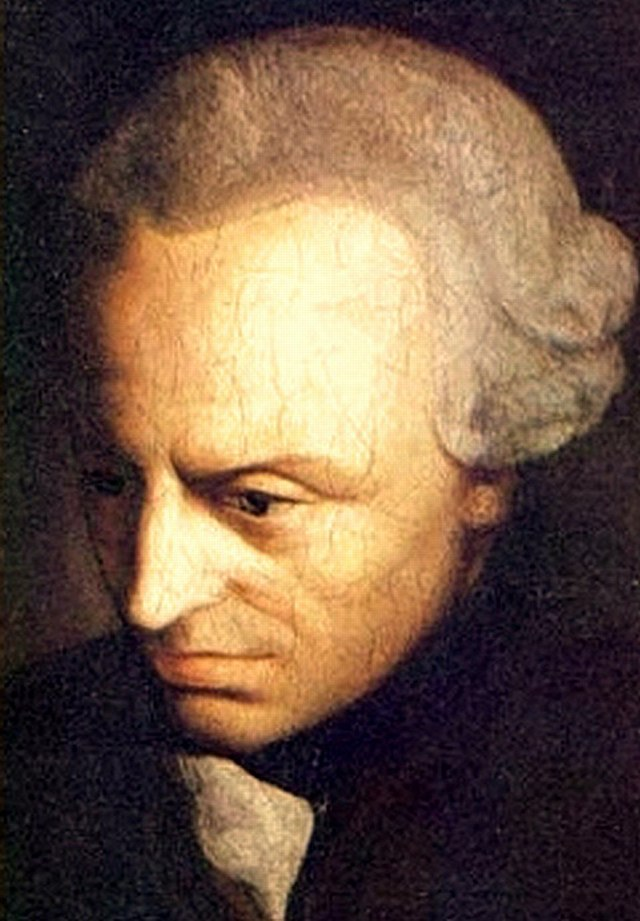
The question concerning the relation of the phenomenon to the thing-in-itself, i.e., to the indwelling reality, has been from far back the chief and most difficult concern of philosophy. Can we, studying phenomena, get at the very cause of them, at the very substance of things? Kant has said definitely: No!—by studying phenomena we do not even approach to the understanding of things in themselves. Recognizing the correctness of Kant’s view, if we desire to approach to an understanding of things in themselves, we must seek an entirely different method, an utterly different path from that which positive science is treading, which studies phenomena.
The increasing assimilation of sensations has been guiding us toward the ultimate understanding of the indwelling reality of things in themselves.
.