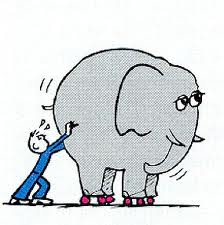
The Identification

Reference: Postulate Mechanics

The Identification

Identification is unconsciously taking the form of what one has sensed but not fully assimilated.

When the Self first senses the Universe it obtains an impression. This impression must be fully assimilated with rest of its experience before Self can become consciously aware of it.

Identification is the stage when the Self, being impressed, acts out according to that impression, while not conscious of it. It is unable to control those actions until impression is fully assimilated. 

All difficulties of a person stem from acting according to the impressions that are not yet assimilated. The person cannot think beyond those impressions. He thinks those impression to be his self.

Identification results in a fixation of attention. The fixation simply narrows the person’s viewpoint. For example, a person who is identifying himself with his body, is mainly aware of the needs of the body for sex, food and survival. All his concerns are guided by those needs.

As these impressions and fixations assimilate the person is able to act more and more with conscious awareness.

.

Misconception

It is a key misconception that one knows it all and one does not need to look at things closely.

.

More Misconceptions

You may discover more misconceptions on your own, if you contemplate on each sentence of the above definition with mindfulness. Please see:

The 12 Aspects of Mindfulness

Then, you may end up improving upon this definition too.

Good luck!

.

The Engram

Reference: Postulate Mechanics

.

The Engram

An engram is a condensed sensation that is difficult to assimilate naturally in the mental matrix. Therefore, a person is not aware of its content, or even its presence. The engram is generated during birth, or during a traumatic experience. The unassimilated engram influences the body and mind adversely, causing aberrations and much discomfort

Birth is an excellent example of an engram. Everyone has it, and it generally is the cause of the auto-immune disease in the body. When a person becomes aware of his birth engram and assimilates it, the auto-immune disease disappears. The damage already caused by the auto-immune disease, however, may take a long time to repair itself.

Engrams, when spotted and examined closely, start to unravel for the first time like a literal recording of some past incident. This is different from a memory, which is known to exist, and is often recalled. 

The ‘past life memories’ are engrams that are startling when unravelled for the first time because their time characteristics do not fit with the present. Later they are recalled like any memory, to make sense out of them. Such engrams are said to be carried forward on the genetic line. They seem to continue from one generation to the next until they are finally assimilated.

The engrams underlying ‘past life memories’ were known in Buddha’s time as  ’samskara’. They were said to determine the deep-seated tendencies of a person that he could not control. These ’samskara’ depended on a person’s past ‘karma.’

The number of engrams existing in an individual are few. They are obvious and come up first during subject clearing. As one continues to address introversions and misconceptions, the remaining engrams will naturally come up if they exist.

.

Misconception

A past life engram does not necessarily imply that the individual has lived before. The engram may have come into existence in the life of an ancestor. Besides, there is no single engram, the discovery and assimilation of which will handle the whole case of the individual.

.

More Misconceptions

You may discover more misconceptions on your own, if you contemplate on each sentence of the above definition with mindfulness. Please see:

The 12 Aspects of Mindfulness

Then, you may end up improving upon this definition too.

Good luck!

.

The Philosophy

Reference: Postulate Mechanics

As knowledge became more sophisticated, it progressed from religion to philosophy and science. All the early philosophers and scientists were man of religion. They were attempting to know the world; and, therefore, God. They were not satisfied with a theistic interpretation of God.

.

Definition of PHILOSOPHY

Philosophy, literally means, “the love of wisdom.” It is a systematic study of general and fundamental questions concerning topics like existence, reason, knowledge, value, mind, and language. It is a rational and critical inquiry that reflects on its own methods and assumptions.

The scientific method is a product of philosophy, that has taken the seeking of answers to a new level. The scientific method has been pretty successful in the realm of matter and energy, where the experience has been pretty uniform for everybody. However, it has run into trouble in the areas  where experience has been subject to increasing interpretation, such as, in the realm of thought.

The scientific method has always sought consistency with our perception of the universe. As perceptions get finer and more uncertain, it is necessary to establish consistency at the broadest level possible, and then use that certainty to establish consistency at the next level, and so on. This is assisted by the principle of Oneness and the concept of anomalies (See LOGIC).

.

Notes

Philosophy has followed the same path as religion, which is the seeking of answers. From philosophy has come the more robust method of investigation, which is science. When we take a broad view of religion, philosophy and science, we see a powerful and insatiable drive to find answers.

Philosophy has achieved a remarkable precision in its investigation of the physical phenomena through its scientific method. But the same precision has been lacking when it comes to the spiritual or thought phenomena. This has slowed down the progress of philosophy.

Now that we can state the principle of Oneness with precision, we can review and strengthen the gains that philosophy has made until now and move forward from there.

.

Key Misconception

More than a misconception, what seems to be missing from the subject of philosophy, is a method to assimilate all the knowledge that we have gathered. That requires the principle of Oneness.

.

More Misconceptions

You may discover more misconceptions on your own, if you contemplate on each sentence of the above definition with mindfulness. Please see:

The 12 Aspects of Mindfulness

Or, you may end up improving upon this definition.

Good luck!

.

The Religion

Reference: Postulate Mechanics

.

The Religion

The religion was the first effort of the thinking mind to explain the world it experienced. It was beset by unknowns, so it postulated. The earliest postulate was Unknowable-Knowable.

The ancient Vedas considered the knowable universe to emerge from the Unknowable (see The Creation Hymn of Rig Veda). The knowable that was sensed became the substance (thought, energy and matter), and the agency that sensed it became the Self.

But the later Book of Genesis symbolized the Unknowable as “God” and presented it as “The Creator.” This was the establishment of an identity. Henceforth, the Universe was seen as created. Man saw himself as a created object. He was the body, which was born and which died. He only lived once.

Man’s original impulse, which was to know, now reduced to believing in the symbol “God,” that was explained to him. His own purpose got modified, and became “to survive.” 

The religion thus became preoccupied with life and death. Its goal became to realize the eternal Self.

.

Misconception

It is often forgotten that beyond the struggles of life and death there lies a deep quest to know.

.

More Misconceptions

You may discover more misconceptions on your own, if you contemplate on each sentence of the above definition with mindfulness. Please see:

The 12 Aspects of Mindfulness

Then, you may end up improving upon this definition too.

Good luck!

.

The Objective-Subjective

Reference: Postulate Mechanics

We look at objective as belonging to the object of thought; and, subjective as belonging to the thinking subject. The anomaly here is that these definitions of objective and subjective are an outcome of our thinking only.

.

The Definition of OBJECTIVE-SUBJECTIVE

In science, objective is the information derived from or guided by direct experience or by experiment; and subjective is the information derived from or guided by abstract principles or theory.

Thus, science looks for results that are consistent with the physical universe. It is, therefore, limited to understanding the physical phenomena. When it comes to the understanding of spiritual phenomena, science does not think that it has a firm basis to determine what is consistent.

Normally, we see verifiable information based on facts and evidence to be objective. To us, the information or perspectives based on feelings, opinions, or emotions are subjective. Today we see even facts and evidence being doubted and questioned.

More and more people are moving towards the extreme view that everything is subjective. So, we need another way of looking at the meanings of objective and subjective.

At the highest level of logic we find continuity, consistency and harmony to be the criterion for a complete picture of what is there. We call this criterion the principle of Oneness. Any violation of this principle is an anomaly. Based on the degree of violation, we may define objective-subjective as a scale. The degree of subjectivity is based on our viewpoint. The more anomalies are there in our viewpoint, the more subjective we are.

Viewpoint means the frame of reference that one uses to view things. The viewpoint can be as broad as the whole universe; but it becomes narrow as it gets identified with the universe and cannot differentiate itself from it. 

The degree of identification with the universe then gives us a measure of subjectivity. The subjectivity of a viewpoint is then measured by the number of anomalies it cannot see or appreciate because of its identification.

The objective viewpoint is not identified with the universe. Therefore, it is as broad as the universe and can grasp the oneness of the whole universe. It can see and appreciate all anomalies.

To attain objectivity one can start recognizing anomalies broadly, and follow them up to become aware of deeper anomalies. As a person continues to spot deeper anomalies, he starts to become increasingly objective in his viewpoint.

.

Notes

The human society and science is unable to deal with the “spiritual” or the thought universe because it is missing the principle of Oneness as the ideal scene for its logic.

All our current social problems are the result of our inability to use the true logic of oneness in all variations. We, therefore, fail to see and appreciate the actual anomalies underlying the social problems.

Please see The Logic to understand the ideal scene for logic.

.

Key Misconception

A key misconception is not having the proper definitions for objective and subjective.

.

More Misconceptions

You may discover more misconceptions on your own, if you contemplate on each sentence of the above definition with mindfulness. Please see:

The 12 Aspects of Mindfulness

Or, you may end up improving upon this definition.

Good luck!

.