Monthly Archives: March 2023

BUDDHISM: Basic Buddhist Concepts

Reference: Buddhism

[NOTE: In color are Vinaire’s comments.]

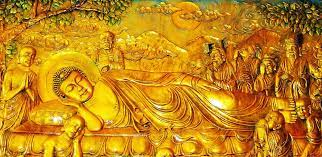
The Buddha listed his Three Marks of Existence  as impermanence (anicca), suffering (dukkha) and the absence of permanent identity or a soul (anatta). We are freed from the pain of clutching for permanence only if the acceptance of continual change is driven into our very marrow.

The Buddha’s total outlook on life is as difficult to be certain of as that of any personage in history. Part of the problem stems from the fact that, like most ancient teachers, he wrote nothing. There is a gap of almost a century and a half between his spoken words and the first written records, and though memory in those times appears to have been incredibly faithful, a gap of that length is certain to raise questions. A second problem arises from the wealth of material in the texts themselves. Buddha taught for forty-five years, and a staggering corpus has come down to us in one form or another. While the net result is doubtless a blessing, the sheer quantity of materials is bewildering; for though his teachings remained remarkably consistent over the years, it was impossible to say things for many minds and in many ways without creating problems of interpretation. These interpretations constitute the third barrier. By the time texts began to appear, partisan schools had sprung up, some intent on minimizing the Buddha’s break with Brahmanic Hinduism, others intent on sharpening it. This makes scholars wonder how much in what they are reading is the Buddha’s actual thought and how much is partisan interpolation.

We are not certain how much we are reading is the Buddha’s actual thought and how much is partisan interpolation.

Undoubtedly, the most serious obstacle to the recovery of the Buddha’s rounded philosophy, however, is his own silence at crucial points. We have seen that his burning concerns were practical and therapeutic, not speculative and theoretical. Instead of debating cosmologies, he wanted to introduce people to a different kind of life. It would be wrong to say that theory did not interest him. His dialogues show that he analyzed certain abstract problems meticulously; that he possessed, indeed, a brilliant metaphysical mind. It was on principle that he resisted philosophy, as someone with a sense of mission might shun hobbies as a waste of time. 

Buddha’s burning concerns were practical and therapeutic, not speculative and theoretical. But his silence at crucial points is puzzling.

His decision makes so much sense that it may seem a betrayal to insert a section like this one, which tries forthrightly to identify—and to some extent define—certain key notions in the Buddha’s outlook. In the end, however, the task is unavoidable for the simple reason that metaphysics is unavoidable. Everyone harbors some notions about ultimate questions, and these notions affect interpretations of subsidiary issues. The Buddha was no exception. He refused to initiate philosophical discussions, and only occasionally did he let himself be pried from his “noble silence” to engage in them, but certainly he had views. No one who wishes to understand him can escape the hazardous task of trying to discover what they were. 

Buddha refused to initiate philosophical discussions, and only occasionally did he let himself be pried from his “noble silence” to engage in them, but certainly he had views.

We may begin with nirvana, the word the Buddha used to name life’s goal as he saw it. Etymologically it means “to blow out,” or “to extinguish,” not transitively, but as a fire ceases to draw. Deprived of fuel, the fire goes out, and this is nirvana. From such imagery it has been widely supposed that the extinction to which Buddhism points is complete, total annihilation. If this were so there would be grounds for the accusation that Buddhism is life-denying and pessimistic. As it is, scholars of the last half-century have exploded this view. Nirvana is the highest destiny of the human spirit and its literal meaning is extinction, but we must be precise as to what is to be extinguished. It is the boundaries of the finite self. It does not follow that what is left will be nothing. Negatively, nirvana is the state in which the faggots of private desire have been completely consumed and everything that restricts the boundless life has died. Affirmatively, it is that boundless life itself. Buddha parried every request for a positive description of the unconditioned, insisting that it was “incomprehensible, indescribable, inconceivable, unutterable”; for after we eliminate every aspect of the only consciousness we have known, how can we speak of what is left? One of Buddha’s heirs, Nagasena, preserves this point in the following dialogue. Asked what nirvana is like, Nagasena countered with a question of his own: 

“Is there such a thing as wind?”
“Yes, revered sir.”
“Please, sir, show the wind by its color or configuration or as thin or thick or long or short.”
“But it is not possible, revered Nagasena, for the wind to be shown; for the wind cannot be grasped in the hand or touched; yet wind exists.”
“If, sir, it is not possible for the wind to be shown, well then, there is no wind.”
“I, revered Nagasena, know that there is wind; I am convinced of it, but I am not able to show the wind.”
“Even so, sir, nirvana exists; but it is not possible to show nirvana.”

Buddha maintained that Nirvana is incomprehensible, indescribable, inconceivable, unutterable. [NOTE: Etymologically nirvana means “to blow out,” or “to extinguish.” This could refer to the “blowing out of all prior considerations or preconceived notions.”]

Our final ignorance is to imagine that our final destiny is conceivable. All we can know is that it is a condition that is beyond—beyond the limitations of mind, thoughts, feelings, and will, all these (not to mention bodily things) being confinements. The Buddha would venture only one affirmative characterization. “Bliss, yes bliss, my friends, is nirvana.” 

The Buddha would venture only one affirmative characterization. “Bliss, yes bliss, my friends, is nirvana.” 

Is nirvana God? When answered in the negative, this question has led to opposite conclusions. Some conclude that since Buddhism professes no God, it cannot be a religion; others, that since Buddhism obviously is a religion, religion doesn’t require God. The dispute requires that we take a quick look at what the word “God” means. 

Buddhism forces one to look carefully at the meaning of “God”.

Its meaning is not single, much less simple. Two meanings must be distinguished for its place in Buddhism to be understood. 

One meaning of God is that of a personal being who created the universe by deliberate design. Defined in this sense, nirvana is not God. The Buddha did not consider it personal because personality requires definition, which nirvana excludes. And while he did not expressly deny creation, he clearly exempted nirvana from responsibility for it. If absence of a personal Creator God is atheism, Buddhism is atheistic. 

If God is defined as a “personal creator” then Buddhism is atheistic. 

There is a second meaning of God, however, which (to distinguish it from the first) has been called the Godhead. The idea of personality is not part of this concept, which appears in mystical traditions throughout the world. When the Buddha declared, “There is, O monks, an Unborn, neither become nor created nor formed…. Were there not, there would be no deliverance from the formed, the made, the compounded,” he seemed to be speaking in this tradition. Impressed by similarities between nirvana and the Godhead, Edward Conze has compiled from Buddhist texts a series of attributes that apply to both. We are told

that Nirvana is permanent, stable, imperishable, immovable, ageless, deathless, unborn, and unbecome, that it is power, bliss and happiness, the secure refuge, the shelter, and the place of unassailable safety; that it is the real Truth and the supreme Reality; that it is the Good, the supreme goal and the one and only consummation of our life, the eternal, hidden and incomprehensible Peace.

We may conclude with Conze that nirvana is not God defined as personal creator, but that it stands sufficiently close to the concept of God as Godhead to warrant the name in that sense.

If God is defined as “Godhead” (the idea of personality is not part of this concept) that is unborn, uncreated and without form, then Buddhism is the truest religion.

The most startling thing the Buddha said about the human self is that it has no soul. This anatta (no soul) doctrine has again caused Buddhism to seem religiously peculiar. But again the word must be examined. What was the atta (Pali for the Sanskrit Atman or soul) that the Buddha denied? At the time it had come to signify (a) a spiritual substance that, in keeping with the dualistic position in Hinduism, (b) retains its separate identity forever. 

Buddha denied the existence of soul—that aspect of self, which retains its separate identity forever.

Buddha denied both these features. His denial of spiritual substance—the soul as homunculus, a ghostly wraith within the body that animates the body and outlasts it—appears to have been the chief point that distinguished his concept of transmigration from prevailing Hindu interpretations. Authentic child of India, the Buddha did not doubt that reincarnation was in some sense a fact, but he was openly critical of the way his Brahmanic contemporaries interpreted the concept. The crux of his criticism may be gathered from the clearest description he gave of his own view on the subject. He used the image of a flame being passed from candle to candle. As it is difficult to think of the flame on the final candle as being the original flame, the connection would seem to be a causal one, in which influence was transmitted by chain reaction but without a perduring substance. 

The Buddha did not doubt that reincarnation was in some sense a fact, but to him it was like a flame being passed from candle to candle. Here influence was transmitted by chain reaction but without a perduring substance, much like the DNA passing various characteristics from one generation to the next.

When to this image of the flame we add the Buddha’s acceptance of karma, we have the gist of what he said about transmigration. A summary of his position would run something like this: (1) There is a chain of causation threading each life to those that have led up to it, and to those that will follow. Each life is in its present condition because of the way the lives that led up to it were lived. (2) Throughout this causal sequence the will remains free. The lawfulness of things makes the present state the product of prior acts, but within the present the will is influenced but not controlled. People remain at liberty to shape their destinies. (3) The two preceding points affirm the causal connectedness of life, but they do not entail that a substance of some sort be transmitted. Ideas, impressions, feelings, streams of consciousness, present moments—these are all that we find, no spiritual substrate. Hume and James were right: If there is an enduring self, subject always, never object, it never shows itself.

Buddha’s acceptance of karma is consistent with the transmission of influence from one life to the next, as in the sense of the transmission of DNA programming.

An analogy can suggest the Buddha’s views of karma and reincarnation in a supporting way. (1) The desires and dislikes that influence the contents of my mind—what I pay attention to and what I ignore—have not appeared by accident; they have definite lineages. In addition to attitudes that I have taken over from my culture, I have formed mental habits. These include cravings of various sorts, tendencies to compare myself with others in pride or envy, and dispositions toward contentment and its opposite, aversion. (2) Although habitual reactions tend to become fixed, I am not bound by my personal history; I can have new ideas and changes of heart. (3) Neither the continuity nor the freedom these two points affirm requires that thoughts or feelings be considered entities—things, or mental substances that are transported from mind to mind, or from moment to moment. Acquiring a concern for justice from my parents did not mean that a substance, however ethereal and ghostlike, leapt from their heads into mine. 

Our tendencies, attitudes and mental habits have lineages, but these are not permanent substances that are transported from mind to mind. We are not bound by them.

This denial of spiritual substance was only an aspect of Buddha’s wider denial of substance of every sort. Substance carries both a general and a specific connotation. Generally, it refers to something relatively permanent that underlies surface changes in the thing in question; specifically, this more basic something is thought to be matter. The psychologist in Buddha rebelled against the latter notion, for to him mind was more basic than matter. The empiricist in him, for its part, challenged the implications of a generalized notion of substance. It is impossible to read much Buddhist literature without catching its sense of the transitoriness (anicca) of everything finite, its recognition of the perpetual perishing of every natural object. It is this that gives Buddhist descriptions of the natural world their poignancy. “The waves follow one after another in an eternal pursuit.” Or,

Life is a journey.
Death is a return to the earth.
The universe is like an inn.
The passing years are like dust.

Substance refers to something relatively permanent that underlies surface changes in the thing in question, but there is no substance that may be considered absolutely permanent or everlasting. The only thing that comes closest to being permanent is the impulse to evolve.

The Buddha listed impermanence (anicca) as the first of his Three Marks of Existence—characteristics that apply to everything in the natural order—the other two being suffering (dukkha) and the absence of permanent identity or a soul (anatta). Nothing in nature is identical with what it was the moment before; in this the Buddha was close to modern science, which has discovered that the relatively stable objects of the macro-world derive from particles that barely exist. To underscore life’s fleetingness the Buddha called the components of the human self skandas—skeins that hang together as loosely as yarn—and the body a “heap,” its elements no more solidly assembled than grains in a sandpile. But why did the Buddha belabor a point that may seem obvious? Because, he believed, we are freed from the pain of clutching for permanence only if the acceptance of continual change is driven into our very marrow. Followers of the Buddha know well his advice:

Regard this phantom world
As a star at dawn, a bubble in a stream,
A flash of lightning in a summer cloud,
A flickering lamp—a phantom—and a dream.

The Buddha listed his Three Marks of Existence  as impermanence (anicca), suffering (dukkha) and the absence of permanent identity or a soul (anatta). We are freed from the pain of clutching for permanence only if the acceptance of continual change is driven into our very marrow.

Given this sense of the radical impermanence of all things finite, we might expect the Buddha’s answer to the question “Do human beings survive bodily death?” to be a flat no, but actually his answer was equivocal. Ordinary people when they die leave strands of finite desire that can only be realized in other incarnations; in this sense at least these persons live on. But what about the Arhat, the holy one who has extinguished all such desires; does such a one continue to exist? When a wandering ascetic put this question, the Buddha said:

“The word reborn does not apply to him.”
“Then he is not reborn?”
“The term not-reborn does not apply to him.”
“To each and all of my questions, Gotama, you have replied in the negative. I am at a loss and bewildered.”
“You ought to be at a loss and bewildered, Vaccha. For this doctrine is profound, recondite, hard to comprehend, rare, excellent, beyond dialectic, subtle, only to be understood by the wise. Let me therefore question you. If there were a fire blazing in front of you, would you know it?”
“Yes, Gotama.”
“If the fire went out, would you know it had gone out?”
“Yes.”
“If now you were asked in what direction the fire had gone, whether to east, west, north, or south, could you give an answer?”
“The question is not rightly put, Gotama.”

Whereupon Buddha brought the discussion to a close by pointing out that “in just the same way” the ascetic had not rightly put his question. “Feelings, perceptions, forces, consciousness—everything by which the Arhat might be denoted has passed away for him. Profound, measureless, unfathomable, is the Arhat even as the mighty ocean; reborn does not apply to him nor not-reborn, nor any combination of such terms.”

Born and not-reborn are the two ends of a dimension that applies to the average person. This dimension simply does not apply to an Arhat, who has extinguished all desires, feelings, perceptions, forces, and consciousness.

It contributes to the understanding of this conversation to know that the Indians of that day thought that expiring flames do not really go out but return to the pure, invisible condition of fire they shared before they visibly appeared. But the real force of the dialogue lies elsewhere. In asking where the fire, conceded to have gone out, had gone, the Buddha was calling attention to the fact that some problems are posed so clumsily by our language as to preclude solution by their very formulation. The question of the illumined soul’s existence after death is such a case. If the Buddha had said, “Yes, it does live on,” his listeners would have assumed the persistence of our present mode of experiencing, which the Buddha did not intend. On the other hand, if he had said, “The enlightened soul ceases to exist,” his hearers would have assumed that he was consigning it to total extinction, which too he did not intend. On the basis of this rejection of extremes we cannot say much with certainty, but we can venture something. The ultimate destiny of the human spirit is a condition in which all identification with the historical experience of the finite self will disappear, while experience as such not only remains but is heightened beyond recognition. As an inconsequential dream vanishes completely on awakening, as the stars go out in deference to the morning sun, so individual awareness will be eclipsed in the blazing light of total awareness. Some say, “The dewdrop slips into the shining sea.” Others prefer to think of the dewdrop as opening to receive the sea itself. 

The ultimate destiny of the human spirit is a condition in which all identification with the historical experience of the finite self will disappear, while experience as such not only remains but is heightened beyond recognition.

If we try to form a more detailed picture of the state of nirvana, we shall have to proceed without the Buddha’s help, not only because he realized almost to despair how far the condition transcends the power of words, but also because he refused to wheedle his hearers with previews of coming attractions. Even so, it is possible to form some notion of the logical goal toward which his Path points. We have seen that the Buddha regarded the world as one of lawful order in which events are governed by the pervading law of cause and effect. The life of the Arhat, however, is one of increasing independence from the causal order of nature. It does not violate that order, but the Arhat’s spirit grows in autonomy as the world’s hold decreases. In this sense the Arhat is increasingly free not only from the passions and worries of the world but also from its happenings in general. With every growth of inwardness, peace and freedom replace the turbulent bondage of those whose lives are prey to circumstance. As long as spirit remains tied to body, its freedom from the particular, the temporal, and the changing cannot be complete. But sever this connection with the Arhat’s final death, and freedom from the finite will be complete. We cannot imagine what the state would be like, but the trajectory toward it is discernible. 

We cannot imagine what the state would be like, but the trajectory toward it is discernible. The Arhat’s spirit grows in autonomy as the world’s hold decreases.

Spiritual freedom brings largeness of life. The Buddha’s disciples sensed that he embodied immeasurably more of reality—and in that sense was more real—than anyone else they knew; and they testified from their own experience that advance along his path enlarged their lives as well. Their worlds seemed to expand, and with each step they felt themselves more alive than they had been before. As long as they were limited by their bodies, there were limits beyond which they could not go; but if all ties were loosed, might not they be completely free? Once more, we cannot concretely imagine such a state, but the logic of the progression seems clear. If increased freedom brings increased being, total freedom should be being itself.

A thousand questions remain, but the Buddha is silent.
Others abide our questions. Thou are free.
We ask and ask; thou smilest and art still.

If increased freedom brings increased being, total freedom should be being itself.

.
TROM: Glossary

Reference: Course on Subject Clearing
Reference: TROM: The Full Package

NOTE: This is a Subject Clearing Version of TROM
(This is a work in progress)

.

Glossary

BEING
TROM says, “A life form is an aggregation of cellular life organized and directed by ‘higher’ life in a hierarchy that leads up to the being who answers up when his name is called. He is the one who does the exercises.” That “being” is nothing but a system of flexible but consistent postulates that has the goal of evolving. Thus, there is a curiosity to know; but, at the same time there is an inertia to knowing new things. 

BLAME
After the loss of a game considered serious, the loser’s only recourse is to blame the victor for overwhelming him. Thus, blame is the assignment of responsibility for the outcome of a game, with an implied wrongness.

BODY
TROM says, “If you walk this route far enough you will one day walk away and leave this ape (human body), but you will never be free of him until you understand him intimately.” This “ape” is nothing but an aspect of the “being”. It is gross ignorance not to see the oneness of “being-mind-body” in terms of an integrated system. Mind and body are incorrectly targeted for what is wrong with the being. There is never a separation of the being from the body.

COMPLEMENTARY POSTULATE
Complementary postulates, when applied, have the ability to dissolve all games.

CONVICTION
Conviction, by definition, is an enforcement of knowingness. This is also called importance. All games contain conviction.

DUALITY
The Law of Duality states that the assignment of importance to a thing automatically assigns importance to the opposite or absence of that thing. Thus, if life is considered important, then death – the absence of life – has also been granted importance. If the concept of ‘self ’ is considered important, then the concept of ‘not-self ’ is thereby also granted importance. From this law we see the proliferation and self-perpetuating nature of games.

EFFECT
That which is brought into existence, taken out of existence, known or not-known

EVALUATION
The evaluation of things, one against the other, is achieved by the noting of differences and similarities between them.

GAME
A game is a play between conflicting postulates. The playing of the game is senior to the consideration of win/lose. The postulation of “self” and “other,” itself, is a basic game. It is a law of all games that overwhelming failure causes the being to compulsively adopt the pan-determined postulate of his opponent. 

GUILT
If the victor accepts this blame he feels guilt. Thus, blame and guilt are seen as two sides of the same coin: where one is present you will always find the other. They are a pair, and are quite inseparable.

IMPORTANCE
Enforcement of knowingness is called importance. Importance is the basis of all significance. Essentially, importance is a “must.” That which is considered important tends to persist and to become more solid. That which is persisting and solid is tended to be regarded as important. Any importance is relative to, and can be evaluated against, any other importance. There is no absolute importance. The search for deeper significance into life or the mind is only the search for prior or greater importance. In that all importance is relative to all other importance it is both a fruitless and endless search. Due to their intrinsic nature, past importances have a command power over the person in the present. 

LOSS
Failure to convince the opponent of one’s postulate, and being convinced of his postulate.

MIND
The mind is best considered as a collection of past importances. The person is in a games condition with his own mind. He is trying to devalue his mind instead of making a re-evaluation of past importances. As the various past importances are contacted and re-evaluated to present time realities, the mind will be found to become progressively less persisting and less and less solid, and will finally vanish. Nevertheless, the person can, at any time, by re-injecting sufficient fresh importance into any part of it, cause it to reappear in any desired solidity. When this stage is reached the mind will no longer have a command power over the person, and his full abilities will be restored.

MOTIVATOR
Having one’s own postulates overwhelmed is called a motivator. It is an act received that is considered considered harmful. It is used as a justifier for one’s own condition and actions.

NIRVANA 
From the compulsive playing of games, through the voluntary playing of games to an ending of all games by the adoption of complementary postulates and so the achieving of a non-game situation. This is Nirvana.

NOW
A person can only communicate across a distance. He cannot communicate through time. So when he is looking at a ‘then’ he is looking at it now. Whatever he looks at, he looks at now.Any changes he makes are changes in ’now’ and not in ‘then’.

OVERRUN 
Overrun is going past the point of erasure. Overrun symptoms are confusion, unwellness, missemotion etc. 

OVERT ACT
An act committed, considered harmful, and justified. Overwhelming the postulate of an opponent in a game is an overt act.

OVERWHELM
Overwhelm is a postulate failure. Overwhelm comes with complete loss in a game.

PAN DETERMINISM (PD)
The “other’s” postulate is the one you put at the other end of the comm line, and is called the pan-determined postulate (PD). It is determining the action of self and others (non-self).

PLAY
Keeping the game in play is more valuable than ending the game by winning or losing it. This is true only when this is the ultimate game, and there are no other games to play.

POSTULATE
A postulate is a self-created truth based on which further reasoning is done. The purpose of postulate is to give form to the unknowable to fill the gaps in the knowable. The postulate may develop into a system of postulates and theories. Everything that we know is based on this system of postulates. To be valid, a postulate must be consistent with all other postulates. 

POSTULATE FAILURE CYCLE
Start at 1. Failure against 4. Keep one’s valence, but change the flow from 1 to 2. Failure against 3. Shift valence to 3. Failure against 2. Keep one’s valence, but change flow from 3 to 4. Failure against 1. Shift valence to 1, but with a substitute effect.

PT 
Present Time – now! 

REALITY
Ideally, reality is made up of postulates that are continuous, consistent and harmonious with each other, and, therefore, they have acquired the quality of ONENESS. This is the basis of evolution.

RI 
Repair of Importances 

SELF
Looking at the motivators of a person you can recognize his “type of self.” You can then predict the type of overts being committed by that person. The theory of TROM tells you how the person acquired that type of self, so you can go about resolving it.

SELF DETERMINISM (SD)
The “self” postulate is at one’s own end of the comm line, and is called the self-determined postulate (SD). It is determining the action of self.

SERVICE EFFECT
Something which the being presses into service in life to aid him in the playing of games.

“THE LONG NIGHT OF THE SOUL”
The endless ransacking of the mind in search of prime cause.

TIME
All motion in this universe is cyclic. When something continues, then the changes in it follow a continuous, consistent and harmonious pattern. This progression is called time. It allows a present moment to be traced back very precisely to a past moment. When a past moment is compared to the present moment by putting the two scenes side by side, any anomaly becomes quite obvious. The awareness then quickly sorts out the anomaly.

TIMEBREAKING
Timebreaking is the action of simultaneously viewing a ‘then’ and a ‘now’ moment side by side. This awareness quickly evaluates if any anomalies are present between the postulates of the past and present moments. The sorting out of anomalies also removes any command power of the past moment over the mind. This does not change either the past or the present. It only clarifies your view of these past and the present moments. When we use the term ‘timeless’ for a being (viewpoint), it simply means that the being can see the progression of time just as it is, free of anomalies.

TROM
TROM is an acronym for ‘The Resolution of Mind’. It is basically a compact system of restimulating deeper levels of the mind, in order to become aware of its deep content.

UPPER LEVELS
The whole purpose of “upper levels” in any system of processing of the mind is to find and resolve all rigid impressions of fixations. Dianetics calls such ultimate rigid impressions “engrams.” Scientology calls the ultimate rigid impressions “GPMs.” TROM calls such ultimate rigid impressions “compulsive postulates.” Subject Clearing the rigid impressions as “inconsistencies” or “anomalies.” In the wake of such resolutions we have more accurately determined postulates, definitions and their logical order.

VALENCE
An identity assumed unwittingly (in games play). The word valence is derived from the Latin word for power. A being assumes a valence in an effort to obtain its real or imagined power. 

VALUE
The greater is the value of the postulate, the more serious is the game.

WIN
Convincing the opponent of one’s postulate.

WIN / LOSE
If the game is relatively trivial, then win/lose is applied. When a game becomes serious, then overt/motivator is applied. TROM says that “to always win is no fun.” But there are always bigger and more challenging games to play. So there is no end to fun. The significant consideration is what one does after a failure.

.

CHRISTIANITY: The Mystical Body of Christ

Reference: Christianity

[NOTE: In color are Vinaire’s comments.]

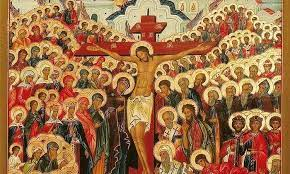
If Christ was the head of this body and the Holy Spirit its soul, individual Christians were its cells, few at first but increasing as the body came of age. 

The first Christians who spread the Good News throughout the Mediterranean world did not feel themselves to be alone. They were not even alone together, for they believed that Jesus was in their midst as a concrete, energizing power. They remembered that he had said, “Where two or three are gathered in my name, I am there among them” (Matthew 18:20). So, while their contemporaries were nicknaming them Christians (literally the Messiah-folk, because they believed Jesus to be the Redeemer the prophets foretold), they began to call themselves an ekklesia, a Greek word that means literally “called out,” or “called apart.” The choice of this name points up how unlike a self-help society the early Christian community thought it was. It was no human association in which people of goodwill banded together to encourage one another in good works and lift themselves by their collective bootstraps. Human members constituted it, but it was powered by Christ’s—which is to say God’s—presence within it, though that presence was now spiritual and no longer visible. 

The first Christians, who spread the Good News throughout the Mediterranean world, believed that Jesus was in their midst as a concrete, energizing power. 

Completely convinced of this, the disciples went out to possess a world they believed God had already possessed for them. Images came to mind to characterize the intense corporate identity they felt. One of these came from Christ himself: “I am the vine, you are the branches.” This is obviously a metaphor, but we shall miss its force unless we see the exact sense in which the early Church read it. Just as a physical substance flows through the vine, entering its branches, leaves, and fruit to bring life to them, so a spiritual substance, the Holy Spirit, was flowing from the resurrected Christ into his followers, empowering them with the love that bore good works as its fruit. (The earliest Christians regarded the Holy Spirit as Christ/God’s empowering presence in the world. By the fourth century that presence had assumed a spiritual identity of its own and was identified as the third person of the triune God and was judged to be consubstantial and co-eternal with God the Father and God the Son, Christ.) This was the way Jesus’ followers read his own statement of the matter: “I am the true vine…. Abide in me as I abide in you. Just as the branch cannot bear fruit by itself unless it abides in the vine, neither can you unless you abide in me” (John 15:1, 4). 

It was believed that a spiritual substance, the Holy Spirit, was flowing from the resurrected Christ into his followers, empowering them with the love that bore good works as its fruit. 

Saint Paul adapted Christ’s image by using the human body instead of a vine to symbolize the Church. This preserved the vine’s image of a central life-substance that animated its parts, while allowing for greater diversity than branches and leaves suggest. Though the offices and talents of individual Christians might differ as much as eyes and feet, Paul argued, all are animated by a single source. “For as in one body we have many members, so we who are many, are one body in Christ”–Christ and Church being synonymous here (Romans 12:4–5). 

Christ’s image was adapted to symbolize the whole body of Christian believers, the Church.

This seemed to the early Christians to be the completely apposite image for their corporate life. The Church was the Mystical Body of Christ. Mystical here meant supernatural and mysterious, but not unreal. The human form of Christ had left the earth, but he was continuing his uncompleted mission through a new physical body, his Church, of which he remained the head. This Mystical Body came to life in the “upper room” in Jerusalem at Pentecost through the animating power of the Holy Spirit. For “what the soul is to the body of man,” Saint Augustine was to write, “that the Holy Spirit is to the Body of Christ, which is the Church.” 

For “what the soul is to the body of man,” Saint Augustine was to write, “that the Holy Spirit is to the Body of Christ, which is the Church.” 

If Christ was the head of this body and the Holy Spirit its soul, individual Christians were its cells, few at first but increasing as the body came of age. The cells of an organism are not isolates; they draw their life from the enveloping vitality of their hosts, while at the same time contributing to that vitality. The analogy is exact. The aim of Christian worship was to say those words and do those things that kept the Mystical Body alive, while at the same time opening individual cells, souls, to its inflowing vitality. The transaction literally “incorporated” Christians into Christ’s person, for in an important sense Christ now was the Church. In any given Christian the divine life might be flowing fully, partially, or not at all according to whether his or her faith was vital, perfunctory, or apostate, the latter condition being comparable to paralysis. Some cells might even turn cancerous and turn on their host—these are the Christians Paul speaks of as bringing disrepute upon the Church by falling into scandal. But to the degree that members were in Christian health, the pulse of the Holy Spirit coursed through them. This bound Christians to one another and at the same time placed them in the closest conceivable relation to Christ himself. “Do you not know that your bodies are members of Christ?” (1 Corinthians 6:15). “It is no longer I who live, but it is Christ who lives in me” (Galatians 2:20). 

The aim of Christian worship was to say those words and do those things that kept the Mystical Body alive, while at the same time opening individual cells, souls, to its inflowing vitality. 

Building upon this early conception of the Church, Christians came to think of it as having a double aspect. Insofar as it consists of Christ and the Holy Spirit dwelling in people and suffusing them with grace and love, it is perfect. Insofar as it consists of fallible human members, it always falls short of perfection. The worldly face of the Church is always open to criticism. But its mistakes, Christians hold, have been due to the human material through which it works. 

The worldly face of the Church is always open to criticism. But its mistakes, Christians hold, have been due to the human material through which it works. 

In what sense there is salvation apart from the Body of Christ is a question on which Christians differ. Some Protestant liberals reject completely Christianity’s historic claim that “there is no salvation outside the Church” as indicative of religious imperialism. At the other extreme are fundamentalists who insist that no one but those who are knowingly and formally Christians will be saved. Other Christians, however, answer the question by drawing a distinction between the Church Visible and the Church Invisible. The Church Visible is composed of those who are formally members of the Church as an earthly institution. Pope Pius IX spoke the views of the majority of Christians when he rejected membership in the Church Visible as indispensable to salvation. “Those who are hampered by invincible ignorance about our Holy Religion,” he said,

and, keeping the natural law, with its commands that are written by God in every human heart, and being ready to obey him, live honorably and uprightly, can, with the power of Divine light and grace helping them, attain eternal life. For God, who clearly sees, searches out, and knows the minds, hearts, thoughts, and dispositions of all, in his great goodness and mercy does not by any means suffer a man to be punished with eternal torments, who is not guilty of voluntary faults.

Pope Pius IX spoke the views of the majority of Christians when he rejected membership in the Church Visible as indispensable to salvation.

This statement clearly allows for those who are not members of the Church Visible to be saved. Beyond the Church Visible stands the Church Invisible, composed of all who, whatever their formal persuasion, follow as best they are able the lights they have. Most Christians continue to affirm that in this second meaning of the Church there is no salvation apart from it. Most of them would add to this their belief that the divine life pulses more strongly through the Church Visible than through any alternative institution. For they concur with the thought John Donne put poetically in his sonnet on the Resurrection, where he says of Christ,

He was all gold when He lay down, but rose All tincture….

Beyond the Church Visible stands the Church Invisible, composed of all who, whatever their formal persuasion, follow as best they are able the lights they have.

Donne was referring to the alchemists, whose ultimate hope was to discover not a way of making gold but a tincture that would transmute into gold all the baser metals it touched. A Christian is someone who has found no tincture equal to Christ.

A Christian is someone who has found no tincture equal to Christ.

.

TROM: Understanding Level 5

Reference: Course on Subject Clearing
Reference: TROM: The Full Package

NOTE: This is a Subject Clearing Version of TROM

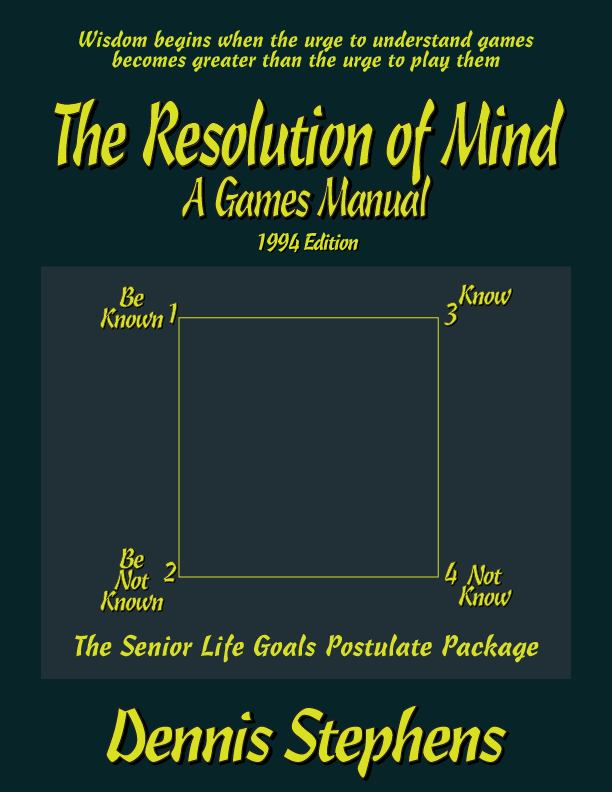
TROM lays out the goal package for an effect, such as, “love,” as follows:

  1. To Make known [love]
  2. To Make not-known [love]
  3. To Know [love]
  4. To Not-know [love]

The goal package becomes much clearer if we change the wordings as follows:

  1. To manifest [love]
  2. To hide [love]
  3. To know [love]
  4. To forget [love]

(1) – (3) and (2) -(4) are complementary.
(1) – (4) and (2) – (3) are contradictory.

Game starts with the effect brought into play with (1) To manifest [love]. 

.

Postulate Failure

A person may go through progressive postulate failure round the four legs of the basic game as follows:

Leg 1… manifest an effect

  1. Forcing to know. (overt)…… Infliction
  2. Prevented from manifesting (Motivator) …… Rejection

Leg 2… hide that effect

  1. Preventing from knowing. (overt)…… Deprivation
  2. Forced to manifest (motivator)…… Revelation

Leg 3 … know that effect

  1. Forcing to manifest. (overt)……. Revelation
  2. Prevented from knowing. (motivator)…… Deprivation

Leg 4 … forget that effect

  1. Preventing from manifesting. (overt)…… Rejection
  2. Forced to know. (motivator)……. Infliction

Leg 1 commits the overt of Infliction, and suffers the motivator of rejection. Leg 2) commits the overt of Deprivation, and suffers the motivator of Revelation. Leg 3) commits the overt of Revelation, and suffers the motivator of Deprivation. Leg 4) commits the overt of Rejection, and suffers the motivator of Infliction.

According to the graphic on the top:

From (1) to (2) and from (3) to (4) one goes through a reversal of flow.
From (2) to (3) and from (4) to (1) one goes through a shift in valence. 

After these failures no further game with the original effect is any longer playable. He must shift to another effect.

.

Personality

Personality of a person stuck on Leg 1:
Must manifest an effect. Outflowing. Extrovert. Persuasive. Creative. Often prone to jealousy. Overts by infliction, and very upset by rejection. He got into this leg by being overwhelmed by somebody who must manifest an effect, whose valence he now occupies.

Personality of a person stuck on Leg 2:
Must hide that effect. Restrained outflow. Retiring. Devious. Secretive. Obsessed by ‘privacy’. Tends to collect mass and wealth by the simple expedient of not being able to outflow it. Overts by deprivation, and very worried by the thought of their secret wheeler-dealings being revealed. He got into this leg by being overwhelmed by somebody who must hide that effect while being in Leg 1; he now dramatizes the must hide that effect PD postulate of his overwhelmer.

Personality of a person stuck on Leg 3:
Must know that effect. Inflow. Nosey. Curious. Inclined to he highly sensual. Demands open comm lines. Hates secrets, and loves exposing them. Good solver of puzzles. Overts by revelation, and just hates being deprived of things. He got into this leg by being overwhelmed by somebody who must know that effect, whose valence he now occupies.

Personality of a person stuck on Leg 4:
Must forget that effect. Restrained inflow. Rejection. Compulsively makes nothing out of things. Destructive. Overts by rejection, and dreads having anything inflicted upon him. Contrary to popular opinion he did not get this way by having things forced upon him. He got into this leg by being overwhelmed by somebody who must forget that effect while being in Leg3; he now dramatizes the must forget that effect PD postulate of his overwhelmer. He’s been overwhelmed by deprivation.

.

Resolution

Mind is a repository of postulates in conflict. We resolve these conflicts by progressively getting the person:

  1. To create and exercise complementary and conflicting postulates
  2. To create and experience overt and motivator overwhelms
  3. To play games, and generally bring back these four basic postulates under his own determinism both as SD and PD

To remove the command power of any effect from the mind it is only necessary to discharge these various overts and motivators where they appear on the time track.

.

TROM: How to Run

Reference: Course on Subject Clearing
Reference: TROM: The Full Package

NOTE: This is a Subject Clearing Version of TROM

TROM (The Resolution of Mind) is a system derived from Scientology that simplifies the handling of the mind. It was put together by Dennis Stephens in the late seventies. The main feature of this system is that it can be applied to oneself without requiring the assistance of an auditor or E-meter. 

The TROM routine consists of 5 levels. The first one is not always necessary except in a few cases, when a person requires his attention to be stabilized in the present time. Only then, one requires the assistance of an experienced auditor. But the other levels, one can do entirely on one’s own. On these levels, one is basically handling one’s postulates that happen to be in conflict. 

It should understood that a person, basically, is a system of postulates; and, he is handling conflicts within himself.

The key word here is POSTULATE, and it is defined as follows:

A postulate is a self-created truth based on which further reasoning is done. The purpose of postulate is to give form to the unknowable to fill the gaps in the knowable. The postulate may develop into a system of postulates and theories. Everything that we know is based on this system of postulates. To be valid, a postulate must be consistent with all other postulates. 

.

Five Levels of TROM

The five levels of TROM are described below. Before you start running these exercises make sure you have completed the section”The Fundamentals” from the Course on Subject Clearing

.

LEVEL ONE 

TROM Level One is the only level that requires another person to run CCH processes on you. These are exercises devoted to improving the reality of the present time. The CCH processes may be found at Grade 1 Exercises. An average person is in pretty good contact with the reality of present time. He may not need this level. 

.

THE REPAIR OF IMPORTANCES (RI)

This is a simple exercise that one should familiarize oneself. Application of this exercise brings relief whenever the going gets rough in your solo work on the subsequent levels. The purpose of this exercise is to replace the old mass (importance) with mass of your own creation.

Commands: 

a) Bring something into existence. 
b) Have another bring something into existence.

Alternate commands: 

a) Create something. 
b) Have another create something.

The simplest creation is just getting an idea. Next level of creation is the visualization of something. The ultimate level of creation is postulating.

Third alternative: 

a) Create an importance. 
b) Have another create an importance.

A simple version is “RI by perception”:

Grasp a solid object with your hands and feel its solidity, temperature, and texture.

All the above commands are done repetitively, one command at a time. The gain is to see things as they are in present time.

.

LEVEL TWO 

These are exercises devoted to the discovery of the past. One compares a past scene to the present to evaluate it properly. It helps one get rid of past repressions and inhibitions by becoming fully aware of them. Compare the “objects” first and then “persons” and “places.”

Commands:

a) Select a past scene. 
b) Select an object from this scene.
c) Find an object in pt (one you can see with your eyes) that is different from the past object.
d) How is it different?

Repeat c) and d) (Its permissible to use the same pt object over and over again if you wish) until no more change; then:

e) Find an object in pt (one you can see with your eyes) that is similar to the object in the past scene.
f) How is it similar?

Repeat e) and f) until no more change, then repeat c) and d). Continue until both c) and d), and e) and f) produce no more change.

g) Select a new past object, either from the same past scene or a different one.

Repeat c) and d), then e) and f) with this new past object until no more change.

Continue the exercise, using more and more significant past objects, until no more change occurs with any past object you care to select. Now do the exercise with past persons. Select them one at a time, and complete the exercise with each person. Continue until no more change occurs with any past person you care to select. Repeat the exercise with “places.” Whenever you start feeling heavy on this level, use the “RI” exercise.

.

LEVEL THREE 

On this level you learn to “timebreak.” Timebreaking is the simultaneous viewing of ‘then’ and ‘now’. Here you view past and present scene as if they are together in the same moment of time. One can then get a true evaluation of their relative importance.

Every so often you’ll come across a scene that just will not Timebreak. Not to worry. Just roll up your sleeves and drop back to Level Two regarding it and start finding some differences and similarities between the scene and present time. There’s something in that scene more than what meets the casual gaze. Suddenly it will flip out easily. Run a bit of RI at this point. 

Commands:

a) Select a past scene. Become simultaneously aware of the scene and pt around you. 
b) Don’t try and Timebreak all of the scene at once. Take it a bit at a time. 
c) Continue to do this until the past scent ‘fades’ – i.e.. begins to ‘fall away’ in intensity compared to present time.
b) Select a new past scene, and repeat a) b) and c).

The nice thing here is that one is staying in the present time, and not diving into the past as in Dianetics. Thus, there is no liability of getting stuck in the past. Use RI exercise liberally when needed.

.

LEVEL FOUR 

These exercises are devoted to the discovery and timebreaking of overwhelm (upset). Each leg of the goal ‘To Know’ has its own overt and motivator, giving us a total of 8 classes in all.

1) Forced to know.
2) Preventing from being known.
3) Prevented from knowing.
4) Forcing to be known.
5) Forced to be known.
6) Preventing from knowing
7) Prevented from being known.
8) Forcing to know.

We work through this list using command such as,

  1. Get the idea of being forced to know.
  2. Get the idea of preventing (something or somebody) from being known.
  3. Get the idea of being prevented from knowing.
  4. Get the idea of forcing (something or somebody) to be known.
  5. Get the idea of being forced to be known.
  6. Get the idea of preventing (something or somebody) from knowing.
  7. Get the idea of being prevented from being known.
  8. Get the idea of forcing (something or somebody) to know.

To remove the command power of any effect from the mind it is only necessary to discharge these various overts and motivators. We work through this list, from 1) to 8), round and round, timebreaking everything that shows up as we go, such as, guilt feelings, blame, shame, and regret. When nothing more is showing up then run RI after completing a command. This level helps one get into a state of total peace and relaxation even while engaged in the activities of life.

The completion of Level Four signals that the student is ready to work with pure postulates. 

.

LEVEL FIVE 

The difference between Level 4 and Level 5 is that Level 4 is more mass oriented which the postulates wrap themselves up in; whereas, Level 5 is pure postulate oriented.

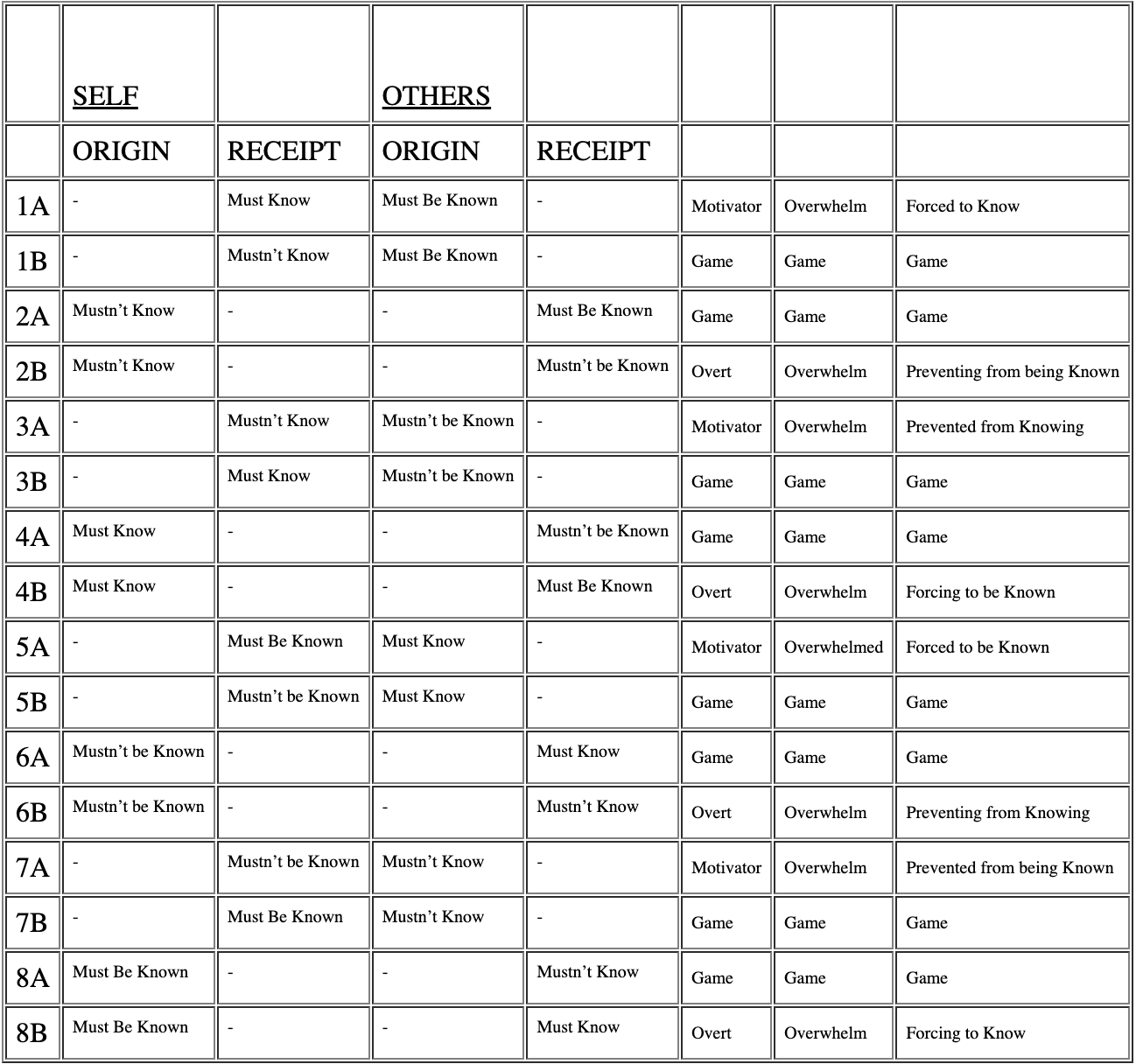
At Level 5, each row of the The Postulate Failure Cycle Chart (see above) forms an exercise. As you do more of Level 4, you start to appreciate the organization provided by this chart to go into the mind more deeply at the pure postulate level.

A pure postulate is like a mathematical relationship. When these relationships are applied to a subject like Physics, they acquire mass. Similarly, pure postulates acquire mass when they are applied to life situations. So, at Level 5, one is dealing with very basic postulates of this universe.

The most basic goal in this universe is “To know.” It is found at the core of all dynamics. One knows by postulating.

Postulating is bringing something into existence. Thus, something is manifested. Once manifested it is known. You can not-know something by altering it. When you alter, you manifest something different on top of what you had manifested earlier. So, the earlier manifestation is hidden under the new manifestation. So, we not-know the earlier manifestation. We only know the new manifestation. This is very solidly the case when there is a shift in valence.

So, there are many, many layers of this alter-is, much like the layers of an onion. This is what life does: “alter-is upon alter-is upon alter-is.”

Auditing (or sorting out of the postulates) is reversing this alter-is. It is like peeling back the layers of the onion one by one. It is discovering the previous layers one at a time. Here we have: “as-is upon as-is upon as-is.”

So, “as-is” is the reverse of “alter-is.” You as-is one layer at a time. In TROM, the layers of alter-is are the 16 rows of the chart above. Row 1A is the top layer of the onion. As you peel it off, you get Row 1B as the next layer. By peeling these layers you get to layer 8B. Below 8B you have another harmonic of layer 1A and so it continues.

.

Running Level 5

How do you “as-is” a layer of this onion? Remember that these layers are made up of an “alter-is” of your postulate. Here we shall look at what happens when we “as-is” a layer.

On the above chart, “Self” and “Other” are just two different viewpoints. Furthermore, the direction of flow is prescribed from “Origin” to “Receipt.”

A layer contains these viewpoints and the flows between them. A viewpoint is like a magnet with two poles called SD and PD. SD is a self-determined postulate. PD is a pan-determined postulate. SD and PD are complementary postulates.

We consider the four most basic postulates (and their complementary postulates) as follows:

Postulate …………………………………… Complementary
Must be known …………………………… (Must know)
Mustn’t be known ……………………….. (Mustn’t know)
Must know ………………………………… (Must be known)
Mustn’t know …………………………….. (Mustn’t be known)

You may identify with the viewpoint called “Self” and mock up another viewpoint called “Other”. You may also mock up two flows as follows:
(1) “Self” as origin and “Other” as receipt.
(2) “Self” as receipt and “Other” as origin.

The PD of the “Origin” is up against the SD of the “Receipt”. The chart only shows the SDs. It doesn’t list the PDs but you can figure them out as the complementary postulates of SDs.

The game is between the PD of the “Origin” and SD of the “Receipt”. An overwhelm (alter-is) occurs when one of these postulates takes over the other postulate completely. The following are the possible overwhelm (alter-is) situations:

(1) You (self) are at origin and your PD takes over the other’s SD. You have committed an overt.
(2) You (self) are at origin and your PD is taken over by the other’s SD. You now have a motivator.
(3) You (self) are at receipt and other’s PD takes over your SD. You now have a motivator.
(4) You (self) are at receipt and your SD takes over the other’s PD. You have committed an overt.

These four situations are mirrored when the postulate and its complementary postulate change places.

When neither takes over then we have an ongoing game, and there are 8 possible games. So, at Level 5 we look at these ongoing games as well.

Thus, the 16 possible compulsive game situations consist of 4 overt overwhelms, 4 motivator overwhelms, 4 origin of games, and 4 receipt of games. Life goes from 8B to 1A, where all four basic postulates regarding an effect may enter into failure both as SD and PD. After these failures, the person must move back to 8B with a different effect to have a game.

We reverse the above cycle of life by processing from 1A towards 8B round and round.

Layer 1A is about “forced to know” same as on Level 4. But here we understand how it came about from layer 1B. From 1B to 1A your SD was taken over by other’s PD. As you become aware of this overwhelm, you revert back to the status of 1B.

At 1B, you are at receipt while playing this game. Then you realize that you have played the same game from origin as in 2A. Your PD was then successful in overcoming other’s SD as in 2B. As you become aware of this overt you realize that you were not in your own valence. So, you flip back into an earlier valence as in 3A, where your SD was overwhelmed in the same way. So, you go on peeling the layers of the onion quite rapidly.

The moment you understand the failures of goal package “to know” as a whole, and how those failures got locked into each other, all the stuck points blow, and you feel complete freedom on the goal “to know.”

In Running Level 5, use RI generously. The key to the resolution of the mind lies in the discovery and creation of complementary postulates. Study “The Tape by Dennis” (the next Section).

.

The Tape by Dennis

“[The best way to follow this is when you have the postulate failure cycle chart in front of you]

“I will go through the chart as if I’m the subject and I’m running Level 5. I’m starting at Level 1A and the goal-package I’m using is the basic To Know goal package. Before I start as given in the manual I’d timebreak all the day’s activities and also I would make sure the Levels 1,2,3, and 4 have been run to no more change. I wouldn’t, of course, attempt Level 5 until those first 4 levels have been run to no more change and also I’ve timebroken the day’s activities.

“Ok, here goes. Level lA. The first thing we need is a little bit of space around us. Now, it doesn’t matter which space you use, you can use the space of the present time universe around you or you can use the space of any past moment in time. It doesn’t matter. You are not limited in any form whatsoever. You just need some space in which to work. It doesn’t have to be present time physical universe space, it can be past physical universe time space. You just need some space there to work.

“So, we are at Level lA and the first thing you would do is put up the postulate, the Other’s postulate “Must be Known”. The postulate is “Must be Known” and that is in the class of not- self. Now, it doesn’t matter where you put the postulate. Most people find it easier to put the postulate into a mass. Even a created mass of your own choice or into a wall, a part of the physical universe, a fence, a passing car. It doesn’t matter where you put it.

“The important thing is that it is a “Must be Known” postulate and it’s in the class of not-self. That is important. You must be certain that it’s in the other’s, the class of other’s to which I will refer for more precision as the class of not-self. So you put up that postulate “Must be Known” in the class of not-self. You yourself then create the postulate “Must Know”. If you go over the column 1 on the chart you see that the level here is “Forced to Know. It’s you being forced to know. Get that? Doesn’t matter what it is, you don’t have to specify as we are just working with the postulates. So you would put up “Must be Known” over tht way in the class of not-self and then get yourself there.

“Don’t see yourself over that way doing this. You get yourself right where you are, right where you are with the “Must Know” postulate. There’s a little danger there that you could say, Oh well, get me over that way. Oh no, that’s wrong. You get right where you are – with the “Must know” postulate. Then you simply timebreak out anything that shows up, any sensations that show up. Your whole situation is of cameo, as a scenario, as a scene, and you timebreak out anything that happens. Anything that shows up, you time break it. Time break it out until it’s gone away and then you put the postulates back up again.

“You put the postulates back up and more scenes show up from the past, you timebreak those back out, have a good look at them, timebreak them out of existence and put the postulates back up again. And you keep on doing this until you can put the postulates up at level 1A with no more change occuring and you can quite happily put up the postulate “Must be Known” in the class of not-self over that way while you’re sitting there with “Must Know”. And you got the idea that you’re being Forced to Know. That’s quite OK. Nothing is happening and it’s all quietened down. Right, now you’re ready to move on. You started to get bored with that level. You’ve done all you can with that level, it’s now time to move on. So we now more from 1A to level 1B.

“Now that is signified by you changing your postulate from “Must Know” to “Mustn’t know”. You’re still at receipt point, but you’re changing your postulate from “Must Know” to “Mustn’t know”. The postulate “Must be known” is still out there in the class of not-self. But now it’s a game. We now have a games condition. We now have the opposition. We now have an opposition situation. We have “Must be Known” in the class of not-self and “Mustn’t Know” in the class of self and they are opposing postulates and that is a games situation. So, you just now hold that. Just hold that situation and timebreak out everything that shows up. Everything that shows up there.

“And you continue with it until there’s no more change. You’ve timebroken out everything you quite happily have that situation there where you have “Must be known” over there in the class of not-self and “Mustn’t know” in the class of self and you can hold that situation. And there’s nothing else, it’s all quietened down. There’s nothing else happening. And you’re getting bored with it, so it’s time to move on. So you now move on from 1B to 2A.

“Now this involves a definite change, you’re going from origin now to receipt. That is a bigger change that happens there between 1B and 2A. When we go from 1B to 2A you start off by still feeling yourself at receipt point. You start off by saying, well, I’m in “Mustn’t know” across to the other person, to the “Must be Known” there. In other words, instead of him being the originator and you being at the receipt at level 2A you’re the originator “Mustn’t know” and you drive him into the receipt of “Must be Known”. In other words, you’re beginning to get at him. So you’re beginning to get at the opponent. So it’s you with “Mustn’t know” and him still holding his postulate of “Must be known”, but instead of him being at the origin point he’s now at the receipt point.

“But it’s still a game. Then again you would do all the necessary timebreaking, the handling of all that shows up, clean everything up until you’re quite bored with that Level, the whole Level 2A. Then you would go to Level 2B where now you are going to actually overwhelm the opponent. You still stay in your “Mustn’t know” postulate, you’re originating your “Mustn’t know” postulate at level 2B and now you drive him, you actually force him, you drive him by the sheer power of the postulate, you drive him from “Must be Known” into “Mustn’t be known”. In other words, you make him comply with your postulate. So he’s driven from “Must be known” he held at level 2A he now goes to “Mustn’t know” at the origin and the opponent with “mustn’t be known” at receipt point there.

“So now we’ve gone through a whole little cycle, haven’t we. We’ve gone through a whole little cycle. We had the complementary postulates at level 1A with “Must be known” and “Must know”. We’ve gone through two game cycles and now we’ve gone back to complementary postulates again. But notice that the postulates have changed. We are now at 2B. At 2B we have “Mustn’t Know” – “Mustn’t be known” and we are back with complementary postulates again. But now you are at the origin point and the “Mustn’t be Known” is at the receipt point.

“Basically the difficulty is a lack of understanding that you’re dealing purely with postulates. You’re not dealing with effects here on the chart, you’re dealing with postulates. That’s all you are putting up, it’s postulates. You’re not putting up effects, you’re not putting up sensations, or you’re not creating people, you’re not mocking up people, you are not mocking up walls, or floors, or situations. You’re simply mocking up postulates. What we’re working with are just postulates. That’s the whole level of level 5, it’s postulates. That is all we are working with at level 5, it’s postulates. We don’t work with anything else, we timebreak out anything else that shows up. We only work with postulates at Level 5.

“It is an incredible thing to work with. At first it seems very strange and so forth, very odd and peculiar to be just working with postulates. But after one gets used to it, when you get into level 5 you get to a point eventually where you wouldn’t dream of working with anything else but postulates because you get the fastest results working with postulates and you always work with just postulates. You simply timebreak out everything else that shows up. Any incidents that show up, or sensations, or emotions or whatever shows up. You simply timebreak them out. So at level 5 you are working purely with postulates. Once you grasp that you have got it. You have got it. You can work then on level 5 and realize what you’re doing.”

.

Summary

A person can end a compulsive game only by adopting a complementary postulate voluntarily. He achieves Nirvana when he can adopt complementary postulates with the whole universe. Therefore, at this level, we only have to return to the person his freedom of choice in the playing of games and the job is done.

A large part of your work will be exercises in developing your PD postulates, and becoming aware of the PD postulates of others.

An easier gradient for Level 5 is SUBJECT CLEARING that helps you first recover those postulates that are underlying the subjects that concerns you the most.

.